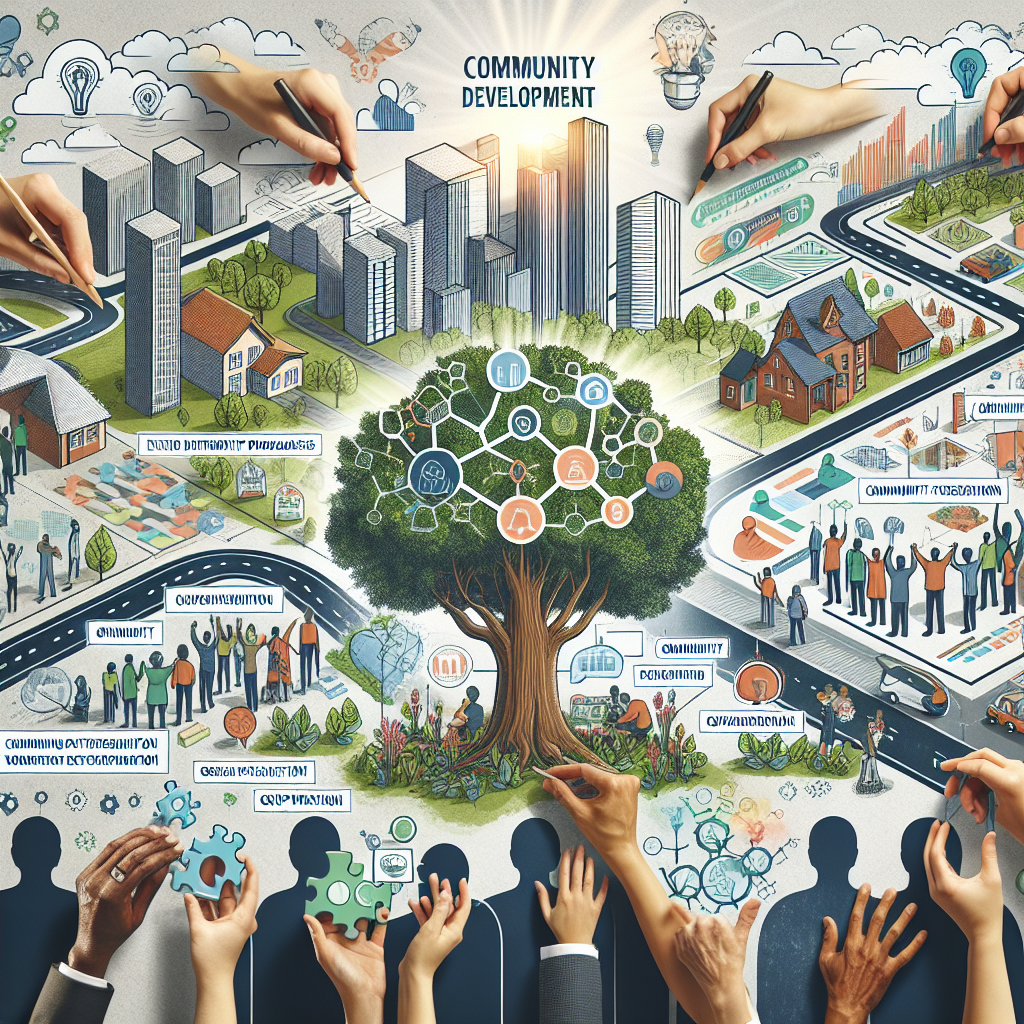
In an ever-globalizing world, community development plays a crucial role in cultural preservation. As areas grow and change due to urban development, the delicate balance between progress and maintaining cultural identity becomes more pronounced. Community development refers to the process of improving the quality of life in a community through collective action and the engagement of residents. Cultural preservation, on the other hand, involves safeguarding and sustaining the cultural heritage, practices, values, and traditions of a community. Balancing these two objectives is essential for fostering a vibrant, dynamic society that respects and cherishes its historical roots. This topic is significant because the successful integration of community development and cultural preservation can enhance social cohesion, encourage economic growth, and build resilient communities that respect their past while embracing the future.
Community Development and Cultural Heritage: A Complex Relationship
Community development and cultural preservation share a complex, often intertwined relationship. Development can bring about improved infrastructure, economic opportunities, and enhanced social services. However, it also poses a risk to cultural heritage through the potential for gentrification, displacement, and the erosion of traditional practices. Understanding this relationship requires exploring how communities can grow while safeguarding their cultural identity.
A prime example of this dynamic is evident in the historic city of Savannah, Georgia. Known for its well-preserved architecture and rich history, Savannah has effectively leveraged community development to enhance its cultural heritage. The city’s approach includes strict zoning laws that protect its historic districts and collaborative efforts between local businesses and government to promote tourism centered around its cultural landmarks. This balance has allowed Savannah to thrive economically while maintaining its unique historical identity.
Promoting Cultural Preservation Through Participatory Planning
Promoting cultural preservation through participatory planning entails involving community members in the decision-making processes related to development projects. This approach ensures that local voices are heard, and cultural values are considered when planning and implementing development initiatives. Participatory planning not only fosters a sense of ownership among community members but also strengthens social ties and cultural cohesion.
An exemplary case is found in Indigenous communities in Australia. Governmental projects that initially threatened cultural sites and practices were significantly transformed through the inclusion of Indigenous leaders and community members in the planning and execution stages. The result was a series of development projects that respected and integrated cultural traditions, such as the building of community centers that serve as hubs for cultural education and heritage promotion.
The Role of Education in Cultural Preservation and Development
Education plays a pivotal role in bridging the gap between community development and cultural preservation. By incorporating cultural heritage into educational programs, communities can ensure that future generations are aware of and value their cultural identities while gaining the skills necessary for a changing world.
A tangible illustration of this principle is found in Hawaii, where educational initiatives incorporate Hawaiian language programs and cultural studies into school curriculums. These programs, often supported by community development funds, aim to preserve the Hawaiian culture while preparing students to engage in a globalized economy. This educational model empowers young Hawaiians to embrace their cultural roots while contributing to the broader society.
| Country | Community Development Initiatives | Cultural Preservation Efforts |
|---|---|---|
| Japan | Increased support for local artisans and craftsmen | Promotion of traditional festivals and practices |
| India | Revitalization of historical urban areas | Protection of ancient temples and rituals |
| Brazil | Urban planning policies that include local culture | Preservation of Samba schools and carnivals |
Challenges in Balancing Community Development and Cultural Preservation
Despite the potential benefits of harmonizing community development and cultural preservation, significant challenges remain. One major challenge is the rising tide of globalization, which can sometimes lead to cultural homogenization and loss. Additionally, economic pressures may lead communities to prioritize immediate economic gains over long-term cultural sustainability.
A case in point is found in the rapid urbanization of cities across China, where traditional neighborhoods known as “hutongs” are being replaced by modern developments. This rapid change poses a threat to the cultural fabric and historical significance of these areas. To address this, some cities, such as Beijing, are now implementing policies that aim to preserve and integrate these traditional elements into modern urban landscapes.
Economic Impacts of Cultural Preservation in Community Development
One of the most significant impacts of cultural preservation in community development is its potential to promote economic growth through tourism and local business. By valuing and showcasing cultural heritage, communities can attract visitors and foster economic opportunities that benefit residents.
An illustrative example of this is found in the city of Charleston, South Carolina. By investing in the conservation of its historic buildings and promoting its rich cultural history, Charleston has become a major tourist destination. The city’s strategic integration of community development with cultural preservation has resulted not only in economic benefits but also in increased pride and quality of life for its residents.
Technological Innovations in Supporting Cultural Preservation
Technological advancements offer new tools for supporting cultural preservation within community development projects. Digital archiving, virtual reality tours, and geographic information systems (GIS) can help document and share cultural heritage with a wider audience while engaging local communities in interactive and meaningful ways.
A forward-thinking example of this can be seen in the use of virtual reality in Venice, Italy, to create immersive experiences that allow tourists to explore historical sites without physically impacting them. This innovation not only helps in preserving the delicate architecture and atmosphere of Venice but also enhances the city’s tourism sector by offering unique and educational experiences.
Conclusion: Charting a Path Forward for Balanced Development
The key takeaway from the discussion above is that successful community development does not have to come at the expense of cultural preservation. By adopting inclusive planning processes, leveraging educational initiatives, overcoming challenges with strategic policies, and embracing technological innovations, communities can enhance their cultural identities while fostering growth. This approach leads to resilient and economically vibrant societies that celebrate diversity and preserve the uniqueness of their cultural heritage.
For those involved in urban planning and housing development, the path forward involves engaging with communities, respecting their cultural narratives, and crafting development strategies that benefit the residents economically and socially while honoring their cultural legacies. By doing so, communities not only safeguard their heritage but also create a sustainable future, rich in diversity and opportunity.
We encourage you to contribute to this ongoing effort by participating in local initiatives, supporting cultural education programs, and advocating for policies that prioritize both development and preservation. Together, we can foster communities that are not only culturally vibrant but also inclusive and forward-thinking.
Frequently Asked Questions
1. What is the impact of community development on cultural preservation?
Community development significantly impacts cultural preservation by fostering environments where cultural identities can thrive amidst change. As communities grow due to urbanization or other factors, community development initiatives can ensure that cultural values, traditions, and histories are integrated into the planning and execution of such growth. This involves creating spaces that honor and incorporate cultural artifacts, practices, and stories, making them accessible and relevant to both locals and visitors. By actively involving residents and respecting their cultural heritage, community development can help safeguard against the erosion of cultural identity, ensuring that cultural legacies are passed on to future generations. An empowered community that is engaged in its own development process is more likely to prioritize and maintain its cultural heritage, making cultural preservation a key part of the community’s evolving identity.
2. How can community development initiatives help protect traditional cultural practices?
Community development initiatives can protect traditional cultural practices by creating platforms for cultural expression and exchange. This can include establishing cultural centers, museums, and art spaces that serve as hubs for traditional arts, crafts, and performances. These initiatives can also involve education programs to teach younger generations about their cultural heritage, ensuring that traditional practices are not only remembered but actively taught and practiced. Moreover, community development can facilitate festivals and events that celebrate cultural identity, providing opportunities for community members to engage with and live out their traditions. By embedding cultural practices into the fabric of the community through intentional planning and programming, development initiatives can make traditional cultural practices a vital, vibrant part of daily life.
3. What challenges do communities face when balancing development and cultural preservation?
Communities often face several challenges when trying to balance development with cultural preservation. One major challenge is the risk of cultural dilution, where cultural elements become overshadowed by new developments and modern influences. This can lead to a loss of cultural identity if not carefully managed. Additionally, there can be economic pressures, where the focus on economic growth and infrastructure may take precedence over cultural concerns, sometimes leading to the prioritization of commercial developments over cultural spaces. Another challenge is the potential generational gap, where younger generations might be less interested in traditional practices, viewing them as outdated compared to contemporary global trends. This can be further compounded by funding constraints, as cultural projects might struggle to receive the necessary financial support compared to other development projects. Addressing these challenges requires a careful, inclusive approach that values cultural voices and recognizes cultural preservation as an essential component of sustainable development.
4. How does involving local residents in development projects aid in cultural preservation?
Involving local residents in development projects is crucial for cultural preservation, as it ensures that the people who know the culture best have a say in what the future of their community looks like. Engagement of residents allows for a participatory approach where cultural insights and perspectives are incorporated into the planning and design processes. This grassroots involvement helps ensure that development initiatives align with the cultural ethos of the community, fostering a sense of ownership and respect for cultural heritage. Local knowledge is invaluable for identifying which aspects of cultural history need preservation and how best to integrate them into contemporary developments. By empowering residents to take an active role in development decisions, communities can craft solutions that both respect cultural traditions and accommodate growth, maintaining the cultural essence while embracing progress.
5. Can technology play a role in both community development and cultural preservation?
Yes, technology can play a significant role in both community development and cultural preservation. In the context of cultural preservation, technology can be leveraged to document and archive cultural artifacts, stories, and traditions, making them accessible to a wider audience and preserving them for future generations. Digital platforms, such as websites and social media, can be used to share cultural narratives and connect communities across geographical boundaries. In community development, technology can facilitate better planning and engagement, providing tools for data collection and analysis that inform decisions. Virtual and augmented reality technologies offer innovative ways to engage with cultural heritage by providing immersive experiences that bring historical sites and cultural stories to life. Additionally, technology can support education initiatives, bridging generational gaps by making cultural learning interactive and engaging for younger audiences. Overall, when used thoughtfully, technology can enhance both development efforts and cultural preservation, ensuring that tradition and progress co-exist harmoniously.