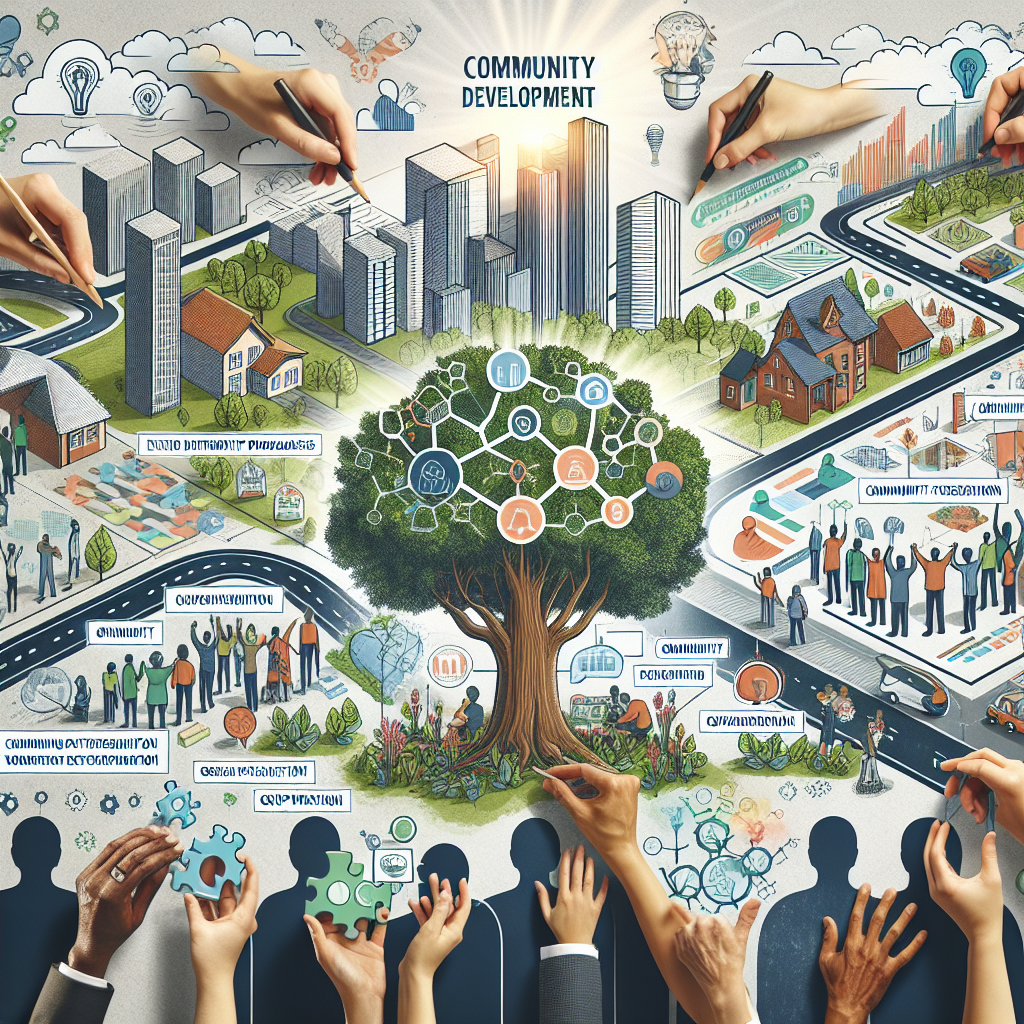
Community-based research (CBR) is a collaborative tool that integrates academic research with the valuable on-the-ground insights of community members to address local issues. This research method diverges from traditional top-down approaches as it actively engages community stakeholders in the research process, from formulation to implementation. As society increasingly values inclusive and sustainable progress, CBR becomes essential in urban planning and housing development. It matters because besides fostering community ownership and engagement, it also yields results that are more relevant, pragmatic, and beneficial to those directly affected. For platforms like HomeSight.org, which focus on housing and urban planning, leveraging CBR can unveil innovative solutions and foster resilient, inclusive communities.
Understanding Community-Based Research
Community-based research stands out by its emphasis on collaborative partnerships. Academic researchers and community members come together as equals, with each party bringing invaluable perspectives and skills to the table. This joint venture aims to not just identify problems, but also co-create solutions that resonate with local needs and capacities.
Consider a real-world example from the city of Portland, Oregon. A local non-profit organization collaborated with Portland State University to tackle housing instability affecting low-income residents. By conducting surveys and focus group interviews, they gained enriched insights that informed policies leading to more inclusive housing practices. This example illustrates how CBR empowers communities by fostering a sense of ownership and actively involving them in problem-solving.
Benefits to Urban Development
Urban development projects drastically impact local communities. Hence, incorporating community insights is crucial for success. CBR provides avenues to integrate local knowledge into urban planning, thereby enhancing project feasibility and acceptance.
In Boston, Massachusetts, community-based research played a pivotal role in redeveloping a central public housing site. By engaging with residents directly impacted by the changes, planners gained a deeper understanding of the community’s requirements. They adapted their plans to include more green spaces and community centers, aligning with residents’ desires for a harmonious living environment. As a result, development initiatives gained broader support, leading to smoother implementation.
Challenges and Limitations
Despite its promising benefits, community-based research is not without challenges. Establishing trust between academic researchers and community members often requires time and effort. Furthermore, conflicting interests between stakeholders can arise, posing potential hurdles in reaching consensus.
In a community development project in Chicago, Illinois, differing priorities between academics focused on long-term environmental concerns and community members concerned with immediate economic benefits led to friction. To reconcile these differences, the team facilitated multiple dialogue sessions, ultimately devising a holistic development strategy catering to both short-term and long-term goals.
Effective Application in Housing Projects
Implementing CBR in housing projects involves a systematic approach, ensuring all stakeholders are effectively engaged and their perspectives documented. Key steps typically include stakeholder identification, problem definition, data collection, and action planning, all conducted collaboratively with community input.
- Stakeholder Identification: Identify relevant community groups and representatives.
- Problem Definition: Co-create a problem statement that reflects community priorities.
- Data Collection: Commence surveys or interviews collaboratively to gather rich data.
- Action Planning: Develop plans rooted in community insights to guide implementation.
A successful CBR application was evident in San Francisco’s Affordable Housing Initiative. Researchers and community activists orchestrated workshops and surveys, gaining a thorough understanding that informed comprehensive housing policies, lending to improved affordability and accessibility for low-income families.
Building Capacity and Sustainability
One notable merit of community-based research is its capacity-building potential, which lays the groundwork for long-term sustainability in community development. Beyond solving immediate issues, CBR empowers members to take proactive roles in ongoing and future developments.
| Capacity-building Element | Outcome |
|---|---|
| Skills Training | Equips community members with research and problem-solving skills. |
| Resource Mobilization | Enhances community’s ability to leverage external resources innovatively. |
| Leadership Development | Fosters emergence of community leaders and advocates. |
For instance, in Toronto, Canada, a community-based research initiative in a marginalized neighborhood resulted in the founding of a local cooperative to sustain ongoing development efforts. Community members involved in the research gained skills and confidence to manage the cooperative, ensuring continuous impact beyond the project’s lifespan.
Research-Policy Interface
Community-based research also plays a pivotal role in bridging the gap between research outcomes and policy making. By highlighting community-driven data, policymakers are more likely to enact policies aligned with genuine community needs and perspectives.
A Vancouver initiative focused on homelessness benefited immensely from CBR insights, leading to policies that addressed not only accommodation but also health care services for the homeless population. Policymakers appreciated the data-driven approach, which helped secure funding and foster widespread community support for the new initiatives.
Ensuring Representation and Equity
A core tenet of community-based research is ensuring equitable representation throughout the process. This involves actively involving underrepresented community groups in discussions and decision-making, thereby amplifying diverse voices in planning and development.
In New Orleans, Louisiana, a post-disaster redevelopment project emphasized representation by engaging marginalized communities significantly affected by Hurricane Katrina. Through a bottom-up approach, stakeholders ensured redevelopment plans reflected everyone’s voices, ultimately fostering improved social cohesion and equitable growth.
Transformative Impact on Local Livelihoods
Community-based research transforms local livelihoods by spurring socio-economic revival. Project outcomes grounded in community realities resonate more with local needs, resulting in enhanced living conditions and opportunities for residents.
A community-driven initiative in Detroit, Michigan, aimed at revitalizing a decaying neighborhood drove economic resurgence. Collaborative research identified opportunities for small business development and training programs, fostering entrepreneurship and reducing unemployment rates, ultimately leading to significantly improved community welfare.
Conclusion: Embracing Community-Based Research
In conclusion, community-based research holds immense potential as an instrument for empowering communities, enhancing decision-making, and fostering sustainable urban development. Through inclusive engagement and collaborative problem-solving, CBR facilitates practical solutions attuned to local needs and aspirations. It presents a strategic opportunity for platforms like HomeSight.org to reinforce their commitment to equitable housing and urban solutions increasingly.
By investing in community-based research, community developers, policymakers, and urban planners can harness the collective wisdom and innovative spirit of communities, paving the path for more resilient, inclusive, and livable urban spaces. As a next step, stakeholders are encouraged to explore partnerships with academic institutions and local organizations to launch community-based research projects addressing specific urban challenges. Through committed collaboration, lasting impact and transformation are within reach for communities across the globe.
Frequently Asked Questions
1. What is Community-Based Research (CBR), and how does it differ from traditional research methods?
Community-Based Research (CBR) is a collaborative approach to research that directly involves community members alongside academic researchers in the entire research process. Unlike traditional research methods that take a top-down approach, where academics solely dictate the research agenda and methodology, CBR flips the script by actively engaging community stakeholders right from the formulation of the research question through to its implementation and dissemination of findings.
This participatory method ensures that the research is deeply rooted in the community’s actual needs and concerns. It values the unique insights and knowledge held by local residents, who are often the most familiar with the intricacies of their environments and challenges. By integrating these on-the-ground perspectives with academic expertise, CBR aims to produce actionable insights that can directly influence positive community change.
2. Why is Community-Based Research vital in urban planning and housing development?
In urban planning and housing development, CBR plays a critical role because it prioritizes the voices and experiences of local residents who are often directly affected by these projects. Urban planning decisions can significantly impact a community’s sustainability, social dynamics, and economic conditions. As such, it’s crucial to incorporate community input to ensure that developments align with the actual needs and aspirations of those who live there.
Community-Based Research facilitates the identification of priorities that may be overlooked in traditional planning approaches. For instance, CBR can highlight the demand for affordable housing, the necessity of public green spaces, or the importance of preserving cultural heritage, which might not be apparent in data-driven frameworks alone. By aligning planning with community needs, CBR supports the creation of more equitable and sustainable urban environments.
3. How does Community-Based Research contribute to sustainable development?
Sustainable development is about meeting the needs of the present without compromising the ability of future generations to meet their own needs. CBR supports this notion by fostering inclusive participation and ensuring that development is both equitable and locally relevant. By engaging community members throughout the research process, CBR ensures that their insights lead to practical, realistic solutions that are sensitive to local ecological, social, and economic contexts.
Moreover, CBR encourages the collaborative development of strategies that address environmental challenges, promote social equality, and stimulate economic opportunity. By rooting development initiatives in the lived experiences and aspirations of communities, CBR aids in crafting solutions that are more resilient and capable of adapting to future challenges.
4. How are community members involved in the Community-Based Research process?
Community members are involved in CBR from the very start. Initially, they participate in identifying the issues that need addressing, ensuring the research is relevant and responsive to their most pressing concerns. During the research design phase, community members collaborate with academic researchers to determine methodologies and tools that align with the community’s realities and resources.
As the research progresses, community members may actively collect data, contribute to analysis, and assist in interpreting results. This ongoing engagement ensures the findings are grounded in the community’s context and perception. Finally, community members play a crucial role in disseminating the research outcomes, helping to communicate the results in ways that are accessible and impactful, both within their community and to broader stakeholders such as policymakers.
5. What challenges might arise in conducting Community-Based Research, and how can they be addressed?
Despite its benefits, CBR does come with challenges, including balancing power dynamics between researchers and community members, differing expectations, and potential resource constraints. Power imbalances can occur if community voices are not genuinely valued or listened to, which can undermine the collaborative spirit of CBR.
To address these challenges, it’s crucial to foster open communication and establish mutual trust and respect at the outset. Clarifying roles, expectations, and goals helps manage differences and prevent conflicts. Adequate training and capacity building for both researchers and community members can also enhance participation and effectiveness. Moreover, ensuring there are sufficient resources in terms of time, funding, and personnel can help sustain the collaborative research efforts and achieve meaningful outcomes.