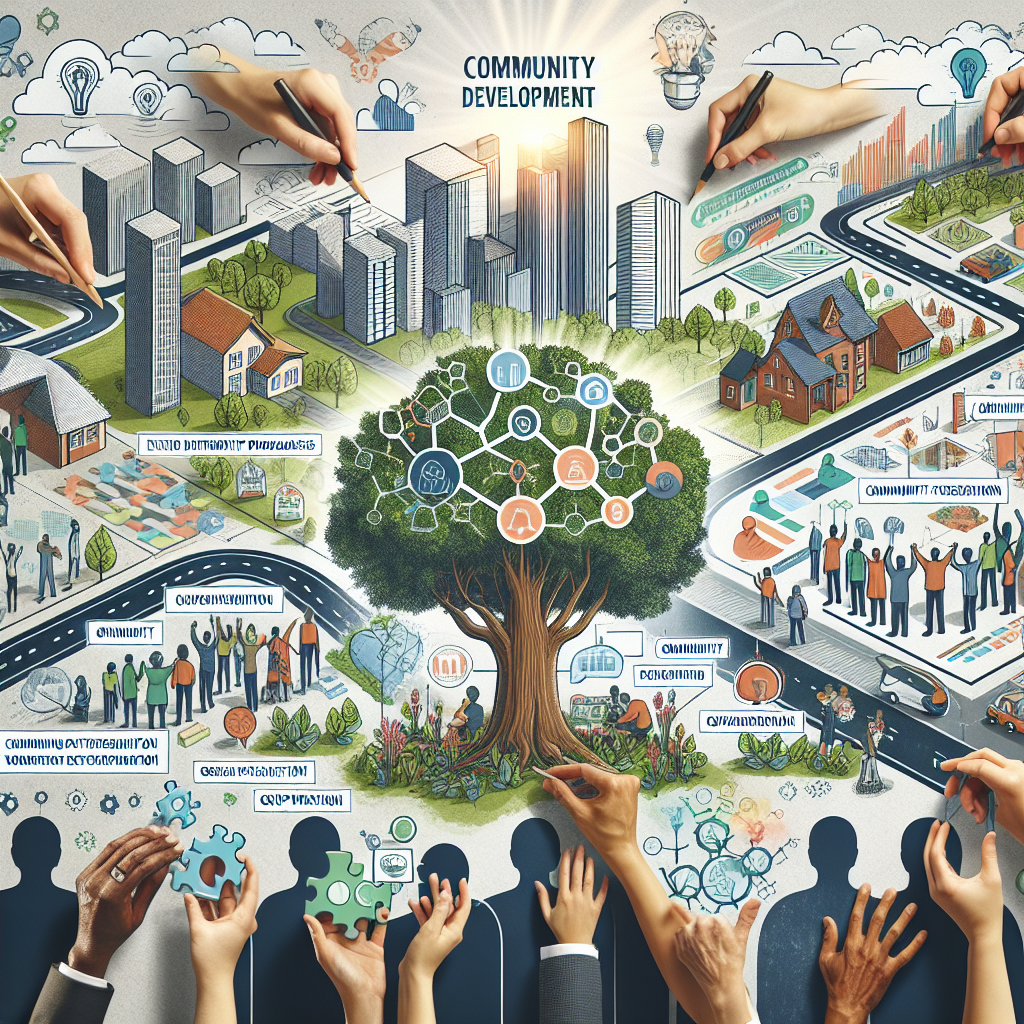
Introduction to Community Development
Community development is a multifaceted process involving the active participation of community members to improve their local environment and encompass various social, economic, and physical changes. It fosters an environment where individuals work collaboratively to address community issues, build goals, and prioritize needs aiming towards better living conditions and harmonious coexistence. The term “social cohesion” refers to the strength of relationships and the sense of solidarity among members of the community. It indicates a high level of interconnectedness and a shared commitment among individuals of different backgrounds. When community development initiatives are effectively put in place, they have the potential to significantly enhance social cohesion, creating a community where residents feel safe, integrated, and committed to mutual objectives.
Understanding the connection between community development and social cohesion matters because cohesive societies are often more resilient, well-functioning, and harmonious, with reduced crime rates and improved well-being. Such environments encourage active citizenship, where community members are engaged in the growth and prosperity of their community. Vibrant neighborhoods develop with the help of shared public spaces, collaborative projects, and an inclusive atmosphere that brings individuals together. Through this article, we will explore how various aspects of community development directly impact social cohesion by examining real-world examples, outlining strategies, and understanding their profound effects on the quality of life.
Community Development Programs and Their Role
Community development programs serve as vital instruments designed to meet the needs of communities and facilitate meaningful interaction among residents. Programs such as neighborhood renewal initiatives, community centers, and skill development activities are practical examples where varied community members come together toward shared objectives. One notable instance is the success of the Dudley Street Neighborhood Initiative (DSNI) in Roxbury, Massachusetts, which transformed a languishing community into a vibrant, self-sustaining neighborhood through grassroots mobilization and local empowerment.
DSNI focused on housing and economic development while fostering leadership among residents. Their efforts rejuvenated physical infrastructure, strengthened local businesses, and enhanced public spaces, fostering a strong sense of ownership among community members. The collective participation in such programs builds bonds, strengthens understanding, and grows trust, forming the essential fabric of social cohesion. Their ability to address social inequalities and promote inclusive growth makes these programs an essential method for enhancing social ties within communities.
Infrastructure Improvements for Enhanced Connectivity
Investing in infrastructure is another critical aspect of community development that supports social cohesion. Good infrastructure, like roads, transportation systems, parks, and public amenities, plays an essential role in connecting people and facilitating meaningful social interactions within communities. In the vibrant city of Curitiba, Brazil, ambitious urban planning and transport initiatives including an effective Bus Rapid Transit (BRT) system have transformed the city into a model for holistic urban development.
The integration of green spaces, pedestrian-friendly areas, and accessible transport in Curitiba nurtured a shared sense of belonging, with both enhanced physical and social connectivity. These improvements have sparked cooperation, increased citizen involvement, and fostered an environment where people are more inclined to walk or use public transport, fortifying community bonds. Improved infrastructure creates opportunities for people from diverse backgrounds to come into contact, creating a harmonious mix where interactions and mutual cooperation thrive.
Housing Developments and Social Mixing
Housing is a core element of community development impacting social cohesion. Thoughtfully planned housing developments can promote social mixing, enabling persons of different social, economic, and ethnic backgrounds to coexist harmoniously. Mixed-use developments and affordable housing policies enhance diversity and foster inclusivity, breaking segregation and reducing socio-economic disparities.
The Vienna Model of housing is an exemplary illustration of this approach. The city emphasizes well-designed, high-quality social housing available to a wide range of incomes. This model strengthens community networks and encourages collaboration among residents. Vienna’s focus on inclusivity and diversity makes it a socially rich urban area where residents experience an enhanced quality of life due to the strong, cohesive social fabric that emerges from these carefully planned housing policies.
Engagement Through Community Spaces
Active public spaces like parks, community gardens, and cultural centers are fundamental in improving social ties within a community by providing venues for shared experiences and social interactions. In New York City, initiatives like the High Line Public Park have transformed unused structures into green corridors that serve as powerful community assets fostering engagement and interaction.
The High Line reclaimed an old rail line giving way to communal green space. It opened avenues for cultural events, community programs, and leisure activities, attracting diverse groups from both the local and wider community. Such spaces create bridges connecting disparate groups, reinforcing the social web. They become symbolic centers of unity, where diverse participants come together, interact, and develop appreciation and understanding for different perspectives, thereby strengthening social cohesion.
| Community Actions | Example City | Impact on Cohesion |
|---|---|---|
| Neighborhood Renewal | Roxbury, MA | Stronger local engagement & ownership |
| Urban Infrastructure Projects | Curitiba, Brazil | Enhanced connectivity & interaction |
| Inclusive Housing Policies | Vienna, Austria | Reduced socio-economic disparity |
| Public Space Development | New York, NY | Increased social interaction |
Community Participation and Resilience
Engaging communities through participatory decision-making processes fosters resilience and strengthens social ties. Encouraging residents to participate in local governance or development planning fosters a sense of empowerment and accountability among individuals. This strategy has been effectively employed in the city of Chicago where participatory budgeting has been introduced, allowing residents to decide on public spending within their neighborhoods.
Participatory budgeting proactively involves citizens in financial decisions affecting their local areas. By giving residents a voice in prioritizing the allocation of community funds, this participatory approach not only increases accountability but also promotes transparency, inclusion, and collaboration. Such engagement fortifies trust and encourages the emergence of diverse leadership voices, nurturing social cohesion by aligning the interests and cooperation of the community members with shared goals.
Summary and Call to Action
In conclusion, community development plays a pivotal role in enhancing social cohesion by bringing individuals together through shared goals and values, fostering diversity, and promoting cooperative interactions within their environment. As we have seen through examples from different parts of the world, strategic initiatives in community development such as infrastructure investment, mixed housing, public spaces, and participatory governance models serve as effective tools in creating a cohesive social fabric.
For one to realize these profound benefits, it is essential for policymakers, community leaders, and residents to actively engage in and prioritize community development strategies. The impact of these strategies not only enhances the social bonds within communities but also results in improved quality of life, reduced social issues, and the emergence of strong, resilient communities. In this pursuit, each individual has a role to play. By supporting and participating in local community initiatives, we can collectively move towards neighborhoods where unity, peace, and prosperity prevail. Consider becoming more involved with neighborhood activities or participating in local planning meetings to contribute towards your community’s development. It begins with you.
Frequently Asked Questions
1. What is community development, and how does it relate to social cohesion?
Community development is a comprehensive and dynamic process that involves the active involvement of community members in efforts to enhance their local surroundings. This process covers a wide range of changes, including social, economic, and physical improvements, with the ultimate goal of creating better living conditions. Essentially, community development is about people coming together to figure out what needs to be done to improve their community, setting goals, and then working collaboratively to make those changes happen.
Social cohesion, on the other hand, is about how well individuals within a community get along and feel connected to each other. It encompasses the strength of relationships and the sense of belonging among community members. When community development is successful, it promotes social cohesion by fostering an environment where individuals work together, share common goals, and build stronger relationships. The process encourages trust, mutual respect, and understanding, all of which are crucial elements of social cohesion. More cohesive communities tend to be more resilient, supportive, and capable of addressing issues collectively, leading to a more harmonious and unified society.
2. How does community development improve social relationships within a community?
Community development actively seeks to build and strengthen the social fabric within a community by encouraging interactions and cooperation among its members. By engaging people in shared projects and initiatives aimed at improving their living conditions, community development creates opportunities for individuals to connect and interact social contexts they might not otherwise experience. This engagement fosters trust and friendships, as people work side by side, facing challenges together, sharing ideas, and celebrating successes.
Initiatives such as community events, neighborhood improvement projects, and local forums allow people from different backgrounds to meet, exchange perspectives, and learn from one another. Such interactions help break down social barriers and reduce prejudices, allowing community members to appreciate the value of diversity and inclusiveness. Over time, these positive interactions contribute to a rise in community spirit and a shared identity, enhancing social relationships and creating a more united and cohesive community.
3. What are some challenges faced in community development that can affect social cohesion?
Several challenges can impact community development efforts and, consequently, social cohesion. One major challenge is the unequal distribution of power and resources, which can result in some voices being marginalized or less heard in the process of community development. This imbalance can lead to feelings of resentment, inequality, and exclusion, hindering efforts to build a cohesive community.
Another challenge is the presence of conflicting interests among community members. As communities often consist of diverse groups with differing priorities and goals, it can be difficult to reach a consensus on the best approach to community development. These conflicts can lead to divisions and undermine trust among community members.
Moreover, limited financial resources and external support can impede the successful implementation of community development initiatives. Without adequate funding and assistance, projects may fall short or falter, leading to frustration and decreased motivation among participants. Importantly, adequate and inclusive communication is vital; misunderstandings or a lack of clear communication can create confusion and disrupt the development process, affecting social cohesion negatively.
4. How can community development initiatives be designed to maximize social cohesion?
To maximize social cohesion, community development initiatives must be designed with inclusivity and participation at their core. This means actively involving diverse sections of the community, ensuring that everyone has a voice in the planning and decision-making processes. Establishing platforms for open dialogue and encouraging community input can provide valuable insights and promote a sense of ownership and commitment among community members.
It’s also crucial to tailor initiatives to address the specific needs and priorities of the community. Projects that resonate with community members are more likely to garner widespread support and engagement. Furthermore, promoting transparency and trust through clear communication and accountability is essential to build confidence in the process and foster solidarity.
Implementing initiatives that are culturally sensitive and respectful of local customs and traditions can enhance the sense of belonging and pride within the community. Encouraging collaboration rather than competition, and creating opportunities for shared experiences, such as community celebrations, workshops, or volunteer work, can significantly bolster bonds within the community, thus enhancing social cohesion.
5. Can you provide examples of successful community development projects that have led to enhanced social cohesion?
There are numerous examples of successful community development projects that have enhanced social cohesion. One standout example is the “Great Places” initiative in various parts of the world, which focuses on revitalizing neighborhoods by improving public spaces and community facilities. These projects often involve the active participation of local residents in designing and implementing changes, leading to a sense of pride and ownership in the community.
Another example is community-driven health initiatives that address local health needs through collaborative efforts. These projects often involve local residents working alongside health professionals to identify key health issues, devise solutions, and implement preventative and educational programs. Such initiatives empower community members by giving them a significant role in addressing local health challenges, thereby strengthening social ties.
Additionally, neighborhood watch programs or local safety patrols offer community-based efforts where individuals come together to increase safety and security within their community. These initiatives not only improve safety but also foster trust and cooperation among neighbors, as they collaborate to create a safer environment for everyone, resulting in enhanced social cohesion.