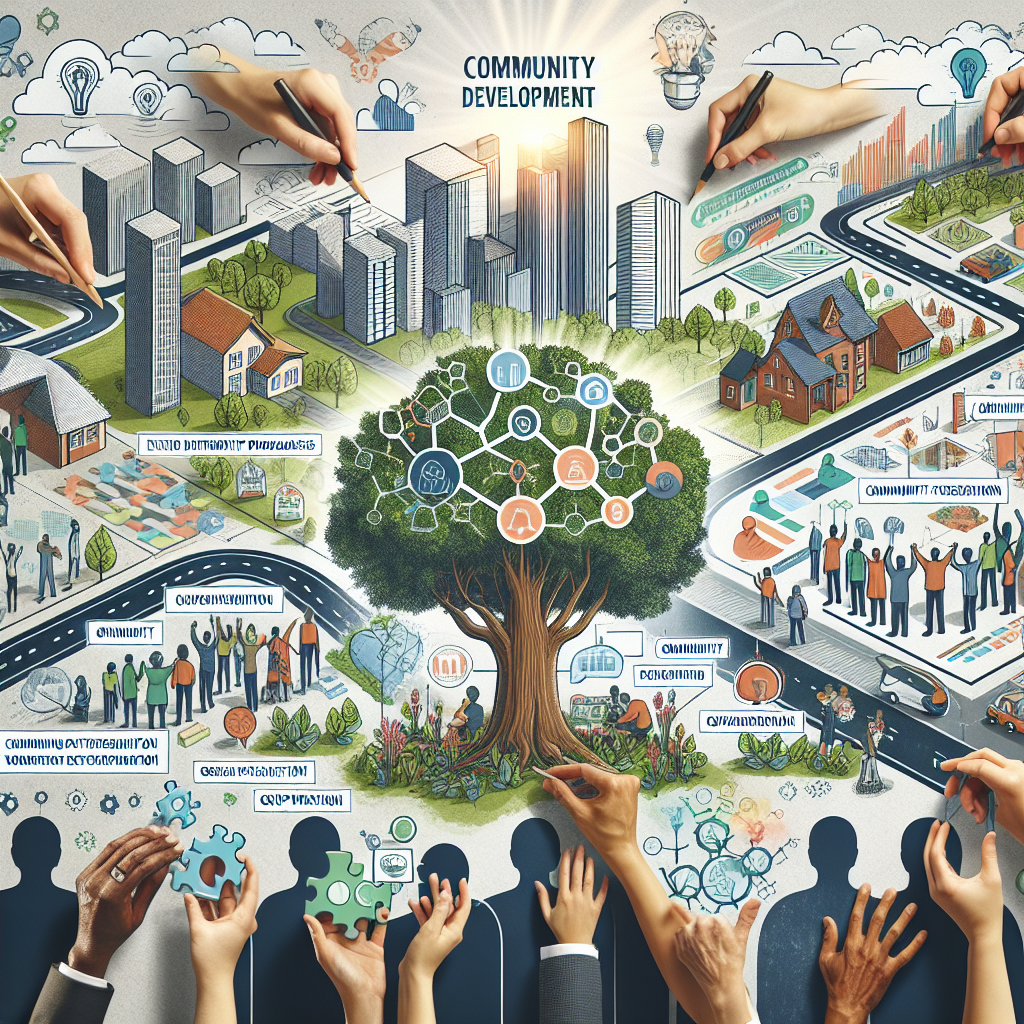
Community development and inclusive design are two intertwined concepts that significantly impact the quality of life within urban and rural environments. Community development refers to the transformative process whereby communities move toward equilibrium, enhancing the well-being of all members. It encompasses various activities designed to uplift the community, such as economic development, infrastructure improvement, education, and social cohesion. Inclusiveness, on the other hand, ensures that the benefits of community development are accessible to everyone, regardless of their age, ability, ethnicity, or socioeconomic status. These concepts are crucial today as they address both social justice and sustainability, creating environments that cater to diverse populations and overcome systemic barriers.
Understanding why these concepts matter is straightforward: communities are built by people and for people. Therefore, when a community lives through inclusive design principles, people across all spectrums enjoy an improved quality of life. An inclusive approach guarantees that everyone, including those often marginalized, can participate in and benefit from community advancements. This shifts focus from exclusionary practices to those that harness the full potential of a diverse population. As such, communities become strong, resilient, and adaptable to future challenges. In this article, we will explore the manifestations of these practices, illustrating how they produce thriving, inclusive spaces.
The Role of Inclusive Design in Urban Planning
Inclusive design in urban planning refers to the thoughtful planning and designing of spaces and infrastructures that accommodate the needs of all community members. It’s not only about physical accessibility but also about fostering accessibility in social interactions and civic participation. For example, consider the city of Curitiba in Brazil, a hallmark of inclusive design in urban settings. Curitiba implemented an advanced public transportation system adapted for people with disabilities while prioritizing environmental sustainability. These transitions resulted in well-connected urban neighborhoods where residents of all abilities could freely navigate the city, contributing to economic productivity and social integration.
This approach requires urban planners to engage directly with community members, integrating their feedback into urban projects. Such collaborations make it possible to address specific needs and cultural contexts while reducing resistance to change. By focusing on inclusivity, urban planning can stimulate shared spaces that encourage interaction, cooperation, and innovation amongst diverse groups, thus promoting a more harmonious community.
Inclusive Housing and its Impact on Community Cohesion
Housing is a fundamental element of community development, crucial for establishing secure and healthy lives. Inclusive housing policies ensure that all demographics, including low-income families, seniors, and disabled individuals, have access to appropriate, affordable homes. For instance, the city of Vienna has implemented a remarkable inclusive housing policy that mixes residential, commercial, and cultural spaces to break down socioeconomic barriers. Known as the “Soziale Stadt” (Social City), it ensures access to affordable housing while promoting social interaction across different societal groups. By preventing segregation, this inclusive approach fosters community cohesion and helps bridge divides caused by socioeconomic disparities.
Providing inclusive housing is not solely about constructing affordable units. It also involves creating diverse neighborhoods that offer educational, employment, and recreational opportunities for all its inhabitants. Proximity to schools, hospitals, and parks plays a crucial role in ensuring that residents can fully engage with their community. Consequently, these environments contribute to a more equitable quality of life, where individuals have equal opportunities to succeed.
Supporting Economic Growth Through Inclusive Design
Economic development must consider inclusive design principles for sustainable growth. The inclusion of marginalized groups within the economic framework leads to diversified ideas, broader markets, and comprehensive socio-economic stability. An example of this is evidence in how the Grameen Bank in Bangladesh targets communities with little to no access to traditional banking, particularly women. By offering microloans to these underprivileged groups, Grameen spurred entrepreneurial initiatives, increased family incomes, and elevated social statuses within the community.
Moreover, inclusive design in business infrastructures, such as accessible office buildings and open spaces, results in higher employment rates among diverse groups, contributing to a more dynamic and productive economy. Communities, therefore, should invest in education and skill-building programs targeting underrepresented groups. Such programs ensure a steady pipeline of skilled labor, vital for sustained economic expansion. When members of a community strengthen economically, they contribute to the tax base, reinvest in their neighborhoods, and play an active part in local governance.
Promoting Health and Well-being through Inclusive Initiatives
Health and well-being are essential facets of a thriving community. Inclusive design in healthcare access and public spaces plays a pivotal role in promoting community health. The “Healthy Cities” initiative by the World Health Organization is an example of promoting health through accessibility. It integrates services such as safe pedestrian pathways, accessible healthcare facilities, and clean parks where individuals can meet and exercise. Such inclusive public spaces foster physical health, psychological well-being, and social bonds.
Community programs, such as community gardens and health education initiatives, can also bridge gaps in health disparities. By involving diverse aspects of society in health planning, communities can ensure culturally sensitive health programs, tailored to the unique needs of all its residents. This involvement increases understanding and participation while enhancing public health outcomes as members become proactive in managing their well-being.
The Power of Education and Capacity Building in Community Development
Education stands as a cornerstone of progressive community development. Investing in education and capacity building ensures communities are equipped with the knowledge, skills, and capabilities to innovate and respond to challenges effectively. An inspiring example is Finland’s education system, which promotes inclusivity through equal education opportunities for all children regardless of their background. Finland’s model emphasizes customized learning, whereby children receive individualized support to meet their educational needs.
Providing access to quality education for all dismantles barriers and fosters a more equitable society. Education as an inclusive tool empowers residents, facilitating informed participation in community affairs. Moreover, fostering a culture of lifelong learning, skill development, and retraining can address the challenges posed by rapid technological change and global competition. Building educational centers or local learning hubs in underserved areas enhances community development, as knowledge becomes a shared resource that binds societies.
| Inclusive Design Element | Impact on Community |
|---|---|
| Accessible Transportation | Improves mobility and economic opportunities |
| Inclusive Housing | Fosters socioeconomic diversity and stability |
| Public Health Initiatives | Enhances overall well-being and social cohesion |
| Education Access | Promotes equality and prepares for economic challenges |
Engaging Community Participation and Designing for All
Inclusive design and community development hinge on active participation and the representation of diverse stakeholders. Encouraging community participation in development projects ensures that the needs and perspectives of all community members are heard, contributing to more effective and sustainable solutions. In Medellín, Colombia, inclusive design transformed public spaces through participatory planning processes that engaged residents at all stages of development. This community-centered approach revitalized neighborhoods, reduced violence, and improved overall quality of life.
Setting mechanisms for participatory governance, such as community committees and forums, elevates citizen involvement and accountability in civic matters. Moreover, designing for all requires a paradigm shift that values the needs of the marginalized, incorporating universal design principles that account for every member of society. Communities become adaptable, innovative, inclusive, and resilient against existing and future adversities.
Conclusion
Community development and inclusive design are vital for creating equitable, sustainable, and enriching environments for all. By understanding and implementing these concepts, communities gain the power to transform lives, break cycles of inequality, and foster economic prosperity. As we’ve seen through real-world examples from cities like Curitiba, Vienna, Medellín, and initiatives like the Grameen Bank, inclusive practices prove beneficial for both individuals and society at large.
Looking at the key takeaways, it is evident that inclusive design fosters greater community cohesion, participation, and broader socioeconomic growth, enriching the overall quality of life. As you engage with your community—whether through participation in local planning meetings, advocating for accessible facilities, or supporting educational initiatives—you contribute actively to a more inclusive world. Begin by taking a step towards learning about current initiatives in your locality and spearheading inclusive community projects. Our neighborhoods reflect who we are, and through inclusive design, we can ensure they echo the values of diversity, fairness, and unity. Join the mission, and with collective effort, be part of creating a more inclusive future.
Frequently Asked Questions
1. What is community development and why is it important?
Community development is a transformative process aimed at fostering growth, empowerment, and sustainability within a community. It involves a wide range of activities, from economic development and infrastructure improvement to education and social cohesion efforts. The primary goal is to enhance the well-being of all community members by creating a more vibrant, resilient, and equitable environment.
The importance of community development cannot be overstated. It is critical because it promotes local agency by giving communities the tools they need to address their specific challenges and opportunities. With effective community development, areas can experience increased economic growth, improved social services, enhanced public spaces, and stronger community bonds. This not only improves the quality of life for residents but also attracts new businesses and visitors, creating a positive cycle of growth and development.
2. How does inclusive design play a role in community development?
Inclusive design is a critical aspect of community development because it prioritizes accessibility and equity by ensuring that all people, regardless of their age, ability, or background, can fully participate in and benefit from the environment where they live. This approach acknowledges and values human diversity by incorporating principles of universality and accessibility into the planning, designing, and building phases of community projects.
Within the realm of community development, inclusive design ensures that infrastructure, public spaces, services, and educational resources are accessible to everyone. This might mean creating wheelchair-friendly pathways, ensuring translation services for non-native speakers, or designing public transportation systems that are easy for all to use. By breaking down barriers and fostering inclusivity, communities can ensure that every member has an opportunity to engage fully with their surroundings and contribute to their development.
3. What are some examples of successful community development projects?
There are countless examples of successful community development projects around the world, each unique to the areas they serve. For instance, the Harlem Children’s Zone in New York City has gained international recognition for its holistic approach to community upliftment. This initiative focuses on improving educational outcomes, health, and social well-being in a defined area, supporting children from birth through college.
Another remarkable example is the community-led regeneration of the Byker Wall Estate in Newcastle, UK. This project emphasized resident participation in decision-making, resulting in improved housing conditions, infrastructure, and community facilities, all reflecting the needs and values of the local population. These projects exemplify how collaborative, inclusive approaches to community development can create meaningful and lasting change.
4. How can individuals contribute to community development?
Individuals have a significant role to play in community development, and their contributions come in many forms. Firstly, they can get involved in local community organizations, which often provide volunteer opportunities ranging from event planning to community clean-ups. By participating in these initiatives, individuals can directly impact their environment while building connections with their neighbors.
Another effective way is for individuals to engage in local governance. This might involve attending town meetings, joining community boards, or even running for local office. Being active in the civic process allows individuals to voice their opinions on community needs and priorities, helping to shape local policies and initiatives.
Moreover, supporting local businesses and advocating for equitable practices can drive economic development, while promoting social inclusion and diversity. Simple actions, such as starting or joining community discussions on social media, can increase awareness and engagement around community issues, uniting individuals towards common goals.
5. What challenges do communities face in implementing inclusive design?
Implementing inclusive design in community development is fraught with challenges, despite its clear benefits. Financial constraints are among the most significant obstacles. Designing and retrofitting spaces to be accessible can be costly, and not all communities have the resources or funding necessary to undertake such projects.
Moreover, inclusive design requires a shift in mindset, adopting a proactive rather than reactive approach. This means overcoming deeply ingrained personal and institutional biases that may overlook or undervalue the needs of marginalized groups. Resistance to change can be another barrier, particularly when traditional methods and designs are perceived as more familiar or easier to implement.
Furthermore, there is a challenge in ensuring comprehensive community engagement, as marginalized voices are often underrepresented in decision-making processes. Overcoming these challenges involves fostering partnerships among governments, organizations, and citizens, leveraging diverse perspectives and expertise to create environments that are truly inclusive and reflective of the community’s diversity.