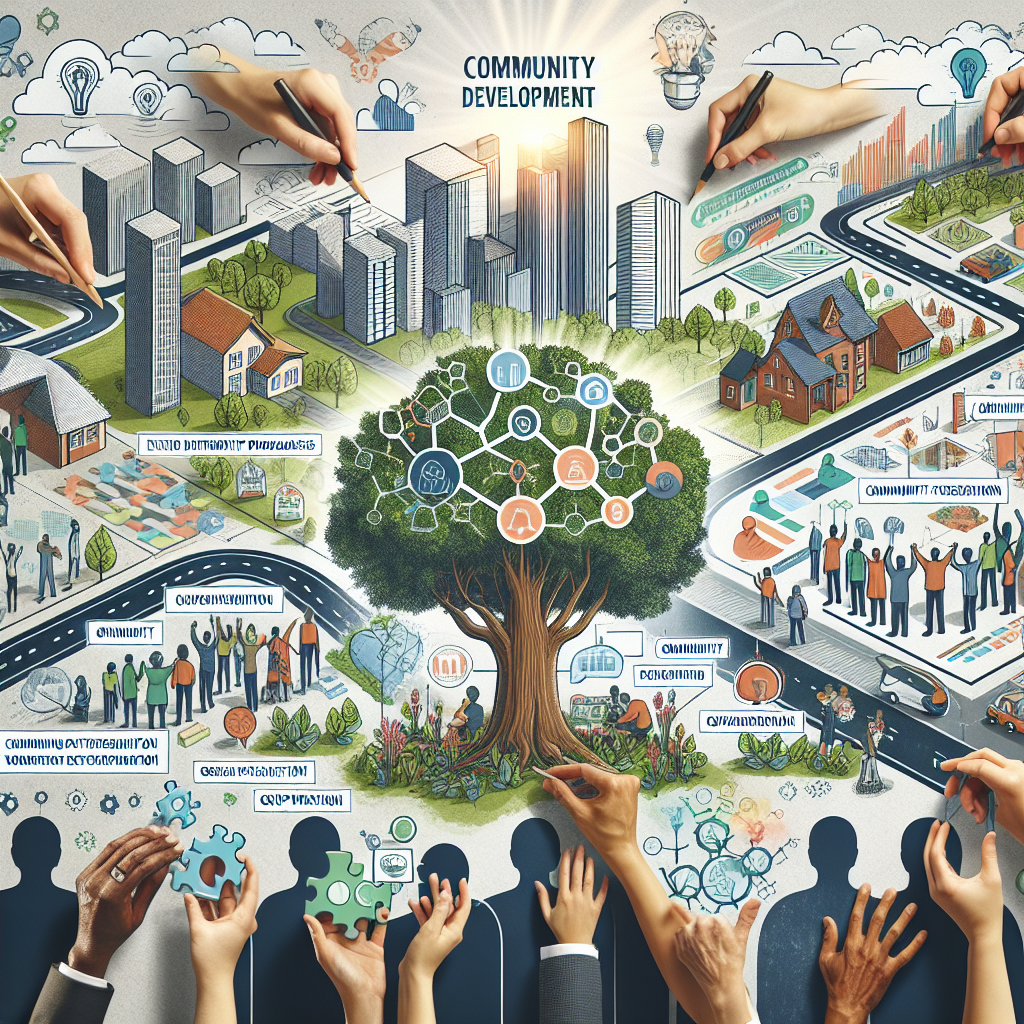
Community development and economic mobility are terms that are often used interchangeably, but they embody distinct concepts. Community development is a process where members come together to take collective action and generate solutions to common problems. It is rooted in the belief that local communities have the ability and insight to bring about positive change, improve their living conditions, and enhance the quality of life for their residents. On the other hand, economic mobility refers to the ability of individuals or families to improve their economic status, usually measured in income or wealth levels, over time.
Why do community development and economic mobility matter? They are critical as they form the backbone of sustainable growth and improvement in living standards, particularly within urban settings. Successful community development results in stronger, more engaged communities that drive forward improvements in areas like housing, education, and employment. Economic mobility, meanwhile, ensures that these improvements translate into tangible economic opportunities for individuals and households, thus fostering a cycle of prosperity and reducing inequality. These concepts are especially relevant in today’s world, where cities are expanding rapidly, and social inequalities are more visible than ever before. Tackling these issues positively impacts social cohesiveness, reduces crime, and ensures a higher quality of life for all residents. Thus, community development and economic mobility are more than just catchphrases; they are essential elements of thriving, dynamic communities.
The Role of Housing in Community Development
Housing is one of the fundamental elements of community development, acting as both a catalyst and an indicator of economic mobility. Quality, affordable housing acts as a stepping stone for residents, providing stability and security, which are prerequisites for pursuing education, employment, and ultimately, economic prosperity.
One real-world example highlighting the importance of housing is the redevelopment of the Atlanta BeltLine in Georgia, USA. This project transformed abandoned railway tracks into a 22-mile loop of parks and pathways, encouraging new residential and commercial development along its path. The BeltLine has led to the creation of over 30,000 permanent jobs and countless housing opportunities; crucially, it has incorporated affordable housing quotas to ensure that economic growth benefits a wider community cross-section.
Housing projects like the BeltLine not only improve physical infrastructure but also foster stronger social bonds, local pride, and economic diversity. By ensuring accessible housing, community development projects can significantly enhance economic mobility by permitting residents to live closer to job opportunities, fostering a sense of security, and creating stable lives from which they can further thrive.
Education and Economic Mobility
Education is widely acknowledged as a cornerstone of economic mobility. By providing individuals with the knowledge and skills necessary to succeed, education equips people with the ability to climb the economic ladder.
An example of the transformative power of education can be seen in the city of Medellín, Colombia. Once notorious for crime and poverty, Medellín invested heavily in education through its “Bibliotecas Parque” or “Library Parks” initiative. These library parks serve as community hubs that provide educational resources, workshops, and recreational activities in underserved areas.
This initiative has contributed to significant improvements in education levels, reductions in crime, and increased economic opportunities in Medellín. It shows how investing in accessible, community-centered educational initiatives can break cycles of poverty and open pathways to economic mobility.
Transportation and Access to Opportunities
A critical but often overlooked element of community development is the role of transportation in economic mobility. Reliable and accessible transportation links communities to essential opportunities in education, employment, and social activities. Without efficient transportation, individuals may find it challenging to reach jobs or educational institutions, limiting their potential economic advancement.
The city of Los Angeles, known for its sprawling urban landscape and notorious traffic congestion, has responded innovatively to these problems. The development of the Metro Rail expansion project is designed to provide a reliable and efficient transportation system that improves access across the city. By expanding rail services and improving public transportation infrastructure, this initiative aims to link low-income neighborhoods to employment centers, educational institutions, and healthcare facilities, thereby fostering economic mobility.
The impact of improved transportation infrastructure is far-reaching, paving the way for individuals to access better opportunities and build wealth over time. This highlights how modernized transportation systems can bridge economic gaps and enhance community development outcomes.
Community Engagement and Participation
Community engagement and participation are pivotal in ensuring successful community development and economic mobility. When residents are involved in development processes, projects are more likely to meet actual community needs and garner more robust support.
Consider the Dudley Street Neighborhood Initiative (DSNI) in Boston, Massachusetts. Faced with urban decay and high poverty rates, the residents of Dudley Street mobilized to take control of their neighborhood’s future. DSNI was established as a community-driven organization dedicated to revitalizing the neighborhood through resident participation.
- They secured the power to acquire and develop vacant lots.
- Focused on affordable housing.
- Developed youth programs and community centers.
DSNI empowered residents to transform their community and improve economic opportunities by prioritizing local needs and encouraging community involvement. This example emphasizes that meaningful community development stems from empowering residents and ensuring their active participation in designing and implementing development projects.
Supportive Policies and Frameworks
Public policies and supportive frameworks are crucial for enabling community development and facilitating economic mobility. Governments and policymakers play an indispensable role in providing the necessary financial resources, regulatory frameworks, and political support to drive community improvement and economic growth.
In Singapore, the government’s approach to public housing through the Housing Development Board (HDB) provides a poignant example. Recognizing the critical link between housing security and economic stability, the HDB offers affordable, high-quality public housing designed to be integrative and inclusive. Singapore’s housing policies have been pivotal in transforming the country into one with a high standard of living and a low poverty rate.
By providing ownership opportunities and prioritizing diverse housing models, Singapore has increased its residents’ economic mobility. Tied with employment strategies and educational access, these policies ensure that residents have the opportunity to advance financially within supportive environments. This showcases the importance of aligning policies with developmental goals to empower communities and foster economic advancement.
Technology and Innovation in Community Development
Technology and innovation represent powerful tools in facilitating community development and economic mobility. By leveraging digital technologies, communities can enhance education, optimize resource use, and create innovative solutions to local challenges.
A prime example of technology benefiting community development is seen in smart city initiatives across the globe, particularly in places like Barcelona, Spain. Barcelona has invested in an open data platform that gathers information about public services, city management, and infrastructure. This data is used to inform urban planning, optimize public transport, improve sustainability, and enhance resident engagement.
The integration of technology in Barcelona demonstrates how digital platforms can facilitate responsive and efficient community management, enabling quicker adjustments and more adaptive strategies. By embracing technology, communities can foster environments that promote economic mobility, paving the way for informed development and equitable access to opportunities.
Final Thoughts and Next Steps
The importance of community development and economic mobility cannot be overstated. They represent the foundation of vibrant, inclusive, and thriving communities capable of adapting to change and pursuing prosperity. By focusing on areas such as housing, education, transportation, community engagement, supportive policies, and technology, stakeholders can facilitate meaningful progress and provide real opportunities for economic advancement.
Key takeaways from our analysis include acknowledging the interlinked nature of community development components, emphasizing resident participation, integrating technology for efficiency, and recognizing the vital role of supportive policies. By embracing these elements, communities can forge paths toward economic mobility, enabling residents to improve their quality of life while reducing inequality.
As we move forward, it’s crucial for policymakers, community leaders, urban planners, and residents to work collaboratively to drive these initiatives. Reader, consider becoming involved in local action groups or advocating for policy changes that promote effective community development. Join the movement to invest in our communities and propel us toward a future of equity and opportunity for all.
Frequently Asked Questions
1. What is the difference between community development and economic mobility?
Community development and economic mobility are two key concepts in building stronger and more resilient communities, but they focus on different aspects. Community development is essentially a grassroots process where community members collaborate to identify and solve local issues, aiming to improve living conditions and enhance quality of life for all residents. This process can include initiatives like building community centers, improving local schools, and creating neighborhood programs that foster engagement and inclusivity. It’s all about empowerment, local leadership, and collective action to make a tangible difference in people’s lives.
On the flip side, economic mobility is more about the potential for individuals or families to improve their economic status over time. It’s focused on providing pathways out of poverty and opportunities to earn higher income levels through things like education, job training, and affordable housing. Economic mobility looks at systemic factors that can either aid or hinder someone’s ability to climb up the economic ladder and seeks to create conditions where individuals can achieve their financial goals. In short, while community development is about making positive changes within a community, economic mobility is about increasing individuals’ ability to advance economically.
2. Why is community development important for economic mobility?
Community development plays a crucial role in setting the foundation for economic mobility. By engaging local residents in the process of improving their neighborhoods, community development creates environments that are more supportive of economic growth. This can mean better access to quality education, increased availability of public resources, safer living conditions, and more job opportunities, all of which fuel economic mobility.
When communities have strong networks and resources, individuals are better equipped to pursue higher education, training, and employment opportunities. For example, a community with a robust public transportation system can help individuals access jobs that are further away from where they live. Similarly, community programs that offer financial literacy classes can empower residents with the knowledge they need to manage their money better and make informed decisions about their economic futures. Thus, effective community development initiatives directly impact the economic mobility of individuals by providing them with the necessary tools and environment to succeed economically.
3. How can community development initiatives improve economic opportunities?
Community development initiatives can significantly enhance economic opportunities through a variety of means. First, by improving local infrastructure—such as building roads, improving public transportation, and expanding internet access—communities can make it easier for individuals to connect with jobs, education, and networking opportunities. These infrastructural improvements can attract businesses looking for a solid base of operations, ultimately increasing local employment opportunities.
Furthermore, community development often involves the creation of local businesses and entrepreneurial opportunities, which can inject life into local economies. By supporting small businesses with grants, tax incentives, and technical assistance, communities can create a nurturing ecosystem for entrepreneurs to thrive. Educational and skill training programs are also a huge part of community development initiatives that can lead to more economic opportunities by preparing individuals to meet the demands of current job markets.
Moreover, community development efforts target social determinants of health and well-being, which can free up individuals to focus on their careers, knowing that other essentials like healthcare, food security, and decent living conditions are in place. Overall, when communities focus on holistic development, they create an environment where economic opportunities can grow and flourish.
4. What challenges do community development and economic mobility face?
While both community development and economic mobility aim at creating positive outcomes for individuals and communities, they face several challenges. One of the primary challenges is funding. Many community development projects require significant financial resources, which can be difficult to secure. Limited funding options often force projects to rely heavily on government grants, philanthropic donations, and volunteers—all of which can be unpredictable sources of support.
Economic mobility, on the other hand, often faces challenges from systemic inequalities such as disparities in education and employment. Individuals from underprivileged backgrounds might face barriers like poor schooling, lack of access to quality healthcare, and limited job opportunities. Furthermore, policies that are not inclusive can exacerbate these inequalities, making it harder for affected individuals to improve their financial situations.
Both fields also encounter challenges related to community engagement. It’s not always easy to mobilize community members to participate in development efforts, especially if there is distrust or if past attempts have not succeeded. Breaking through apathy and building a sense of community ownership takes sustained effort and a focus on building trust and credibility.
5. How can individuals get involved in community development to stimulate economic mobility?
Individuals looking to get involved in community development can start by actively participating in local meetings, forums, or town halls where they can gain insights into the issues facing their community and the initiatives underway. Engaging with local community organizations or non-profits is another great way to gain hands-on experience and contribute to community projects. Volunteering time, talent, or resources can give people a front-row seat to the changes occurring in their communities, while also providing practical support to those efforts.
Joining or forming advocacy groups focused on areas such as housing, education, or health services can also provide leverage for policy changes that facilitate community development and economic mobility. Individuals could get involved in data gathering or research initiatives to help pinpoint areas that need more attention. Also, property owners can engage in responsible practices, like providing affordable rents and maintaining the housing stock, as a part of the community development process.
Another impact individuals can make is through supporting local businesses, which keeps money circulating within the community, thereby strengthening the local economy. Advocating for or helping implement skill development programs and workshops is another great way to enhance the human capital of a community, thus paving the way for economic mobility.
Ultimately, getting involved in community development is about becoming an active participant in shaping not just one’s own future but that of the community, creating a ripple effect that enhances the possibility of economic mobility for many.