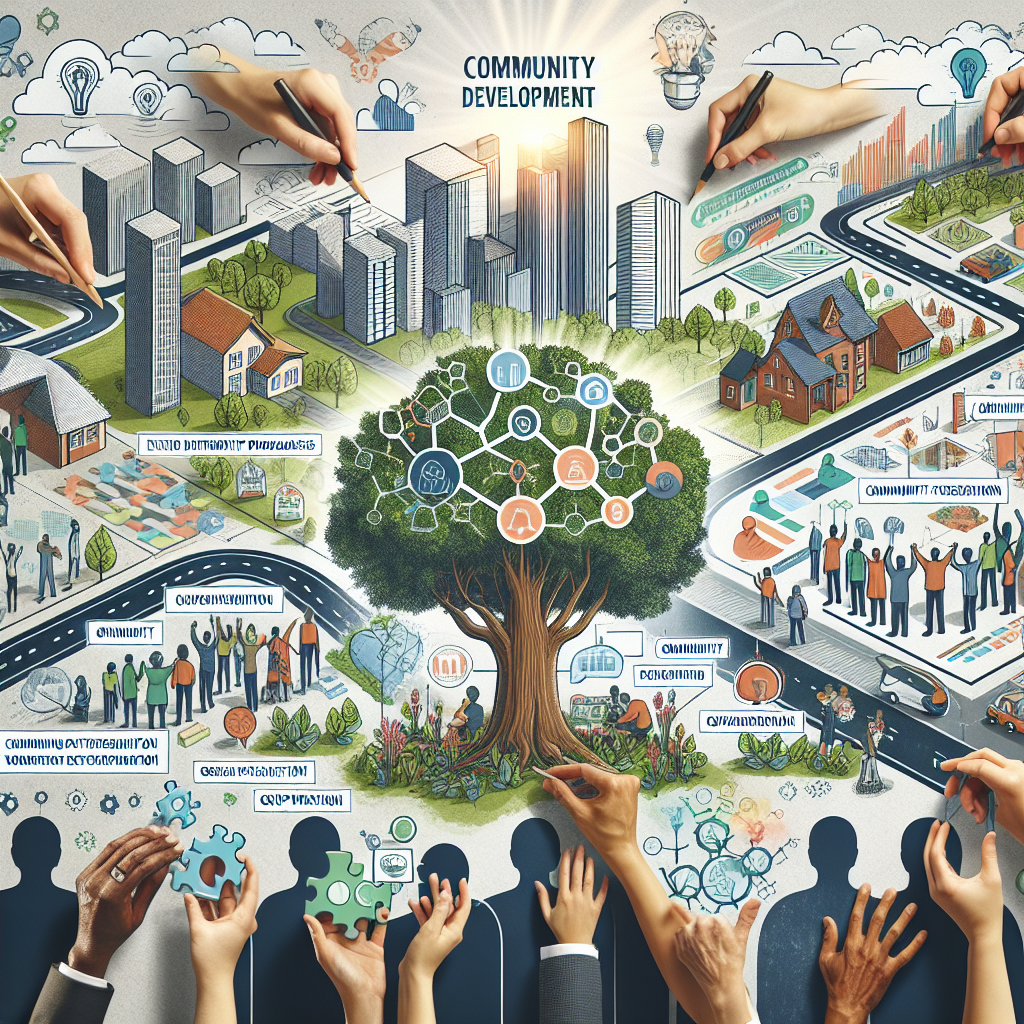
The interconnectedness of community development and disaster recovery has never been more pertinent. In an era where natural and human-made disasters occur more frequently, it’s crucial to understand how these two spheres interact to create resilient, thriving neighborhoods. Community development is a process where community members come together to take collective action and generate solutions to common problems. Disaster recovery, on the other hand, involves the coordinated effort to restore and improve living conditions after a disaster. Both processes aim to build social, economic, and environmental resilience, ultimately ensuring sustainable growth and improving the quality of life for inhabitants. But why does it matter? Simple: resilient communities can mitigate the adverse effects of disasters, recover more swiftly, and establish a proactive stance against future challenges. The purpose of this article is to delve deep into the symbiosis between community development and disaster recovery and provide actionable insights for housing and urban planning stakeholders.
The Role of Community Development in Disaster Preparedness
Proactive community development is instrumental in disaster preparedness. By effectively engaging local populations in planning and decision-making processes, communities can design strategies that reflect local needs and vulnerabilities, translating into practical, localized disaster preparedness measures. This involves identifying critical infrastructure needs, such as secure housing, efficient transportation, and robust communication networks, and embedding them into long-term developmental plans.
In Japan, for example, local communities have successfully integrated disaster preparedness into their urban planning efforts. Through widespread public education initiatives and the establishment of community disaster management councils, Japanese towns have managed to minimize the destructive impact of frequent earthquakes. Residents actively participate in evacuation drills, and homes are constructed following strict safety codes designed to withstand tremors. This proactive approach highlights how community development directly contributes to improved disaster preparedness through inclusive planning and public engagement.
Integrating Resilient Infrastructure in Urban Development
Infrastructure development forms the backbone of any community, with roads, bridges, and utilities serving as lifelines. When disasters strike, resilient infrastructure is vital for ensuring a swift recovery. Municipalities worldwide are now recognizing the need to integrate disaster resilience into their infrastructure designs as they pursue urban development.
Consider the city of Rotterdam in the Netherlands, which has embraced its geographical challenges by becoming a pioneer in climate-resilient infrastructure. By constructing floating neighborhoods and water plazas that double as public spaces and flood control systems, Rotterdam exemplifies how investing in resilient infrastructure can help communities withstand and recover from disasters more effectively. By prioritizing eco-friendly and innovative designs, urban planners ensure that these infrastructures serve both present-day functions and future-proofing against potential disasters.
Leveraging Community Networks for Efficient Disaster Response
The strength of a community often reveals itself in crises, where existing networks and personal relationships pave the way for an efficient and coordinated disaster response. Community development fosters trust, communication, and a sense of collective responsibility that can be leveraged during disaster response efforts. These networks facilitate rapid information sharing, mobilization of resources, and assistance distribution.
In the aftermath of Hurricane Katrina in the United States, community networks played a crucial role in response and recovery efforts. Grassroots organizations and local churches stepped up to coordinate relief operations, distributing food, water, and supplies to affected residents when official channels were overwhelmed. This example demonstrates how community development initiatives that build social capital and trust enhance a community’s capacity to respond effectively in times of crisis.
| Key Elements | Description | Real-World Example |
|---|---|---|
| Proactive Planning | Engages community members in planning for disaster scenarios. | Japan’s earthquake preparedness initiatives. |
| Resilient Infrastructure | Infrastructure that withstands and recovers from disasters. | Rotterdam’s climate-resilient infrastructure projects. |
| Community Networks | Social frameworks that support disaster response and recovery. | Hurricane Katrina’s local response efforts. |
Community-Led Recovery Strategies
Once a disaster has passed, the journey towards recovery begins—this is where community development plays another pivotal role. Unlike traditional top-down recovery efforts, community-led strategies empower locals to take charge of their rebuilding efforts. By involving residents in the design and implementation of recovery plans, affected populations can direct resources toward initiatives that reflect their priorities and aspirations.
In the aftermath of the 2004 Indian Ocean tsunami, the community in Aceh, Indonesia, demonstrated the effectiveness of community-led recovery. Local committees were formed to oversee the rebuilding of homes, schools, and infrastructure, tailored to local needs and cultural contexts. By placing decision-making power in the hands of the community, this area experienced a more inclusive, sustainable, and culturally sensitive recovery.
Partnering with External Agencies for Holistic Recovery
While community-driven initiatives are vital for long-term recovery, partnerships with external agencies provide essential resources, technical expertise, and funding. Effective collaboration involves local authorities, non-governmental organizations (NGOs), and international entities working alongside community members to create comprehensive recovery plans that address immediate needs and contribute to future resilience.
An exemplary model of this partnership is the collaboration between Haitian communities and international organizations after the 2010 earthquake. By combining local knowledge with external support, they developed robust plans for reconstructing essential infrastructure, building disaster-resilient housing, and restoring critical services, including healthcare and education. This illustrates how partnerships amplify the impact of community development efforts, delivering holistic recovery solutions.
Empowering Communities through Education and Capacity Building
Training and education initiatives are fundamental components of community development strategies, fostering a knowledgeable and capable populace ready to manage disaster recovery processes efficiently. Education programs equip residents with crucial skills needed to anticipate, respond to, and recover from disasters while contributing long-term to community development efforts.
A vivid illustration is found in the Philippines, where typhoons frequently disrupt daily life. Local governments, NGOs, and community organizations have prioritized education and capacity-building initiatives by providing training on disaster risk reduction, emergency response, and sustainable development practices. These programs have empowered residents, creating a network of trained volunteers ready to respond to disaster scenarios and providing a continuous framework for community development.
Reinforcing Economic Resilience through Community Development
Post-disaster recovery often involves the revitalization of local economies, which is indispensable in community development. Strategies focused on economic resilience prioritize restoring livelihoods, supporting small businesses, and creating employment opportunities. This not only accelerates recovery but also lays the foundation for sustainable economic growth.
The town of Greensburg, Kansas, serves as a case study in leveraging disaster as a catalyst for economic renewal. After a devastating tornado, leaders embraced a green recovery approach, prioritizing sustainable building techniques and renewable energy projects. These initiatives attracted new businesses, bolstered tourism, and revitalized the town’s economic landscape, underscoring the power of community-driven economic resilience strategies.
Conclusion: Building a Resilient Future Together
As we have seen, community development and disaster recovery are intrinsically linked. Resilient infrastructure, empowered communities, and strategic partnerships play essential roles in minimizing the impact of disasters and accelerating recovery processes. It is evident that when communities actively engage in their development journey, better-prepared, more adaptive, and thriving neighborhoods are created.
For housing and urban planning professionals, the message is clear: incorporate community-driven strategies into every stage of planning, from preparedness and response to recovery and economic revitalization. By doing so, we ensure the development of inclusive, resilient, and sustainable communities capable of withstanding the challenges of tomorrow.
To our readers, the call to action is straightforward: get involved in your community’s development efforts. Participate in local meetings, join planning committees, advocate for resilient infrastructure, and prioritize education and capacity building. Together, we can create resilient environments where everyone thrives, living prepared and poised for a better future.
Remember, the journey to resilience begins with community involvement—let’s build a stronger tomorrow, today.
Frequently Asked Questions
1. What is community development and how does it relate to disaster recovery?
Community development is essentially the process where people who live in a community come together to identify and solve common problems, improving the overall well-being of the community. This often involves building partnerships, leveraging local resources, and creating policies or programs that address various needs such as housing, education, health, or economic opportunities.
When linked with disaster recovery, community development becomes even more crucial. Disasters, whether natural or human-made, can severely impact a community’s physical, social, and economic systems. Community development ensures that there is a framework for individuals to unite and collaborate both before and after a disaster strikes. This preparation and unity can greatly enhance the resilience of a community, facilitating faster and more effective recovery efforts.
Furthermore, by integrating community development initiatives with disaster preparedness and recovery plans, neighborhoods are better equipped to withstand and rebound from disasters. This means not only restoring what was lost but potentially improving the community to be more robust against future challenges.
2. Why is resilience important in communities facing disasters?
Resilience in communities is incredibly important because it represents the ability to withstand, adapt to, and recover from disasters and other adversities. This is not just about physical infrastructure, although that’s a significant part, but also about the social and economic systems that support the community.
Resilience ensures that a community can minimize disaster impacts through prepared and coordinated responses, reducing the time it takes to return to normalcy. It is achieved through various means such as developing strong emergency response plans, investing in infrastructure that can withstand extreme events, and ensuring that there are social safety nets to support the most vulnerable populations.
Communities that focus on resilience are not only better prepared to face disasters but also capable of reducing potential damages and losses. This proactive approach helps to mitigate the economic and human costs associated with disasters, maintaining or even enhancing the community’s quality of life over time.
3. How can a community effectively engage in disaster recovery efforts?
Effective engagement in disaster recovery efforts requires coordinated actions and active involvement from all community members. The recovery process should begin with comprehensive planning before a disaster strikes, which involves understanding potential risks and vulnerabilities specific to the community.
Once a disaster occurs, clear and timely communication is key. Community leaders and organizations can facilitate information sharing and keep everyone updated on recovery progress and needs. Collaboration with local governments, NGOs, and other support networks is essential to pool resources effectively.
Volunteers can be organized to address immediate needs, such as providing shelter or food, while working alongside professionals in rebuilding and restoring critical infrastructure. It’s vital that community recovery efforts are inclusive, ensuring that all voices are heard, and that vulnerable populations receive the assistance they need.
Long-term recovery focuses on not simply returning to the status quo but rather improving community resilience and quality of life post-disaster. This involves learning from the disaster experience, adjusting plans, and adopting innovative solutions for future preparedness.
4. What role do government policies play in supporting community development and disaster recovery?
Government policies play a critical role in supporting both community development and disaster recovery. At the core, these policies can establish the regulatory and financial frameworks that empower communities to undertake development initiatives and prepare for disasters.
Governments can provide crucial funding for infrastructure projects that improve resilience, such as improved drainage systems to handle flooding or updated building codes that ensure structures can withstand earthquakes. Policies that encourage sustainable practices, like renewable energy use or green building standards, also contribute to community development and resilience.
During disaster recovery, government assistance can come in many forms, from direct financial aid to providing technical expertise and resources to affected areas. Policies that streamline disaster response and recovery processes can significantly reduce recovery time, allowing communities to bounce back faster.
Moreover, governments can help foster collaborative relationships between communities, non-profits, and businesses, which are vital for both pre-disaster planning and post-disaster recovery efforts. Ultimately, supportive policies empower communities to take proactive measures and build back better and more resilient than before.
5. How does engaging with local businesses contribute to community development and disaster recovery?
Local businesses are the backbone of many communities and play a pivotal role in both community development and disaster recovery. These businesses provide essential goods and services, create jobs, and contribute to the local economy, which is vital for a community’s overall health and prosperity.
Engaging local businesses in community development efforts can lead to a more self-sufficient and vibrant local economy. These businesses can support local initiatives by participating in community events, investing in local projects, or providing sponsorships, creating a positive cycle of community support and economic growth.
In terms of disaster recovery, local businesses are crucial for a community’s quick recovery as they have a vested interest in restoring normalcy. They can offer immediate relief by providing necessary supplies or services, employing community members, and serving as communication hubs for information dissemination.
Moreover, businesses that have robust contingency plans and that collaborate closely with community leaders can help stabilize the local economy by ensuring continuity of supply chains and services during and after disaster events. Their involvement and investment in disaster preparedness initiatives can significantly enhance the resilience of the entire community, allowing for a smoother and more effective recovery process.