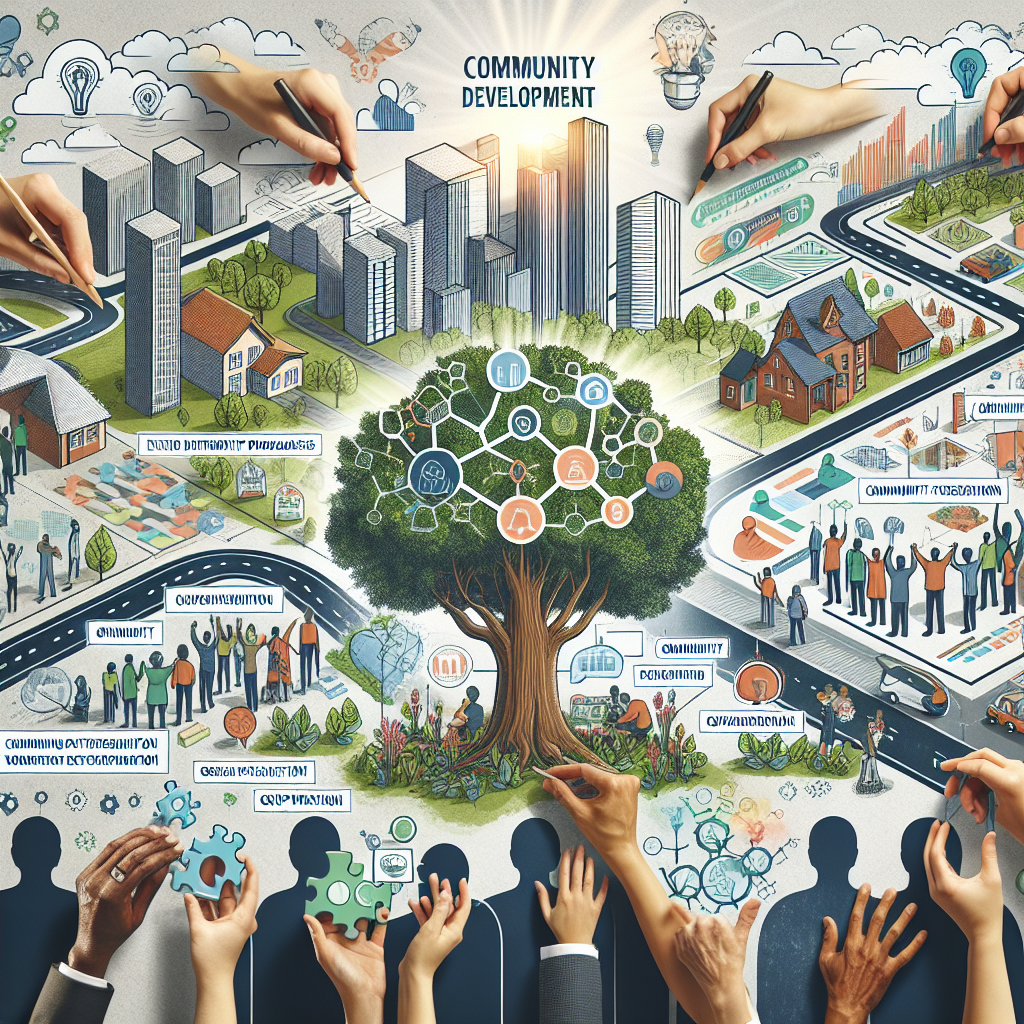
Community development and disaster mitigation are two critical aspects of urban planning and housing that intertwine to ensure the preservation and enhancement of communities. As urban growth accelerates and climate change presents new challenges, understanding these concepts is crucial for the sustainability and resilience of our neighborhoods. Community development refers to a range of actions designed to improve the conditions in which people live by fostering economic opportunities, enhancing the physical environment, and strengthening social networks. Disaster mitigation, on the other hand, involves strategies and measures aimed at reducing the risk of disasters and minimizing their impact on human lives and property.
These two areas are intertwined because the success of community development directly affects a community’s ability to withstand and recover from natural disasters. A well-developed community with robust infrastructure, strong social ties, and economic stability is better equipped to manage disasters effectively. Addressing disaster mitigation within community development plans is essential for creating resilient communities that can face natural or man-made adversities. Therefore, focusing on both community development and disaster mitigation is critical for the long-term well-being and sustainability of urban areas.
Understanding Community Development
Community development is a comprehensive approach that involves improving the living conditions of a community through coordinated efforts of individuals, government entities, non-profit organizations, and private sector partners. One key area of focus is infrastructure development, which includes building roads, school facilities, healthcare centers, and affordable housing. These efforts collectively enhance the living standards of community members and contribute to their overall quality of life.
An illustrative example can be found in the city of Curitiba, Brazil. Curitiba is often lauded for its innovative urban planning practices. By investing in public transport infrastructure and creating green spaces, the city has improved the quality of life for its residents while also promoting environmental sustainability. Its bus rapid transit system is a model for other cities around the globe. This approach not only fosters economic development but also enhances social cohesion and environmental health, showcasing effective community development in action.
Importance of Social Capital in Community Development
Social capital refers to the networks, relationships, and norms that enable collective action within a community. It is essential for fostering cooperation and trust among residents, which can be critical during times of crisis. Communities with strong social capital are often more resilient, as they can leverage personal networks to mobilize resources, information, and support quickly.
A practical example of social capital in action is the community response following the 2017 hurricanes in Puerto Rico. Neighborhoods with higher social capital were able to self-organize and distribute resources effectively when official aid was delayed. Community leaders played pivotal roles in coordinating relief efforts, and neighbors assisted each other, demonstrating the power of social networks in facilitating recovery in the aftermath of a disaster.
Infrastructure and Disaster Mitigation
The development of resilient infrastructure is crucial in reducing the impact of disasters. Resilient infrastructure includes buildings and systems that are designed to withstand extreme weather events and other environmental stresses. This includes using durable materials for construction, implementing flood defenses, and maintaining robust utility systems.
Japan provides a compelling example of successful disaster mitigation through infrastructure development. In response to its vulnerability to earthquakes and tsunamis, Japan has invested in advanced engineering practices such as the seismic isolation of buildings and elevated evacuation platforms. Tokyo, in particular, has designed its buildings to sway rather than collapse during an earthquake, significantly reducing potential casualties and damage. These measures demonstrate a proactive approach to reducing disaster risk through infrastructure enhancements.
| Community Development Strategy | Disaster Mitigation Benefit |
|---|---|
| Investing in Public Transport | Ensures efficient evacuation routes |
| Developing Green Spaces | Absorbs excess rainfall and reduces flooding |
| Building Affordable Housing | Provides secure shelters during disasters |
| Strengthening Social Networks | Facilitates resource sharing and support |
| Improving Utilities and Services | Reduces service disruptions post-disaster |
Case Study: Community Resilience in New Orleans
New Orleans serves as a vital case study for understanding the relationship between community development and disaster mitigation. Following the devastation of Hurricane Katrina in 2005, New Orleans faced significant challenges in rebuilding and enhancing its disaster resilience. The city’s recovery efforts included strengthening its levee system, investing in wetland restoration, and promoting higher standards for building codes and housing construction.
Moreover, initiatives like the Neighborhood Stabilization Program facilitated community redevelopment projects, which aimed to restore affordable housing and support local businesses. The inclusion of community voices in these recovery efforts played a significant role in aligning development with resident needs. Although challenges remain, New Orleans has made notable strides in creating a more resilient community better prepared for future disasters.
The Future: Integrating Technology and Innovation
As we look to the future, there is a growing trend of integrating technology and innovation into community development and disaster mitigation efforts. Leveraging data analytics, geographic information systems (GIS), and Internet of Things (IoT) technologies allows for enhanced monitoring and response strategies.
For instance, the city of San Francisco utilizes GIS technology to map and track seismic activity, flood plains, and other potential hazards. This data informs urban planning decisions and enhances the city’s capacity to prepare for and respond to disasters. Additionally, IoT devices are increasingly being used to provide real-time monitoring of essential infrastructure systems, enabling faster responses to system failures or environmental threats.
Conclusion: The Path Forward for Communities
The integration of community development and disaster mitigation is essential for creating sustainable, resilient communities in the face of growing environmental and urban challenges. The lessons drawn from global examples underscore the importance of coordinated planning, strong social networks, and investment in resilient infrastructure. As community developers, policymakers, and residents, it is our responsibility to prioritize these areas to safeguard our neighborhoods and enhance their capacities to thrive under changing conditions.
For residents and stakeholders, the next step involves active participation in local planning processes and advocating for policies that support comprehensive development and disaster preparedness. Engaged communities, informed decision-making, and strategic investments are central to fostering environments where individuals and families can live safely and prosperously despite potential adversities.
Frequently Asked Questions
1. What is community development, and why is it important?
Community development is a set of practices aimed at improving the quality of life for people in a community by fostering economic growth, job creation, and social inclusion. It’s about empowering individuals and groups, facilitating their active involvement in the development process, and strengthening their abilities to influence the social and public aspects of their environment. The importance of community development lies in its ability to transform communities into more livable spaces that provide opportunities for all residents. This includes improving infrastructure like schools, libraries, and parks, fostering local businesses, supporting cultural and recreational activities, and ensuring access to essential services. By helping individuals and communities to help themselves, community development lays down the framework for a sustainable future where everyone has the resources they need to thrive.
2. How does disaster mitigation fit into community development?
Disaster mitigation is an integral aspect of community development that focuses on reducing or eliminating the long-term risks associated with natural and man-made hazards. It involves planning and implementing strategies to strengthen community resiliency in the face of potential disasters like floods, earthquakes, hurricanes, or industrial accidents. By integrating disaster mitigation into community development, city planners can ensure that community improvements and infrastructures are designed with resilience in mind. This means when disasters do occur, communities can better withstand and recover from these events, minimizing loss of life and property damage. Effective disaster mitigation strategies include enforcing building codes, developing early warning systems, educating the public on emergency responses, and preserving natural buffers such as wetlands or dunes. These efforts ensure that as communities grow, they are safe, sustainable, and prepared for future challenges.
3. What role do residents play in community development and disaster mitigation?
Residents play a crucial role in both community development and disaster mitigation. Their active participation and engagement are pivotal in ensuring that the community’s needs and priorities are accurately reflected in development plans and mitigation strategies. In community development, residents can contribute by voicing their perspectives during public meetings, participating in local committees, and supporting community projects. This kind of engagement helps create a sense of ownership and responsibility, fostering stronger and more connected communities. When it comes to disaster mitigation, residents are essential in implementing preparedness measures and disseminating information throughout the community. Personal and collective preparedness activities, such as creating emergency plans, assembling disaster supply kits, and familiarizing themselves with evacuation routes, are crucial steps. Moreover, residents can volunteer in disaster response and recovery efforts, making sure that the community can promptly bounce back after an event. By staying informed, vigilant, and involved, residents enhance their community’s resilience within both development and mitigation frameworks.
4. How do urban growth and climate change challenge community development and disaster mitigation?
Urban growth and climate change pose significant challenges to community development and disaster mitigation by altering existing environmental and infrastructural conditions. Rapid urban growth often strains infrastructure, housing, and public services, leading to increased vulnerability to disasters. The rush to accommodate more people can result in unsafe housing developments in high-risk areas such as floodplains or coastlines. Meanwhile, climate change exacerbates the frequency and severity of weather-related disasters, including hurricanes, wildfires, and extreme heat events, pushing existing mitigation strategies to their limits. As a result, urban planners and policymakers must address these challenges by advocating for sustainable development practices that incorporate climate adaptation and mitigation strategies. This means planning for green spaces, promoting energy-efficient buildings, integrating public transportation, and ensuring equitable access to resources. It also involves enhancing systems for emergency management and updating infrastructure to withstand climatic impacts. Addressing these issues requires innovative, cross-sectoral collaboration and a proactive approach to managing urban and environmental changes while safeguarding community welfare.
5. What are some strategies for effective community development and disaster mitigation?
Effective community development and disaster mitigation involve a combination of strategic planning, community engagement, and resource management. Strategies may include comprehensive urban planning that incorporates sustainable development principles and considers the socio-economic needs of various community members. In practice, this could mean investing in public transportation to reduce carbon footprints, building green infrastructure like parks and urban forests, and ensuring equitable access to education and healthcare. Disaster mitigation strategies focus on risk assessment and management. This might involve updating building codes to enhance structural resilience in disaster-prone areas, creating defensible spaces to protect against wildfires, and implementing flood management practices such as constructing levees or restoring wetlands. Both domains emphasize the importance of community awareness and education programs that empower residents with knowledge and tools to participate in their community’s growth and safety. Partnerships with local governments, businesses, non-profits, and academic institutions can provide additional resources and expertise, thereby enhancing the impact of community development and disaster mitigation efforts. Long-term success in these areas hinges on the readiness to adapt and innovate in response to emerging trends and challenges.