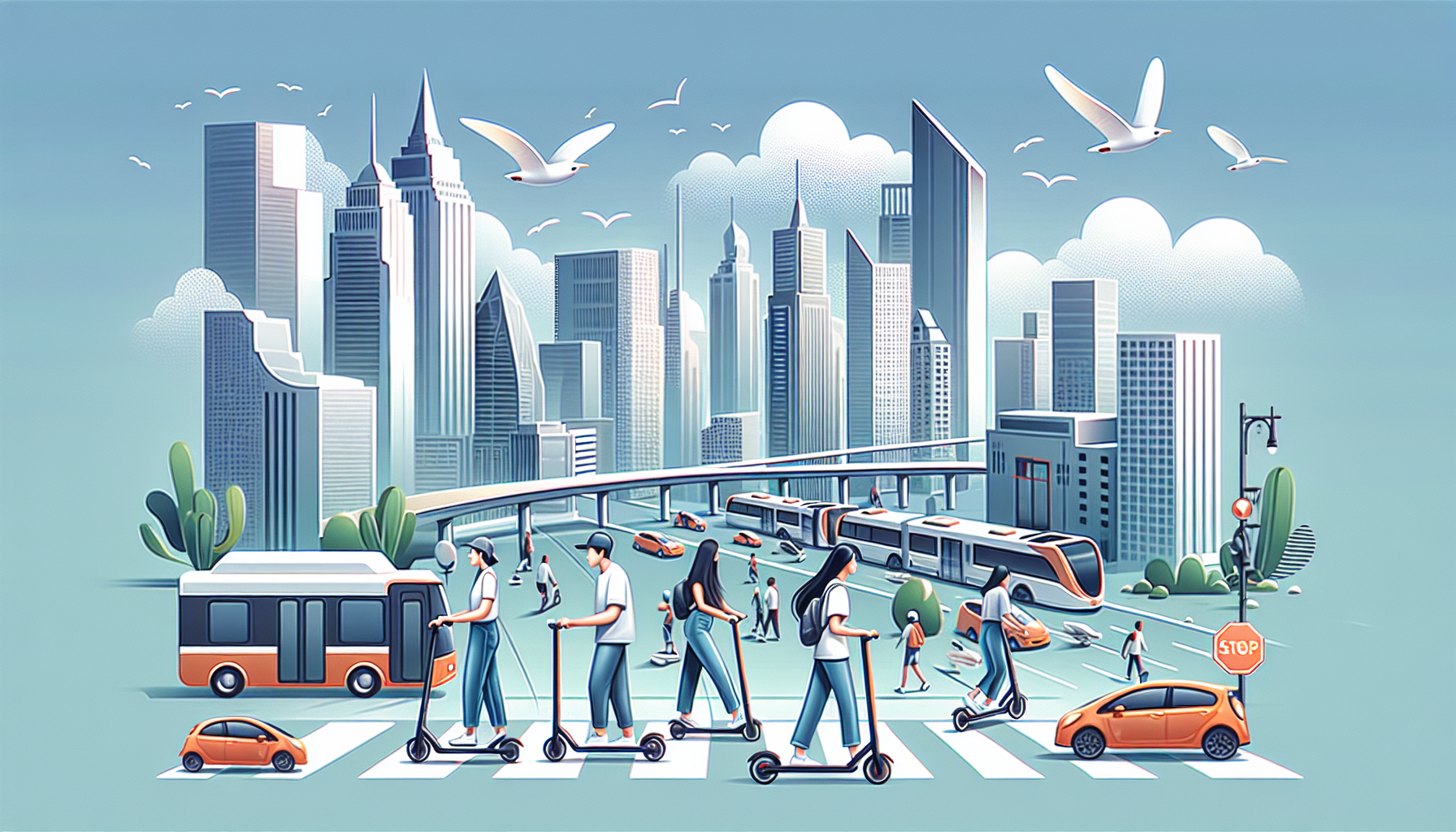
E-scooters have become one of the most visible changes in urban transportation, reshaping how people move through dense neighborhoods, connect to transit, and think about short trips. In practical terms, an e-scooter is a lightweight stand-up vehicle powered by an electric motor and rechargeable battery, typically designed for one rider and used for trips of one to three miles. In city planning discussions, they are part of micromobility: small, low-speed vehicles that fill the gap between walking and driving. That gap matters because a large share of city travel is short. In the United States, many daily car trips are under three miles, a distance that is often too long to walk comfortably but inefficient to drive and park for.
I have worked with transportation teams evaluating scooter programs, curb policies, and safety complaints, and the pattern is consistent across cities: e-scooters are neither a cure-all nor a nuisance to dismiss. They are a useful mode when cities define where they fit, how they connect to buses and rail, and what standards operators must meet. Their impact reaches beyond convenience. They affect congestion, emissions, sidewalk management, transit ridership, injury patterns, public space, and access to jobs. They also force local governments to answer practical questions quickly: Who can ride? Where can devices be parked? What speed is appropriate? How should data be shared? Which neighborhoods should be served first?
For a hub article under urban mobility and transportation, the topic is broader than vehicle technology alone. The real issue is how e-scooters interact with the full transport system. Riders use them for first-mile and last-mile links to train stations, for replacing ride-hail trips in busy districts, and for errands in neighborhoods where parking is scarce. Critics focus on sidewalk clutter, unsafe riding, and uneven compliance with rules. Both views are grounded in reality. Understanding the impact of e-scooters on urban transportation means looking at demand, infrastructure, regulation, economics, accessibility, and public outcomes together rather than in isolation.
This matters because cities are trying to move more people in less space while reducing emissions and preserving street safety. A single traffic lane can move far more people when it supports transit, walking, cycling, and micromobility than when it is dominated by private cars carrying one person each. E-scooters will not replace buses, subways, or protected bike networks, but they can make those systems work better when integrated carefully. The most successful city programs treat scooters as part of a coordinated mobility ecosystem with rules, incentives, and performance measures tied to public goals. That is the standard by which their impact should be judged.
How E-Scooters Change Travel Behavior
The most important transportation effect of e-scooters is trip substitution. A city wants to know what riders would have done otherwise: walked, taken transit, used a personal car, booked ride-hail, or not made the trip at all. Research from several North American and European cities shows a mixed result. Some scooter trips replace walking, which limits environmental benefit. Some replace car or ride-hail trips, which reduces vehicle miles traveled and parking demand. Many serve as access trips to bus or rail stops. In downtowns and university districts, I have repeatedly seen scooters perform best for irregular short trips when schedules are tight and parking is expensive.
Travel time reliability is another reason riders adopt scooters. A one-mile car trip in a congested core can take longer than the same trip by scooter once parking search is included. For workers moving between offices, students crossing campus, or residents connecting from home to a transit station, the appeal is not only speed but predictability. Users know roughly how long a scooter trip will take, especially on streets with bike lanes. This reliability can shift habits over time. Once riders discover they can complete short urban trips without a car, some reduce discretionary driving, and in a few cases households delay buying a second vehicle.
E-scooters also expand the effective catchment area of transit. A rail station within a ten-minute walk serves one set of residents; a station within a ten-minute scooter ride serves many more. That extension is particularly useful in lower-density districts where bus frequency is modest and walking routes are indirect. However, the gain depends on safe routes and orderly parking at destinations. If riders fear traffic or cannot find a legal place to end a trip, adoption stalls. In other words, scooters change travel behavior only when the city makes the overall journey practical from origin to destination.
Environmental and Congestion Effects
The environmental case for e-scooters is strongest when they replace car travel and when operators manage charging, maintenance, and fleet lifespan efficiently. Electric propulsion produces no tailpipe emissions, but full lifecycle impact includes manufacturing batteries and frames, collecting devices for charging or repair, and redistributing scooters across service areas. Early shared scooter programs were criticized because short device lifespans and van-based collection reduced sustainability gains. Newer fleets are more durable, swappable-battery systems reduce collection miles, and some operators use cargo bikes or electric service vehicles for field work. These operational changes materially improve emissions performance.
Congestion effects are similarly nuanced. Scooters take up far less road and curb space than cars, and they can reduce short car trips in crowded districts. That helps not only travel times but also delivery access and bus operations. Yet disorderly parking can create micro-congestion on sidewalks and at corners. Cities that require designated parking corrals, geofenced no-parking zones, and responsive rebalancing usually see better outcomes. Paris, Madrid, Washington, DC, and other cities have all tested versions of these controls with varying strictness. The lesson is straightforward: scooters can reduce pressure on streets, but only if curb and sidewalk management keeps public space usable for everyone.
| Impact Area | Potential Benefit | Main Risk | Best Mitigation |
|---|---|---|---|
| Short urban trips | Replaces some car and ride-hail travel | May substitute for walking instead | Prioritize links to transit and dense activity centers |
| Emissions | Lower operational emissions than cars | Lifecycle impact from collection and hardware turnover | Use durable fleets and swappable batteries |
| Congestion | Less space used than private vehicles | Sidewalk obstruction from poor parking | Parking corrals and geofenced controls |
| Transit access | Improves first-mile and last-mile connections | Unsafe routes discourage usage | Protected lanes and station-area parking |
One common question is whether e-scooters meaningfully reduce citywide traffic. The honest answer is that their effect is usually local rather than systemwide. They are most effective in central districts, near campuses, around major transit stops, and on corridors with short trip demand. They do not solve regional commuting by themselves. Still, local gains matter. Replacing thousands of short car trips in dense zones improves curb turnover, reduces noise, and frees space for buses, bikes, and pedestrians. For mayors and transport agencies, that is a tangible urban transportation benefit even if metropolitan congestion totals change only modestly.
Safety, Street Design, and Public Health
Safety is the issue that determines whether e-scooters remain politically viable. Injury concerns are real, and the highest risks usually come from conflicts with motor vehicles, poor pavement, nighttime riding, excessive speed, and inexperienced users. Emergency departments in several cities have reported fractures, head injuries, and wrist injuries associated with scooter crashes. Helmet use remains inconsistent, especially in spontaneous shared trips. From a street design perspective, the core problem is not that scooters exist but that riders are often forced to choose between fast traffic and crowded sidewalks. When streets provide neither protected lanes nor calm local routes, unsafe behavior becomes more likely.
In my experience, cities get better safety outcomes when they regulate the environment instead of relying only on rider warnings. Lower speed caps in busy districts, protected bike lanes, daylighting at intersections, better pavement maintenance, and clear separation between walking and riding space produce measurable improvements. Geofencing can cap scooter speeds in plazas or along waterfront promenades, though abrupt slowdowns must be engineered carefully to avoid instability. Mandatory reporting of collisions and standardized trip data help agencies identify hotspots. These are not anti-scooter measures; they are the operational basics of adding a new mode to a constrained street network.
Public health effects are mixed but important. Scooters do not provide the same physical activity as walking or cycling, so replacing a walking trip is not a health gain. However, replacing a car trip can support cleaner air and less traffic stress. For some users, especially older adults with limited walking tolerance or workers facing long first-mile gaps, scooters increase practical mobility. Accessibility concerns remain significant. Sidewalk riding and poor parking can obstruct wheelchair users and people with low vision. That is why inclusive policy must balance rider convenience with universal access standards, particularly around curb ramps, bus stops, and narrow sidewalks.
Economics, Equity, and Regulation
The economics of shared e-scooters are challenging, which is why regulation matters. Operators face vehicle depreciation, charging and maintenance costs, software expenses, insurance, staff wages, permits, and fleet rebalancing. Cities, meanwhile, must manage complaints, enforce parking rules, review data, and redesign streets. A permit system tied to performance metrics is usually the most effective approach. Common metrics include response times for improperly parked scooters, service coverage in underserved neighborhoods, vehicle availability near transit, data reporting quality, and demonstrated safety compliance. Caps on fleet size can prevent oversupply, but rigid caps can also suppress useful demand if they are not adjusted based on actual performance.
Equity is often discussed and less often delivered. If operators concentrate scooters only in affluent, high-demand districts, low-income neighborhoods receive little benefit. Better programs require minimum service zones, discounted fares for income-qualified riders, cash payment options for unbanked users, and multilingual onboarding. Some cities have also required adaptive mobility pilots or partnerships with community organizations. These interventions are not symbolic. They determine whether micromobility serves the full city or only tech-comfortable early adopters. When agencies review permit renewals, equity results should carry as much weight as ridership totals because transportation access is a public good, not just a market opportunity.
Regulation works best when it is specific and enforceable. Good rules define where scooters may ride, where they may park, maximum operating speeds, fleet maintenance standards, and data-sharing requirements that respect privacy. The National Association of City Transportation Officials has published widely used guidance on shared micromobility, and many agencies align local rules with those principles. Enforcement should focus on outcomes, not blanket prohibition. If sidewalk clutter is the problem, require parking corrals and quick removals. If speeding in crowded zones is the problem, geofence lower speeds. Broad bans may satisfy headlines, but they usually push riders back into cars or illegal use rather than solving the underlying design failure.
The Future Role of E-Scooters in Urban Mobility
The future of e-scooters in urban transportation depends less on novelty and more on integration. The cities seeing durable value are those that treat scooters as one layer in a wider network that includes frequent transit, safe walking, protected cycling facilities, demand-managed curb space, and digital trip planning. Integration can be physical, such as scooter parking at rail stations; digital, such as mobility apps showing multimodal routes; and financial, such as fare products that link scooters with bus and rail passes. As these systems mature, scooters become less of a stand-alone service and more of a flexible connector that expands the usefulness of the rest of the network.
Technology will improve the model, but infrastructure and governance will matter more. Better batteries, stronger frames, more accurate parking verification, and computer vision for sidewalk detection can all help. Still, no software can compensate for streets designed exclusively around fast car movement. If cities want safe, low-emission, space-efficient travel, they must redesign corridors to support it. That means more protected lanes, clearer curb rules, and station areas designed for multiple modes. It also means better procurement and oversight so operators succeed by meeting public goals rather than simply maximizing trip volume. The transportation value of e-scooters rises when city policy defines success clearly.
E-scooters have already proved that many urban trips do not require a full-size car. Their lasting impact is not that they introduced a gadget, but that they exposed unmet demand for short, flexible, low-cost movement across cities. Used well, they reduce friction in daily travel, strengthen transit access, and make better use of scarce street space. Used poorly, they create safety conflicts and accessibility problems that erode public trust. The difference is governance, design, and accountability. Cities and mobility leaders should evaluate scooter programs against real transportation goals, expand what works, and fix what does not. That is how e-scooters become a durable part of better urban mobility.
Frequently Asked Questions
How are e-scooters changing urban transportation in everyday city life?
E-scooters are changing urban transportation by making short-distance travel faster, more flexible, and often more convenient than traditional options. In many cities, a large share of daily trips covers only one to three miles, which is exactly the distance range where e-scooters perform best. Instead of waiting for a bus, circling for parking, or using a car for a very short errand, riders can use an e-scooter to move efficiently through dense neighborhoods and commercial corridors. This has made them especially visible in areas where streets are busy, parking is limited, and people need a quick way to cover short urban distances.
They also play an important role in the “first-mile/last-mile” problem, which refers to the challenge of getting from home to a train station, bus stop, workplace, or final destination. Public transit may work well for the main part of a trip, but it is often less convenient when people are too far to walk comfortably and too close to justify driving. E-scooters help bridge that gap. As a result, they can extend the reach of transit systems and give residents another option that fits between walking, biking, and driving.
Beyond convenience, e-scooters are influencing how cities think about street design and mobility planning. Their growth has pushed transportation agencies to reconsider curb space, bike lane networks, parking zones, and safety rules for low-speed vehicles. In that sense, their impact goes beyond the device itself. E-scooters are part of a broader shift toward micromobility, where cities recognize that not every trip requires a full-size car and that a more diverse transportation ecosystem can improve mobility overall.
What are the main benefits of e-scooters for cities and commuters?
The biggest benefit of e-scooters is that they offer a fast, practical solution for short urban trips. For commuters, that means less time spent walking long distances between destinations, less dependence on car ownership for simple local travel, and greater flexibility throughout the day. People can use e-scooters to get to work, connect to transit, run errands, or travel across neighborhoods without dealing with traffic congestion in the same way drivers do. In dense city environments, that convenience can be a meaningful improvement in daily mobility.
For cities, e-scooters can contribute to a more balanced transportation system. When used in place of short car trips, they can help reduce traffic pressure, lower demand for parking, and support cleaner transportation goals. While the overall environmental impact depends on factors such as vehicle lifespan, charging logistics, and how often scooters replace car trips rather than walking, they still represent an important opportunity to shift some travel away from higher-emission modes. They also use far less physical space than cars, both while moving and when properly parked, which matters greatly in crowded urban areas.
Another major advantage is accessibility of choice. E-scooters add another layer to the transportation network, giving residents and visitors more options depending on distance, time, and budget. Not everyone wants to bike, drive, or wait for transit, and e-scooters can fill that gap. In well-managed systems, they can improve connectivity, support local business districts by making them easier to reach, and encourage cities to invest in safer infrastructure for all micromobility users, including cyclists and pedestrians.
What challenges and concerns do e-scooters create in urban areas?
Despite their advantages, e-scooters also create real challenges that cities must manage carefully. Safety is one of the most common concerns. Riders often share space with cars, bicycles, and pedestrians, and conflicts can happen when infrastructure is incomplete or unclear. Streets designed primarily for automobiles do not always provide safe conditions for low-speed micromobility, which can increase the risk of crashes. Helmet use, rider behavior, speed limits, and rules about where scooters can operate all shape how safe the system is in practice.
Sidewalk clutter and improper parking are another frequent issue, especially in dockless scooter programs. If scooters are left across sidewalks, curb ramps, building entrances, or bus stops, they can create hazards for pedestrians and serious barriers for people with disabilities. This is why many cities have introduced designated parking zones, geofencing technology, and operator requirements to improve fleet management. The challenge is not simply whether scooters are useful, but whether they are integrated into public space in a way that is orderly and equitable.
Cities also face policy and operational questions about enforcement, data sharing, fleet caps, and neighborhood coverage. Some areas may see an oversupply of scooters, while others are underserved. There can also be concerns about affordability, maintenance, and whether programs are truly serving a broad cross-section of residents rather than only tourists or central business districts. In short, e-scooters can improve urban mobility, but their success depends on thoughtful regulation, good street design, and clear expectations for both riders and operators.
Are e-scooters environmentally friendly compared with cars and other transportation options?
E-scooters are often described as a greener transportation option, and in many situations that is true, especially when they replace short car trips. Because they are electrically powered, they produce no tailpipe emissions during use, and they consume far less energy than private automobiles for short-distance travel. In congested city environments where many trips are relatively brief, shifting even a portion of those trips from cars to e-scooters can support broader sustainability goals and help reduce local air pollution.
However, the environmental picture is more nuanced than it may first appear. The true impact of e-scooters depends on their full lifecycle, including manufacturing, battery production, collection for charging, maintenance, and disposal. It also depends on what type of trip they replace. If a rider chooses an e-scooter instead of driving, the environmental benefit is generally stronger. If the scooter replaces a trip that would otherwise have been walked, the advantage is much smaller. That is why city planners and researchers often evaluate e-scooters based not just on the vehicle itself, but on how they fit into overall travel behavior.
When supported by durable vehicle design, efficient operations, renewable electricity, and strong integration with transit, e-scooters can be a positive part of a lower-carbon urban transportation system. They are not a complete environmental solution on their own, but they can play a valuable role within a broader strategy that includes walking, cycling, transit, and reduced car dependence. In that sense, their environmental value is highest when they are treated as one useful tool in a more sustainable mobility mix.
What does the future of e-scooters in urban transportation look like?
The future of e-scooters will likely depend on how well cities integrate them into long-term transportation planning rather than treating them as a temporary trend. Early e-scooter rollouts in many places were rapid and sometimes chaotic, but the next phase is more focused on structure, regulation, and infrastructure. Cities are increasingly developing permit systems, parking standards, speed controls, and data requirements that allow scooter programs to operate more predictably. As this matures, e-scooters are likely to become a more stable part of urban mobility networks.
Infrastructure will be especially important. E-scooters work best where cities provide protected bike lanes, traffic-calmed streets, and clearly marked places to park. These improvements do not only benefit scooter users; they also create safer conditions for cyclists, pedestrians, and other micromobility users. In the long run, the expansion of these networks could make e-scooters more practical and more broadly accepted. Better technology will also shape the future, including more durable vehicles, improved battery systems, smarter geofencing, and app features that encourage responsible riding and parking.
Most importantly, e-scooters are likely to remain relevant because they address a real transportation need: the short urban trip that is too far to walk comfortably and too inefficient to drive. As cities continue to rethink street space, reduce car dependence, and improve connections to public transit, e-scooters are well positioned to remain part of the conversation. Their long-term impact will depend not just on rider demand, but on whether urban policy, public infrastructure, and private operations evolve in ways that make micromobility safe, useful, and inclusive.