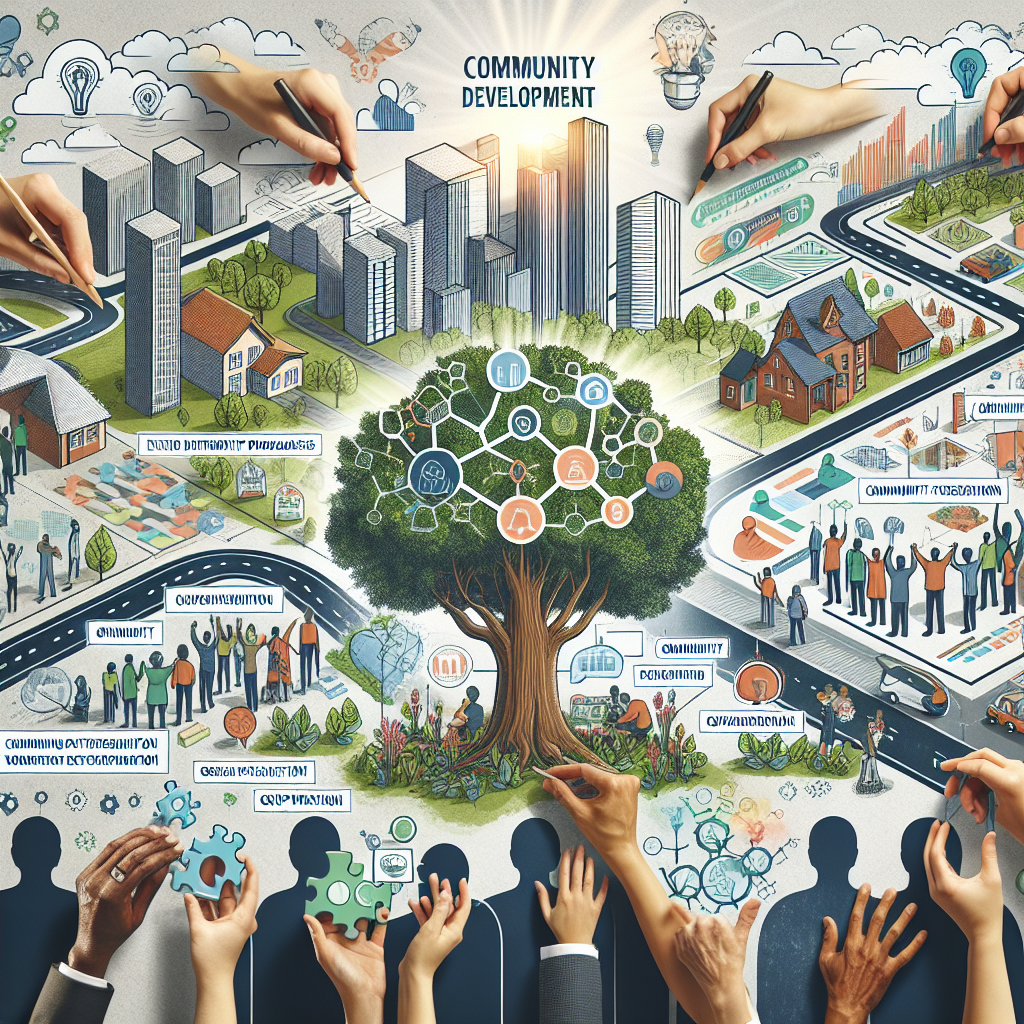
Community development plays an essential role in shaping the fabric of social networks, influencing the way individuals and groups interact within a community. At its core, community development refers to the processes and actions undertaken to improve the quality of life and economic wellbeing of people living in a specific area. In recent years, the concept of social networks has evolved to encompass both traditional and digital interactions, making community development strategies more important than ever. Understanding the impact of community development on social networks can provide valuable insights into how communities can thrive and become more resilient. This topic matters because as the world becomes increasingly interconnected, harnessing the potential of community development can help foster inclusive and supportive environments where social bonds are strong, and collective goals are achieved.
The Role of Community Development in Physical Social Networks
Community development initiatives are pivotal in enhancing physical social networks by providing spaces and opportunities for people to connect and collaborate. These initiatives often focus on building infrastructure that facilitates interaction, such as parks, community centers, and event spaces. A tangible example of this is the transformation of public parks in urban areas. By investing in beautiful and accessible parks complete with recreational facilities, seating areas, and community gardens, cities have successfully fostered environments where community members can casually meet, engage in activities, and form bonds.
Consider New York City’s “High Line,” a formerly abandoned railway transformed into a linear park. The High Line attracts locals and tourists alike, promoting social interactions and serving as a vibrant hub for community events. This type of community development not only enhances the aesthetic of a region but also strengthens social networks by encouraging regular, organic interactions within a shared space.
Digital Social Networks and Community Development
In an era where digital connections are increasingly vital, community development can harness the power of digital social networks to expand and enhance social ties. While physical infrastructure remains important, communities are also investing in technology and digital platforms to encourage virtual interactions. Local governments and organizations are setting up online platforms, forums, and social media groups to keep residents informed, engaged, and connected. These digital networks enable geographically dispersed individuals to share information, coordinate community activities, and offer support.
A successful implementation of this is the “Nextdoor” app, which connects neighbors and offers a space for exchanging information, services, and recommendations. By facilitating communication among neighbors, digital platforms break down barriers and promote a sense of community, even in large and spread-out neighborhoods.
Community Development and Economic Empowerment
Community development is closely linked to economic development, and its strategies often aim to boost economic opportunities within a community. By fostering local business development, providing access to resources, and creating job opportunities, community development efforts can improve residents’ economic wellbeing, thus strengthening social networks. For example, community cooperatives and local markets encourage local production and consumption, which economically empower members and build a sense of community ownership.
Take the case of Mondragon Corporation in Spain, one of the largest cooperative networks in the world, which started as a small community initiative. It has grown into a successful model of how community-focused economic development can lead to sustainable economic empowerment and a strong, interconnected community.
The Influence of Collaborative Community Projects
Collaborative community projects have a profound impact on social networks by encouraging collective action and increasing a sense of belonging among participants. These projects often bring together diverse groups of individuals who contribute their skills and resources to achieve a common goal, fostering trust, cooperation, and camaraderie. Examples include community clean-up efforts, public art initiatives, and neighborhood watch programs.
A noteworthy example is Detroit’s urban farming initiatives, such as the Detroit Black Community Food Security Network. This collaborative project brings together community members to turn vacant lots into urban farms, providing fresh produce while enhancing neighborhood aesthetics. This initiative not only addresses food security but also strengthens community bonds by promoting cooperation and shared ownership.
Overcoming Challenges in Community Development
While community development offers numerous benefits, it also faces challenges, including resource limitations, political barriers, and community resistance. Successfully overcoming these challenges requires creating inclusive and participatory processes where community members have a voice in the development initiatives that affect their lives. Engaging diverse community representatives and fostering transparent communication lines can help address potential conflicts and facilitate smooth implementation.
An effective strategy can be observed in participatory budgeting models, where community members are directly involved in deciding how to allocate a portion of public funds. This approach empowers residents, ensuring their needs and priorities are addressed, and reinforcing trust and cooperation within the community.
Visual Summary: Key Elements of Community Development
| Key Element | Description | Impact on Social Networks |
|---|---|---|
| Physical Infrastructure | Development of spaces like parks and community centers | Encourage face-to-face interactions |
| Digital Platforms | Online forums and apps for local communication | Facilitate digital connections and information sharing |
| Economic Initiatives | Local business support and job creation | Economic empowerment and stronger community ties |
| Collaborative Projects | Community events and cooperative efforts | Promote inclusion and collective action |
| Participatory Processes | Inclusive decision-making models | Builds trust and community engagement |
Conclusion: Bringing Communities Together Through Development
Community development has a transformative impact on social networks, serving as a foundation for building strong, resilient, and interconnected communities. The key takeaway is understanding the multifaceted nature of community development, which encompasses improving physical spaces for interactions, fostering digital networks, boosting economic opportunities, and encouraging collaborative projects. By embracing and investing in comprehensive community development strategies, neighborhoods can enhance their social networks, resulting in a more cohesive and supportive environment.
To benefit from these insights, community leaders, policymakers, and residents should advocate for and actively participate in community development initiatives. Engaging in these processes not only strengthens social ties but also empowers individuals to contribute meaningfully to their communities. Let’s work together to foster growth, innovation, and resilience in our communities by prioritizing development strategies that bring people together.
Next Steps: Consider joining a local community group, participating in neighborhood events, or advocating for community development projects in your area to strengthen the social networks around you.
Frequently Asked Questions
1. What is the relationship between community development and social networks?
Community development and social networks are intricately linked, with each influencing the other in significant ways. Community development refers to the efforts and policies aimed at improving the quality of life in a given community. These initiatives often foster opportunities for individuals to connect, share experiences, and create a supportive social network. Improving public spaces, organizing community events, and implementing policies that address local needs can strengthen community ties by encouraging interaction and collaboration among residents. Social networks, both physical and digital, serve as platforms for communication, support, and resource sharing. As community development initiatives create more supportive environments, social networks may grow denser and more cohesive, enhancing the overall sense of community.
2. How do digital social networks affect community development efforts?
Digital social networks have a profound impact on community development, providing new avenues for communication and engagement that were previously unavailable. Platforms like Facebook, Twitter, and Nextdoor enable community members to easily connect, share information, and mobilize around local issues. These networks can be used to promote community events, disseminate important information quickly, and gather feedback on community initiatives. This enhances the ability of community leaders and members to engage in dialogue and collaborate more effectively, potentially speeding up the implementation and effectiveness of community development projects. Moreover, digital networks can reach a broader audience, including individuals who might not participate in traditional community settings, thereby promoting inclusivity and diversity in community development.
3. What are some challenges that community development faces in the context of social networks?
While social networks offer numerous benefits for community development, they also present several challenges. One key issue is the digital divide, where a lack of access to online tools and resources can exclude certain populations from participating in digital social networks. This can perpetuate inequality and limit the reach and impact of community development efforts. Additionally, the misinformation and negative discourse prevalent on some digital platforms can polarize communities and divert attention from constructive development goals. There’s also the challenge of maintaining online engagement: digital interactions might not always translate into real-world action, hence strong offline connections and activities remain indispensable. Balancing digital engagement with traditional community-building efforts is crucial to overcoming these challenges.
4. In what ways can community development initiatives enhance social networks?
Community development initiatives can greatly enhance social networks through the creation of spaces and opportunities for people to connect and engage with one another. For instance, designing public parks, community centers, and organizing local events can provide venues for face-to-face interactions that strengthen social ties. Education and training programs can empower residents with the skills and knowledge to use digital platforms effectively, increasing online participation and strengthening digital networks. By fostering an inclusive environment that values diverse voices, community development can also support the creation of more robust and meaningful online and offline relationships. In essence, thoughtful community development can lay the foundation for vibrant social networks that empower individuals and foster collective action.
5. Why is it important to consider both traditional and digital social networks in community development?
Considering both traditional and digital social networks is crucial for comprehensive community development for several reasons. Traditional networks, which include face-to-face interactions, informal gatherings, and local community groups, are often the backbone of community support and engagement. They foster trust and personal connections that are essential for collaboration and collective resilience. Meanwhile, digital networks extend the reach of these traditional interactions, providing new ways to maintain connections and share information beyond geographical boundaries. By leveraging both types of networks, community developers can create more inclusive, adaptive, and effective strategies. This dual approach ensures that all community members, regardless of their technological access or preference, can participate fully in community life and development.