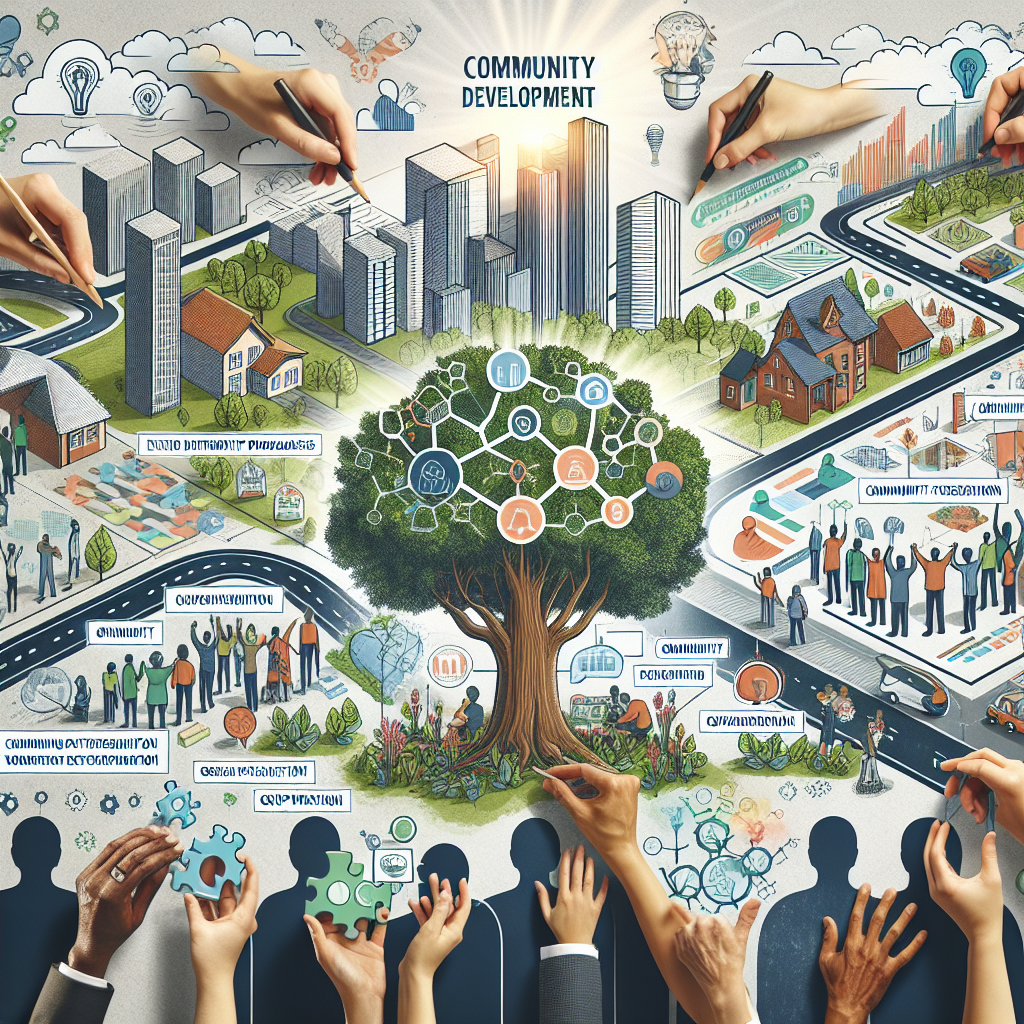
In recent years, the term “community development” has taken on new significance as societies strive for social and economic improvements. This is not just about building infrastructure but fostering a cohesive sense of community spirit and involvement. A core component of successful community development is the concept of social capital. Social capital refers to the networks, norms, and social trust that facilitate coordination and cooperation for mutual benefit. This article delves into the relationship between community development and social capital, exploring how these concepts interlink and drive mutual growth.
Introduction
Community development is a process where community members come together to take collective action and generate solutions to common problems. It involves enhancing the social, economic, and environmental well-being of a community. The concept has gained traction as an effective means of fostering sustainable development, as it focuses on utilizing local resources and talents. Alongside this, social capital plays a crucial role in community development, fostering relationships that lend themselves to collective problem-solving.
In simple terms, social capital is like the glue that holds communities together. It encompasses the relationships, networks, and norms that facilitate cooperative action among community members. Unlike financial or physical capital, social capital’s value is often intangible, found in the trust, mutual understanding, and shared values within a community. The synergy between community development and social capital can drive significant positive change, enabling communities to become more resilient and self-reliant.
But what does this interrelation look like on the ground? To understand this, we need to explore both concepts in detail and examine real-life examples of successful community initiatives. Through these examples, we can appreciate how social capital strengthens community development efforts and vice versa.
Understanding Community Development
Community development is more than just a strategy; it’s a philosophy rooted in the belief that local involvement and leadership are key to sustainable development. It typically involves a range of activities, from improving infrastructure to empowering local organizations and individuals. The goal is to create empowered, self-reliant communities capable of overcoming their challenges.
Implementing community development begins with understanding and identifying the community’s unique needs and resources. Various methods, including surveys, focus groups, and community meetings, help gather this information. Once these needs are understood, community members can form action plans that leverage their strengths and address their weaknesses.
One essential aspect of community development is participation. Effective community development is inclusive, ensuring that the voices of marginalized and disenfranchised community members are heard. By involving all sections of the community, the solutions become more holistic and applicable. Strategies such as participatory planning, where community members actively participate in the decision-making process, are common in successful initiatives.
The synergy between participation and planning forms the backbone of community development efforts. As community members engage in these processes, they create new relationships and strengthen existing ones, thus contributing to the growth of social capital.
Defining and Exploring Social Capital
Social capital refers to the networks of relationships among people who live and work in a particular society, enabling that society to function effectively. It is built on the principles of trust, mutual benefit, and collective action. There are three main types of social capital: bonding, bridging, and linking.
Bonding Social Capital: This involves close-knit relationships within a group or community, such as family members and close friends. It strengthens the internal bonds within a community but can sometimes lead to exclusivity.
Bridging Social Capital: This type expands the connections beyond the close-knit group, linking different communities and social groups. It fosters broader connections and inclusivity.
Linking Social Capital: This involves networks and connections with people in positions of power and authority, helping communities access resources and support from higher-level organizations and institutions.
Social capital is not static; it evolves and can be cultivated through various community activities and initiatives. For instance, community events, local clubs, volunteer groups, and even informal neighborhood interactions can all contribute to building social capital.
The benefits of robust social capital are myriad. Communities with high social capital tend to exhibit higher levels of trust and cooperation, leading to more effective problem-solving and innovation. Conversely, low social capital can result in social fragmentation and reduced community resilience, making it harder to address common issues.

The Interplay between Community Development and Social Capital
The relationship between community development and social capital is symbiotic. Community development efforts often aim to build and utilize social capital, while robust social capital can significantly enhance community development initiatives’ effectiveness and impact.
Consider a community striving to create a local park. This park’s development will likely involve various stakeholders, from local government officials to community members and possibly external funding bodies. Existing social capital can facilitate cooperation, with established networks and trust making it easier to coordinate efforts and mobilize resources. Conversely, the process of developing the park — involving community meetings, collaborative decision-making, and volunteer activities — will likely build new social capital by fostering relationships and collective action.
This interplay is evident in numerous case studies worldwide. For instance, the revitalization of Detroit’s urban spaces involved extensive community participation and leveraged existing social networks to attract support and resources. Similarly, rural development projects in various countries have shown that when communities have strong social capital, they are better equipped to implement and sustain development initiatives, from agricultural improvements to educational programs.
It becomes clear that cultivating social capital should be a strategic priority in community development. By nurturing trust, networks, and a spirit of mutual support, communities lay the foundation for effective, sustainable development.
Strategies for Building Social Capital through Community Development
There are several practical strategies communities can use to build social capital as part of their development initiatives. These strategies often involve fostering inclusivity, encouraging participation, and creating opportunities for engagement and collaboration.
1. Promote Community Engagement: Encouraging participation in community activities, from local government meetings to volunteer projects, helps build relationships and trust. Communities can achieve this through accessible communication channels, inclusive event planning, and active outreach efforts.
2. Foster Inclusivity and Diversity: Ensuring that all community members, regardless of background or status, have the opportunity to participate in development activities reinforces trust and mutual respect. This can involve targeted outreach to marginalized groups and creating spaces where diverse voices can be heard and valued.
3. Facilitate Collaborative Projects: Initiatives that require collective effort, such as community gardens, neighborhood clean-ups, or local festivals, naturally build social capital. These projects provide a platform for people to work together towards a common goal, fostering a sense of belonging and mutual support.
4. Enhance Communication Channels: Effective communication is crucial for building social capital. Communities can use various tools, from social media groups to local newsletters, to keep members informed and engaged. Transparent and open communication helps build trust and ensures that everyone feels included in the community’s development efforts.
5. Invest in Leadership Development: Developing local leadership is essential for sustaining social capital. Training programs and mentorship opportunities can empower community members to take on leadership roles, fostering a culture of mutual support and collective action.
Case Studies: Successful Community Development Initiatives
Examining successful community development initiatives provides valuable insights into the practical application of these strategies. Here are two examples where the interplay between community development and social capital is evident:
1. The Dudley Street Neighborhood Initiative (DSNI): Located in Boston, Massachusetts, DSNI is a prime example of community-driven development. Facing significant urban decay and socio-economic challenges, residents banded together to reclaim and transform their neighborhood. Through participatory planning and collective action, they built strong social capital, fostering a cooperative spirit that led to significant improvements in housing, education, and green spaces. The initiative’s success underscores the power of social capital in driving sustainable community development.
2. The Green Light New Orleans Project: This initiative focuses on promoting environmental sustainability while building social capital. Volunteers work with community members to install energy-efficient light bulbs, reducing energy costs and environmental impact. The project successfully connects diverse groups within the community, from local residents to environmental activists, creating a network of mutual support and cooperation. This collaborative effort showcases how community development projects can build social capital while addressing broader societal challenges.
Challenges and Considerations in Community Development and Social Capital
While the potential benefits are significant, community development and social capital building are not without challenges. Recognizing and addressing these challenges is essential for successful initiatives.
1. Overcoming Social Fragmentation: In communities with low social capital or significant divisions, fostering cooperation can be challenging. Strategies must be tailored to address these divisions, building bridges and creating inclusive spaces for dialogue and collaboration.
2. Ensuring Sustained Engagement: Maintaining long-term engagement can be difficult, especially in communities with high mobility or where people have competing commitments. Building sustained engagement requires ongoing communication, opportunities for involvement, and demonstrating tangible outcomes.
3. Balancing Power Dynamics: Power imbalances within communities can hinder inclusive participation and trust-building. Effective community development must actively work to balance these dynamics, ensuring that marginalized voices are heard and valued.
4. Measuring Impact: The intangible nature of social capital can make it challenging to measure the impact of community development initiatives. Developing clear metrics and indicators for social capital, alongside traditional development indicators, can help assess progress and guide strategy adjustments.
Conclusion
Community development and social capital are intrinsically linked, each reinforcing and enhancing the other. Community development initiatives offer a practical framework for addressing local challenges and fostering sustainable development. When coupled with a concerted effort to build social capital, these initiatives become significantly more effective and impactful.
The insights and strategies discussed in this article underscore the importance of fostering relationships, encouraging participation, and creating inclusive spaces for community engagement. Whether through collaborative projects, participatory planning, or leadership development, building social capital should be an integral part of any community development strategy.
As communities worldwide continue to navigate complex social and economic challenges, the synergy between community development and social capital offers a path towards resilience and self-reliance. By nurturing trust, networks, and a spirit of mutual support, we can create empowered communities capable of driving their own development and achieving sustainable success.
Frequently Asked Questions
1. What is Community Development, and why is it significant today?
Community development is all about improving the lives and well-being of people in a community, often by providing better infrastructure, like roads, schools, and hospitals, as well as by enhancing social services. Its significance has increased in recent years because communities are realizing that physical development alone isn’t enough. There’s a need for a more holistic approach that accounts for social bonds and collective identity among community members. When people feel connected to their neighbors and work together, there’s an improvement in economic outcomes, overall quality of life, safety, and resilience against adversities, like economic downturns or natural disasters.
2. How do Community Development and Social Capital work together?
Community development and social capital are like two sides of the same coin. For community development to be truly effective, it needs the backing of strong social capital. Social capital refers to the networks, relationships, and trust that exist among people. Think of it as the glue that holds a community together. When people trust each other and share a common purpose, they’re more likely to get involved in projects, support one another, and work collaboratively towards community goals. This synergy means that as infrastructure is built or improved, there’s also a parallel development of the social fabric that makes those physical spaces thrive and foster inclusion and community spirit.
3. What are some examples of how Social Capital benefits community projects?
Social capital can manifest in various forms, such as volunteer groups, local clubs, associations, and networks. For instance, when a community comes together to create a community garden, it’s not just the physical space that benefits but also the relationships among community members. They share knowledge, resources, and provide mutual support, which enforces community ties and builds trust. Another example could be neighborhood watch schemes or community sports clubs where people come together for a common interest. In all these scenarios, the strong social ties facilitate better communication, leading to more effective and sustainable project outcomes. People invest in their community’s future because they feel a part of it.
4. How can communities build or strengthen their Social Capital?
Building and strengthening social capital is an ongoing process that involves enhancing the connections among community members. To do this, communities can organize events or activities that bring people together, such as local festivals, clean-up days, or community meetings. Encouraging open dialogue and active listening also helps, as it builds trust and understanding among community members. Additionally, fostering inclusivity and ensuring everyone feels they have a voice in community matters is crucial. Supporting local leadership and encouraging people to take on roles in the community also plays a vital part in developing social capital. Thus, it’s about creating opportunities for people to form connections and contribute meaningfully to the community.
5. What challenges might communities face when integrating Community Development with Social Capital?
While the integration of community development and social capital holds immense potential, it is not without its challenges. One significant issue is ensuring inclusivity and avoiding the marginalization of minority groups within communities. Sometimes, the louder voices overshadow those of less represented community members, which can lead to decision-making that doesn’t address everyone’s needs. Furthermore, pre-existing social tension or distrust within a community can hinder the building of social capital. Addressing these challenges takes time and requires concerted effort. It may involve conflict resolution, fostering a culture of openness and respect, and developing communication channels that ensure all voices are heard and considered within community development projects. Ultimately, overcoming these challenges is essential for creating a community where both development and social capital can thrive.