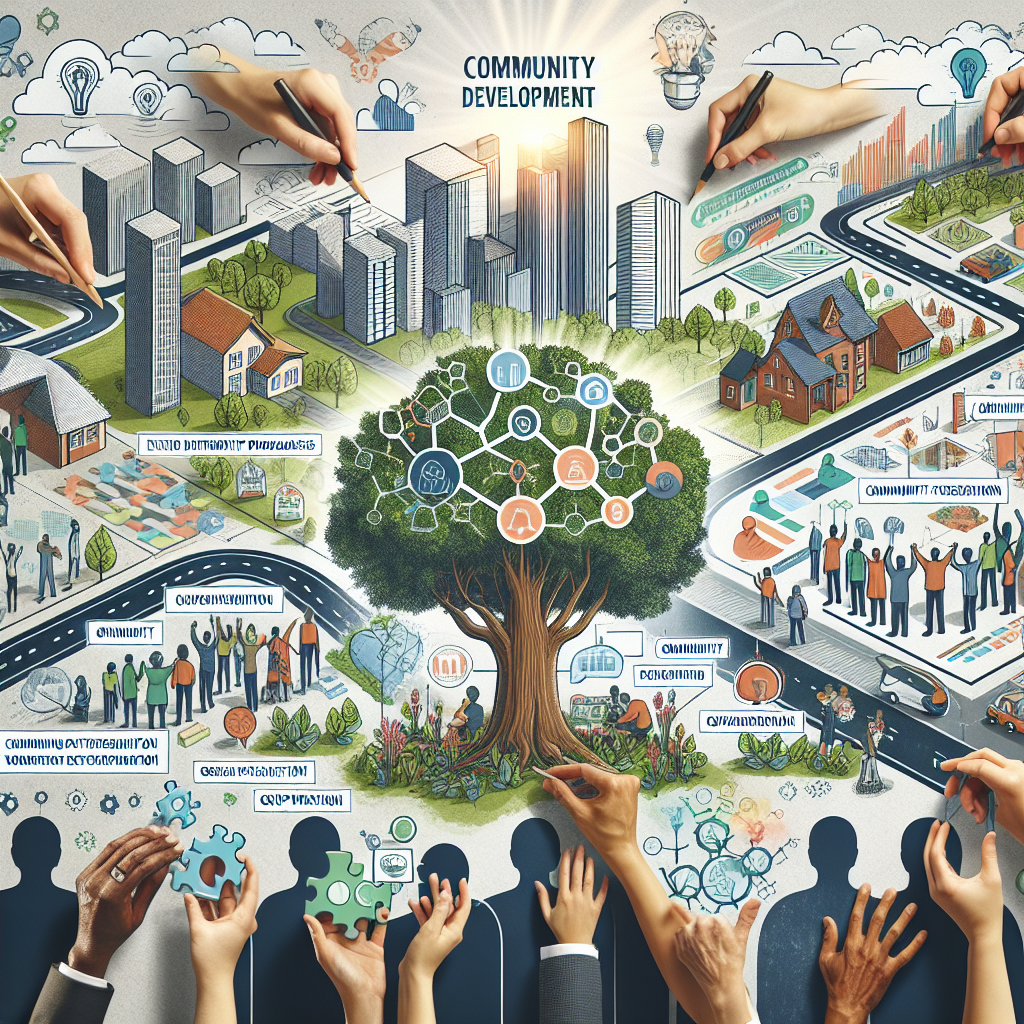
Community development and climate resilience are two critically interlinked fields that can no longer be viewed in isolation. As environmental challenges, such as global warming, natural disasters, and erratic weather patterns, become more severe, the role of community development in fostering climate resilience has never been more significant. Effective community development involves not only improving the social, economic, and environmental conditions of communities but also equipping them with the tools to withstand and adapt to climate change. By integrating climate resilience strategies into community planning and development, we can create stronger, more adaptive communities that can thrive amid environmental challenges.
Climate resilience refers to the capacity of communities and ecosystems to absorb stress and maintain functionality in the face of external pressures. It encompasses various strategies and practices designed to reduce vulnerability and enhance adaptive capacity. Community development, on the other hand, involves the collective efforts of individuals and organizations to build stronger, more sustainable communities through social, economic, and environmental improvements. When combined, these two concepts can significantly contribute to sustainable development, promoting long-term well-being and stability for communities worldwide.
In this article, we will explore the intersection of community development and climate resilience, highlighting how these two fields come together to create adaptive, sustainable communities. We will discuss the importance of community engagement, the role of policy and planning, and the need for sustainable infrastructure. Additionally, we will examine case studies of successful community-led initiatives that have enhanced climate resilience, providing valuable insights and practical lessons for other communities seeking to develop similar projects.
Engagement and Participation in Community Development
Engagement and participation are the cornerstones of effective community development. When it comes to building climate resilience, involving community members in the planning and decision-making processes is crucial. By actively engaging residents, local leaders, and organizations, communities can ensure that initiatives are tailored to their specific needs, preferences, and vulnerabilities. Moreover, community participation fosters a sense of ownership and empowerment, leading to more sustainable and successful outcomes.
One effective approach to community engagement is the use of participatory mapping, where community members collaborate to identify and document local climate risks, resources, and assets. This process not only raises awareness of potential hazards but also helps prioritize actions and allocate resources more efficiently. Another valuable method is the organization of workshops, focus groups, and public meetings, providing platforms for dialogue and knowledge exchange between community members, experts, and policymakers.
In addition to these methods, leveraging local knowledge and expertise can significantly enhance the effectiveness of community development projects. Communities possess valuable insights into their unique social, economic, and environmental contexts, which can inform the design and implementation of climate resilience strategies. By drawing on this wealth of local knowledge and fostering strong partnerships between residents, governments, and organizations, communities can develop more comprehensive and contextually appropriate solutions to climate challenges.
The Role of Policy and Planning in Fostering Climate Resilience
Policy and planning play a critical role in promoting climate resilience through community development. Effective policies and plans create a framework that supports adaptive measures, promotes sustainable practices, and ensures that resources are allocated efficiently to address climate risks. Integrating climate resilience considerations into local, regional, and national planning processes is essential for building long-term resilience and adaptive capacity.
One key aspect of climate-resilient policy and planning is the incorporation of climate risk assessments into development strategies. By identifying and prioritizing climate-related risks, policymakers can design and implement targeted interventions to mitigate these risks and enhance community resilience. Additionally, policies that promote the use of resilient infrastructure, adaptive land-use planning, and sustainable resource management practices can significantly contribute to community resilience.
Furthermore, collaboration between different levels of government, as well as between the public and private sectors, is vital for effective climate resilience planning. By fostering partnerships and coordinating efforts, stakeholders can pool resources, share knowledge, and develop synergistic strategies to address climate challenges comprehensively. This collaborative approach ensures that policies and plans are informed by diverse perspectives and expertise, ultimately leading to more robust and successful outcomes.

Sustainable Infrastructure for Climate-Resilient Communities
Sustainable infrastructure is a critical component of climate-resilient communities. Infrastructure—such as transportation systems, water supply and sanitation systems, and energy networks—plays an essential role in the functioning of societies, and it is particularly vulnerable to the impacts of climate change. Building and maintaining resilient infrastructure systems can help communities withstand climatic shocks and stresses, ensuring the continued delivery of essential services even under adverse conditions.
One approach to developing sustainable infrastructure is to integrate climate resilience considerations into the design, construction, and maintenance of infrastructure projects. This can involve the use of resilient materials, the incorporation of natural and nature-based solutions, and the adoption of innovative technologies that enhance the durability and adaptability of infrastructure systems. Additionally, regular monitoring and maintenance of infrastructure are crucial to identifying and addressing vulnerabilities proactively.
Green infrastructure, which leverages natural systems to provide essential services, is another effective strategy for promoting climate resilience. Examples of green infrastructure include wetlands for flood mitigation, urban forests for temperature regulation, and permeable surfaces for stormwater management. By integrating green infrastructure with traditional engineering solutions, communities can create multifunctional, adaptive systems that contribute to both climate resilience and environmental sustainability.
Case Studies: Successful Community-Led Climate Resilience Initiatives
Examining case studies of successful community-led initiatives can provide valuable insights and practical lessons for other communities seeking to enhance their climate resilience. These initiatives demonstrate the power of local engagement, collaboration, and innovation in developing effective climate resilience strategies.
One notable example is the city of New Orleans, Louisiana, which has made significant strides in building climate resilience in the wake of Hurricane Katrina. The city’s climate action plan emphasizes the importance of community engagement, sustainable infrastructure, and equitable development. Initiatives such as the Gentilly Resilience District, which integrates blue-green infrastructure, community spaces, and stormwater management strategies, showcase how local efforts can create adaptive, inclusive communities.
Another inspiring example can be found in the Gullah/Geechee Sea Island Coalition, which has focused on preserving cultural heritage while enhancing climate resilience. By engaging residents in participatory planning and leveraging traditional knowledge, the Coalition has developed targeted strategies to address climate risks, such as sea-level rise and coastal erosion. Their approach highlights the importance of culturally informed and community-driven resilience initiatives.
Challenges and Opportunities in Community Development for Climate Resilience
While there are numerous opportunities for promoting climate resilience through community development, several challenges must be addressed to achieve successful outcomes. One significant challenge is securing adequate funding and resources to support resilience initiatives. Funding limitations can hinder the implementation and scaling of climate resilience projects, making it essential to explore diverse funding sources and innovative financing mechanisms.
Another challenge is the need for capacity building and education to equip community members, local leaders, and organizations with the knowledge and skills necessary for effective resilience planning and implementation. Training programs, workshops, and knowledge-sharing platforms can help build this capacity, fostering informed and proactive communities capable of addressing climate risks.
Despite these challenges, several opportunities exist to advance community development for climate resilience. Emerging technologies, such as remote sensing, data analytics, and climate modeling, offer valuable tools for assessing risks, monitoring progress, and informing decision-making. Additionally, the growing recognition of the importance of climate resilience has led to increased support from governments, international organizations, and the private sector, creating a favorable environment for the development and scaling of resilience initiatives.
Conclusion:
Community development and climate resilience are inherently interconnected, each playing a vital role in promoting sustainable and adaptive communities. By integrating climate resilience considerations into community development efforts, we can create stronger, more responsive societies capable of withstanding and thriving amid environmental challenges. Effective community engagement, supportive policy and planning frameworks, and sustainable infrastructure are essential components of this integrated approach.
The case studies and examples discussed in this article illustrate the power of local engagement and innovative strategies in building climate-resilient communities. Although challenges such as funding constraints and capacity building remain, the opportunities for advancing community development for climate resilience are substantial. Through collaboration, informed decision-making, and the adoption of innovative practices, communities worldwide can enhance their resilience to climate change, ultimately contributing to global sustainability and well-being.
As climate risks continue to escalate, the need for climate-resilient community development has never been more urgent. By fostering adaptive, inclusive, and sustainable communities, we can ensure a more resilient and prosperous future for generations to come.