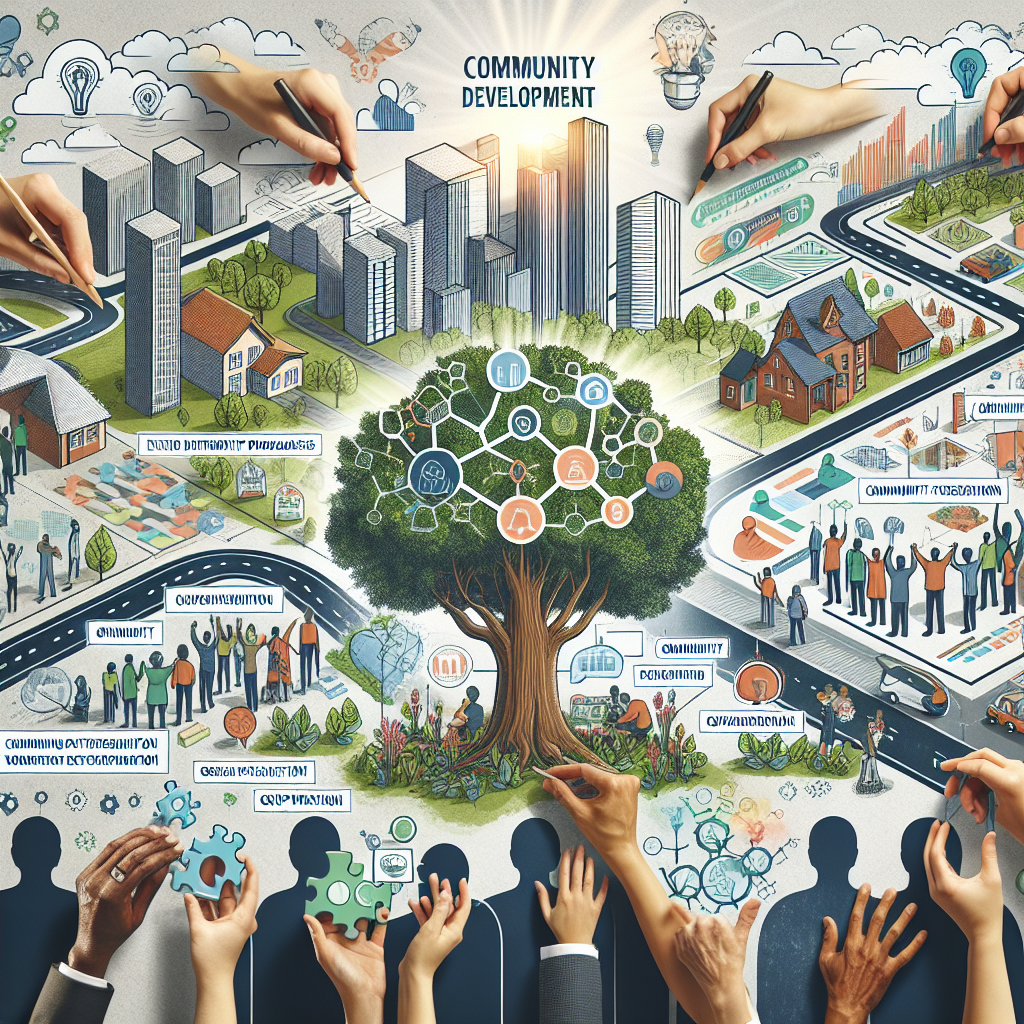
Community development is a multifaceted discipline that aims to enhance the living conditions of people within a community. At its core, it involves the application of various strategies to improve the quality of life, economic opportunities, social cohesion, and overall well-being of community members. The concept of community development is not just limited to infrastructure projects, such as building roads or parks; it also extends to social services, such as healthcare, education, and welfare programs.
The integration of social services with community development initiatives is crucial for sustainable growth. Effective integration ensures that the needs of the community are not just met in a piecemeal fashion but are addressed in a comprehensive and holistic manner. This involves coordination between various stakeholders, including government agencies, non-profit organizations, and private sector entities.
One of the fundamental principles of community development is participatory planning. This approach encourages the involvement of community members in every stage of the development process, from identifying needs and setting priorities to implementing projects and monitoring outcomes. Participatory planning fosters a sense of ownership and empowers residents to take an active role in shaping their community.
In this article, we will explore key aspects of integrating social services within community development efforts. We will discuss the importance of holistic planning, the role of partnerships, funding mechanisms, and the measurement of outcomes. By the end of this piece, you will have a deeper understanding of how social services integration can lead to more resilient and thriving communities.
Key Aspects of Holistic Planning
Holistic planning is the cornerstone of effective community development. It requires a comprehensive approach that considers various elements of a community’s needs and integrates them into a unified strategy. To achieve this, planners must gather data on the current state of the community, including demographic information, economic conditions, and existing social services. This data provides a baseline that can be used to identify gaps and prioritize needs.
Once the baseline is established, planners can develop a multi-faceted plan that addresses different areas, such as housing, healthcare, education, and employment. The key to successful holistic planning is to ensure that these different areas are not treated in isolation but are interconnected. For example, improving educational opportunities can have a positive impact on employment prospects, which in turn can enhance economic stability and reduce poverty rates.
Holistic planning also involves setting clear, measurable goals and identifying the resources needed to achieve them. This includes financial resources, human capital, and organizational capacity. Planners must also establish timelines and milestones to track progress and make adjustments as needed.
Community engagement is another critical element of holistic planning. By involving residents in the planning process, planners can gain valuable insights into the unique needs and priorities of the community. This engagement can take various forms, such as town hall meetings, focus groups, and surveys. The goal is to create a collaborative environment where community members feel heard and their input is valued.
The Role of Partnerships
Partnerships are vital for the success of any community development initiative. No single organization or entity can address all the needs of a community on its own. By forming partnerships, different stakeholders can pool their resources, expertise, and influence to achieve common goals. These partnerships can include government agencies, non-profit organizations, private sector companies, and community groups.
Government agencies often play a central role in community development efforts. They can provide funding, regulatory support, and technical assistance. Non-profit organizations bring valuable expertise in areas such as social services, advocacy, and community organizing. Private sector companies can contribute financial resources, professional skills, and access to markets. Community groups offer local knowledge and a deep understanding of the community’s needs and dynamics.
Effective partnerships are built on mutual trust, shared goals, and clear communication. It is essential to establish formal agreements that outline the roles and responsibilities of each partner, as well as mechanisms for coordination and decision-making. Regular meetings and progress updates can help ensure that all partners are aligned and working towards the same objectives.
One of the key benefits of partnerships is the ability to leverage diverse expertise and perspectives. For example, a healthcare provider can offer insights into the health needs of the community, while an educational institution can contribute knowledge on effective learning strategies. By combining these different perspectives, partnerships can create more comprehensive and effective solutions.
Funding Mechanisms for Integrated Community Development
Securing adequate funding is a common challenge in community development and social services integration. To address this challenge, it is essential to explore various funding mechanisms and diversify revenue streams. Traditional funding sources include government grants, philanthropic donations, and private investments. However, innovative funding models are increasingly gaining traction in the field.
One such model is Social Impact Bonds (SIBs), which are performance-based contracts where private investors provide upfront capital for social programs. The government repays the investors with interest if the program achieves specified outcomes. This model shifts the financial risk from the government to private investors and incentivizes the achievement of measurable results.
Another innovative approach is community land trusts (CLTs), which are non-profit organizations that acquire and manage land to ensure long-term affordability of housing and other community facilities. CLTs can leverage public and private funding sources to purchase land and develop projects that benefit the community.
Collaborative funding is also a valuable strategy. By pooling resources from multiple stakeholders, community development initiatives can access larger amounts of capital and share the financial burden. Collaborative funding can involve joint grant applications, shared investment funds, and co-financing agreements.
To effectively manage funding, it is important to establish transparent budgeting processes and financial controls. This includes creating detailed budgets, monitoring expenditures, and conducting regular audits. Transparency in financial management helps build trust among stakeholders and ensures that funds are used efficiently and effectively.
Measuring Outcomes and Impact
Measuring outcomes and impact is a critical component of community development and social services integration. It allows stakeholders to assess the effectiveness of their efforts, identify areas for improvement, and demonstrate the value of their work to funders and the community. Effective measurement involves setting clear, quantifiable goals and using appropriate metrics to track progress.
One common framework for measuring outcomes is the Theory of Change, which outlines the expected pathways of change and the links between activities, outputs, outcomes, and impact. By mapping out these pathways, stakeholders can identify key indicators to measure at each stage of the process.
Data collection is a crucial part of the measurement process. This can involve a combination of quantitative methods (such as surveys and administrative data) and qualitative methods (such as interviews and focus groups). The choice of data collection methods should be guided by the specific goals and context of the initiative.
Regular monitoring and evaluation are essential for ensuring that the initiative stays on track and achieves its goals. This involves comparing actual performance against targets, identifying any deviations, and making necessary adjustments. Monitoring and evaluation should be integrated into the overall project management cycle and involve all relevant stakeholders.
Sharing the results of outcome measurements is important for accountability and transparency. This can be done through reports, presentations, and community meetings. By communicating outcomes and impact, stakeholders can build trust, secure ongoing support, and inspire others to take action.
Case Studies of Successful Integration
Examining case studies of successful integration of social services within community development can provide valuable insights and inspiration for other initiatives. One notable example is the Harlem Children’s Zone (HCZ) in New York City, which combines education, healthcare, and social services to create a comprehensive support system for children and their families.
The HCZ model is based on the idea that providing a range of interconnected services can create a positive environment that supports child development and family stability. The initiative includes charter schools, after-school programs, health clinics, and housing assistance, among other services. By addressing multiple aspects of well-being, the HCZ has achieved significant improvements in academic performance, health outcomes, and economic stability for participating families.
Another successful example is the Dudley Street Neighborhood Initiative (DSNI) in Boston. The DSNI focuses on community empowerment and revitalization through a combination of housing development, youth programs, and environmental sustainability efforts. A key element of the DSNI’s success is its emphasis on resident leadership and participatory planning.
Through its community land trust, the DSNI has been able to preserve affordable housing and prevent displacement amidst gentrification pressures. The initiative also emphasizes environmental justice, with projects such as urban agriculture, green infrastructure, and energy efficiency improvements.
These case studies highlight the importance of a comprehensive, integrated approach to community development. By addressing multiple needs and involving community members in the process, these initiatives have created sustainable, long-lasting positive change.
Conclusion
Integrating social services into community development is vital for creating sustainable, resilient, and thriving communities. Holistic planning, partnerships, diverse funding mechanisms, and effective measurement are key components of successful integration. Through participatory planning and engagement, community members can take an active role in shaping their future and ensuring that their needs are met.
By leveraging diverse expertise and resources through partnerships, stakeholders can create innovative and effective solutions. Funding mechanisms such as Social Impact Bonds and community land trusts provide new opportunities for securing the necessary capital. Transparent financial management and collaborative funding can further enhance the sustainability of initiatives.
Measuring outcomes and impact is essential for demonstrating the value of integration efforts and ensuring continuous improvement. By setting clear goals, using appropriate metrics, and sharing results, stakeholders can build trust and secure ongoing support.
Case studies of successful initiatives such as the Harlem Children’s Zone and the Dudley Street Neighborhood Initiative provide valuable examples of how integrated approaches can create positive change. These examples demonstrate the power of a comprehensive, community-driven approach to development.
In conclusion, the integration of social services within community development is a powerful strategy for enhancing the well-being of communities. By adopting a holistic, participatory, and collaborative approach, stakeholders can create sustainable and resilient communities that support the needs and aspirations of all their members.
Frequently Asked Questions
1. What is Community Development and why is it important?
Community development involves a comprehensive approach to improving the societal, economic, and physical conditions of a community. It’s a discipline that brings various strategies to the fore to elevate the quality of life for all community members. Why is it vital? Well, it’s about creating sustainable environments in which people can thrive. This means focusing not only on infrastructure, such as roads, parks, and public spaces, but also on social services like education, healthcare, and welfare initiatives. This integration strives to address issues holistically, meaning that when a community develops, it considers economic opportunities, social cohesion, and the overall well-being of its members. Essentially, community development is about empowerment, giving people the tools they need to better their lives and contribute meaningfully to the world around them.
2. How does integrating social services into community development projects work?
Integrating social services into community development involves a strategic alignment where projects don’t just aim to build physical infrastructure but also support human development. Basically, instead of just constructing a park, the project might include programs for youth sports, gardening clubs, or cultural events that foster community interaction. In terms of social services, it might mean setting up community health clinics within development projects, ensuring access to quality education through school partnerships, or offering workshops for financial literacy and job readiness. By weaving these services into the fabric of community development efforts, you create a more resilient society with the capacity to not just survive, but thrive. The integration ensures that developments truly serve their communities by meeting diverse needs and bridging gaps that often exacerbate social issues.
3. What are the main challenges faced in community development and social services integration?
There are a multitude of challenges that can arise in the integration of social services with community development. One of the biggest hurdles is securing funding. Often, financial resources are limited, and it can be a struggle to allocate these funds efficiently to encompass both physical infrastructure and social initiatives. Furthermore, coordinating among diverse stakeholders—which may include government agencies, nonprofits, and community groups—can also be complex. Each of these players may have different priorities and methods, and finding common ground takes time and negotiation. Additionally, there’s often resistance to change, particularly when new programs alter the status quo. Moreover, measuring the impact of community development projects, particularly those with an integrated service component, can be challenging. Without tangible metrics, it’s difficult to demonstrate the effectiveness and sustainability of such initiatives. Lastly, cultural and demographic differences can make it difficult to implement one-size-fits-all solutions, demanding tailored strategies that consider local nuances.
4. Can you give examples of successful community development projects with integrated social services?
There are numerous success stories worldwide where community development and social services integration has led to prosperous outcomes. One example is the Harlem Children’s Zone in New York City. This initiative expanded beyond traditional educational confines, providing comprehensive support services including healthcare, afterschool programs, and family counseling—all with the goal of fostering a supportive community environment. Another example is the Urban Regeneration Project in Medellín, Colombia, which turned around crime-ridden neighborhoods by investing in education, transportation, libraries, and public parks while partnering with local agencies to provide social services. Melbourne’s Community Hub Model also stands out, where development of community centers includes services like libraries, healthcare services, and recreational resources, all under one roof. These hubs aim at making essential services more accessible, promoting community engagement, and fostering a sense of belonging. These examples illustrate the powerful potential of integrated approaches to make substantive change in communities.
5. How can community members get involved in community development and the integration of social services?
Community members play a crucial role in the success of community development projects and the integration of social services. One way they can get involved is through direct participation in local planning meetings and community forums where they can voice their concerns and offer input on potential projects. Volunteering is another impactful way to be involved—whether it’s helping at local events, participating in social service programs, or contributing skills to development projects. Community members can also form or join local advocacy groups that work towards community improvement. These groups often partner with larger organizations to push for changes or improvements. Moreover, staying informed about ongoing projects is important, as awareness allows community members to support initiatives through petitions, workshops, or by publicly advocating for necessary changes. Lastly, by supporting local businesses and initiatives, community members can help drive economic development, demonstrating the positive effects of integrated approaches to community development.