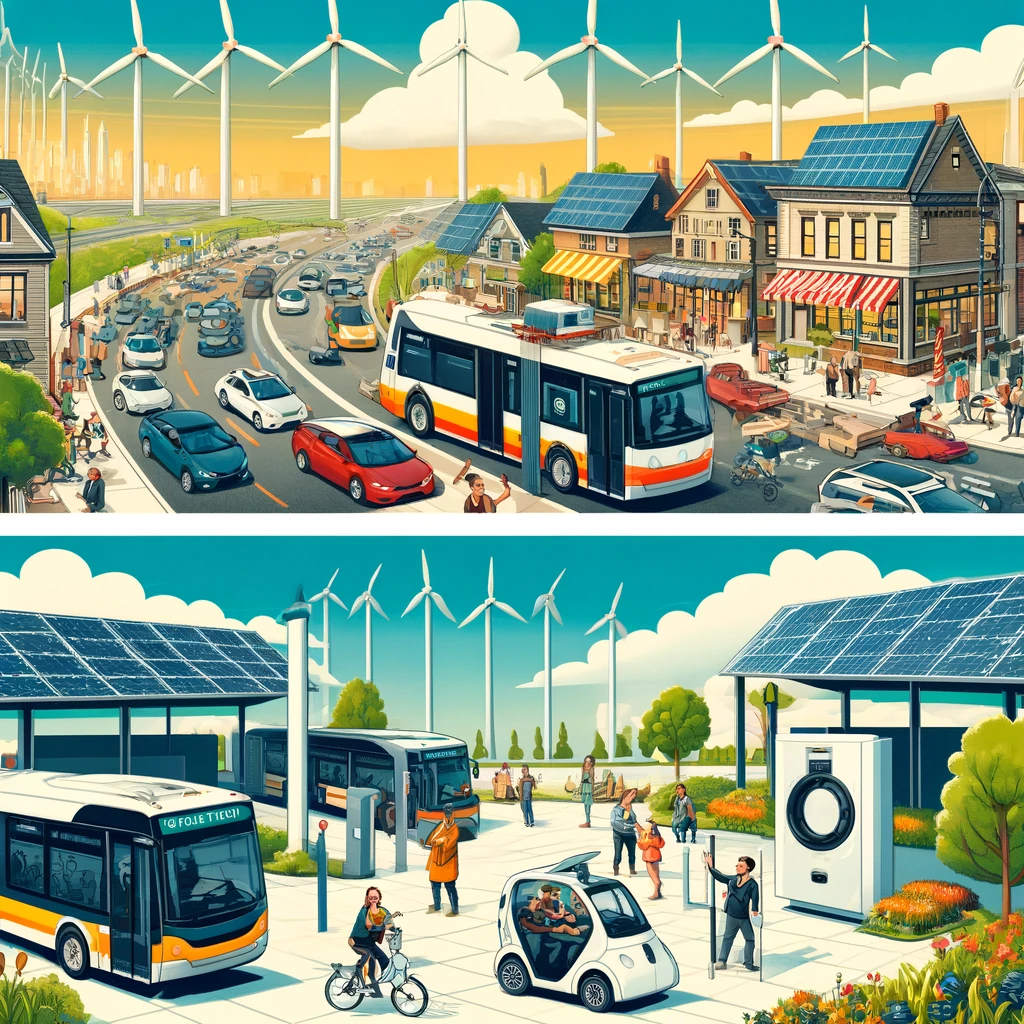
Building decarbonization has moved from a narrow facilities conversation to a core neighborhood planning issue because the emissions tied to homes, offices, schools, and shops are shaped by district infrastructure, land use, housing policy, and local investment decisions. In practice, decarbonization means reducing and ultimately eliminating greenhouse gas emissions from building operations and, increasingly, from construction materials. That includes cutting energy demand through better envelopes, replacing fossil-fuel equipment with efficient electric systems, cleaning the power supply, and coordinating upgrades so residents and businesses can actually afford them. I have seen projects stall when teams treated carbon as a mechanical-room problem; they advanced when cities looked at the block, not just the boiler. Neighborhood planning matters because buildings do not operate in isolation. They share electric feeders, gas networks, transit access, public health burdens, climate risks, and the benefits or harms of public policy. As cities set emissions targets, the neighborhood has become the scale where technical feasibility, equity, and political reality meet.
Why the neighborhood scale changes the decarbonization equation
The main reason building decarbonization now sits inside neighborhood planning is simple: the cost and impact of upgrades depend heavily on surrounding conditions. A heat pump retrofit in a detached house on a strong electric feeder is a different proposition from electrifying a row of aging multifamily buildings at the edge of grid capacity. The same is true for district energy opportunities, rooftop solar potential, and resilience investments such as cooling centers or microgrids. Neighborhood planning gives local governments a way to map building typologies, utility constraints, ownership patterns, and social vulnerability before setting requirements or incentives.
That planning lens also reveals clustering effects. If a city sequences retrofits block by block, contractors can standardize scopes, reduce mobilization costs, and train local workers on repeatable measures. Utilities can align transformer upgrades with known electrification timelines instead of responding building by building. Community organizations can target outreach to landlords and tenants who face similar barriers. I have watched this coordination cut months from procurement schedules because agencies were no longer solving the same problem one address at a time. Decarbonization becomes more bankable when demand is aggregated and infrastructure planning is shared.
Another shift is regulatory. Building performance standards, benchmarking ordinances, and emissions caps are no longer just compliance tools for individual owners. They are shaping neighborhood investment patterns. Areas with older building stock, lower incomes, and weaker access to capital can fall behind if planning ignores financing and anti-displacement measures. Conversely, neighborhoods with clear retrofit road maps and utility coordination attract private capital faster. That is why decarbonization cannot be separated from planning for affordability, economic development, and infrastructure timing.
Buildings, infrastructure, and land use are now inseparable
For decades, many cities planned buildings, energy systems, and transportation in separate silos. Decarbonization has exposed how inefficient that approach is. A neighborhood with compact mixed use, frequent transit, and buildings that can share thermal loads has a fundamentally different carbon profile from one dominated by long car trips and isolated structures. Land use decisions influence building energy demand through density, shading, orientation, and the feasibility of shared systems. Infrastructure decisions determine whether electric heating, thermal networks, battery storage, and demand response can scale without service disruptions.
Consider thermal energy networks, sometimes called ambient loop or district geothermal systems. These systems can connect multiple buildings so heat rejected by one use supports another. They work best where planning agencies can coordinate streets, rights-of-way, redevelopment cycles, and utility regulation at a neighborhood scale. Likewise, deep energy retrofits in public housing often depend on stormwater upgrades, tree canopy expansion, and street redesign because heat risk and flood risk affect building performance and resident safety. When planners integrate these systems, decarbonization outcomes improve and capital spending serves multiple goals.
Electric load growth makes the connection even clearer. Widespread heat pump adoption can raise winter peak demand in cold climates. If neighborhood plans identify where electrification is likely first, utilities can upgrade substations, feeders, and service lines strategically. The alternative is delay, cost escalation, and public frustration. The same coordination supports electric vehicle charging, especially in multifamily areas where unmanaged charging can compete with building loads. Good neighborhood planning therefore links zoning, capital plans, utility investment, and building policy into one implementation sequence.
Public health and housing equity have pushed decarbonization into planning
Decarbonization became a neighborhood issue not only because of infrastructure, but because of who bears the costs of dirty buildings. Combustion appliances contribute to indoor nitrogen dioxide and other pollutants. Poor insulation and weak cooling expose residents to extreme heat. Drafty buildings produce high bills and energy insecurity. These burdens are not evenly distributed. Lower-income households, renters, older adults, and communities located near highways or industrial corridors often experience the worst housing quality and the least capacity to pay for upgrades. Planning at the neighborhood level helps cities identify these patterns and target interventions where health benefits are largest.
In practical terms, that means pairing emissions reduction with housing protection. Electrifying a building without stabilizing rents can trigger displacement, especially in rapidly appreciating neighborhoods. Requiring expensive upgrades without financing support can push small landlords to defer maintenance or sell. The better model is coordinated policy: low-cost capital, on-bill repayment where allowed, tax incentives, tenant protections, and retrofit standards that are phased by building type and condition. When I have worked with municipalities on decarbonization road maps, the most durable plans were those that started with a housing vulnerability map and asked who benefits first, who pays, and who might be harmed if policy moves too fast.
Neighborhood planning also creates a venue for trust. Residents often understand block-level flooding, overheating, landlord practices, and utility reliability better than citywide models do. Their input changes project design. A planned cooling hub might need backup power, language access, and evening hours. A heat pump incentive may fail if electricians are scarce or if panel upgrades are unaffordable in older multifamily buildings. Engagement is not a procedural add-on; it is how cities avoid technically correct but socially ineffective decarbonization plans.
What neighborhood-scale implementation looks like
Effective building decarbonization at the neighborhood level usually starts with a building stock analysis. Cities classify structures by age, use, height, heating fuel, ownership, and renovation status. They overlay this with utility data, climate risk, housing vulnerability, and planned public works. From there, planners identify “no-regret” actions, such as air sealing, controls optimization, and heat pump water heating, while flagging areas where larger electric upgrades or district systems may be more cost-effective. The point is not to create a perfect model; it is to make sequencing decisions based on local conditions instead of generic assumptions.
The next step is portfolio-based delivery. Public buildings, affordable housing, schools, and community facilities can anchor neighborhood programs because they offer scale and visible public benefit. Cities then use procurement tools, standardized technical scopes, and prequalified contractors to reduce soft costs. Measurement and verification matter here. Utility bills, ENERGY STAR Portfolio Manager benchmarking, ASHRAE audit protocols, and interval data from smart meters help confirm which measures deliver real savings. Carbon accounting is improving, but implementation still succeeds or fails on project management, contractor capacity, and resident communication.
| Neighborhood planning task | Why it matters for decarbonization | Example outcome |
|---|---|---|
| Map building typologies and heating fuels | Identifies where electrification is straightforward and where envelopes or panels need upgrades first | Targeted retrofit packages for prewar multifamily blocks |
| Coordinate with electric and gas utilities | Prevents grid constraints from delaying heat pump adoption | Scheduled feeder upgrades before mass electrification |
| Overlay housing vulnerability data | Protects renters and low-income households from cost burdens and displacement | Financing tied to affordability covenants and tenant safeguards |
| Align with capital planning and street work | Reduces construction costs and allows district infrastructure installation | Thermal network installed during sewer reconstruction |
Real-world examples show why this approach is gaining traction. New York City’s Local Law 97 has pushed owners to study emissions at portfolio scale, while neighborhood conditions still determine feasible compliance paths. Boston has explored building emissions reduction and district energy in the context of campus areas and redevelopment districts. In Europe, cities such as Amsterdam and Copenhagen have treated heat planning as a local infrastructure question for years, matching building upgrades with low-carbon thermal supply. The common lesson is that neighborhood planning helps translate climate targets into implementable projects.
Key barriers cities must solve together
The largest barrier is fragmented ownership. A neighborhood may contain owner-occupied homes, small landlords, public housing, condominiums, nonprofit facilities, and institutional campuses, each with different incentives and financing tools. A city can set a broad target, but execution requires tailored pathways. Condominiums may struggle to approve common-area investments. Small landlords may lack access to engineering support. Nonprofits may have thin reserves. Public agencies may move slowly because of procurement rules. Neighborhood planning does not remove these differences, but it allows cities to design programs around them instead of pretending one incentive will fit every building.
A second barrier is workforce and supply chain capacity. Heat pumps, advanced controls, envelope retrofits, and commissioning all require trained labor. If policy accelerates faster than workforce development, prices rise and quality drops. I have seen owners wait six months for electrical upgrades because local contractor availability was the true bottleneck. That is why neighborhood plans should include labor demand forecasting, apprenticeship partnerships, and contractor prequalification standards. Community colleges, union training centers, and manufacturer programs are part of decarbonization infrastructure even though they do not appear on an emissions inventory.
Third, data quality remains uneven. Many municipalities still lack accurate information on heating fuels, equipment age, or tenant energy burdens. Benchmarking ordinances improve visibility, but smaller buildings are often outside reporting thresholds. Planners therefore need pragmatic methods: tax assessor files, utility data-sharing agreements, permit histories, sample audits, and field verification. Better data improves targeting, yet cities should not wait for perfect information before acting. The strongest plans use iterative governance: start with the best available evidence, implement pilot projects, measure outcomes, and update priorities annually.
How local leaders can plan decarbonization without losing public support
Public support depends on visible fairness and plain-language communication. Residents want to know what changes are coming, who will pay, whether bills will fall, and how construction disruption will be managed. City leaders should explain that building decarbonization is not simply fuel switching. It is a package of efficiency, comfort, health, and resilience improvements delivered over time. Messaging should distinguish between immediate no-cost actions, medium-term equipment replacements, and long-term infrastructure shifts. When residents understand the sequence, opposition usually softens.
Policy design matters just as much as communication. Cities should phase requirements based on equipment end of life, building type, and hardship criteria. They should prioritize public buildings and subsidized housing early to demonstrate benefits. They should publish neighborhood transition maps so owners can anticipate utility changes and financing options. And they should measure success using more than carbon alone. Indoor air quality, thermal comfort, outage resilience, arrears reduction, and avoided displacement are legitimate planning outcomes. A neighborhood that cuts emissions but worsens housing instability has not succeeded.
Done well, neighborhood-scale decarbonization also creates civic momentum. Retrofit work supports local contractors. Streetscape and tree investments reduce heat stress. Schools and libraries can become trusted demonstration sites for clean heating and backup power. Business districts can use coordinated upgrades to lower operating risk and strengthen commercial occupancy. These co-benefits are not side effects; they are the political foundation that makes long-term climate policy durable across election cycles.
Building decarbonization has become a neighborhood planning issue because carbon outcomes now depend on local infrastructure, housing conditions, public health needs, and the timing of community investment. Treating each building as an isolated project misses the realities of electric capacity, district energy potential, tenant vulnerability, and block-level climate risk. The neighborhood is where these variables can be seen together and managed in a practical sequence. That is why the most credible decarbonization strategies now combine building policy with land use, utility coordination, workforce planning, and anti-displacement measures.
The central takeaway is straightforward: cities decarbonize buildings faster, more fairly, and at lower long-term cost when they plan at the neighborhood scale. This approach helps identify which upgrades are ready now, which require enabling infrastructure, and which communities need stronger financial protection before mandates take effect. It also turns abstract emissions targets into visible projects residents can understand, from school retrofits to thermal networks to cooling hubs. For local governments, developers, and community organizations, the next step is to build neighborhood decarbonization road maps grounded in real building data, utility constraints, and resident priorities.
If you are shaping a sustainable urban development agenda, start by asking a simple planning question: what would it take for this neighborhood, not just this building, to reach low-carbon operation without sacrificing affordability or reliability? The answer will produce better policy, better projects, and a stronger case for investment.
Frequently Asked Questions
Why is building decarbonization now considered a neighborhood planning issue instead of just a building management issue?
Building decarbonization is no longer limited to decisions made by individual property owners or facilities teams because the biggest drivers of emissions are often shaped at the neighborhood scale. Homes, offices, schools, retail spaces, and community facilities all depend on shared systems and local conditions, including electric grid capacity, district energy opportunities, street design, zoning, transit access, and the age and type of the surrounding building stock. When a neighborhood is planned around long car trips, aging gas infrastructure, inefficient buildings, and uneven public investment, it becomes much harder and more expensive for any single building to reduce emissions on its own.
Neighborhood planning matters because decarbonization works best when it is coordinated. For example, a block or district may need electrical upgrades to support building electrification, heat pumps, EV charging, and distributed renewable energy. Land use policy also affects emissions by influencing density, mixed-use development, housing supply, and access to jobs and services. A neighborhood with compact development, energy-efficient housing, and strong transit options typically produces lower emissions than one that separates daily needs across long distances and locks residents into high energy and transportation costs. In other words, building emissions are closely connected to the physical form, infrastructure, and investment patterns of the places where buildings are located.
This shift also reflects a broader understanding of climate planning. Cities and communities are recognizing that building emissions are tied to affordability, health, resilience, and equity. If decarbonization is pursued building by building without regard to neighborhood conditions, it can leave behind lower-income residents, renters, and small businesses in older areas with the highest energy burdens. Treating decarbonization as a neighborhood planning issue allows local governments and planners to align climate goals with housing policy, capital improvements, community development, and public health priorities in a way that is more effective and more just.
What does building decarbonization actually include beyond simply using less energy?
Building decarbonization starts with reducing energy demand, but it goes well beyond basic efficiency measures. At its core, it means lowering and ultimately eliminating greenhouse gas emissions associated with building operations. That includes improving building envelopes through better insulation, air sealing, high-performance windows, and smarter design so buildings need less heating and cooling in the first place. It also includes upgrading lighting, ventilation, controls, and appliances so energy is used more efficiently and indoor environments become healthier and more comfortable.
Another major component is electrification. In many communities, fossil fuels such as natural gas are still used for space heating, water heating, and cooking. Decarbonization typically involves replacing that equipment with electric alternatives such as heat pumps, heat pump water heaters, and induction cooking, especially as the electricity supply becomes cleaner over time. In addition, building decarbonization may include onsite solar, battery storage, demand management systems, and participation in district-scale thermal or energy networks that reduce reliance on combustion-based systems.
Increasingly, the conversation also includes embodied carbon, which refers to emissions associated with construction materials and the building process itself. Materials such as concrete, steel, and certain insulation products can carry significant carbon impacts before a building is even occupied. As a result, decarbonization strategies now often consider adaptive reuse, lower-carbon materials, better procurement practices, and longer-lasting building design. Taken together, these steps show that building decarbonization is not one technology or one retrofit. It is a comprehensive approach that addresses operations, infrastructure, materials, and long-term planning choices.
How do neighborhood-scale decisions like zoning, infrastructure, and housing policy affect building emissions?
Neighborhood-scale decisions shape both the direct and indirect emissions tied to buildings. Zoning influences what can be built, where it can be built, and how efficiently land is used. If zoning limits housing diversity, separates homes from jobs and services, or discourages compact mixed-use development, it can increase both building and transportation emissions. By contrast, zoning that allows more housing options, supports walkable neighborhoods, and encourages reinvestment in existing areas can reduce energy demand per household and make shared low-carbon infrastructure more feasible.
Infrastructure decisions are equally important. A neighborhood’s electrical system must be capable of supporting widespread electrification, especially as buildings shift from fossil fuel systems to electric heating and hot water. Street design can support or undermine district energy installations, tree canopy expansion, stormwater upgrades, and resilience investments. Public transit, bike networks, and pedestrian access also influence how much energy residents and workers use overall, which is why climate-conscious neighborhood planning looks at buildings as part of a larger local system rather than as isolated structures.
Housing policy plays a major role because the age, tenure, and affordability of housing determine who can benefit from decarbonization investments. Renters often have little control over energy upgrades, while landlords may be reluctant to invest without incentives or regulatory requirements. Affordable housing providers may face capital constraints even when efficiency improvements would clearly reduce utility burdens for residents. Neighborhood planning can help address these barriers by linking decarbonization goals to housing preservation, rehabilitation funding, anti-displacement measures, and equitable investment strategies. When local policy aligns land use, infrastructure, and housing with climate targets, emissions reductions become more practical, scalable, and durable.
Why is equity such an important part of neighborhood-based building decarbonization?
Equity is central because the costs and benefits of building emissions are not distributed evenly. Lower-income households, renters, seniors, and communities that have experienced historic underinvestment often live in older, less efficient buildings with poor insulation, outdated heating systems, and higher exposure to indoor and outdoor air pollution. These residents frequently pay a larger share of their income on utility bills while also facing greater health risks from heat, cold, dampness, and combustion-based appliances. If decarbonization policies focus only on technical performance and ignore these realities, they can deepen existing inequalities rather than solve them.
A neighborhood-based approach helps communities target the places where need is greatest. Instead of waiting for upgrades to happen randomly through market turnover, planners and local leaders can prioritize blocks and districts with high energy burdens, poor housing quality, or climate vulnerability. That may include public financing for retrofits, incentives for affordable housing electrification, tenant protections during renovation, workforce development for local residents, and community engagement that gives people real influence over project design and implementation. Equity in this context is not just about fairness in theory. It is about making sure cleaner, healthier, lower-cost buildings are accessible to the people who need them most.
Equity also matters politically and practically. Decarbonization efforts are more likely to succeed when communities see clear local benefits such as lower bills, better air quality, improved comfort, job creation, and safer housing. If residents believe climate policies will raise rents, trigger displacement, or channel investment only to already advantaged areas, public support will weaken. Neighborhood planning provides a framework for connecting emissions reduction with community stability and shared prosperity, which is essential for long-term implementation.
What are the biggest benefits of treating building decarbonization as part of neighborhood planning?
The biggest benefit is that it allows communities to reduce emissions more efficiently and at a larger scale. Coordinated neighborhood planning makes it easier to align building retrofits with grid upgrades, streetscape projects, housing investments, resilience measures, and economic development initiatives. Instead of addressing one building at a time in a fragmented way, cities can identify priority districts, bundle projects, lower costs through coordination, and create conditions that support wider adoption of clean technologies. This systems-based approach often produces better results than isolated actions because it addresses the structural factors that influence how buildings use energy.
There are also strong economic and social benefits. When decarbonization is embedded in neighborhood planning, it can support affordable housing preservation, reduce utility costs, stimulate local construction and clean energy jobs, and improve public health through better indoor air quality and reduced combustion. It can help neighborhoods become more resilient to extreme weather by improving building performance during heat waves, cold snaps, and power disruptions. It can also guide public and private investment toward places that have been overlooked, especially when paired with thoughtful equity and anti-displacement strategies.
Perhaps most importantly, neighborhood planning creates a path for long-term transformation rather than one-off improvements. It allows decision-makers to think ahead about infrastructure capacity, land use patterns, material choices, climate risk, and community priorities in a connected way. That leads to more durable outcomes: cleaner buildings, healthier neighborhoods, lower emissions, and stronger local economies. In the current climate and housing landscape, that integrated approach is why building decarbonization has become not just a technical objective, but a defining neighborhood planning issue.