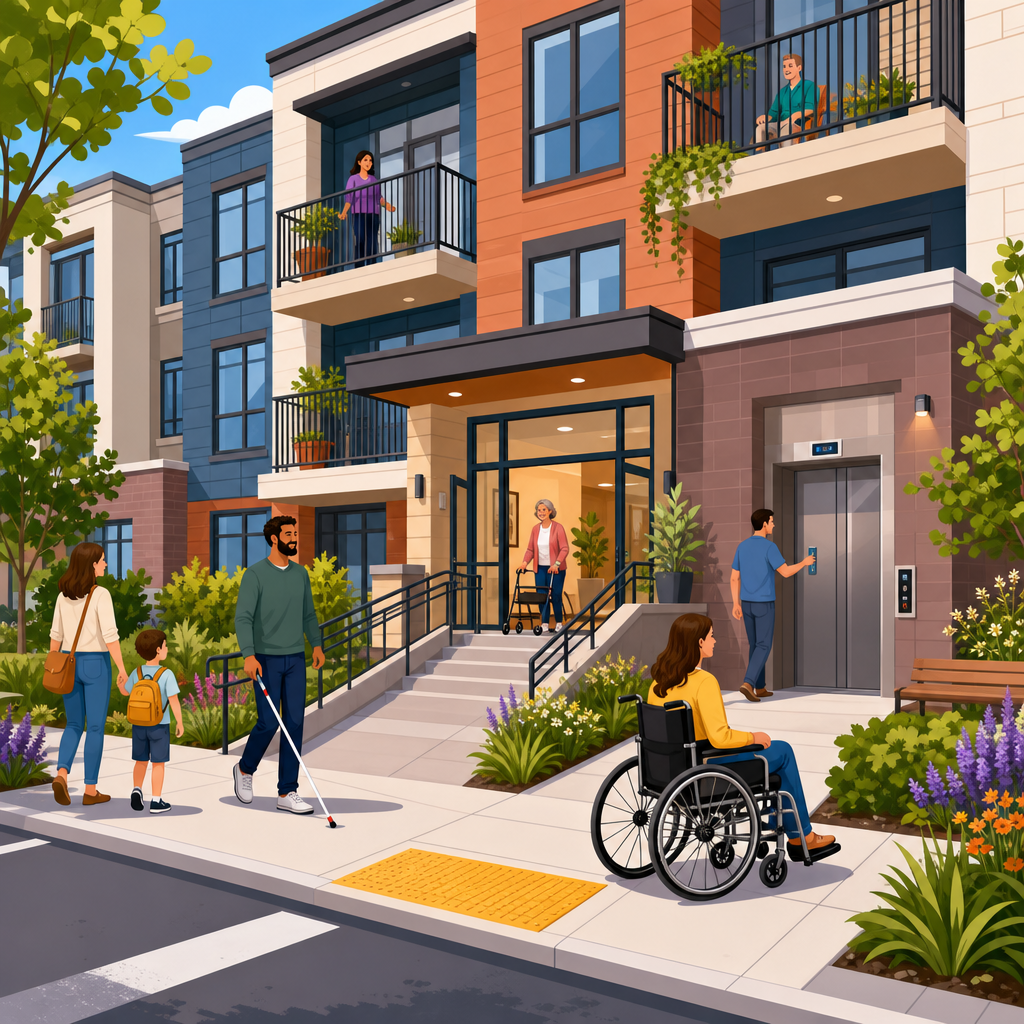
Universal design principles for multifamily buildings create housing that works for more people, across more life stages, without segregating residents by age or ability. In practice, universal design means planning homes, shared amenities, circulation paths, controls, and services so they are intuitive, safe, and usable by people with different mobility, sensory, and cognitive needs. In multifamily housing, that includes wheelchair users, parents pushing strollers, delivery workers, older adults aging in place, residents recovering from injuries, and visitors who may need temporary support. I have seen projects succeed when teams treat accessibility as a baseline design discipline rather than a compliance checklist. That shift matters because apartment buildings are long-life assets. A corridor width, door clearance, elevator size, lighting level, or bathroom layout decided today can either support decades of independent living or create daily barriers that are expensive to fix later.
The topic matters for social, operational, and financial reasons. Cities need denser housing, but density only serves the public well when buildings remain usable as households change. Universal design improves leasing appeal, reduces retrofit costs, supports fair housing goals, and can lower injury risk in common areas. It also complements sustainability: a durable, adaptable building avoids premature remodeling and keeps residents in place longer, reducing churn and waste. While building codes and accessibility laws set minimum requirements, universal design goes further by asking a practical question: can the widest range of residents use this building with dignity, comfort, and minimal assistance? For owners, architects, developers, and property managers, the answer depends on decisions made from the site plan to the mailbox height.
Core principles applied to multifamily housing
Universal design in multifamily buildings is best understood as a set of operating principles rather than a single certification. The most useful framework still starts with equitable use, flexibility, simple and intuitive operation, perceptible information, tolerance for error, low physical effort, and appropriate size and space for approach and use. In apartment projects, those ideas translate into everyday details. A level building entry benefits a wheelchair user, but it also helps movers with carts and residents carrying groceries. Lever handles at unit doors are easier for people with arthritis, but they are also easier when hands are full. Clear wayfinding with visual contrast helps residents with low vision, and it also reduces confusion for guests, delivery staff, and emergency responders.
Good teams apply these principles consistently across public and private zones. I have found that failures often happen at transitions: from sidewalk to lobby, lobby to elevator, elevator to corridor, corridor to apartment, and apartment to balcony or bathroom. Designers may solve one segment and overlook the next. A truly inclusive building preserves continuity. Routes should be step-free where feasible, floor surfaces should minimize trip hazards and rolling resistance, and hardware should be operable without tight grasping or twisting. In unit interiors, the goal is not to make every apartment look institutional. The goal is to make desirable housing that quietly accommodates varied users through proportional planning, smart fixture placement, reinforced walls for future grab bars, and layouts that allow turning, reaching, and transfer without awkward workarounds.
Site planning, entries, and circulation
The resident experience starts before the front door. Site planning should provide accessible routes from public sidewalks, transit stops, bike parking, ride-share drop-off zones, and accessible parking spaces. Slopes, cross-slopes, drainage grates, tree roots, and surface changes are common failure points. I have walked new developments where the lobby was technically accessible from one side street but functionally inconvenient because the main plaza route included stairs. That is legal risk and bad design. The preferred approach is obvious, direct, and dignified access for everyone. Weather protection also matters. Covered entries, benches at intervals, and non-slip paving improve safety for all users, especially in rain, snow, or extreme heat.
Inside the building, circulation determines whether the property feels effortless or exhausting. Lobbies should offer adequate maneuvering space, seating with armrests, clear sightlines to reception or package areas, and acoustics that support speech intelligibility. Elevators must be sized and programmed for real use, not bare minimums; a building with frequent stroller, wheelchair, and move-in traffic benefits from larger cabs and predictable door timing. Corridors need sufficient width, turning space at corners, and lighting that avoids glare and deep shadow. Mail, trash, parcel lockers, and amenity rooms should sit on accessible routes with reachable controls and hardware. When these services are hidden behind heavy doors or split levels, the building silently excludes residents from routine tasks that define independent living.
Apartment unit layouts that support independence
Unit design is where universal design delivers the most value. In multifamily projects, I recommend treating adaptability as a core performance target. That means planning entry doors with generous clear widths, minimizing thresholds, and creating circulation paths that accommodate side approaches and turns. Kitchens should provide usable work zones rather than just meeting cabinet counts. A resident should be able to reach appliances, open doors, and move between sink, cooktop, and refrigerator without conflict. Side-opening or drawer-style ovens, varied counter heights in selected units, knee clearance at one work surface, and pull-out shelves can significantly improve usability. Even in market-rate projects, these decisions expand the renter pool without making the unit feel specialized.
Bathrooms deserve particular attention because they combine moisture, hard surfaces, and confined movement. The best layouts allow a resident to enter, close the door, approach fixtures safely, and transfer with dignity. Curbless showers are one of the strongest examples of universal design because they reduce fall risk and simplify use for wheelchair users, older adults, and children alike. Reinforcing walls for future grab bars is low-cost during construction and expensive later, so it should be standard practice. Toilets with adjacent clear space, handheld shower wands, non-slip tile with modest grout texture, and well-placed lighting all improve safety. Bedrooms and closets should also allow useful clearances. A beautiful unit loses value quickly when a resident cannot reach storage, open a window, or place furniture without blocking circulation.
| Building element | Minimum-compliance mindset | Universal design mindset |
|---|---|---|
| Entry | One accessible route somewhere on site | Main route is step-free, obvious, weather-protected, and equal in dignity |
| Doors | Code-sized clearances only | Comfortable maneuvering space, lever hardware, low opening force |
| Kitchen | Standard fixed counters | Reachable appliances, adaptable work surfaces, logical circulation |
| Bathroom | Tub or raised shower curb | Curbless shower, reinforced walls, safer transfers, better lighting |
| Wayfinding | Basic numbering | High contrast signage, intuitive layout, readable landmarks |
| Amenities | Accessible on paper | Usable independently with clear routes, controls, seating, and acoustics |
Sensory comfort, wayfinding, and cognitive accessibility
Universal design is often reduced to mobility, but multifamily buildings must also support residents with low vision, hearing loss, sensory sensitivities, dementia, autism, brain injury, or limited literacy. Wayfinding should start with a logical building plan: clear organization beats decorative signage every time. Repetition helps. Residents should encounter consistent floor numbering, unit identification, color cues, and landmark elements such as artwork, daylight at corridor ends, or distinct elevator lobbies. Signage needs high contrast, simple typography, and placement within common sightlines. Tactile and braille signs are essential where required, but they work best as part of a complete information system rather than an afterthought added late in construction.
Acoustic design is equally important. Hard lobby finishes, loud ventilation, and echoing corridors can make communication difficult for hearing-aid users and stressful for many residents. Sound-absorbing ceilings, wall panels in strategic areas, and quieter mechanical equipment improve daily comfort. Lighting should provide uniform illumination and limit glare, especially at entries, stairs, elevators, mailrooms, and laundry rooms. Controls must be understandable: plainly labeled intercoms, simple thermostats, visual confirmation at access systems, and emergency notifications that use both audible and visible signals. I have seen residents avoid common spaces not because they were physically inaccessible, but because they were confusing, noisy, or overstimulating. Good universal design fixes that by treating perception and comprehension as design responsibilities.
Amenities, operations, and management policies
A multifamily building is more than its units. Fitness rooms, rooftops, co-working spaces, laundry rooms, package areas, pet amenities, and leasing offices all shape whether residents can participate fully in community life. Amenity planning should include route continuity, turning space around furniture, accessible seating integrated rather than isolated, and controls within comfortable reach ranges. In shared kitchens or lounges, a mix of table heights and movable chairs works better than fixed banquettes. On rooftops and courtyards, stable surfaces, shade, wind control, and edge protection matter as much as dimensions. Pool areas and fitness spaces require especially careful attention because equipment layout can unintentionally block access even when the room itself technically complies.
Operations are where inclusive intent either holds or collapses. Property managers should review leasing processes, maintenance requests, emergency procedures, and house rules through a universal design lens. Digital platforms for rent payment or amenity booking need accessible interfaces compatible with screen readers and keyboard navigation. Staff training should cover effective communication, reasonable accommodation procedures, and respectful interaction. Maintenance teams should understand why door closers, threshold conditions, elevator timing, lighting levels, and accessible parking enforcement are not minor issues but core service quality. Snow removal, temporary signage during repairs, and package overflow management all affect access. In my experience, buildings with strong policies preserve usability far better than buildings that rely only on initial design drawings.
Compliance, costs, and long-term value
Developers often ask whether universal design costs more. The accurate answer is that some features add upfront cost, but most value comes from integrating them early, when changes are inexpensive. Wider clearances coordinated during schematic design are cheap; structural rework after occupancy is not. Reinforcement for future grab bars, blocking for seats, better lighting coordination, or specifying lever hardware are minor line items compared with the cost of resident turnover, lawsuits, or retrofits. In the United States, teams must understand the interaction of the Fair Housing Act design requirements, the Americans with Disabilities Act in public areas, state codes such as California Title 24, and standards including ICC A117.1. Universal design does not replace compliance; it builds on it to improve lived performance.
The long-term value is measurable. Buildings that support aging in place can retain residents longer, reducing vacancy and make-ready costs. Safer bathrooms and common areas can lower incident exposure. More adaptable units broaden the market to households that would otherwise self-select out. Lenders, municipalities, and institutional investors increasingly evaluate social resilience alongside energy and climate performance, especially in sustainable urban development portfolios. Universal design strengthens that case because resilient housing is not only efficient; it is usable through demographic change, disability, illness, and recovery. For project teams, the practical path is straightforward: set measurable accessibility goals at project kickoff, coordinate architecture, interiors, landscape, and operations, test plans with user scenarios, and conduct post-occupancy reviews. That process consistently produces better multifamily buildings.
Universal design principles for multifamily buildings are not extras reserved for senior housing or luxury developments. They are the foundation of durable, inclusive housing in growing cities. When site access is direct, circulation is intuitive, units are adaptable, information is easy to perceive, and amenities are genuinely usable, residents gain independence and property owners gain a stronger asset. The most important lesson is that good outcomes come from continuity. Accessibility cannot stop at the front gate, the elevator, or the nominally compliant unit. It must connect every daily action, from entering the building to receiving a package, cooking dinner, showering safely, meeting neighbors, and evacuating during an emergency.
For teams working under the broader goal of sustainable urban development, universal design offers a clear advantage: it extends building usefulness across time. Housing that serves more people for longer periods reduces disruptive moves, unnecessary renovations, and the social costs of exclusion. It also aligns design quality with operational discipline, which is why the best projects address policy, maintenance, and digital tools alongside walls and fixtures. If you are planning, renovating, or managing a multifamily property, start with a simple audit of routes, doors, bathrooms, controls, signage, and amenity access. Then prioritize the changes that remove the most daily friction. That is how inclusive design becomes practical, measurable, and valuable.
Frequently Asked Questions
What are universal design principles in multifamily buildings?
Universal design principles in multifamily buildings are planning and design strategies that make homes and shared spaces easier to use for the widest possible range of people, without requiring special adaptation or separate “accessible” areas. In a multifamily context, that means thinking beyond minimum code compliance and designing apartments, corridors, lobbies, amenity areas, parking, entries, controls, and site circulation so they work well for residents and visitors with different mobility, sensory, and cognitive needs. The goal is not to create housing for one specific group, but to create housing that performs better for everyone, including wheelchair users, older adults, parents with strollers, children, people carrying groceries, delivery workers, and residents whose needs may change over time.
In practical terms, universal design often includes step-free entrances, wider clearances, intuitive wayfinding, lever-style hardware, reachable controls, good lighting, reduced trip hazards, bathrooms with better maneuvering space, and kitchens that support safer movement and easier use. It also extends to common areas such as mail rooms, package areas, fitness centers, rooftop amenities, laundry rooms, and outdoor paths. A well-designed multifamily building should allow people to move through it confidently, understand how to use it quickly, and participate in everyday building life without unnecessary barriers. That is what makes universal design especially valuable in shared residential environments.
How is universal design different from accessibility compliance or ADA requirements?
Universal design and accessibility compliance are related, but they are not the same thing. Accessibility laws and codes, including ADA-related standards for certain common areas and Fair Housing requirements that apply to many multifamily properties, establish minimum technical requirements intended to reduce discrimination and remove barriers. Those standards are essential, but they typically set a baseline. Universal design goes further by asking a broader question: how can the building be made more comfortable, intuitive, safe, and usable for as many people as possible from the start?
For example, a code-compliant space may technically meet clearances and reach ranges, yet still feel awkward, confusing, or difficult to navigate in day-to-day use. Universal design looks at the lived experience. It considers how a resident enters the building during bad weather, how easily someone can carry packages while opening doors, whether signage is easy to read, whether elevator controls are placed and identified clearly, and whether common amenities can be used with dignity by people with varying physical and sensory abilities. In this way, universal design is a design philosophy, while code compliance is a legal and technical threshold. Strong multifamily projects usually need both: full compliance with applicable standards and a broader universal design approach that improves usability well beyond the minimum.
What are the most important universal design features to include in multifamily housing?
The most important universal design features are the ones that affect everyday use across the entire resident journey, from arrival to entry to circulation to activities inside the unit and common spaces. Step-free access is one of the biggest priorities because it supports residents using wheelchairs or walkers, as well as people with strollers, carts, bicycles, or temporary injuries. Clear and continuous accessible routes from parking, sidewalks, transit stops, and amenity areas are equally important. Automatic or power-assisted entry doors, durable non-slip surfaces, good lighting, and weather-protected entrances can make a major difference in safety and ease of use.
Inside the building, wide hallways and doorways, intuitive floor plans, easy-to-grasp hardware, reachable switches and thermostats, and elevators with clear controls support a broader range of users. Within dwelling units, kitchens and bathrooms deserve special attention because they are the spaces where maneuvering, reach, balance, and visibility matter most. Features such as reinforced bathroom walls for future grab bars, curbless or low-threshold showers, better turning space, varied countertop options, and thoughtfully placed storage can help residents remain comfortable as their needs evolve. In shared amenities, universal design should include seating options with different heights and support levels, accessible mail and package retrieval, visual and tactile wayfinding, acoustical control where possible, and layouts that do not isolate residents who use mobility devices. The best features are those integrated seamlessly into the design so the building feels welcoming and functional, not clinical or institutional.
Why is universal design a smart investment for multifamily developers and property owners?
Universal design is a smart investment because it can improve marketability, resident satisfaction, long-term building performance, and risk management at the same time. Multifamily housing serves a very broad audience, and that audience is becoming more diverse in age, household structure, and physical ability. Buildings that are easier to enter, navigate, and live in appeal to more renters and buyers, including older adults who want to age in place, multigenerational households, and residents who simply value comfort and convenience. Features like no-step entries, easier-to-use bathrooms, better lighting, and intuitive common areas are not niche upgrades; they are quality-of-life improvements that many residents actively prefer.
From an operational standpoint, universal design can also reduce friction in daily building use. Spaces that are easier to navigate tend to generate fewer complaints, fewer ad hoc modifications, and less wear caused by poor circulation or awkward layouts. Planning for adaptability early is often more cost-effective than retrofitting units or common areas later, especially when resident needs change or when ownership wants to expand accessibility options over time. There is also a brand and reputation benefit. Developers and property owners who prioritize inclusive design signal that they understand contemporary housing expectations and are building for long-term resilience, not short-term minimums. In competitive markets, that can strengthen leasing, support retention, and position the property as a more future-ready asset.
How can architects and developers apply universal design principles without making multifamily buildings feel institutional?
A common misconception is that more usable and inclusive design automatically looks medical, specialized, or overly utilitarian. In reality, the strongest universal design solutions are often almost invisible because they are integrated into good architecture from the beginning. A generous entry sequence, flush thresholds, attractive lever hardware, layered lighting, intuitive circulation, and spacious bathrooms can all be elegant, contemporary, and highly marketable. The key is to treat universal design as part of the overall design concept rather than as a checklist added late in the process. When details are coordinated early, the result is typically more refined and cohesive.
Architects and developers can avoid an institutional feel by focusing on materials, proportion, and user experience. For example, slip-resistant flooring can still be warm and high-end, grab-bar reinforcement can be concealed until needed, and accessible seating can be varied and stylish rather than uniform and clinical. In common areas, clear signage can be beautifully designed, and acoustical comfort can be improved through thoughtful finishes and layout rather than obvious interventions. The same is true outdoors, where smooth pathways, shaded rest areas, and well-placed lighting can enhance both accessibility and visual appeal. Ultimately, universal design is not about compromising aesthetics. It is about creating multifamily environments that are more humane, more flexible, and more livable for everyone who uses them.