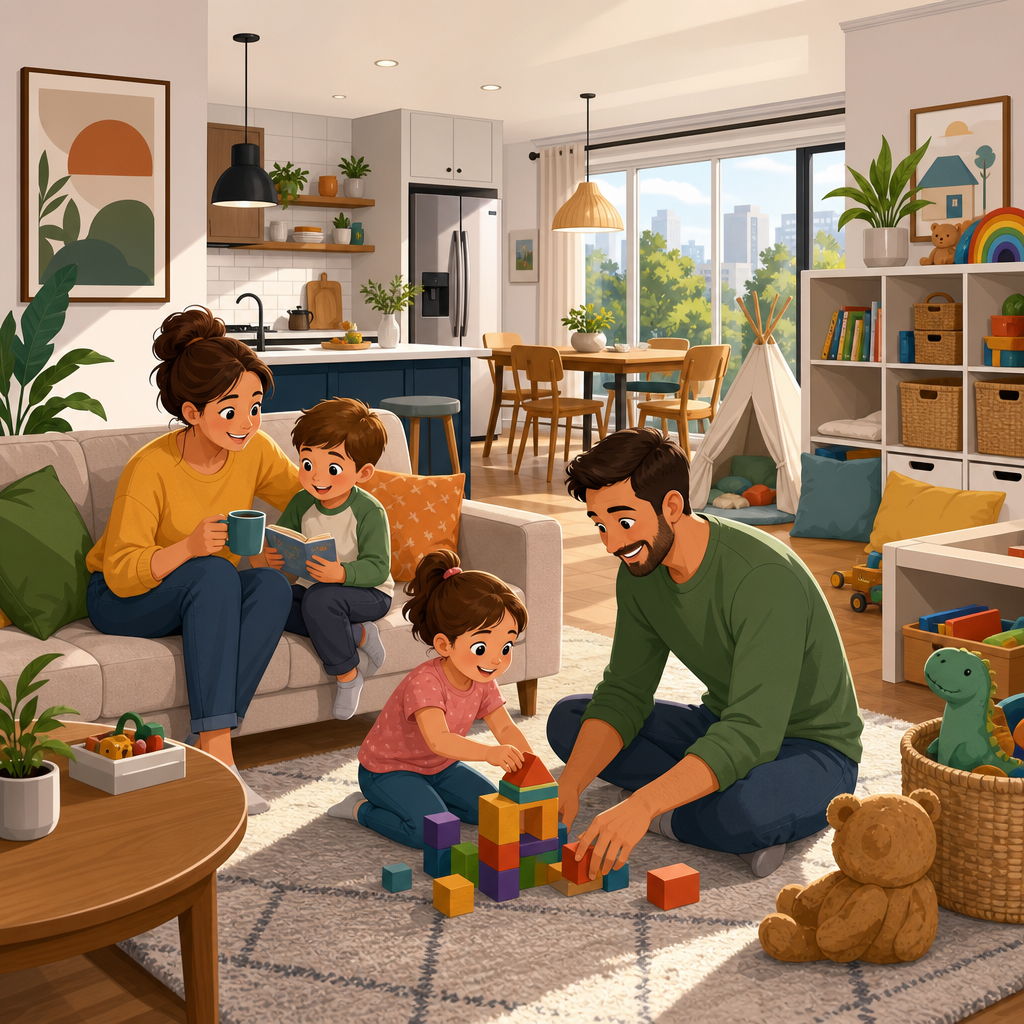
Family-friendly apartment design is the practice of planning homes that work for children, caregivers, and changing household routines without sacrificing safety, comfort, or long-term livability. In dense cities, where detached houses are often unaffordable or impractical, apartments carry more of the burden of raising families well. I have worked with parents reviewing floor plans, retrofit options, and building amenities, and the gap between what developers market and what families actually need is usually obvious within minutes. A “two-bedroom family unit” may technically sleep four people, yet still fail the basic tests of daily life: stroller storage, nap-friendly acoustics, sightlines to supervise a toddler, durable finishes, and enough flexible space for homework, play, remote work, and hosting relatives.
The key terms matter because they shape design decisions. Family-friendly does not mean oversized or expensive. It means resilient layouts, safe circulation, healthy materials, and shared building features that reduce friction. Apartment design includes the private unit, the common areas, and the surrounding block, because parents experience all three as one system. A good home for families supports routines that happen dozens of times a day: getting children dressed, carrying groceries while managing a scooter, keeping bedrooms dark and quiet, cleaning quickly, and letting a child play without constant conflict over space. When these needs are ignored, stress compounds. When they are addressed early, apartments become viable long-term homes rather than temporary compromises.
This matters far beyond convenience. Cities that cannot house families lose school enrollment stability, intergenerational diversity, and the social continuity that makes neighborhoods durable. Family-oriented apartment design also intersects directly with sustainability. Homes that support larger households in walkable, transit-served buildings reduce car dependence and land consumption. Better layouts lower renovation churn, while healthier materials and better ventilation improve indoor air quality for children, who are more vulnerable to pollutants and overheating. For planners, developers, architects, and property managers, the practical question is simple: what should a family apartment actually include? The answer begins with space planning, but it also includes storage, acoustics, safety, building operations, and the public realm directly outside the front door.
Layout Fundamentals That Support Daily Family Life
The best family-friendly apartment layouts are not defined by square footage alone. They are defined by how efficiently every square meter works. Parents consistently need clear zoning between active and quiet spaces. In practice, that means keeping bedrooms away from elevators, refuse chutes, and noisy shared corridors whenever possible. It also means separating the kitchen and living area enough to allow one child to sleep while another adult prepares dinner or finishes work. Open plans can support supervision, but fully exposed living spaces often create noise spill and visual clutter. The most successful layouts I have seen use partial separation: a kitchen with sightlines into the main room, plus a corner for toys, reading, or homework that does not block circulation.
Circulation paths deserve more attention than they usually get. Hallways may seem inefficient on paper, yet a modest entry zone can transform family life by creating a place to unload shoes, coats, lunch bags, and strollers before the home erupts into disorder. Bedrooms should fit real furniture, not just a bed symbol on a marketing plan. Parents need walls long enough for wardrobes, cribs, bunks, or desks. A main bedroom should allow a cot or bassinet during infancy. Secondary bedrooms need enough flexibility to shift from nursery to shared room to study space over time. Corner units with dual aspect are especially valuable because daylight from two orientations improves comfort and makes spaces easier to divide functionally.
Flexibility is essential because family needs change faster than lease cycles. A dining niche may become a homework station, a guest room may become a nursery, and a section of the living room may need to support remote work. Sliding partitions, pocket doors, and built-in storage can create adaptable micro-zones without requiring a larger unit. Ceiling height also matters more than many buyers realize. Slightly higher ceilings make compact rooms feel less compressed, improve daylight penetration, and allow taller storage systems. Good layouts acknowledge that family life is repetitive, messy, and time-sensitive. They give parents direct sightlines, enough turning space for children and gear, and rooms that can change function without expensive remodeling.
Storage, Durability, and the Real Value of Materials
Parents do not need luxury finishes as much as they need materials that survive repetitive use and are easy to maintain. Durable apartment design starts at the entry, where a family home should have built-in or clearly allocated storage for shoes, coats, helmets, and cleaning supplies. In buildings where stroller parking is prohibited in corridors for fire code reasons, the unit itself or a secured common room must provide an alternative. Without that provision, families improvise in ways that create conflict and clutter. Inside the apartment, full-height wardrobes, deep linen cabinets, and under-bench storage outperform decorative shelving because they hide the volume of objects family life generates.
Material choices should reflect actual wear patterns. In kitchens and bathrooms, quartz or durable laminate counters typically outperform porous stone in cost and maintenance. Washable low-VOC paint is preferable to delicate finishes that show every mark. Flooring should balance acoustics, slip resistance, and cleanability. I usually recommend high-quality resilient flooring or engineered wood with strong impact ratings rather than wall-to-wall carpet, which can trap allergens and stains, especially in humid climates. Cabinet hardware should be simple, robust, and replaceable. Rounded edges reduce injury risk, while soft-close hinges help with noise control during early mornings and late nights. Families also benefit from utility space: a laundry closet with shelving, a place for drying racks, and somewhere to store a vacuum or folding stroller.
Healthy materials are not an aesthetic preference; they are a performance requirement. Children are more affected by formaldehyde, phthalates, mold, and combustion byproducts than adults. Designers should prioritize low-emission products, effective exhaust ventilation vented outdoors, and moisture-resistant detailing in kitchens, bathrooms, and window perimeters. The following table summarizes the apartment features parents ask for most often and the specific design value each delivers.
| Feature | Why Parents Need It | Design Standard That Helps |
|---|---|---|
| Entry storage zone | Contains shoes, bags, coats, and school items before clutter spreads | Built-in millwork or a recessed niche near the door |
| Quiet bedrooms | Supports naps, bedtime, and caregiver recovery | Separate bedrooms from lifts, trash rooms, and busy streets |
| Durable flooring | Handles spills, toys, and frequent cleaning | Resilient or impact-rated hard flooring with acoustic underlayment |
| Stroller and bike storage | Reduces hallway conflicts and daily carrying strain | Secure ground-floor storage with wide access routes |
| Operable windows plus ventilation | Improves indoor air quality and thermal comfort | Cross-ventilation or mechanical fresh-air systems with filtration |
Safety, Acoustics, and Indoor Environmental Quality
When parents say an apartment feels safe, they usually mean several different things. They mean a child cannot fall from a window, reach a cooktop, run unseen into a parking area, or be woken repeatedly by corridor noise. They also mean the building helps them supervise children without living in constant anxiety. Basic protections include window restrictors that still allow ventilation, balcony guards that prevent climbing, anti-scald valves, tamper-resistant outlets, non-slip bathroom floors, and kitchens designed to keep hot surfaces away from circulation routes. These measures are neither glamorous nor optional. They are the foundation of family-friendly apartment design.
Acoustic performance is one of the most underestimated features in multifamily housing. Parents need impact insulation from neighbors above, airborne sound insulation between units, and quiet mechanical systems. In practical terms, that means concrete slabs or well-detailed timber assemblies with tested acoustic ratings, resilient underlayments, insulated service penetrations, and bedroom walls that do not back directly onto elevators or plant rooms. White-noise machines and rugs can help, but they are coping mechanisms, not design solutions. If a child wakes every time a neighbor drops something on the floor, the apartment is not functioning properly for family life.
Indoor environmental quality also shapes health and behavior. Apartments for families should avoid internal bedrooms without borrowed ventilation, because children need daylight cues for sleep regulation and concentration. Cross-ventilation is ideal where climate and building form allow it. Where it does not, balanced mechanical ventilation with filtration is a strong alternative, especially in polluted urban corridors. Overheating is a rising concern in cities, particularly on west-facing façades and top floors. External shading, operable windows, ceiling fans, and efficient envelopes are more reliable than expecting families to solve comfort with portable units. Good family housing is quiet, well ventilated, thermally stable, and demonstrably safe in everyday use, not only compliant on paper.
Shared Building Amenities and Management Policies That Matter
A family apartment does not end at the unit threshold. Shared spaces and operational policies often determine whether a building genuinely supports children. Elevators should fit a stroller and groceries without forcing awkward turns. Lobbies need weather-protected waiting areas and enough maneuvering room for multiple households at school-run hours. Secure package rooms reduce missed deliveries of diapers, medicine, and household essentials. Ground-floor stroller and bicycle storage is not a luxury amenity; in family buildings it is core infrastructure. So are common toilets near play areas, visible mailrooms, and access controls that let older children gain independence gradually without compromising security.
Outdoor space matters, but the details matter more. A token patch of lawn on a podium deck is not equivalent to a usable play area. Families need shaded seating, sightlines from benches to play zones, varied equipment for different ages, and surfaces that remain safe after rain. In high-density projects, semi-supervised common rooms can extend living space for birthday gatherings, homework clubs, and wet-weather play. I have seen buildings with modest private units perform exceptionally well because the shared spaces were practical, well maintained, and clearly governed. By contrast, expensive buildings fail families when management bans scooters everywhere, closes courtyards early, or treats normal child activity as a nuisance.
Management policy is therefore part of design. Clear rules for noise, deliveries, pets, and common-space use should protect all residents without making families feel unwelcome. Maintenance response times matter because a broken entry door, unreliable lift, or persistent mold issue affects parents disproportionately. Resident communication should be simple and multilingual where necessary. The strongest family-oriented buildings combine physical design with competent operations: staffed or responsive management, preventive maintenance, and programming that helps neighbors know one another. Social trust reduces isolation, increases informal supervision, and makes apartment living more resilient for caregivers.
Neighborhood Design, Mobility, and Long-Term Family Viability
Even an excellent apartment will struggle if the surrounding neighborhood works against family routines. Parents need safe, direct routes to childcare, schools, parks, groceries, and transit. The measure is not distance alone but route quality: curb ramps, crossing times, shade, lighting, and whether a child can reasonably walk or cycle with an adult. Family-friendly apartment design therefore extends into site planning and urban design. Entrances should avoid forcing residents through parking garages. Ground floors should support active frontages and passive surveillance. Streets near family housing benefit from traffic calming, lower vehicle speeds, protected intersections, and secure bicycle parking sized for cargo bikes and child seats.
Long-term viability is the final test. Families stay in apartments when homes adapt to changing ages, school schedules, and caregiving demands. That means leases or ownership models stable enough to support continuity, utility costs that remain predictable, and floor plans that do not become obsolete once a child reaches school age. Designers and developers should study local housing standards, accessibility requirements, and post-occupancy feedback rather than relying on marketing assumptions. In my experience, the apartments families love most are rarely the flashiest. They are the ones that reduce daily friction through practical decisions made early: better storage, quieter rooms, safer windows, healthier air, and useful common space.
For sustainable urban development, this is a straightforward priority. Cities need apartments where families can thrive for years, not just cope for a season. When design responds to what parents actually need, buildings retain residents longer, neighborhoods stabilize, and urban living becomes a credible family choice. If you are planning, designing, developing, or renovating family housing, start with routines, not renderings. Map the school run, bedtime, laundry, storage, play, work, and recovery. The right apartment design is the one that makes those ordinary tasks easier every single day.
Frequently Asked Questions
What makes an apartment truly family-friendly, beyond the usual marketing claims?
A truly family-friendly apartment is not defined by a staged playroom, a few bright finishes, or a brochure that mentions “kid-friendly living.” What actually matters is whether the home supports real daily routines for parents, children, and caregivers over time. In practice, that means a layout with clear sightlines so adults can supervise children while cooking or working, bedrooms positioned to allow both privacy and quick access at night, and enough flexible space to absorb changing needs as children grow. Families usually need room for strollers, coats, school bags, groceries, sports gear, and the small but constant overflow of everyday life. If a unit looks clean only when it is empty, it is probably not designed well for family use.
Safety is another major differentiator. Good family design reduces hazards without making the home feel institutional. Parents benefit from secure windows, child-safe balconies, durable flooring with slip resistance, rounded or forgiving edges in high-traffic areas, and entry sequences that help contain children before they reach elevators or corridors. Acoustic performance also matters more than many buyers expect. Apartments that protect against noise from neighbors, hallways, and building systems are far easier to live in with babies, toddlers, and school-aged children who sleep, study, and play on different schedules.
Just as important is long-term livability. Families’ needs change quickly, so the most successful apartments are not designed around one narrow life stage. A second bedroom may start as a nursery, become a shared children’s room, and later function as a study space. An alcove that seems minor on paper can become a homework station, toy storage zone, or work-from-home corner. The best family-friendly apartments are the ones that continue working when routines become messier, children become bigger, and household demands become more complex.
Which apartment layout features matter most for parents with young children?
For parents with young children, layout is usually more important than raw square footage. A smaller apartment with an efficient, well-organized floor plan can outperform a larger one with awkward circulation or wasted corners. One of the first things to look for is visibility. Parents benefit enormously from kitchens that open to living areas, dining areas that can double as activity zones, and circulation paths that do not force constant backtracking. Being able to prepare food while watching a toddler, or help with coloring and snacks in the same shared space, is far more practical than having rooms that are visually disconnected.
Bedroom placement is another critical issue. Many parents want children close enough for nighttime care, especially during infancy and toddlerhood, but not so close that every noise disrupts sleep. A good compromise is a bedroom arrangement that keeps children accessible without putting sleeping spaces directly on top of noisy living-room walls or front-entry traffic. Apartments with a small buffer, such as a closet wall, hallway, or bathroom between sleeping and active zones, often function much better than plans that simply maximize room count.
Storage and transitional space also matter more than people realize. A family apartment needs places for shoes, coats, diaper bags, folding strollers, and the accumulation of daily essentials that come with raising children in a compact home. Even a modest entry nook can make a huge difference by preventing clutter from spreading into the main living area. Bathrooms should be easy to use for bathing children, kitchens should have enough counter space for food prep and bottles or lunch packing, and laundry access should be as convenient as possible. In-unit laundry is a major advantage for families, but if that is not available, an accessible and reliable building laundry room becomes especially important. These are the features that reduce friction every single day.
How can parents make a small apartment safer for children without giving up comfort and style?
The most effective approach is to think in layers rather than one-time babyproofing. Families often assume child safety means filling the apartment with bulky plastic products, but the best results usually come from combining discreet safety measures with smarter furnishing and layout choices. Anchoring furniture, securing televisions, adding cabinet latches where necessary, using cordless window coverings, and installing gates only in truly high-risk locations can dramatically improve safety without overwhelming the home visually. Window safety deserves special attention in apartments, especially in upper-floor units. Parents should look for secure opening limits, durable screens that are not treated as fall protection, and furniture placement that does not create climbing opportunities near windows or balcony doors.
Material selection also plays a big role. Durable, easy-to-clean finishes are not just convenient; they help families maintain a calmer home because everyday messes become less stressful. Washable paint, stain-resistant upholstery, rounded coffee tables or ottomans, and flooring that is forgiving underfoot can make the apartment feel both safer and more comfortable. Rugs should be secured to prevent slipping, and heavily used furniture should withstand jumping, spills, and repeated cleaning. Good design for families does not mean accepting a home that feels temporary or chaotic. It means choosing pieces and finishes that can absorb real life while still looking intentional.
Comfort and style are easier to preserve when storage is built into the safety strategy. Clutter creates both visual stress and practical hazards in small apartments, so concealed storage, baskets, bench seating with compartments, and wall-mounted organization systems can keep toys and supplies accessible without taking over the entire home. Parents should also create zones: a safe play area within sight of the kitchen, a quiet sleep area with blackout control and low noise, and circulation routes that remain clear even during busy hours. When safety is integrated into the overall design rather than added as an afterthought, the apartment feels more refined, not less.
What building amenities and shared spaces actually help families, and which ones are mostly marketing?
The most valuable family-oriented amenities are the ones that support routine, not the ones that look impressive in photos. Parents usually gain the most from practical features such as stroller-friendly entrances, elevators that are reliable and large enough for family movement, secure package and grocery handling, accessible storage, well-maintained laundry facilities, and outdoor space that is easy to reach without a complicated trip through multiple locked doors. A small but usable courtyard, a shaded seating area where caregivers can supervise children, or a flexible community room can be far more beneficial than a flashy amenity with limited everyday use.
Families should also pay close attention to circulation, security, and supervision. Long, confusing hallways, poor visibility in shared spaces, and difficult elevator access can make even a well-appointed building frustrating with children. Secure entry systems matter, but so does ease of use when a parent is carrying groceries, guiding a tired child, or pushing a stroller. Bicycle storage, stroller parking, and nearby trash and recycling access are all examples of mundane features that significantly improve family life. If a building has outdoor play space, parents should consider whether it is genuinely usable: Is it visible, enclosed, shaded, age-appropriate, and separated from vehicle circulation?
By contrast, many heavily marketed amenities add little value to families if they do not match actual routines. A designer lounge that prohibits active use, a rooftop deck without child-safe detailing, or a “kids’ room” with limited hours and poor maintenance may sound appealing but do little to support daily life. What parents need most are amenities that reduce logistical strain, improve safety, and create opportunities for children and caregivers to spend time outside the apartment without unnecessary hassle. Reliability, accessibility, and ease of supervision are often much more important than novelty.
How can families choose an apartment that will still work as children grow and routines change?
The best way to choose for the long term is to evaluate adaptability, not just immediate fit. Many apartments work well for a baby but become difficult once that child becomes mobile, needs a sleep routine, starts school, or shares space with siblings. Parents should ask whether rooms can serve more than one purpose over time. Can a dining area become a homework zone? Can a den or alcove function as a nursery, office, or guest space? Can children share a room without making storage and circulation unmanageable? A flexible apartment does not need to be oversized, but it does need enough planning logic to absorb change.
Storage remains one of the strongest indicators of long-term success. As children grow, belongings do not simply increase in quantity; they change in type. Diaper supplies become toys, then books, art materials, school gear, sports equipment, and larger clothing. Apartments that include meaningful closets, utility storage, or adaptable shelving systems tend to age much better with a family than units that rely on perfectly minimal living. Families should also think about work and care patterns. Many households need room for remote work, visiting grandparents, shared custody schedules, or occasional overnight help. A home that can support multiple overlapping uses will feel much more resilient over time.
Finally, parents should look beyond the unit itself to the broader building and neighborhood context. A workable family apartment is strengthened by safe routes to schools and parks, nearby childcare, walkable daily services, and a building culture that accepts normal family life. Sound insulation, management responsiveness, and neighbor tolerance can matter just as much as floor plan efficiency. Choosing an apartment for family life is ultimately about reducing future friction. The right home should not only meet today’s needs but continue to support sleep, play, study, storage, caregiving, and privacy as family life evolves.