Urban sustainability is an ever-pressing issue in today’s rapidly urbanizing world. Populations are growing exponentially, and cities are expanding at unprecedented rates. This poses significant challenges in terms of resource management, environmental protection, and ensuring a viable quality of life for urban residents. While numerous strategies have been proposed and implemented, not all have yielded the desired results. One approach that has shown promise is the integration of nature-based solutions (NBS) in urban development. NBS leverages natural processes and elements to address urban challenges in a sustainable and cost-effective manner. This article examines the role of nature-based solutions in enhancing urban sustainability, focusing on the main components, benefits, challenges, and implementation strategies.
The Essence of Nature-Based Solutions
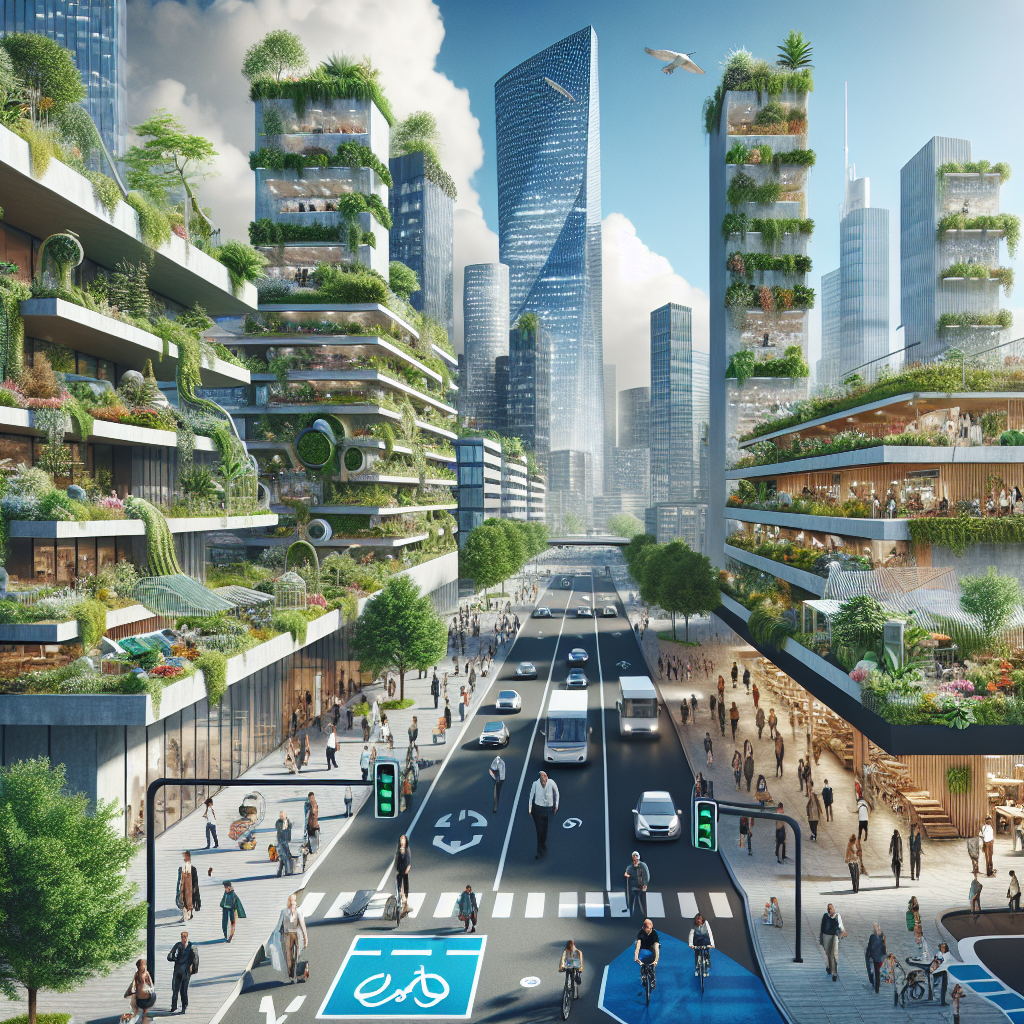
Nature-based solutions refer to actions that utilize natural processes and ecosystems to address societal challenges. They aim to provide environmental, social, and economic benefits simultaneously. For instance, creating green spaces in urban areas can help reduce temperature, absorb carbon dioxide, improve mental health, and enhance biodiversity. NBS can range from small-scale interventions like green roofs to large-scale projects such as urban wetlands. The key is that these solutions work with nature, rather than against it. Examples include creating rain gardens to manage stormwater, restoring urban forests to enhance air quality, and constructing green walls to reduce energy consumption. Understanding and integrating the essence of these solutions can serve as a critical step in promoting sustainable urban development.
Benefits of Nature-Based Solutions
Utilizing nature-based solutions in urban planning offers manifold benefits. Firstly, they contribute significantly to climate change mitigation and adaptation. For example, urban trees can reduce the heat island effect, lower temperatures, and cut down on energy used for cooling buildings. Secondly, NBS helps in managing water resources more effectively. Techniques such as permeable pavements and vegetative swales can mitigate flooding risks and enhance groundwater recharge. Thirdly, these solutions improve biodiversity by creating habitats for various species, contributing to a healthier ecosystem. Social benefits include enhanced well-being, recreational opportunities, and community engagement. Economically, nature-based solutions can lower infrastructure costs, reduce healthcare expenses, and increase property values by making urban areas more attractive.
Implementing Nature-Based Solutions
Implementing nature-based solutions requires a multi-faceted approach. Planners and policymakers need to consider the unique characteristics of the urban environment, such as climate, topography, and existing infrastructure. Stakeholder involvement is crucial for successful implementation. This includes collaboration between government agencies, private sectors, and the community. Financial mechanisms like public-private partnerships, green bonds, and grants can provide essential funding for NBS projects. Additionally, monitoring and evaluation are necessary to assess the effectiveness and make necessary adjustments. It is also important to integrate NBS into broader urban planning frameworks and policies to ensure long-term sustainability.
Challenges in Adopting Nature-Based Solutions
Despite the numerous benefits, adopting nature-based solutions in urban planning is not without challenges. One primary obstacle is the lack of awareness and understanding among stakeholders, which can lead to resistance or reluctance. There’s also the issue of competing land uses; urban areas often face intense competition for space, making it difficult to allocate areas for green infrastructure. Additionally, the benefits of NBS are often distributed unevenly, leading to potential social equity issues. Financial constraints can also limit the scope and scale of NBS projects. Lastly, there is the challenge of long-term maintenance; natural elements require ongoing care, which can be resource-intensive. Overcoming these challenges necessitates a concerted effort from all involved parties, including education and capacity-building initiatives.
Case Studies in Successful NBS Implementation
Examining successful case studies can provide valuable insights into the implementation of nature-based solutions. For instance, the city of Singapore has been a global frontrunner in integrating NBS in its urban planning. The “City in a Garden” vision has led to projects such as the Bishan-Ang Mo Kio Park, which transformed a concrete canal into a naturalized river, reducing flood risks and providing recreational space. In Copenhagen, the Cloudburst Management Plan involves green roofs, permeable pavements, and urban parks to manage extreme rainfall events. New York City’s High Line is another notable example, converting an abandoned railway line into an elevated green park, enhancing biodiversity and providing a public amenity. These case studies exemplify how innovative thinking and collaboration can successfully integrate nature into urban spaces.
Future Directions for Nature-Based Solutions
Looking forward, the role of nature-based solutions in urban sustainability is likely to become even more significant. As cities continue to grow and the impacts of climate change become more pronounced, the urgency for sustainable development will intensify. Emerging technologies such as GIS mapping, remote sensing, and data analytics can enhance the planning and monitoring of NBS projects. Collaborative platforms and networks can facilitate the sharing of knowledge and best practices. Furthermore, incorporating NBS into educational curricula can foster a new generation of urban planners and environmental stewards. Policies and regulations that promote investment in green infrastructure will also be crucial. Ultimately, a paradigm shift towards viewing nature as an integral part of urban environments will be essential for achieving long-term sustainability.
Conclusion
In conclusion, nature-based solutions represent a promising approach to sustainable urban development. By leveraging natural processes and elements, NBS can address a myriad of urban challenges, from climate change and water management to biodiversity enhancement and social cohesion. While the implementation of NBS comes with its set of challenges, the benefits far outweigh the obstacles. Successful case studies around the world have demonstrated the potential of NBS to transform urban spaces into more resilient, livable, and sustainable environments. As we look to the future, it is imperative that urban planners, policymakers, and communities recognize the value of integrating nature into urban settings. By doing so, we can create healthier, more vibrant cities for current and future generations.
Frequently Asked Questions
1. What are Nature-Based Solutions (NBS) and how do they contribute to urban sustainability?
Nature-Based Solutions (NBS) refer to strategies that utilize natural processes and ecosystems to tackle socio-environmental challenges, such as improving climate resilience, managing urban water, and enhancing biodiversity. In the context of urban sustainability, NBS can include green roofs, urban forests, wetland restoration, and sustainable urban drainage systems, to name a few examples. These solutions contribute significantly to urban sustainability by providing ecosystem services that support cleaner air and water, reduced urban heat, and more pleasant, green urban spaces, all of which are essential for developing livable, resilient cities.
Moreover, NBS promote biodiversity by providing habitats for various species within urban areas, which is crucial as cities continue to expand. By mimicking or integrating natural systems within cities, NBS can help manage stormwater, reduce pollution, and mitigate the urban heat island effect. They also empower communities to engage with and benefit from their natural surroundings, which can lead to improved mental health and well-being. Overall, NBS play a crucial role in creating sustainable cities that can adapt to and overcome environmental challenges.
2. How can Nature-Based Solutions help manage urban water systems?
Cities around the world face significant challenges with water management, including stormwater runoff, flooding, and water quality issues. Nature-based solutions offer innovative ways to manage water sustainably within urban environments. For example, green infrastructures such as bioswales, permeable pavements, and rain gardens can manage stormwater naturally by allowing it to infiltrate and be filtered through soil and vegetation. This reduces the burden on sewer systems, decreases runoff, and improves water quality by removing pollutants.
Additionally, constructed wetlands can help treat and manage wastewater naturally, providing effective filtration and improving the quality of water being released into the ecosystem. Not only do these systems mimic natural water cycles, but they also enhance landscape aesthetics, provide wildlife habitats, and offer recreational and educational opportunities for urban populations. Through these multifaceted benefits, NBS in water management reinforce urban resilience against climate change and provide sustainable solutions to one of the most pressing urban challenges—water management.
3. What is the effect of Nature-Based Solutions on urban heat islands?
Urban heat islands (UHIs) are a phenomenon where urban areas experience significantly higher temperatures than their rural surroundings due to human activities, increased infrastructure, and reduced vegetation. Nature-based solutions are highly effective in mitigating the effects of UHIs. Green infrastructure such as green roofs, vertical gardens, and urban forests play a pivotal role in cooling urban areas through evapotranspiration—the process by which plants release moisture into the atmosphere.
Trees and vegetation can provide shade, reducing the need for air conditioning, which in turn lowers energy consumption and greenhouse gas emissions. Furthermore, green spaces absorb and reflect less heat compared to traditional building materials, helping to lower surface and air temperatures. By integrating such solutions, cities not only become more comfortable during hot weather but also more equipped to handle extreme heat events, thus, promoting sustainability and increasing resident well-being.
4. Are there social and economic benefits associated with implementing Nature-Based Solutions in cities?
Yes, the implementation of Nature-Based Solutions (NBS) extends beyond environmental benefits, offering significant social and economic advantages. From an economic perspective, NBS can reduce public expenditure on infrastructure maintenance and energy use. For instance, urban green spaces can decrease the need for artificial cooling, significantly lowering energy bills. In terms of cost-effectiveness, NBS often offer a more sustainable and economical alternative compared to grey infrastructure, which requires high maintenance and eventual replacement costs.
Socially, NBS enhance community well-being by providing opportunities for recreation, physical activity, and social interaction. Green spaces have been shown to reduce stress, improve mental health, and encourage a closer connection to nature. Additionally, they can also help foster social cohesion and provide educational opportunities about environmental conservation and sustainability. In economically disadvantaged areas, NBS can contribute to revitalization efforts, increasing property values and attracting businesses and tourism. Hence, the integration of NBS supports a holistic approach to urban sustainability by balancing environmental, economic, and social needs.
5. What challenges do cities face when integrating Nature-Based Solutions, and how can they be overcome?
Integrating Nature-Based Solutions (NBS) into urban planning faces several challenges, including financial constraints, lack of awareness, regulatory barriers, and limited space availability. Financial constraints can hinder implementation, as initial setup costs may be perceived as high. However, advocating for the long-term cost savings and benefits can help justify the investment to policymakers and stakeholders.
Lack of awareness and education about the benefits and practicality of NBS can be addressed through community engagement, workshops, and pilot projects that demonstrate their effectiveness. Regulatory barriers often arise from outdated urban planning policies that favor conventional grey infrastructure. Advocacy and policy reform, coupled with intersectoral collaboration among city planners, architects, landscape architects, and ecologists, are vital in integrating NBS into city frameworks.
Lastly, dense urban environments may struggle with space limitations. Creative design and multifunctional spaces can optimize land use by integrating green features into existing infrastructure, such as rooftop gardens on buildings or green corridors connecting different parts of the city. Collaborating with local communities, businesses, and developers is essential in overcoming these challenges, ensuring NBS can be tailored to fit the unique circumstances and needs of each urban ecosystem, paving the way for a more sustainable urban future.