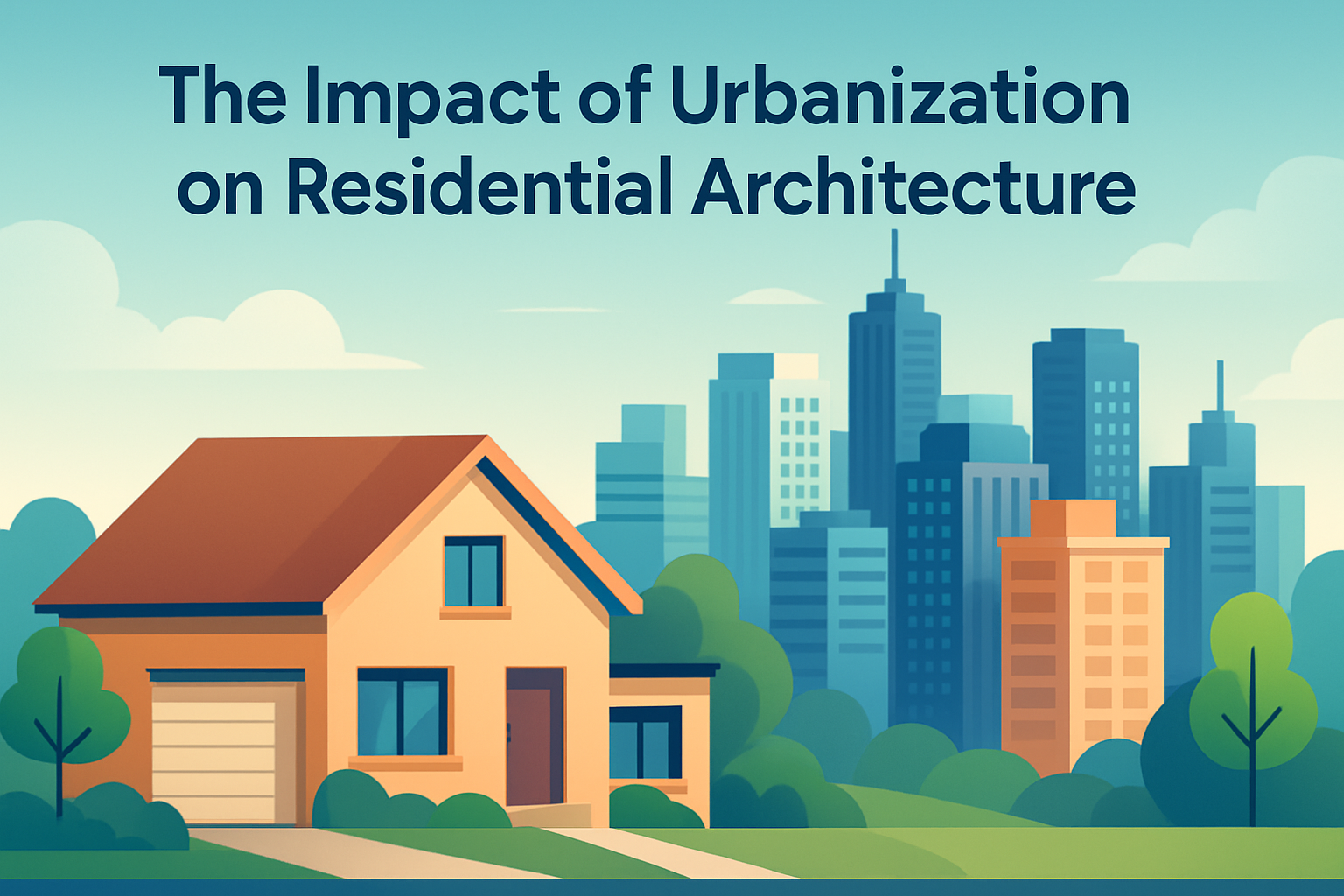
Urbanization is a transformative force that reshapes our landscapes, economies, and societies. This confluence of growth and development is influencing not just where people live but how they live, particularly when it comes to residential architecture. As cities expand, architects and city planners are compelled to innovate and adapt to the dynamic needs of growing urban populations. Understanding the impact of urbanization on residential architecture is crucial, as it affects environmental sustainability, social equity, and quality of life.
At its core, urbanization refers to the increasing concentration of populations in urban areas. It drives the construction of housing that can accommodate a diverse, often dense population. Residential architecture, on the other hand, involves the design and construction of living spaces. The marriage between these two disciplines matters significantly because the choices made in residential architecture directly influence urban living conditions, infrastructure needs, and resource consumption.
As cities become denser, the demand for space-efficient, sustainable, and affordable housing rises. Urbanization impacts how residential buildings are designed, constructed, and utilized. Environmental concerns, cultural expressions, and advancements in building technology further shape these urban architectural landscapes. This article explores the intersections of these themes and practices, highlighting how urbanization is instrumental in shaping the future of residential architecture.
Sustainable Architectural Practices
Urbanization brings both challenges and opportunities for sustainability in residential architecture. With the rise in population density, cities are under pressure to minimize their carbon footprints. This pressure has led to innovations in sustainable architectural practices, where the emphasis is on reducing resource consumption and promoting energy efficiency.
For instance, the concept of green buildings has gained traction globally. These buildings are designed to be environmentally responsible and resource-efficient throughout their life cycle. An exemplary model is the Bosco Verticale in Milan, Italy. These residential towers epitomize the integration of nature with urban living by incorporating vertical gardens that host thousands of plants, improving air quality and providing natural insulation.
Furthermore, sustainable architecture in urban areas often involves retrofitting existing structures with modern energy-saving technologies. This can include solar panels, rainwater harvesting systems, and advanced heating and cooling systems. These practices not only help conserve resources but also enhance the comfort and livability of urban residential spaces.
Innovative Housing Solutions
Innovative housing solutions are imperative in managing the housing shortages and spatial constraints that accompany urbanization. Architects are employing creative strategies to maximize the use of limited space while ensuring comfort and functionality. Concepts such as micro-apartments, co-living spaces, and modular housing are emerging as viable solutions to urban housing dilemmas.
Micro-apartments, for instance, cater to single urban professionals who prioritize location over space. These compact units often include multifunctional furniture and intelligent design to make the most of limited square footage. The development of Carmel Place in New York City, a pioneering micro-unit apartment building, exemplifies the potential of these dwellings in addressing urban housing needs.
Another innovative model gaining popularity is co-living spaces. Designed for communities that emphasize shared values and resources, co-living setups include private bedrooms with shared common areas such as kitchens and living rooms. They foster social interaction while providing cost-effective living options in expensive urban areas.
Cultural and Social Influences
Urbanization does not occur in a vacuum; it intersects with cultural and social dynamics that directly influence residential architecture. As cities become melting pots of cultures and ethnicities, architectural designs are increasingly reflecting this diversity. This cultural infusion is evident in the adaptation of traditional architectural elements to modern urban contexts.
A notable example is the incorporation of traditional Japanese design in many contemporary urban apartments. By adopting elements such as tatami flooring, minimalistic aesthetics, and sliding doors, architects pay homage to cultural heritage while also saving space and promoting sustainability. This blend of traditional and modern has broad appeal for urban dwellers seeking a connection to their cultural roots.
Social considerations also play a critical role in urban residential architecture. As cities grow, ensuring social equity in access to housing becomes crucial. This has led to the rise of mixed-income housing developments that aim to integrate affordable housing with market-rate residences. Such initiatives foster socially diverse communities and prevent economic segregation.
Technological Advancements in Architecture
Advancements in technology are reshaping the landscape of residential architecture in urban settings. The integration of smart home technology, 3D printing, and Building Information Modeling (BIM) demonstrates how technology enhances the functionality and efficiency of urban living spaces.
Smart home technology, for example, enables residents to control lighting, temperature, security, and appliances remotely via smartphone apps. This not only provides convenience but also contributes to energy savings and enhanced security. The incorporation of such technology is becoming increasingly common in new residential developments, especially in tech-savvy cities like San Francisco and Seoul.
| Technological Advancement | Impact on Urban Residential Architecture |
|---|---|
| Smart Home Technology | Improved living comfort, energy efficiency, enhanced security |
| 3D Printing | Cost-effective, rapid construction, customized design options |
| BIM (Building Information Modeling) | Streamlined planning, error reduction, integrated design modifications |
Another breakthrough is 3D printing technology, which allows for the creation of building components using digital models. This innovation holds promise for affordable and rapid construction, particularly in urban areas requiring quick expansion. For example, in Shanghai, a company successfully constructed ten 3D-printed houses in a single day, illustrating the potential of this technology to revolutionize urban housing development.
Building Information Modeling (BIM) is yet another technological tool with a transformative impact. By providing detailed digital representations of buildings, BIM facilitates seamless collaboration among architects, engineers, and contractors, reducing errors and enhancing the efficiency of construction processes.
Environmental and Economic Considerations
The impact of urbanization on residential architecture cannot be assessed without considering environmental and economic factors. As urban areas expand, the environmental footprint of construction and residence poses significant concerns.
From an environmental perspective, urban residential architecture is steering towards sustainable land use practices and reducing urban sprawl. Vertical development is preferred over horizontal expansion to preserve green spaces and diminish ecological disruption. This densification trend is evident in skyscrapers and high-rise residential complexes that characterize the skylines of modern cities like Hong Kong and New York.
Economically, the cost of urban living is an ever-present consideration. Urbanization often leads to increased property values and living costs, which can drive economic displacement of lower-income residents. To address this, cities are exploring policies and incentives that encourage affordable housing development. Inclusionary zoning policies that mandate a portion of new developments to be set aside for affordable housing are examples of efforts to ensure economic diversity within urban neighborhoods.
The integration of renewable energy sources in residential architecture is also gaining ground as a means to offset the economic burden of rising energy costs. Solar panels and wind turbines are becoming integral components of urban housing, providing long-term economic benefits through reduced energy expenses.
Challenges and Future Directions
Despite the positive impacts of urbanization on residential architecture, there are formidable challenges that need to be addressed. Urban areas often face constraints in terms of space, resources, and infrastructure. The rapid pace of urbanization sometimes outstrips the capacity of cities to provide adequate services and infrastructure, leading to issues such as overcrowding and poor living conditions.
Furthermore, urbanization can exacerbate social inequalities. While some benefit from enhanced housing and amenities, others may be marginalized, leading to social tensions. Ensuring inclusivity and equity in urban housing remains a priority for architects and policymakers.
Looking ahead, the future of residential architecture in urban areas will be shaped by ongoing technological advancements, increased emphasis on sustainability, and evolving social dynamics. The development of smart cities that integrate digital technology across urban functions is a promising direction. In such environments, residential architecture will play a pivotal role in ensuring that smart city initiatives contribute positively to urban living.
Moreover, as cities continue to globalize, there is an opportunity for residential architecture to leverage cultural diversity as a source of innovation. By embracing different cultural expressions and design philosophies, architects can create spaces that are not only functional but also resonate with the diverse populations they serve.
Conclusion
In conclusion, urbanization profoundly influences residential architecture by driving innovation in sustainability, technology, cultural integration, and economic strategies. As cities grow and restructure, residential architecture must adapt to meet the changing needs and preferences of urban dwellers. The key takeaways highlight the importance of designing living spaces that are environmentally sustainable, socially inclusive, and technologically adept.
The impacts of urbanization present both opportunities and challenges. However, through effective planning and innovative design, architects and city planners can enhance urban living conditions and contribute to equitable, sustainable development. Readers are encouraged to engage with urbanization policies and advocate for sustainable architectural practices that harmonize with the natural and social environments.
As a next step, exploring one’s local housing market for new developments that incorporate these architectural innovations can provide insights into the evolving landscape of residential architecture. By understanding and supporting these advances, individuals can play a role in shaping sustainable and vibrant urban communities.
Frequently Asked Questions
1. How does urbanization influence the design and functionality of residential architecture?
Urbanization significantly impacts the design and functionality of residential architecture by necessitating more efficient use of decreasing urban space. As cities grow, available land becomes scarcer, pushing architects and designers to think creatively. This often results in vertical living solutions, like high-rise apartments, which maximize space in densely populated areas. Furthermore, functionality must cater to the pressures of urban living. This includes designing homes that incorporate modern technology and sustainable practices to minimize environmental impact. These homes often have to balance the need for privacy with community living, offering shared spaces like roof decks, gyms, and coworking areas to foster interactions and a sense of community.
2. What role does sustainability play in urban residential architectural designs?
Sustainability is a crucial consideration in urban residential architecture due to cities’ enormous environmental footprint. Architects strive to incorporate sustainable practices to lessen this impact, such as using energy-efficient building materials, incorporating solar panels, and designing for natural ventilation to reduce reliance on artificial cooling and heating systems. Green roofs and terraces are increasingly popular, not just for their aesthetic appeal but for their ability to decrease urban heat. Furthermore, sustainable designs consider water conservation through rainwater harvesting and greywater recycling systems. Ultimately, the goal is to reduce the carbon footprint of urban dwellings while promoting a healthier, more resilient way of living.
3. How does urbanization affect housing affordability and accessibility?
Urbanization often drives up the cost of housing due to increased demand and limited supply in urban areas. As more people move into cities seeking opportunities, the competition for housing can lead to soaring real estate prices, making it difficult for many individuals and families to afford suitable accommodations. In response, urban residential architecture sometimes focuses on smaller living spaces, such as micro-apartments, which offer cheaper options but at the cost of space. Architects and planners also explore mixed-use developments and affordable housing projects as strategies to enhance accessibility, often incorporating public amenities and mass transit options to make life in cities viable for a broader demographic.
4. How do architects address the challenge of maintaining local culture and identity in rapidly urbanizing areas?
Maintaining local culture and identity amidst urbanization is a significant challenge for architects. To address this, architects often integrate traditional elements and local architectural styles into new designs. This might involve using materials native to the area or reflecting indigenous building techniques in construction. Additionally, they may prioritize the preservation of historical buildings, blending them into modern developments to maintain a connection to the past. Community engagement is also crucial; architects work with local populations to understand their needs and cultural references, ensuring that new developments respect and enhance cultural identity rather than overpower it.
5. What technological advancements are influencing modern residential architecture in urban settings?
Technological advancements are drastically reshaping modern residential architecture in urban settings. Smart home technologies, powered by the Internet of Things (IoT), play a pivotal role by offering automated solutions for everyday tasks, improving energy efficiency, security, and overall convenience. 3D printing is emerging as an innovative construction technique, enabling faster, more efficient building processes, and reducing material waste. Moreover, the integration of Building Information Modeling (BIM) allows architects to streamline the design and construction process, enhancing collaboration and reducing costs and errors. The incorporation of renewable energy systems, such as solar and wind power, into urban residential designs further underscores the influence of technology in creating sustainable and resilient living spaces in our rapidly evolving cities.