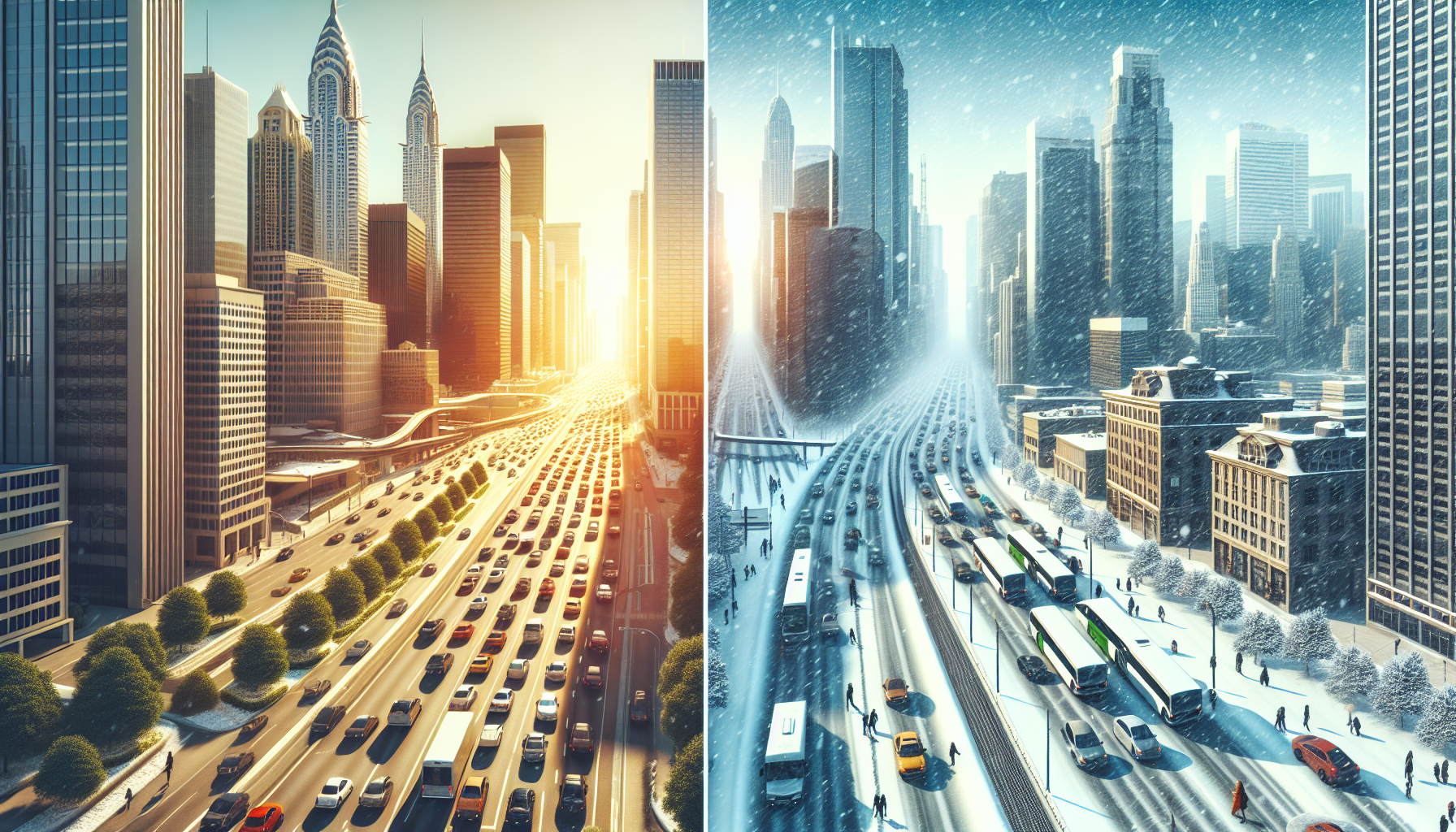
Seasonal changes shape urban mobility more than most city residents realize. Temperature swings, rainfall patterns, snowfall, daylight hours, school calendars, tourism peaks, and air-quality alerts all influence how people move through streets, sidewalks, bike lanes, transit systems, and parking networks. Urban mobility refers to the full system of movement within a city: public transport, private vehicles, walking, cycling, ride-hailing, micromobility, freight deliveries, and the infrastructure and policies that connect them. When seasons shift, demand patterns, safety risks, maintenance requirements, operating costs, and traveler behavior shift with them. For transport planners, fleet managers, and commuters, understanding the impact of seasonal changes on urban mobility is essential because reliable movement underpins access to work, education, healthcare, and commerce. In practice, I have seen the same corridor perform like two different networks between summer and winter. A bus lane that moves smoothly in April can become unreliable during a December storm, while a downtown bike route that is underused in January may become saturated by May. Cities that treat mobility as static usually react too late. Cities that plan seasonally build resilience, reduce congestion, and protect safety year-round.
The seasonal effect is not limited to extreme weather. Small changes matter. A ten-minute reduction in daylight can alter pedestrian comfort and increase crash exposure during evening peaks. A stretch of humid heat can shift travelers from walking to air-conditioned buses. Heavy autumn leaf fall can make painted cycle lanes slick enough to deter casual riders. University terms, holiday shopping, and summer festivals also reshape traffic composition. Because this article is a hub for the miscellaneous side of urban mobility and transportation, it brings together the operational, behavioral, environmental, and policy angles that are often discussed separately. It explains what changes by season, which modes are most affected, how cities can respond, and where the tradeoffs sit. The central point is straightforward: seasonal changes do not just disrupt urban mobility; they reveal how adaptable, equitable, and well-managed a transport system really is.
How Seasons Change Travel Demand and Mode Choice
Travel demand changes seasonally because people change both where they go and how they get there. In colder months, many cities see fewer cycling trips, more transit boardings on inclement days, and more private car use among travelers who can afford flexibility. In warmer months, walking and cycling generally rise, leisure trips increase, and school-related trips fall during holiday periods. The pattern varies by climate and urban form. In compact European cities with protected bike networks, winter cycling can remain strong if snow clearance is fast. In lower-density North American cities, a cold snap often pushes riders back into cars because distances are longer and alternatives are weaker.
Mode choice responds to perceived comfort as much as actual conditions. People rarely calculate temperature alone. They weigh shelter, wait time, transfer quality, and reliability. A commuter may choose a tram over a bike not because rain makes cycling impossible, but because tram stops have canopies and real-time arrival screens. Conversely, a shaded greenway can attract summer cyclists even when nearby bus service is frequent. Travel behavior data from agencies using automatic passenger counters, bike counters, and mobile location analytics consistently shows that short urban trips are the most sensitive to weather. If a three-kilometer trip becomes unpleasant, the traveler easily switches modes or cancels the trip. Long work commutes are less elastic, which is why peak-hour pressure remains even in bad weather.
Seasonality also changes trip timing. In winter, dark mornings can delay discretionary travel, while early nightfall compresses shopping and errands into daylight hours. During heat waves, cities in Southern Europe and the Middle East often observe shifts toward earlier and later travel, with reduced midday activity. Tourism amplifies these swings. A historic center may be commuter-dominated in February and pedestrian-dominated in July. Freight patterns change too, especially during holiday delivery surges. Last-mile couriers occupy curb space differently in December than in March, affecting buses, cyclists, and loading operations. Urban mobility planning works best when agencies forecast these seasonal demand shifts instead of relying on annual averages that hide operational stress points.
Weather, Safety, and Infrastructure Performance
Seasonal weather directly affects safety and the physical performance of transport infrastructure. Rain reduces tire grip, lengthens braking distances, obscures lane markings, and lowers driver visibility. Snow and ice create even greater hazards for road traffic, bus operations, cycling, and walking. Heat brings different risks: rail buckling, asphalt rutting, vehicle overheating, and heat stress for people waiting at unsheltered stops. Wind can destabilize cyclists and disrupt overhead power systems. Even drainage capacity becomes a mobility issue when intense storms flood underpasses or block curb ramps. A resilient city therefore treats weather response as a transportation function, not only as a public works issue.
Pedestrians and cyclists are especially exposed to seasonal hazards because they interact directly with surface conditions. I have seen sidewalks cleared days after roads were plowed, effectively telling residents that driving mattered more than walking. That choice has measurable consequences. Falls rise when ice remains on footways, and cycle volumes drop sharply when protected lanes are not maintained to the same standard as vehicle lanes. Transit reliability also depends on small infrastructure details. Frozen switch points can delay tram lines. Wet leaves on rail can reduce adhesion and force slower operations. Potholes formed by freeze-thaw cycles increase maintenance costs and can damage buses, delivery vans, and emergency vehicles.
| Seasonal condition | Main mobility impact | Most affected modes | Practical city response |
|---|---|---|---|
| Heavy rain | Slower traffic, flooding, lower visibility | Buses, walking, cycling, deliveries | Clear drains, raise crossings, improve shelter, adjust signal timing |
| Snow and ice | Reduced traction, delays, crash risk | Buses, cars, bikes, pedestrians | Priority plowing, deicing, winter tire enforcement, sidewalk clearance |
| Extreme heat | Track stress, heat illness, lower comfort | Transit riders, rail, walking | Shade, water access, heat-resistant materials, speed management |
| Autumn leaf fall | Slippery surfaces, rail adhesion loss | Cycling, trams, commuter rail | Surface sweeping, rail treatment, targeted warnings |
Safety outcomes improve when agencies move from reactive maintenance to seasonal preparedness. That means using pavement sensors, weather forecasts, and asset inventories to prioritize interventions before failure occurs. It also means designing infrastructure for four seasons instead of ideal conditions. Sheltered transit stops, permeable surfaces, high-visibility markings, anti-icing plans, and continuous sidewalk maintenance provide benefits every year. Seasonal changes on urban mobility are therefore not just about inconvenience; they are a test of whether infrastructure standards match real operating conditions.
Public Transit Operations Across the Year
Public transit is often judged on annual punctuality or ridership, but seasonal variation explains much of what riders experience day to day. Buses face slower boarding in wet weather, more bunching in mixed traffic during holiday shopping periods, and route detours during storms or street events. Rail networks contend with heat restrictions, ice, signal failures, and platform crowding driven by tourism or school terms. Agencies that manage these patterns well use seasonal service planning, not static timetables. They adjust running times, vehicle allocation, operator staffing, cleaning cycles, and customer communications according to anticipated conditions.
Winter operations are usually the most resource-intensive. Snow clearance around depots, switch heaters, vehicle preheating, and standby crews all cost money, but these measures prevent larger service failures. In cities such as Helsinki, Stockholm, and Montreal, transit agencies treat winter readiness as core operating practice, with predefined thresholds for frequency changes and maintenance dispatch. Heat resilience is increasingly important as summers become more extreme. London, Paris, and Washington have all faced service stress during hot periods because older assets were not designed for persistent high temperatures. Air conditioning helps riders, but it also raises energy demand and maintenance complexity. The stronger strategy combines fleet upgrades with shaded stops, ventilation improvements, and realistic contingency schedules.
Communication matters almost as much as operations. Riders tolerate seasonal disruption better when information is specific, timely, and credible. Saying service is delayed due to weather is less useful than stating that bus travel times on a given corridor are running twelve minutes slower because of flooding near a key junction. Agencies with integrated apps, open data feeds, and multilingual alerts perform better because they support traveler decisions before passengers arrive at the stop. Seasonal mobility planning should therefore include service design, fleet maintenance, and customer information as one coordinated system.
Walking, Cycling, and Micromobility in Different Seasons
Walking is the most universal urban mode, yet it is often the least protected from seasonal disruption. Summer heat can make a short trip physically stressful, especially for older adults, children, and people with cardiovascular conditions. Winter darkness can reduce perceived personal security as well as actual visibility. Rain affects accessibility too; puddled crossings and blocked curb ramps can turn a routine trip into an impossible one for wheelchair users. When cities improve shade, lighting, drainage, benches, and winter maintenance, pedestrian activity becomes more stable across the year.
Cycling and micromobility are highly sensitive to infrastructure quality. Casual riders disappear quickly when conditions feel unsafe, but experienced riders continue if networks are protected and maintained. That distinction explains why cities like Oulu in Finland sustain notable winter cycling rates: separated routes are cleared early, intersections are treated, and riders trust the system. Shared scooters and bikes introduce extra seasonal management questions. Battery performance drops in cold weather, tires behave differently on wet surfaces, and parking disorder can worsen when snow narrows footways. Operators need seasonal rebalancing, maintenance inspections, and sometimes temporary geofenced restrictions in hazardous areas.
Seasonal comfort also determines whether active travel grows beyond its core user base. People do not need perfect weather to walk or ride; they need a network that reduces friction. Trees, arcades, awnings, drinking fountains, wind screens, and secure parking may sound like small amenities, but they materially change mode choice. Urban mobility strategies that aim to increase walking and cycling should track seasonal retention, not just annual totals. If ridership collapses every winter or every heat wave, the network still has a resilience gap.
Equity, Freight, and Policy Responses
Seasonal mobility impacts are not shared equally. Low-income residents are more likely to rely on walking, buses, and exposed waiting environments. Shift workers often travel before dawn or after dark, when winter conditions are harsher and service is thinner. Older adults and disabled travelers face greater risk from uncleared sidewalks, broken elevators, and heat exposure. In many cities, wealthier travelers can absorb seasonal disruption by switching to remote work, ride-hailing, or private cars, while essential workers cannot. Fair mobility policy starts by recognizing that seasonal reliability is an equity issue, not merely a convenience issue.
Freight and curb management deserve equal attention. Retail peaks, food delivery surges, and weather-related consolidation of shipments can intensify loading demand in specific seasons. If curb space is unmanaged, delivery vehicles double-park, blocking bus lanes and bike lanes when networks are already under stress. Better policy includes dynamic curb pricing, designated loading windows, micro-distribution hubs, and e-cargo bike delivery in dense districts. These tools reduce conflicts and can perform especially well during summer tourism peaks or winter shopping seasons.
The most effective city responses combine data, design, and governance. Agencies should analyze seasonal origin-destination data, crash patterns, maintenance logs, and weather records together rather than in separate silos. Capital projects should be tested for year-round performance: Will this plaza still drain in cloudburst conditions? Will this bus stop provide shade in August and wind protection in January? Operationally, cities need formal seasonal playbooks with trigger points, responsibilities, and public communication rules. The impact of seasonal changes on urban mobility becomes manageable when cities plan for variability instead of treating each disruption as unusual.
Urban mobility is strongest when it is designed for change. Seasonal shifts alter demand, comfort, safety, operating cost, and the balance between transport modes, but they do not have to produce chaos. The evidence across transit, walking, cycling, driving, and freight is consistent: cities that anticipate weather, maintain infrastructure equitably, and communicate clearly keep people moving more reliably throughout the year. The practical lesson is that annual averages are not enough. A corridor, fleet, or sidewalk network must be evaluated in summer heat, winter ice, heavy rain, school holidays, and tourist peaks if planners want a true picture of performance.
For readers building a broader understanding of urban mobility and transportation, this miscellaneous hub connects the issues that cut across every mode. Seasonal change reveals where systems are fragile, where policies favor one group over another, and where modest design improvements can deliver large benefits. If you manage transport, start with a seasonal audit of your busiest corridors, stops, and walking routes. If you are researching the topic, use this hub as a guide to explore transit resilience, active travel infrastructure, curb management, and equitable street design in more detail. Cities cannot control the seasons, but they can control how well their mobility networks respond.
Frequently Asked Questions
How do seasonal changes affect urban mobility in everyday city life?
Seasonal changes influence nearly every part of how people and goods move through a city. In warmer months, longer daylight hours and milder temperatures typically encourage more walking, cycling, outdoor social activity, and recreational travel. Sidewalks, bike lanes, parks, and commercial corridors often see increased use, while transit ridership may shift toward leisure trips in addition to commuting. In colder or wetter seasons, travelers tend to rely more heavily on enclosed and motorized options such as buses, trains, private vehicles, and ride-hailing services, especially when comfort, safety, and travel time become bigger concerns.
Weather conditions also affect the reliability and performance of infrastructure. Heavy rain can slow traffic, reduce visibility, and increase flooding risks on streets and underpasses. Snow and ice can make roads, sidewalks, station platforms, and bike routes hazardous, often requiring plowing, salting, and service adjustments. Even seasonal daylight changes matter, because darker mornings and evenings can alter travel behavior, increase perceived safety concerns, and affect when people choose to travel. Beyond weather itself, seasonal rhythms such as school schedules, holiday shopping, tourism peaks, and construction cycles create major fluctuations in congestion, parking demand, and transit crowding. Taken together, these factors show that urban mobility is not static; it changes continuously with the seasons, and cities that plan for those shifts tend to deliver safer, more efficient transportation systems.
Why do public transportation systems often struggle more during certain seasons?
Public transportation systems are highly sensitive to seasonal conditions because they depend on coordinated operations, fixed infrastructure, and predictable travel patterns. During winter, snow, ice, freezing rain, and extreme cold can disrupt tracks, switches, overhead power systems, bus traction, door mechanisms, and station access points. Delays can compound quickly when vehicles move more slowly, stops take longer, and road congestion interferes with bus operations. In rainy seasons, flooding around stations, tunnels, or low-lying corridors can reduce service frequency or force detours. Summer heat can also be a serious problem, affecting rail expansion, vehicle cooling systems, and passenger comfort, especially in older systems not designed for extreme temperatures.
At the same time, demand is rarely constant throughout the year. School terms can dramatically increase peak-hour loads, while holidays and tourist seasons may shift riders toward different routes and times of day. Special events, seasonal shopping, and vacation travel can create uneven surges that strain capacity. Transit agencies must also balance maintenance schedules around weather windows, meaning some repairs are easier in dry or mild conditions and more difficult during storms or deep winter. The result is that seasonal pressures affect both supply and demand at once. Strong systems respond with flexible scheduling, weather-resistant infrastructure, real-time passenger information, preventive maintenance, and coordinated emergency planning. When transit agencies anticipate seasonal risks rather than simply reacting to them, they can reduce disruptions and keep cities moving more reliably.
What happens to walking, cycling, and micromobility when the seasons change?
Walking, cycling, and micromobility options such as e-scooters and bike-share tend to experience some of the most visible seasonal swings in urban mobility. In spring and summer, favorable weather and longer days generally increase the appeal of active travel. More people choose to walk short distances, commute by bicycle, or use shared scooters for first-mile and last-mile trips. Streets with protected bike lanes, shaded sidewalks, traffic calming, and good lighting often see especially strong seasonal gains because they make active modes feel both safe and convenient. These shifts can reduce vehicle congestion, lower emissions, and support local businesses by increasing foot traffic.
In fall and winter, however, active mobility often declines if cities do not maintain infrastructure well. Rain, snow, ice, wet leaves, and early darkness can create slipping hazards and reduce visibility for both users and motorists. If bike lanes and sidewalks are not cleared as quickly as major roads, people may abandon these modes and return to private cars or crowded transit. That said, seasonal decline is not inevitable. Cities that invest in all-season infrastructure, prompt snow removal, drainage improvements, weather-protected waiting areas, and safer street design can preserve much higher year-round walking and cycling rates. Public education, seasonal equipment such as winter tires for bikes, and responsive micromobility fleet management also help. The key lesson is that people do not stop wanting convenient, affordable short-distance travel in bad weather; they stop using modes that feel unsafe, uncomfortable, or unreliable.
How do seasonal factors influence traffic congestion, parking demand, and deliveries?
Seasonal factors can significantly reshape how crowded streets become, where vehicles accumulate, and when freight activity intensifies. During back-to-school periods, commuter traffic often rises sharply as school drop-offs, altered work schedules, and university travel patterns add pressure to local road networks. Holiday shopping seasons can increase parking demand near retail corridors and generate more delivery vans, curbside loading activity, and ride-hailing pickups. Summer tourism may congest downtown districts, waterfronts, airports, entertainment areas, and hotel zones, while also shifting demand away from purely commuter-oriented corridors. In some cities, road construction is concentrated in warmer months, which can reduce lane capacity even as travel volumes increase.
Weather-related seasonality can intensify these challenges. Rain and snow generally reduce traffic speeds and roadway capacity, leading to longer travel times and more unpredictable congestion. Parking behavior changes as well; in winter, people may avoid walking longer distances from remote lots, increasing demand for spaces closer to destinations. Temporary parking restrictions for snow removal can further complicate the system. Freight and delivery networks are especially sensitive because seasonal peaks in consumer demand can coincide with difficult road conditions and limited curb space. Effective city responses include dynamic curb management, flexible signal timing, demand-responsive parking policies, off-peak delivery incentives, and better coordination between freight operators and local government. Understanding seasonal variation helps cities move beyond one-size-fits-all traffic planning and toward more adaptive mobility management.
How can cities make urban mobility more resilient across all seasons?
Building seasonal resilience in urban mobility requires cities to plan for variation rather than designing systems around average conditions. A resilient approach begins with data: tracking ridership changes, traffic patterns, sidewalk and bike lane usage, crash trends, weather disruptions, and seasonal demand at different times of year. With that information, city leaders can identify where systems are most vulnerable, whether that means flood-prone intersections, transit stops exposed to heat, sidewalks that are rarely cleared after snowstorms, or neighborhoods that lose mobility options during school breaks or tourism peaks. Resilience also depends on infrastructure quality. Good drainage, durable pavement materials, protected transit shelters, shade trees, all-weather bike facilities, reliable lighting, and accessible sidewalks all improve performance across changing conditions.
Operational flexibility is just as important. Transit agencies can adjust schedules seasonally, pre-position equipment before storms, and communicate service changes in real time. Streets departments can prioritize sidewalk and bike lane maintenance alongside vehicle lanes so mobility remains equitable for people who do not drive. Cities can also coordinate land use, school transportation planning, freight management, and public health responses, especially during heat waves or air-quality alerts that affect travel behavior. Long-term resilience means recognizing that climate variability is making seasonal patterns less predictable and often more extreme. Cities that invest in multimodal networks, redundant travel options, strong maintenance practices, and inclusive planning are better equipped to handle both expected seasonal shifts and unexpected disruptions. In practical terms, the most resilient urban mobility systems are the ones that give residents multiple safe, reliable ways to move no matter the month, weather, or demand pattern.