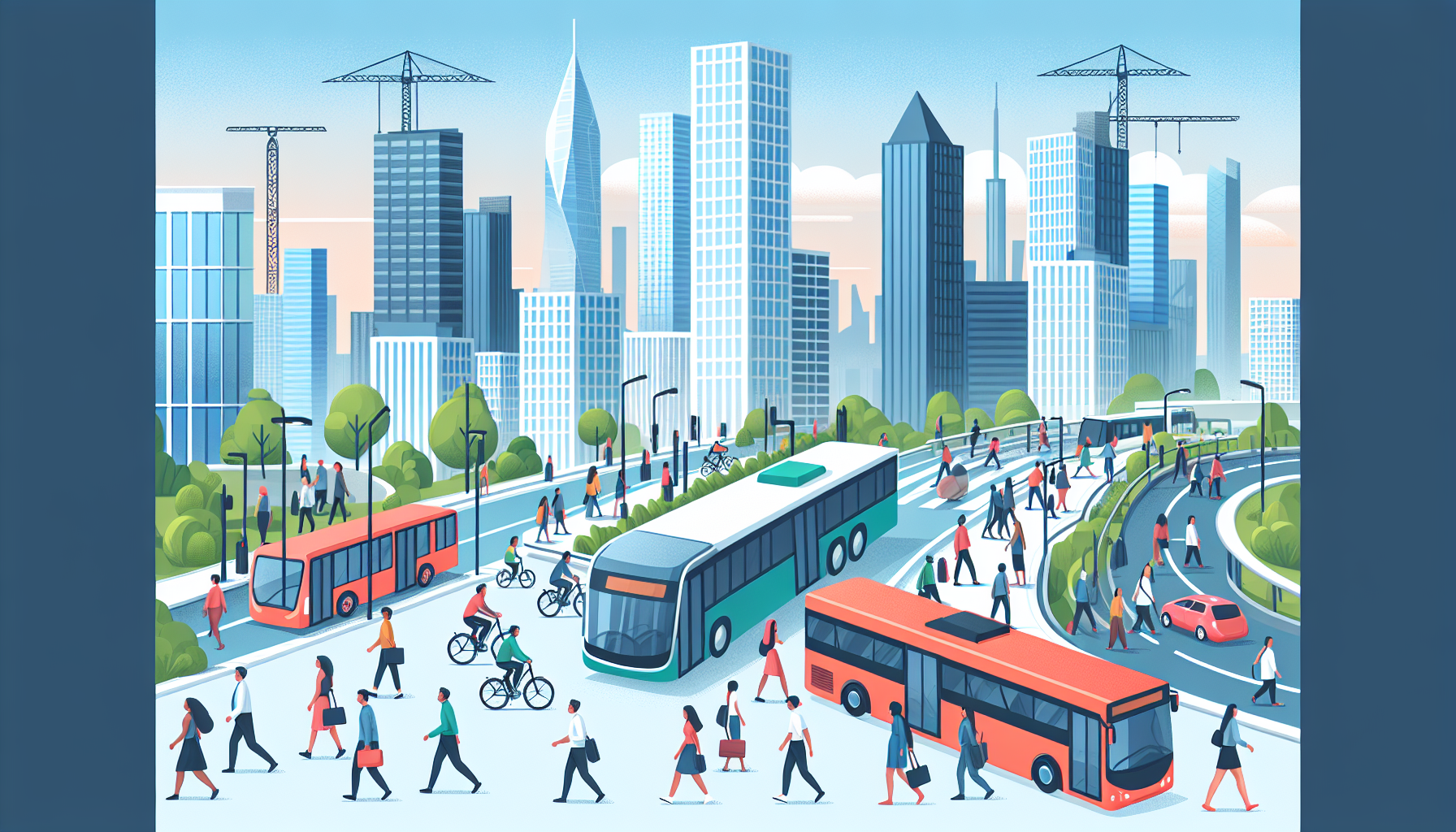
Population growth is reshaping urban transportation in every major city, affecting how people move, how infrastructure is funded, and how planners prioritize limited street space. In simple terms, population growth means a sustained increase in the number of people living in a city or metropolitan area, while urban transportation includes the systems, policies, and physical networks that enable travel: roads, buses, rail, walking routes, cycling lanes, freight corridors, parking management, and digital mobility services. When more residents, workers, and visitors compete for the same space, transportation demand rises faster than many cities can expand capacity, and the result is visible in congestion, longer commutes, crowding, emissions, and inequitable access.
I have worked on transportation content and planning analysis long enough to see the same pattern repeat: cities that treat growth as a temporary spike fall behind, while cities that plan for density, mixed land use, and multimodal travel adapt far better. Population growth matters because transportation is not only about movement; it shapes economic productivity, housing choices, public health, and climate outcomes. A growing city with weak transit and unsafe streets can trap people in long, expensive commutes. A growing city with coordinated transportation policy can support jobs, reduce car dependency, and improve daily life. This hub article explains the full impact of population growth on urban transportation, from capacity pressure and infrastructure financing to technology, equity, freight, and long-term planning.
Why Population Growth Puts Immediate Pressure on Urban Transport Systems
The first impact of population growth on urban transportation is straightforward: more people generate more trips. Those trips include commuting, school travel, shopping, deliveries, healthcare access, and social activities. Even if car ownership rates stay flat, total travel demand rises when population increases. In practice, travel demand often grows faster than population because expanding cities also generate longer trip distances between housing and jobs. This is especially true when housing supply lags and residents move farther from employment centers.
Road networks have a limited ability to absorb extra demand. Transportation engineers describe this with volume-to-capacity ratios: once a corridor approaches its practical limit, small increases in traffic can cause disproportionate delays. I have seen corridors perform adequately at one level of demand and then deteriorate rapidly after a modest rise in population and vehicle trips. Transit systems face similar thresholds. A bus route that is manageable at 70 percent load becomes unreliable when crowding slows boarding, dwell times increase, and late trips cascade through the schedule. Rail systems can add frequency, but only if signaling, rolling stock, power supply, and station capacity support it.
Population growth also stresses infrastructure that people do not always notice: sidewalks, intersections, curb space, bike parking, bus depots, maintenance facilities, and traffic management centers. In many growing cities, curb space has become one of the most contested transportation assets because private vehicles, ride-hailing pickups, buses, freight deliveries, and micromobility devices all compete for the same frontage. Without active management, growth produces friction everywhere, not just on highways.
Congestion, Travel Time, and the Hidden Cost of Delay
Congestion is the most visible consequence of urban population growth, but it is often misunderstood. Traffic congestion is not just too many cars; it is a mismatch between travel demand and available capacity at specific times and places. Population growth magnifies that mismatch. As more households settle in urban areas, peak periods become sharper on some corridors and more spread out on others, depending on land use and work patterns. The rise of hybrid work has changed commuting schedules, yet many cities still see severe demand spikes tied to schools, logistics, and service-sector shifts.
The cost of congestion goes beyond frustration. Delays reduce worker productivity, increase freight costs, and make public transport less reliable when buses operate in mixed traffic. The Texas A&M Transportation Institute has long documented billions of hours of annual travel delay in the United States, illustrating how congestion becomes an economic drag rather than a simple inconvenience. For lower-income workers, delay can mean missed shifts, childcare penalties, or reduced job access. For emergency services, unreliable travel times can affect response performance.
There is also a policy lesson here: adding road lanes rarely solves congestion permanently in growing cities. Induced demand is well established in transportation research. New road capacity can temporarily reduce delay, but easier driving encourages longer trips, different route choices, and more development patterns that depend on car travel. Over time, congestion returns. Cities such as London, Singapore, and Stockholm have shown that demand management, pricing, and strong public transport can stabilize networks more effectively than repeated road widening.
Public Transit Capacity, Reliability, and Network Redesign
Population growth can strengthen public transit if cities respond strategically, because denser cities support frequent service. However, growth can also overwhelm underfunded systems. The key issue is not just ridership volume; it is whether the network matches changing travel patterns. Many legacy transit systems were designed around commuting to a central business district. Population growth in outer districts, polycentric job markets, and decentralized services require crosstown routes, bus priority, integrated fares, and better first-mile and last-mile connections.
In practical planning work, the fastest gains often come from redesigning bus networks before building new rail lines. Bus network redesigns in cities like Houston and Auckland showed that simpler, higher-frequency grids can improve access significantly without proportional cost increases. Dedicated bus lanes, all-door boarding, off-board fare payment, and transit signal priority can raise throughput and reliability quickly. Rail remains important for very high-demand corridors, but bus service is often the first system to absorb new residents.
Transit agencies in growing cities must also plan for state of good repair. Expanding service while neglecting maintenance creates a fragile system. Fleet renewal, track rehabilitation, accessibility upgrades under standards such as the Americans with Disabilities Act, and real-time passenger information are not optional extras. They determine whether transit remains usable as demand rises. When agencies fail to maintain reliability, population growth can push travelers toward private cars, worsening congestion for everyone.
Land Use, Density, and Transportation Demand
Urban transportation outcomes are inseparable from land use. Population growth does not automatically cause transportation crisis; crisis emerges when growth is poorly distributed. Compact, mixed-use development around transit corridors typically generates fewer car trips per resident than low-density sprawl. This is one reason transit-oriented development has become a central strategy in cities from Vancouver to Copenhagen to parts of Tokyo. When housing, jobs, schools, and services are closer together, more trips can be completed by walking, cycling, or short transit rides.
I have repeatedly found that transportation problems presented as roadway issues are often land-use issues in disguise. If a city permits housing growth far from employment clusters and does not require multimodal access, commute distances increase and car dependency becomes structurally embedded. Parking minimums compound the problem by making driving artificially convenient and consuming land that could support housing or public space. By contrast, reduced parking requirements, mixed-use zoning, and corridor-based development can lower per-capita transportation demand while accommodating more residents.
Good land-use coordination also protects freight and service access. Growing cities need housing, but they also need loading zones, industrial land, and delivery routes. Ignoring those needs creates conflict between residential growth and urban logistics. Balanced planning recognizes that population growth changes both personal travel and goods movement patterns.
Equity, Affordability, and Access to Opportunity
The impact of population growth on urban transportation is not evenly distributed. Higher-income households can often adapt by moving closer to jobs, owning multiple vehicles, or using ride-hailing services. Lower-income residents, older adults, and people with disabilities face much tighter constraints. When population growth drives up housing costs in central neighborhoods, residents are pushed to peripheral areas where transportation options are weaker. The result is a heavier transport burden: longer commutes, higher travel costs, and reduced access to healthcare, education, and employment.
Transportation equity means more than placing a bus stop in every district. It requires measuring travel time, cost, safety, reliability, and accessibility. Tools such as accessibility mapping, origin-destination analysis, and Title VI service equity reviews help agencies understand who benefits and who is left behind. A city can report transit expansion while still failing residents if service is infrequent, inaccessible, or disconnected from actual job centers.
| Growth Impact | Typical Transportation Effect | Best Policy Response |
|---|---|---|
| Rising central housing costs | Longer commutes from outer suburbs | Frequent regional transit and more infill housing |
| Crowded bus corridors | Unreliable arrivals and pass-ups | Bus lanes, larger fleets, higher frequency |
| More curbside activity | Conflicts among freight, buses, and pickups | Curb pricing and designated loading zones |
| Growth in walking districts | Safety risk at intersections | Traffic calming and protected crossings |
Affordability matters as much as availability. Fare policy can either support mobility or suppress it. Income-based discounts, fare capping, integrated regional ticketing, and employer-supported transit benefits help growing cities preserve access. The most effective systems treat transportation as a pathway to opportunity, not merely a technical service.
Environmental, Safety, and Public Health Consequences
As urban populations grow, transportation choices become central to environmental performance. If additional travel demand is met mainly by private cars, fuel use and greenhouse gas emissions rise, even where vehicles are becoming cleaner. Road traffic also contributes to particulate pollution, nitrogen oxides, noise, and heat retention. Electrification reduces tailpipe emissions, but it does not solve congestion, crash risk, or space consumption. That distinction is important. A city full of electric cars can still be gridlocked and unsafe.
Population growth can either worsen or improve environmental outcomes depending on mode share. Dense cities with strong transit, walking, and cycling networks often have lower per-capita transportation emissions than sprawling regions. This is why climate action plans increasingly integrate transportation demand management, zero-emission buses, vehicle charging, and street redesign. Paris, for example, has paired public space reallocation with cycling expansion, while many Chinese cities have electrified large bus fleets at scale.
Safety is equally critical. More residents mean more interactions among vehicles, pedestrians, cyclists, and delivery services. Without design changes, crash exposure increases. The proven countermeasures are clear: lower operating speeds, protected bike lanes, shorter crossing distances, raised intersections, daylighting at corners, and better enforcement of dangerous driving behaviors. Public health benefits follow when people can walk and cycle safely. Reduced sedentary travel, cleaner air, and lower injury rates are transportation outcomes with direct medical and social value.
Technology, Data, and Managing Growth More Intelligently
Technology does not eliminate the impact of population growth on urban transportation, but it helps cities manage it better. The most useful tools are often not flashy consumer apps; they are operational systems that improve decision-making. Automatic passenger counters, smart fare systems, traffic signal coordination, bus lane cameras, general transit feed specification data, and curb management platforms allow agencies to see where demand is changing and intervene faster.
Data should guide service design, but it must be interpreted carefully. Mobile phone data and app-based trip records reveal movement patterns, yet they can underrepresent residents without smartphones or bank accounts. I have seen agencies make stronger decisions when they combine digital data with onboard surveys, manual counts, and direct community consultation. Good planning uses data to test assumptions, not replace local knowledge.
Emerging tools such as digital twins, adaptive signals, and demand-responsive transit have value in specific contexts. However, technology works best when paired with basic policy discipline. A city does not solve overcrowded buses with a new app if buses remain stuck in traffic. It does not solve unsafe streets with sensors if roadway design still encourages speeding. The strongest growth-management strategy is to use technology to support proven transportation principles: prioritize high-capacity modes, manage scarce street space, and publish clear performance measures.
How Cities Can Plan for Population Growth Without Losing Mobility
Successful cities plan for growth before systems fail. The core approach is integrated transportation planning linked to housing, land use, finance, and climate policy. Forecasting matters, but it must be realistic. Population projections should be tied to employment forecasts, school enrollment, freight demand, and development approvals. Scenario planning is especially useful because it tests how different growth patterns affect mode share, vehicle miles traveled, and infrastructure costs.
Funding is the hard part. Major transit expansions require stable revenue, and maintenance needs compete with capital ambitions. Cities typically combine fare revenue, local taxes, value capture, development impact fees, national grants, and public-private delivery models. There is no universal formula, but one rule holds: operating funding is as important as construction funding. A new line or corridor fails if the city cannot afford frequent, reliable service.
Policy sequencing also matters. Quick-build bus lanes, safer intersections, parking reform, and curb regulation can deliver visible improvements within months. Larger projects such as metro extensions, bus rapid transit corridors, and regional rail modernization take years but create lasting capacity. The best urban transportation strategies combine short-term operational wins with long-term network investment. If your city is growing, the practical next step is to audit where demand is rising, protect transit corridors, and align every transport decision with the kind of urban growth you want to support.
Frequently Asked Questions
1. How does population growth affect urban transportation systems?
Population growth increases the number of daily trips made across a city, which places greater pressure on every part of the transportation network. As more people live, work, shop, and attend school in the same metropolitan area, roads become more congested, public transit vehicles become more crowded, and competition for curb space, parking, and street access intensifies. Even small increases in population can create major operational challenges when infrastructure is already near capacity.
In practical terms, growing cities often experience longer commute times, more unreliable travel, and higher maintenance demands on roads, bridges, transit fleets, and pedestrian facilities. Population growth also changes travel patterns. New housing may be built far from major job centers, which can increase trip distances and put pressure on highways and regional transit. At the same time, denser neighborhoods may generate more demand for walking, cycling, and frequent bus or rail service. This means transportation systems must adapt not just to more people, but to more complex and varied movement needs.
Another important effect is that population growth forces cities to make harder choices about how limited street space is used. A single corridor may need to serve drivers, buses, cyclists, delivery vehicles, emergency services, and pedestrians all at once. As demand rises, planners often need to prioritize modes that move more people efficiently, such as transit, walking, and cycling, rather than simply expanding space for private cars. In that sense, population growth does not just increase transportation demand; it changes the planning priorities and performance expectations for the entire urban mobility system.
2. Why does traffic congestion often get worse as city populations increase?
Traffic congestion typically worsens with population growth because the number of vehicles and trips rises faster than the available roadway capacity. When more residents are added to a city, they generate additional commuting trips, school drop-offs, shopping trips, freight deliveries, ride-hailing activity, and service calls. If the transportation network does not expand or diversify quickly enough, those extra trips are funneled onto the same roads at similar times of day, creating bottlenecks and slowdowns.
Congestion is not caused only by more cars. It is also shaped by land use patterns, job concentration, housing affordability, and travel behavior. For example, if rising population pushes lower- and middle-income households farther from employment centers, more people may be forced into longer car commutes. Likewise, if public transit is overcrowded, infrequent, or unavailable, residents may have little choice but to drive. In fast-growing cities, the problem is often structural: transportation demand grows across multiple corridors, but road expansion alone cannot keep pace with urban development.
There is also a well-documented limit to road widening as a congestion solution. New lanes may temporarily increase capacity, but they often encourage additional driving over time, a phenomenon known as induced demand. As a result, congestion can return even after expensive roadway expansions. That is why many transportation experts focus on managing demand and improving alternatives, such as reliable transit, safe cycling infrastructure, walkable mixed-use neighborhoods, and smarter traffic operations. In growing cities, reducing congestion usually depends less on adding asphalt and more on giving people practical ways to travel without relying on a private vehicle for every trip.
3. How does population growth influence public transit planning and investment?
Population growth has a direct and powerful impact on public transit planning because it increases ridership demand, shifts travel corridors, and raises expectations for service frequency, reliability, and coverage. As more people move into a city, transit agencies must determine where demand is increasing fastest, which routes are overcrowded, and which neighborhoods remain underserved. This often requires investments in more buses and rail cars, upgraded stations, expanded maintenance facilities, and better technology for scheduling, payment, and passenger information.
Growth also changes the economics of transit. In denser areas, more people living and working near transit corridors can make frequent bus and rail service more efficient and cost-effective. High population concentrations support all-day service, stronger ridership, and better returns on infrastructure investments. At the same time, rapid growth can strain transit budgets. Agencies may need to increase staffing, energy use, fleet replacement, and capital spending long before new tax revenues fully catch up. This creates a common challenge in growing metropolitan regions: demand for transit improves the case for investment, but funding and implementation often lag behind need.
From a planning standpoint, population growth pushes agencies to think beyond simple expansion. They must evaluate whether transit service connects housing to jobs, education, healthcare, and commercial areas in an equitable way. They also need to coordinate with local governments on zoning, development intensity, street design, and station-area planning. The most successful response is usually an integrated one, where land use and transit investment reinforce each other. In a growing city, public transit works best when it is treated not as a backup option, but as a central tool for moving large numbers of people efficiently and sustainably.
4. What challenges does population growth create for walking, cycling, and street space allocation?
As urban populations grow, sidewalks, intersections, bike lanes, crossings, and curbside areas must accommodate more users with very different needs. What may once have been a lightly used street can quickly become a high-conflict space where pedestrians, cyclists, buses, private vehicles, delivery vans, scooters, and ride-hailing vehicles all compete for room. This creates safety concerns, operational delays, and pressure on city officials to redesign streets in ways that better reflect how people actually move through dense urban areas.
Walking and cycling often become more important in growing cities because they are space-efficient, low-cost, and well suited to shorter urban trips. However, population growth exposes weaknesses in existing infrastructure. Narrow sidewalks, missing crosswalks, unsafe intersections, disconnected bike routes, and poor accessibility for older adults and people with disabilities become more serious problems when foot and bike traffic increases. In many cases, streets designed primarily for vehicle throughput no longer match the realities of a denser population that needs safe, multimodal access.
Street space allocation therefore becomes one of the most important policy questions in urban transportation. Cities may need to convert parking lanes into bus lanes, protected bike lanes, parklets, loading zones, or wider sidewalks. These decisions can be politically difficult, but they are often necessary to move more people safely and efficiently. In a growing city, every lane and curb segment carries increasing value. Effective planning means treating street space as a limited public asset and assigning it based on mobility, safety, access, and economic function rather than assuming the private car should receive the largest share by default.
5. What strategies can cities use to manage transportation demand as populations grow?
Cities can manage transportation demand through a combination of infrastructure investment, land use reform, pricing policies, and service improvements across multiple travel modes. One of the most effective strategies is expanding high-capacity public transit, especially in corridors where population and job growth are concentrated. Frequent buses, bus rapid transit, commuter rail, subways, and light rail can move far more people per lane than private cars. When these services are reliable, affordable, and well connected, they reduce pressure on roads and provide residents with viable alternatives to driving.
Another key strategy is encouraging development patterns that reduce the need for long car trips. Mixed-use neighborhoods, transit-oriented development, and denser housing near major employment centers can shorten travel distances and make walking, cycling, and transit more practical. Cities can also use transportation demand management tools such as congestion pricing, variable parking rates, employer transit benefits, carpool incentives, and staggered work schedules. These policies help spread demand across time and mode, rather than allowing all growth-related trips to fall onto the road network at the busiest hours.
Equally important is improving the quality of the entire mobility ecosystem. That includes safer sidewalks, protected bike lanes, better freight coordination, accessible street design, real-time traffic management, and smarter curb regulations for deliveries and passenger pick-up. Cities that respond well to population growth usually do not rely on a single megaproject. Instead, they combine short-term operational improvements with long-term planning and investment. The goal is not simply to accommodate more trips, but to create a transportation system that remains efficient, equitable, resilient, and financially sustainable as the urban population continues to grow.