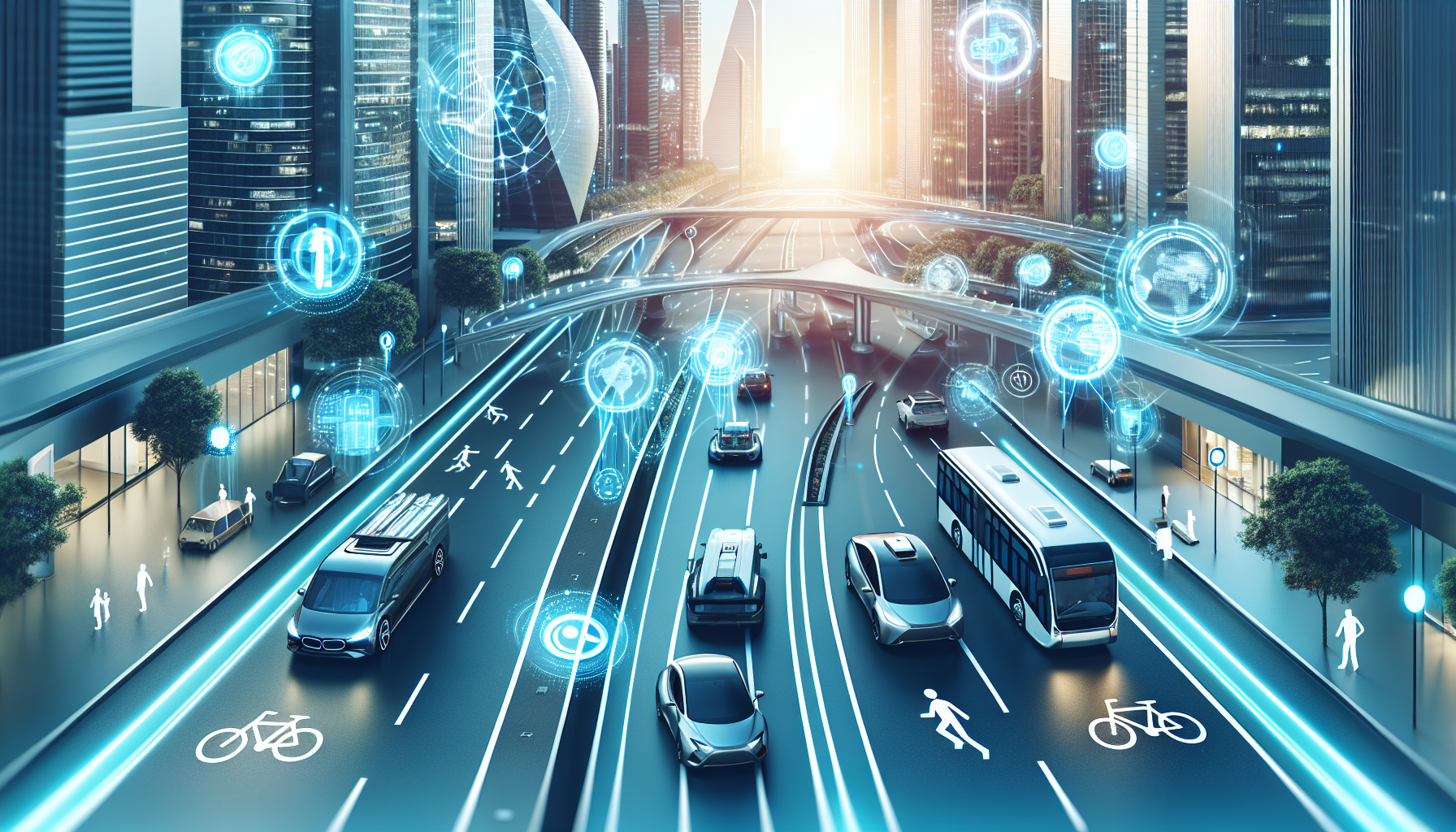
Urban transportation networks are entering a decisive decade, shaped by electrification, digitization, demographic change, climate policy, and the redesign of streets once built almost entirely around private cars. In practical terms, an urban transportation network is the linked system of roads, rail lines, sidewalks, bike lanes, transit routes, curbs, signals, data platforms, and service operators that move people and goods through a city. The future of urban transportation networks is therefore not only about new vehicles. It is about how cities coordinate infrastructure, pricing, land use, safety standards, logistics, and traveler information so the whole system performs better.
This matters because transport determines whether cities are productive, affordable, healthy, and resilient. Congestion wastes time and fuel, while poor transit access limits access to jobs, schools, and healthcare. The International Energy Agency has repeatedly identified transport as a major source of energy-related emissions, and the World Health Organization links road traffic injuries and air pollution to large urban health burdens. At the same time, city populations continue to grow. When I have worked with mobility teams evaluating corridor performance, the same pattern appears again and again: demand is not disappearing, but expectations are changing. Travelers want reliable trips, safer streets, clear real-time information, and more options than driving alone.
Several key terms define the discussion. Multimodal transportation means a network that supports multiple ways to travel, including rail, bus, walking, cycling, ride-hailing, scooters, and shared cars. Mobility as a service refers to digital trip planning, booking, and payment across modes in one interface. Micromobility covers lightweight, short-trip vehicles such as bicycles, e-bikes, and e-scooters. Intelligent transportation systems use sensors, communications, analytics, and signal control to manage traffic and transit in real time. Complete streets is a planning approach that designs roads for users of all ages and abilities, not only motorists. Transit-oriented development concentrates housing and jobs near high-capacity transit to reduce car dependence. These ideas now sit at the center of how cities plan network upgrades.
The future will not be defined by one technology winning. It will be defined by integration. A strong urban network links frequent transit with safe sidewalks, protected bike lanes, accessible stations, dynamic curb management, electrified fleets, and interoperable payment systems. It also recognizes freight. Delivery vans, loading zones, and last-mile logistics now shape curb demand as much as private travel. Because this page serves as a hub for miscellaneous issues within urban mobility and transportation, it brings together the core themes that connect specialized topics: infrastructure modernization, public transit evolution, shared and active mobility, data-driven operations, freight, governance, equity, and resilience. Understanding how these pieces fit together is the foundation for making better city transport decisions.
Infrastructure is shifting from car capacity to network performance
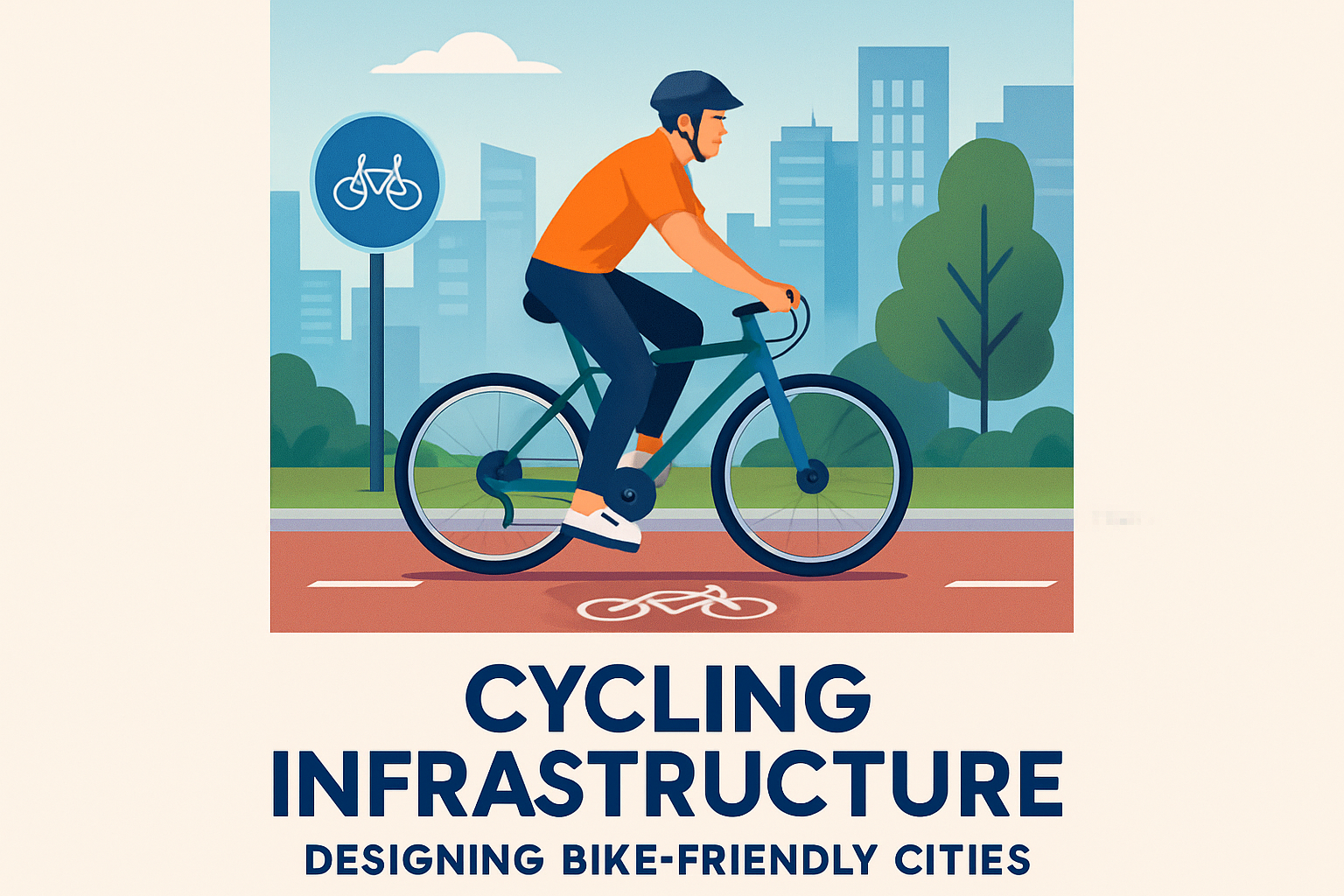
For most of the twentieth century, many cities measured success by vehicle throughput. More lanes, wider intersections, and abundant parking were treated as signs of progress. That model is weakening because it solves only part of the problem and often creates new ones. Induced demand is well documented: expanding road capacity can invite more driving until congestion returns. In contrast, modern urban transportation networks are increasingly managed around person throughput, reliability, and safety. A bus lane moving fifty riders in one vehicle can outperform a general traffic lane dominated by single-occupant cars. A protected bike corridor can unlock thousands of short trips that never need road space at all.
Street design illustrates the change. Cities such as Paris, Copenhagen, and Bogotá have shown that reallocating road space to cycling, buses, and pedestrians can improve overall mobility when paired with enforcement and high-frequency service. In the United States, New York City’s busways and redesigned corridors have delivered measurable travel time gains on selected routes. London’s congestion charging and ultra low emission zone demonstrate another principle: pricing can be infrastructure policy. By managing demand, cities can improve travel speeds and air quality without continuous road expansion. The lesson is clear. Future-ready infrastructure is not simply bigger. It is more adaptive, more balanced, and more accountable to outcomes.
Physical assets are also becoming smarter. Adaptive traffic signals from providers such as Siemens Mobility, Yunex Traffic, and Econolite allow intersections to respond to real-time conditions. Dedicated transit signal priority can reduce bus delays, while connected corridor management can coordinate adjacent intersections to smooth flows. Sensor networks, camera analytics, and curbside monitoring now give transport agencies a clearer picture of what is happening block by block. These tools are useful, but only when backed by policy. Data cannot substitute for priorities. If a city says buses and emergency vehicles should move first, signal timing, lane design, and curb rules must reflect that decision.
Public transit remains the backbone of high-capacity urban mobility
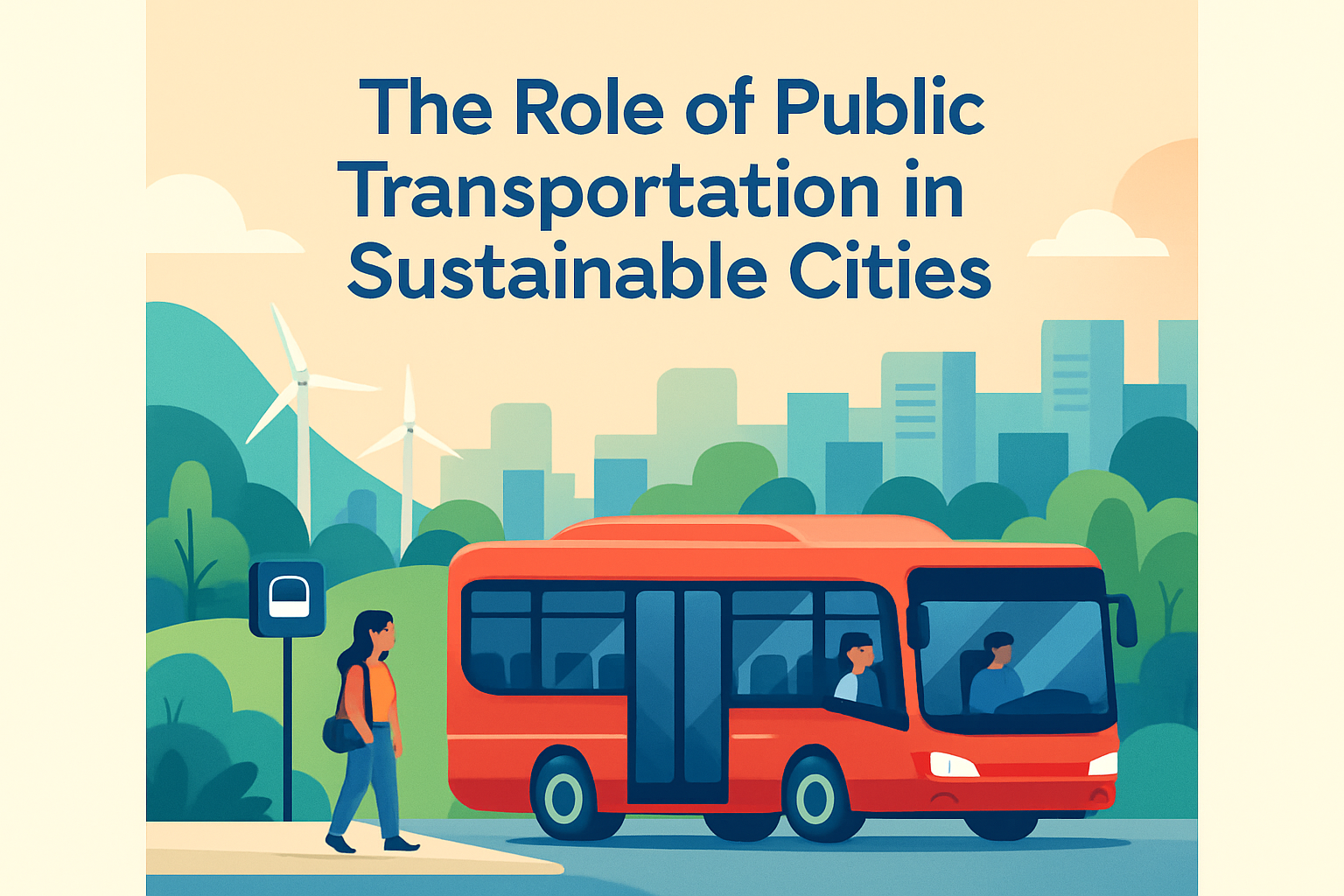
Every serious discussion about the future of urban transportation networks returns to transit because no other urban mode moves large numbers of people as efficiently in dense corridors. Metro, commuter rail, bus rapid transit, trams, and high-frequency bus networks remain essential for cities that want growth without permanent gridlock. Even with remote work changing commute patterns, transit is still the most space-efficient way to serve central business districts, universities, airports, and major event venues. Where transit underperforms, the cause is usually not that cities no longer need it. The cause is often service that is too infrequent, too slow, too unreliable, or too disconnected from where people now live and work.
The most promising transit strategies focus on simplicity and frequency. Agencies from Transport for London to Houston METRO have shown the value of redesigning routes around all-day frequent service rather than a maze of low-ridership lines. Bus rapid transit, when implemented with true dedicated lanes, off-board fare collection, level boarding, and strong station design, can deliver rail-like benefits at lower capital cost. Curitiba and Bogotá established the model decades ago, and newer systems continue to refine it. Rail still has an important role, particularly where demand justifies high capacity and permanent rights-of-way support land-use change. But buses should not be treated as a lesser mode. In many cities, the bus network is the network.
Transit’s future also depends on better integration with payment, information, and access. Riders increasingly expect contactless fare payment, mobile ticketing, and real-time arrival data. Open-loop payment systems using bank cards and digital wallets reduce friction for occasional riders and visitors. General Transit Feed Specification data and real-time APIs have transformed trip planning apps, making transit easier to understand than printed schedules ever were. The remaining gap is often first-mile and last-mile access. Safe walking routes, secure bike parking, feeder buses, and accessible station design determine whether a transit line succeeds beyond its platforms. A station surrounded by hostile roads and poor sidewalks is not truly connected to the city.
Shared mobility, micromobility, and the curb are reshaping short urban trips
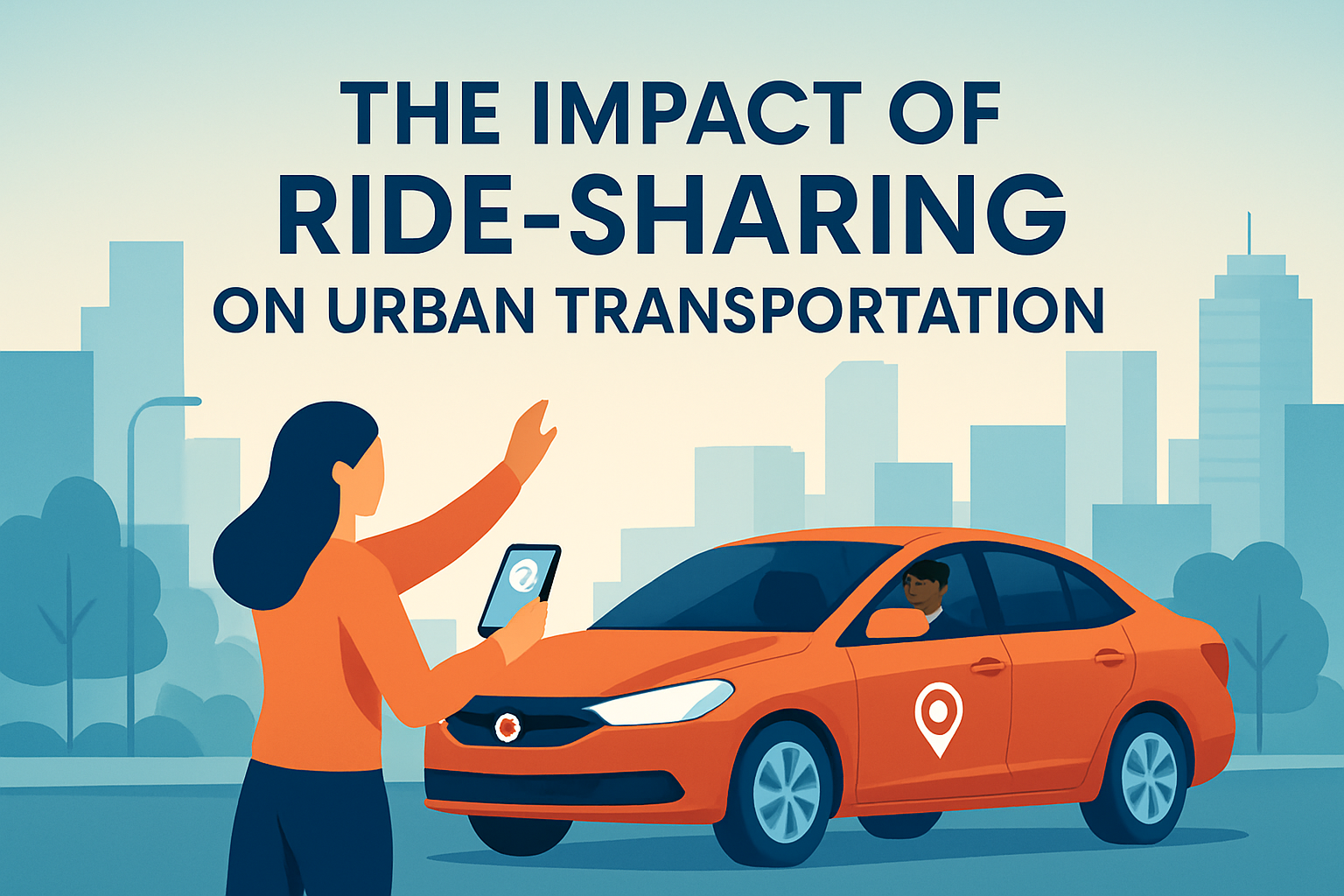
Short trips are where urban transportation networks often fail most visibly. A two-kilometer journey can take too long by car, feel unsafe by bike, and be poorly served by fixed-route transit. That gap created the rise of bike share, e-scooters, car share, and ride-hailing. These services are not a universal solution, but they have changed traveler expectations and city operations. In neighborhoods with protected lanes and dense destinations, bike share and e-bikes can replace a significant share of short car trips. Ride-hailing fills service gaps late at night or where demand is dispersed. Car share reduces the need for private vehicle ownership among residents who only drive occasionally.
The challenge is governance. Left unmanaged, scooters can clutter sidewalks, ride-hailing can add vehicle miles traveled, and curbside pick-ups can disrupt buses and bike lanes. Cities that handle shared mobility well treat it as part of the network rather than a novelty. They use permits, geofencing, designated parking corrals, operating caps, data-sharing requirements, and performance metrics. They also design physical space accordingly. A curb is no longer just parking. It is a scarce asset serving deliveries, paratransit, bus boarding, passenger pick-up, bike parking, street trees, and outdoor commerce. Managing it dynamically is one of the most practical ways to improve urban transportation networks in the next decade.
| Mode or Tool | Best Use Case | Main Benefit | Key Limitation |
|---|---|---|---|
| Bike share and e-bikes | Short trips under 5 miles | Fast, low-emission travel in dense areas | Needs protected lanes and secure parking |
| E-scooters | First-mile and last-mile links | Convenient access to transit | Sidewalk clutter if parking is unmanaged |
| Ride-hailing | Late night, low-density, or special trips | Flexible door-to-door service | Can increase congestion without pooling |
| Car share | Occasional driving without ownership | Reduces private car dependence | Works best in dense mixed-use districts |
| Dynamic curb management | Busy commercial corridors | Improves loading and pick-up efficiency | Requires enforcement and clear pricing |
In my experience, the most successful shared mobility programs are the ones tied directly to transit hubs, protected cycling networks, and curb rules people can understand. Users adopt them quickly when the physical environment feels safe and predictable. They abandon them just as quickly when each block becomes a negotiation with traffic, parked vehicles, and confusing regulations.
Data, electrification, and automation will improve operations, but policy decides outcomes
Three technological trends dominate future planning discussions: data-rich operations, zero-emission vehicles, and automation. All three matter, but none is self-executing. Data is already transforming network management. Agencies can combine fare records, automatic passenger counters, Bluetooth travel time sampling, GPS traces, and curb occupancy data to understand demand almost in real time. Digital twins and scenario modeling help planners test signal changes, bus lane proposals, or freight restrictions before implementation. The strongest use of analytics is not surveillance for its own sake. It is targeted operational improvement: better headway management, faster incident response, smarter maintenance, and more credible public reporting.
Electrification is moving from pilot stage to systemwide strategy. Battery electric buses are becoming standard procurement in many regions as agencies respond to air quality goals, noise reduction, and lifecycle fuel savings. Shenzhen famously electrified its large bus fleet, demonstrating what is possible at metropolitan scale, though local grid conditions and depot constraints vary. Cities are also planning for electric delivery vans, charging depots, and curbside charging where appropriate. The complexity lies in power distribution, charging schedules, vehicle range under weather extremes, and capital cost. Fleet electrification works best when transport agencies, utilities, and private operators plan together rather than in parallel.
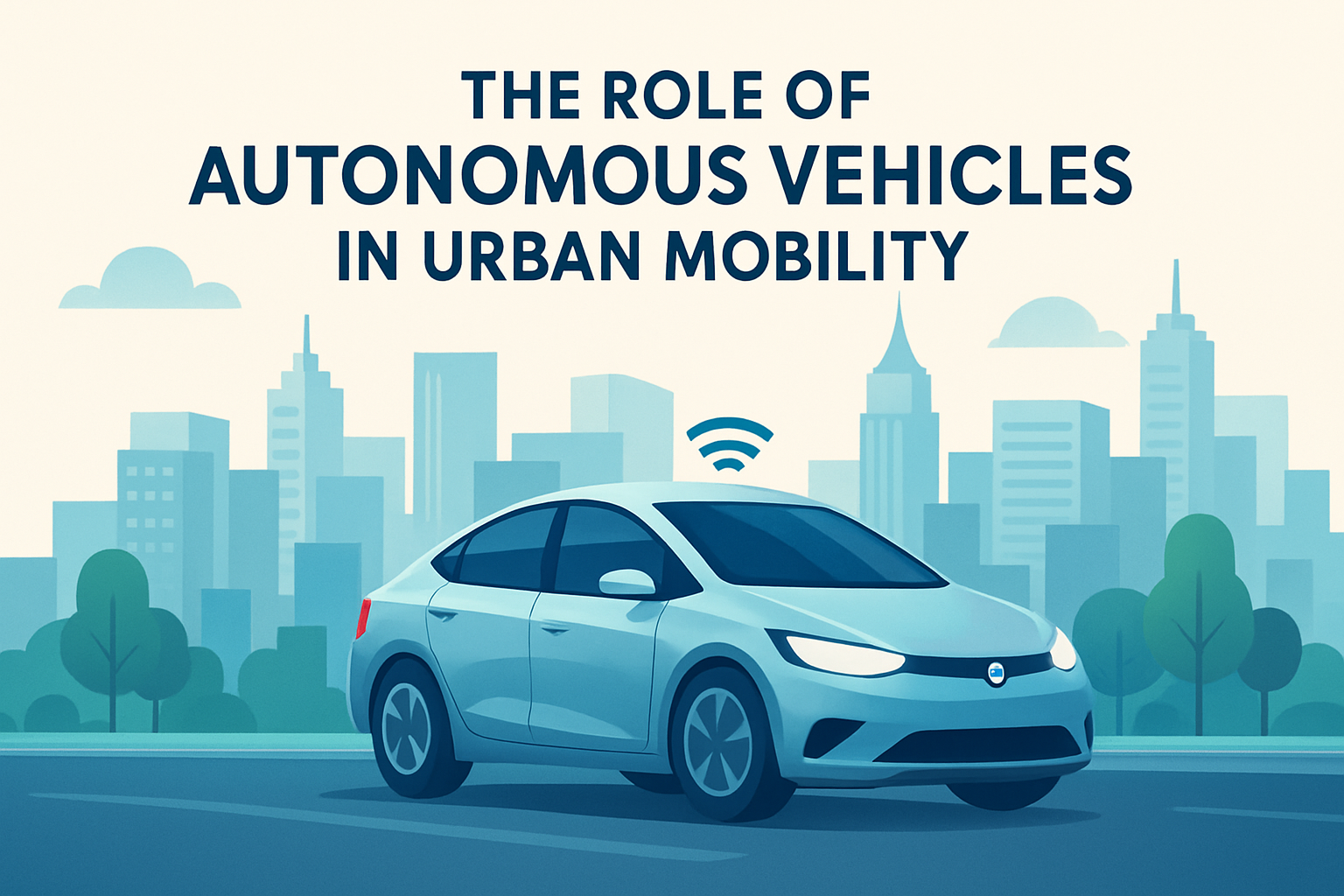
Automation is advancing more slowly in dense cities than headlines often suggest. Driver assistance, automated shuttles in controlled environments, and freight platooning are more realistic near-term applications than fully autonomous mixed-traffic urban travel at scale. Complex street environments include pedestrians, cyclists, unpredictable curb activity, emergency vehicles, and roadworks. Those conditions are technically difficult and legally sensitive. Cities should therefore treat automation as one tool among many, not the core strategy. Proven measures such as bus lanes, protected intersections, and signal priority deliver benefits now. The future of urban transportation networks will reward technologies that reduce crashes and improve reliability, but policy must define acceptable risk, accountability, and public value.
Freight, equity, and resilience are now central to transport planning
Urban mobility is not only about passenger travel. Freight has become impossible to ignore as e-commerce expands and same-day delivery becomes standard. Delivery vehicles compete for curb space, create double-parking conflicts, and influence street design in every commercial district. Forward-looking cities are creating microhubs, timed delivery windows, dedicated loading zones, and cargo-bike logistics for dense centers. These measures can reduce failed deliveries and ease curb pressure. They also show why passenger and freight planning must be integrated. A bus lane blocked by deliveries is not a minor inconvenience; it is a network failure.
Equity is equally central. Transportation systems do not serve everyone equally, and future planning must correct that. Low-income households, older adults, disabled travelers, shift workers, and outer-neighborhood residents often face the longest and least reliable trips. Accessibility is not a niche requirement. It is a basic performance standard. That means sidewalks with curb ramps, audible signals, elevators that actually work, fare policies that do not punish the poor, and service spans that reflect real labor markets rather than idealized nine-to-five commuting. When agencies map travel time to jobs, hospitals, schools, and grocery stores, inequities become visible and fixable.
Resilience has moved from a specialist concern to a daily operational priority. Flooding, heat, wildfire smoke, cyberattacks, and supply-chain disruptions can all affect urban transportation networks. The practical response includes elevated critical equipment, drainage upgrades, redundant communications, heat-resilient materials, diversified suppliers, and contingency service plans. Transit agencies increasingly need climate adaptation strategies as much as capital plans. Cities that build redundancy into their networks recover faster because travelers have alternatives. If one bridge, tunnel, or rail line fails, a resilient city still offers usable bus corridors, safe bike routes, and coordinated traveler information.
The main takeaway is straightforward: the future of urban transportation networks belongs to cities that manage mobility as an integrated public system rather than a collection of isolated projects. Strong networks prioritize person movement over vehicle storage, invest in frequent and reliable transit, create safe conditions for walking and cycling, govern shared mobility carefully, modernize operations with useful data, prepare for electrification, and treat freight, equity, and resilience as core design requirements. No single intervention solves everything, but the combined effect of coordinated policy, infrastructure, and operations is powerful.
For readers using this hub within the broader Urban Mobility and Transportation topic, the value of a miscellaneous overview is that it connects the dots. Bus lanes influence curb access. Land use shapes transit demand. Micromobility depends on street design. Electrification affects utility planning. Freight policy changes corridor performance. When these links are understood, decisions become more durable and less reactive. Cities stop chasing isolated pilot projects and start building networks that work under everyday conditions, not just in presentations.
If you are planning, studying, or investing in urban mobility, start with the network question: what combination of infrastructure, service, technology, and governance will move the most people and goods safely, affordably, and reliably in your city? Use that question to evaluate every project, from a station upgrade to a curb regulation. The future is not a single mode or app. It is a connected system designed with discipline. Explore the related articles in this subtopic hub and use them to turn strategy into practical action.
Frequently Asked Questions
What is changing most in the future of urban transportation networks?
The biggest change is that urban transportation networks are shifting from car-dominant systems to integrated mobility ecosystems. For decades, many cities organized roads, curb space, signals, and land use primarily around private vehicle movement. That model is now being reworked as cities respond to congestion, emissions targets, population growth, aging infrastructure, and changing public expectations. Instead of evaluating success only by how many cars move through an intersection, transportation planners are increasingly looking at how efficiently entire corridors move people, goods, and services across multiple modes.
In practical terms, that means more electrified buses and vehicle fleets, more protected bike infrastructure, more reliable rail and bus rapid transit, smarter traffic signal systems, and better digital coordination between agencies and operators. It also means curb space is being rethought as a scarce urban asset that must serve deliveries, transit access, ride-hailing, bike parking, pedestrians, and public life. Data platforms are becoming just as important as pavement, because cities need real-time visibility into traffic patterns, service performance, and demand shifts.
Another major change is that urban transportation is becoming more connected to climate resilience, public health, and economic inclusion. A modern network is no longer just about moving commuters downtown during rush hour. It must also support mixed travel patterns, remote and hybrid work, neighborhood-level trips, freight logistics, and safe access for people of all ages and abilities. The future network is therefore more multimodal, more digitized, more flexible, and more focused on moving people efficiently rather than simply maximizing vehicle throughput.
How will electrification affect city transportation systems?
Electrification will reshape urban transportation networks at both the vehicle level and the infrastructure level. On the surface, the most visible changes will include electric buses, electric delivery vans, electric municipal fleets, and a growing number of private electric vehicles. These changes can reduce tailpipe emissions, improve local air quality, and lower noise levels, especially along dense corridors where heavy diesel traffic has historically created health burdens for nearby residents.
But the deeper impact is infrastructural. Electrification requires charging networks, upgraded utility connections, depot redesign, power management software, and coordination between transportation agencies, transit operators, utilities, and private providers. A city cannot simply replace combustion vehicles with electric ones without planning for where charging will happen, when electricity demand will peak, and how limited curb space or depot space will be managed. Transit agencies, for example, often need to redesign maintenance facilities and operational schedules to account for charging cycles, route lengths, climate conditions, and battery performance.
Electrification also has strategic implications for freight and last-mile logistics. Urban delivery activity is rising, and cities will increasingly need to accommodate electric cargo bikes, electric vans, micro-distribution hubs, and managed loading zones. This is important because the future of transportation networks is not only about personal mobility. It is also about how food, retail goods, medical supplies, and construction materials move through crowded urban environments with minimal disruption and emissions.
Even so, electrification alone is not a complete transportation strategy. If cities simply replace every gasoline car with an electric car while keeping the same land use and congestion patterns, many major problems remain, including traffic delays, parking demands, road safety risks, and inequitable access. Electrification works best when paired with stronger public transit, safer walking and cycling options, and smarter street design that reduces unnecessary vehicle dependence in the first place.
What role will technology and data play in future urban mobility?
Technology and data will be central to how future urban transportation networks are managed, optimized, and expanded. Modern cities generate enormous amounts of transportation data through fare systems, mobile devices, connected vehicles, traffic cameras, curb sensors, delivery platforms, and transit operations software. When used effectively, this information can help agencies understand demand in real time, identify bottlenecks, improve reliability, and allocate resources more precisely.
One of the most important applications is traffic and transit management. Adaptive traffic signals can respond to changing conditions instead of operating on fixed timing plans. Transit agencies can use real-time vehicle tracking and predictive analytics to reduce bus bunching, improve dispatch decisions, and give passengers more accurate arrival information. Digital platforms can also support integrated trip planning, allowing users to compare routes across buses, trains, micromobility services, and walking connections in a single interface.
Technology will also influence curb management, freight coordination, and safety. Cities are beginning to use digital permitting systems, geofencing, and dynamic pricing to regulate loading zones, parking, pick-up areas, and shared mobility operations. This matters because curb space is increasingly contested, and unmanaged curb activity can create delays, unsafe conditions, and conflicts between different users. Data-driven systems make it easier to adjust rules by time of day, location, and actual demand.
That said, data-rich transportation systems must be implemented carefully. Privacy, cybersecurity, interoperability, and public accountability are major concerns. Cities should avoid becoming dependent on closed platforms that limit transparency or constrain policy choices. The most durable approach is to build governance frameworks that ensure data is secure, standardized where possible, and used to advance public goals such as safety, accessibility, equity, and sustainability rather than purely commercial objectives. In other words, technology is a powerful tool, but it works best when guided by clear policy and strong public oversight.
Why are walking, cycling, and public transit so important to the future of urban transportation networks?
Walking, cycling, and public transit are essential because they allow cities to move more people using less space, less energy, and lower cost than networks centered mainly on private cars. Urban land is limited, and street capacity is finite. A transportation system that depends too heavily on individual vehicle trips struggles with congestion, parking demand, emissions, and unequal access. By contrast, high-quality sidewalks, safe bike lanes, reliable buses, and efficient rail service help cities absorb growth without constantly widening roads or sacrificing valuable land to vehicle storage.
These modes also support broader urban goals. Walkable streets improve access to shops, schools, healthcare, and public services. Cycling can provide affordable and flexible short-distance travel, especially when protected infrastructure makes it safe for a wider range of users, not just confident riders. Public transit remains the backbone of high-capacity urban movement, particularly for commuters, students, seniors, and workers who need dependable and cost-effective transportation across longer distances. In dense areas, no other mode matches transit’s ability to move large numbers of people efficiently.
Just as importantly, these investments improve resilience and inclusion. Not everyone can drive, afford a car, or choose where they live relative to job centers. A future-ready transportation network must serve children, older adults, low-income households, people with disabilities, and residents in neighborhoods that have historically been underserved. That means designing for universal access, better station connectivity, safer crossings, weather protection, and seamless transfers between modes.
The key point is that these modes work best as part of a connected system. A bus route is more useful when sidewalks are safe and continuous. A rail station is more effective when bike parking, local feeder service, and clear wayfinding are in place. Protected cycling corridors become even more valuable when they connect homes to schools, employment areas, and transit hubs. The future of urban transportation networks depends on these links, because successful cities are not built around a single mode. They are built around coordinated mobility choices that make daily travel simpler, safer, and more reliable.
What are the biggest challenges cities face when building the next generation of transportation networks?
The biggest challenges are funding, governance, public trust, and physical constraints. Many cities are trying to modernize systems that were built over decades for different travel patterns and different policy priorities. Upgrading transit fleets, rebuilding streets, adding protected bike lanes, deploying charging infrastructure, improving accessibility, and integrating digital systems all require sustained capital investment as well as long-term operational funding. Securing that funding is often difficult, especially when agencies face competing political priorities and uncertain revenue sources.
Governance is another major issue. Urban transportation networks are rarely controlled by a single institution. Roads may be managed by city departments, transit by regional agencies, rail by separate authorities, freight by private operators, utilities by independent companies, and curb activity by a mix of permits and enforcement systems. Coordinating these actors is complex, and fragmented authority can slow down projects that are technically feasible but institutionally difficult. The future network will depend not just on engineering, but on stronger collaboration across jurisdictions and sectors.
Cities also face trade-offs over space and public acceptance. Reallocating street space from general traffic or parking to bus lanes, wider sidewalks, protected cycle tracks, or loading zones can deliver major long-term benefits, but these decisions often trigger short-term controversy. Businesses may worry about access, drivers may resist lane changes, and residents may distrust new technologies or pricing systems. For this reason, successful implementation usually requires transparent communication, pilot projects, performance data, and a clear explanation of who benefits and why.
Finally, cities must plan for uncertainty. Demographic shifts, climate events, remote work patterns, freight growth, and evolving mobility business models all affect demand. The most effective transportation networks will therefore be adaptable rather than rigid. They will combine durable infrastructure with flexible policies, real-time management tools, and continuous performance measurement. In the coming decade, the cities that succeed will be the ones that treat transportation as a living