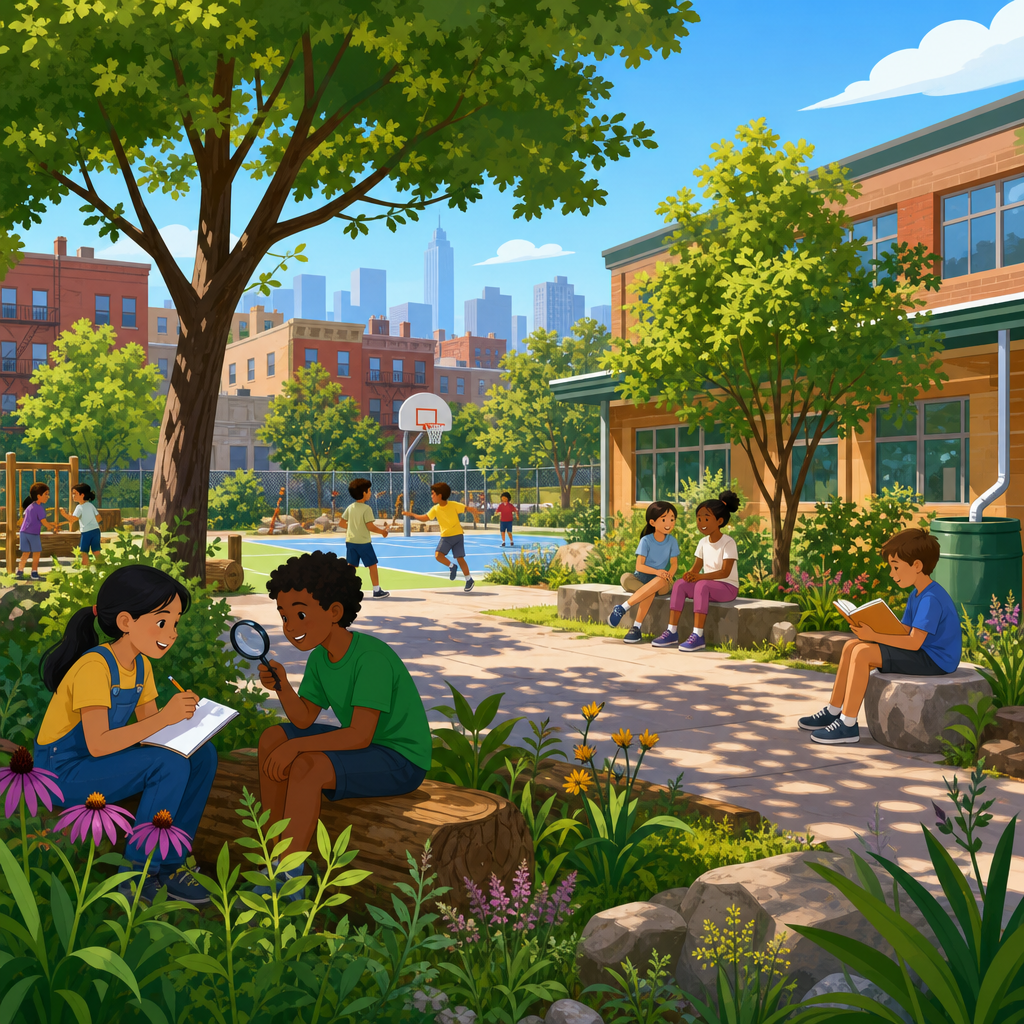
Greening schoolyards in heat-vulnerable neighborhoods is one of the most practical, evidence-based strategies cities can use to protect children, improve learning conditions, and strengthen neighborhood resilience at the same time. A green schoolyard replaces expanses of asphalt and bare ground with shade trees, gardens, permeable surfaces, play features, and outdoor learning spaces designed to lower surface and air temperatures. Heat-vulnerable neighborhoods are communities where extreme heat creates disproportionate harm because of sparse tree canopy, dense impervious cover, older housing, higher energy burdens, and limited access to cooling. In my work reviewing urban climate adaptation projects, schoolyards consistently stand out because they combine public land, daily community use, and long-term civic value. This matters now because heat is no longer an occasional hazard. It is a recurring public health risk that disrupts classrooms, worsens asthma and dehydration, and makes outdoor play unsafe. When cities green schoolyards strategically, they do more than beautify campuses. They reduce exposure to dangerous heat, create cooler routes to school, support stormwater management, and provide neighborhood green space where park access is limited.
Why schoolyards are a climate and equity priority
Schoolyards matter because many of the hottest urban blocks are concentrated in neighborhoods shaped by decades of underinvestment, industrial land use, highway construction, and low tree canopy. Satellite-based land surface temperature mapping regularly shows gaps of 10 to 20 degrees Fahrenheit between leafy neighborhoods and nearby blocks dominated by asphalt and dark roofs. Children are especially vulnerable because they produce more metabolic heat during activity, rely on adults to recognize symptoms, and spend critical parts of the school day outdoors during lunch, recess, sports, and dismissal. Heat also affects concentration and attendance. Research on classroom conditions has linked high temperatures to lower cognitive performance, and anyone who has walked a blacktop playground on a ninety-degree afternoon understands why. On many campuses, the schoolyard is the largest unshaded surface in the area. That makes it both a problem and an opportunity.
A schoolyard greening project targets the urban heat island effect at human scale. Trees intercept solar radiation before it strikes the ground. Lighter and permeable materials absorb less heat than conventional asphalt and release less stored heat into the evening. Vegetation cools surrounding air through evapotranspiration, while bioswales and rain gardens manage runoff that would otherwise flood streets and strain combined sewer systems. In neighborhoods with little private yard space, a redesigned campus can function as a community cooling asset after school hours. That is why planners increasingly treat green schoolyards as core infrastructure, not optional amenities. Programs in cities such as Philadelphia, New York City, Chicago, and Paris have shown that school campuses can anchor broader district cooling strategies, especially where municipal land is scarce and park creation is slow and expensive.
How green schoolyards reduce heat exposure
The cooling benefits of green schoolyards are measurable and immediate when design is done well. Surface temperatures on conventional playground asphalt can exceed ambient air temperature by 40 to 60 degrees Fahrenheit under full sun. By contrast, shaded play areas, planted zones, and engineered surfaces can remain dramatically cooler. Tree canopy is the highest-value intervention because shade changes radiant heat exposure directly, which is what children actually feel on their skin. A mature deciduous tree can lower nearby surface temperatures substantially while also improving thermal comfort for pedestrians and caregivers waiting at pickup. Shade structures help too, but they do not deliver the same air quality, habitat, or stormwater benefits.
Design details determine outcomes. Simply adding a few trees around the perimeter will not solve the hottest conditions if play equipment, seating, and queuing zones remain exposed. Effective projects map afternoon sun angles, identify dominant wind patterns, and prioritize shade over the places children use most. I have seen campuses install beautiful gardens that had little effect on recess conditions because the blacktop remained untouched. The strongest projects combine canopy trees, smaller understory planting, permeable paving, drinking water access, and a maintenance plan that protects young trees during establishment. They also account for species selection. In hot neighborhoods, drought-tolerant native or climate-adapted species generally perform better over time than ornamental trees chosen only for appearance.
| Intervention | Primary heat benefit | Secondary benefit | Key implementation note |
|---|---|---|---|
| Shade trees | Reduces radiant and surface heat | Air quality, habitat, stormwater capture | Protect roots, irrigate during establishment |
| Permeable surfaces | Lower heat storage than asphalt | Runoff reduction | Needs soil and drainage design |
| Shade structures | Immediate cover over play zones | Useful where tree growth takes time | Best paired with planting, not used alone |
| Gardens and bioswales | Localized cooling through vegetation | Outdoor learning, flood mitigation | Requires stewardship plan and safe access |
| Drinking water stations | Reduces heat stress risk | Supports physical activity | Must be maintained and accessible |
Benefits beyond temperature: health, learning, and community use
The case for greening schoolyards is not limited to cooling. Green campuses support physical and mental health in ways that matter for school systems and families. Trees and planted areas improve perceived comfort, which increases willingness to use outdoor spaces for play and instruction. Contact with nature has been associated with reduced stress, improved attention, and stronger social behavior in children. Teachers often report that outdoor learning spaces work best when they are intentionally designed with seating, shade, and clear circulation, not when they are improvised in leftover corners. In neighborhoods with limited park access, an open campus after school can provide safe recreation space within walking distance of home, which is especially important for caregivers without a car.
Stormwater management is another major advantage. Many heat-vulnerable neighborhoods also face flooding because hard surfaces shed rain rapidly into overloaded drains. Replacing asphalt with permeable materials, tree pits, and rain gardens helps absorb and slow runoff. That improves local drainage while protecting school buildings and basements. Air quality can also improve when dust and heat are reduced around busy streets. The educational value is substantial as well. A green schoolyard can function as living infrastructure that supports science, ecology, and climate literacy. Students can observe pollinators, measure soil moisture, track shade movement, and understand how urban design influences health. Those lessons become more durable when children can see and feel the difference between a blazing blacktop and a shaded grove on the same campus.
What effective implementation looks like
Successful schoolyard greening follows a disciplined process. First, cities and districts should identify priority campuses using heat maps, canopy data, health indicators, and social vulnerability metrics rather than political convenience. The strongest programs also consider school age, disability access, and neighborhood park deficits. Second, planners need a site assessment that includes sun exposure, soil conditions, drainage constraints, underground utilities, and existing maintenance capacity. Third, the design process must involve principals, teachers, students, facilities staff, and nearby residents. When participation is rushed, projects often miss simple operational realities, such as where snow is stored, where buses idle, or which gates stay open after hours.
Budgeting should cover the full life cycle, not only installation. Young trees fail when watering, mulch replacement, pruning, and vandalism repair are ignored during the first three years. I have reviewed projects where grant funding delivered attractive renderings but no irrigation strategy, leading to high mortality after the first hot summer. Contracts should specify establishment care, and districts should clarify who owns maintenance tasks between parks departments, school facilities teams, and nonprofit partners. Designers should also plan for safety and durability. Planting beds cannot obstruct supervision lines. Materials must meet playground standards. Shade should be distributed across seating, play structures, and waiting areas, not concentrated in one decorative zone. When community access is part of the goal, hours, liability, lighting, and restroom policies need to be resolved before construction begins.
Policy, funding, and measurement
The most durable green schoolyard programs are backed by policy, not one-off philanthropy. Cities can embed schoolyards in climate action plans, heat resilience plans, stormwater permits, capital improvement programs, and public health strategies. School districts can revise design standards so new campuses and major renovations require minimum canopy targets, shaded play areas, and permeable coverage where feasible. State agencies can support these efforts through resilience grants, urban forestry programs, and technical assistance. Federal sources may include environmental justice funding, hazard mitigation programs, transportation grants for safe routes to school, and water infrastructure support tied to stormwater reduction. Layered funding is usually necessary because schoolyard greening delivers benefits across departments that rarely share budgets by default.
Measurement matters because it turns a good idea into defensible public investment. At minimum, projects should track canopy growth, shaded area, surface temperature, air temperature, stormwater retention, outdoor use, and maintenance performance. Some cities also monitor absenteeism, nurse visits during hot weather, and neighborhood access after school hours. The right evaluation design compares conditions before and after construction and, where possible, against similar ungreened campuses. Remote sensing can identify broad heat patterns, but on-site monitoring is essential for understanding what children experience at noon on the play surface. Good data also reveal tradeoffs. For example, artificial turf is sometimes marketed as lower maintenance, yet it can reach very high temperatures in direct sun and should not be treated as a cooling strategy. Decision-makers need that level of specificity if they want results that hold up over time.
Greening schoolyards in heat-vulnerable neighborhoods is a practical climate adaptation strategy because it protects children where they already spend time and delivers multiple public benefits from a single investment. It lowers dangerous heat exposure, improves comfort for play and learning, manages stormwater, expands neighborhood green space, and can strengthen public health in communities that have been left with the least shade and the highest risk. The strongest projects are targeted by data, designed around actual daily use, funded for long-term maintenance, and measured with clear performance indicators. They also treat schoolyards as shared civic infrastructure rather than isolated education assets. That shift in thinking is essential. Cities do not need to wait for large new parks to begin cooling neighborhoods. They can start with the public land already in every district and redesign it for heat safety, learning, and community use.
For local governments, school districts, and community organizations, the next step is straightforward: map the hottest campuses, set canopy and shade goals, and build a coordinated pipeline of greening projects in the neighborhoods that need them first. Start with one schoolyard if needed, but design it as a model that can be repeated block by block. When children gain safer places to play and learn, the entire neighborhood benefits.
Frequently Asked Questions
What is a green schoolyard, and why does it matter especially in heat-vulnerable neighborhoods?
A green schoolyard is a school outdoor space intentionally redesigned to replace heat-absorbing asphalt, concrete, and bare dirt with trees, vegetation, permeable surfaces, shaded play areas, gardens, and outdoor learning spaces. Instead of functioning like a paved heat island, the schoolyard becomes a cooler, healthier, and more flexible environment for students, teachers, and the surrounding community. In heat-vulnerable neighborhoods, this matters even more because these areas often have fewer trees, more dark paved surfaces, heavier building density, and less access to parks or cooling infrastructure. As a result, temperatures can be significantly higher than in leafier, better-resourced parts of the same city.
Schoolyards are especially important because they are places where children spend many hours of the day, often outdoors for recess, physical education, arrival and dismissal, after-school programs, and community events. When these spaces are dominated by asphalt, surface temperatures can soar, increasing heat exposure and making normal activities uncomfortable or even unsafe. A green schoolyard helps counter that by providing shade, evapotranspiration from plants, and materials that absorb and radiate less heat. The result is not just a more pleasant space, but one that directly supports child health, concentration, attendance, and daily comfort in neighborhoods where heat risk is already disproportionately high.
How do green schoolyards actually reduce heat and improve conditions for students?
Green schoolyards reduce heat through several well-documented mechanisms. First, trees provide direct shade, which can dramatically lower surface temperatures on play areas, walkways, seating zones, and building edges. Shade is one of the most immediate and effective heat-protection tools because it reduces direct solar exposure for children and staff. Second, plants cool the surrounding air through evapotranspiration, a natural process in which water moves through vegetation and is released into the atmosphere, helping moderate local temperatures. Third, replacing dark, impervious surfaces with lighter, permeable, and planted areas reduces the amount of heat stored and re-radiated throughout the day.
These temperature reductions matter in practical ways. Cooler schoolyards are safer for play and outdoor instruction, especially during hot months and early fall heat waves that overlap with the school calendar. Students are less likely to experience heat stress, fatigue, irritability, and discomfort. Teachers gain access to more usable outdoor space for classes, reading circles, science activities, and social-emotional learning. In addition, greener landscapes can improve stormwater management, reduce glare, improve air quality near the school, and create more inviting spaces that support movement and recreation. In other words, a green schoolyard is not just landscaping; it is climate adaptation infrastructure that improves the day-to-day learning environment.
Why are children in heat-vulnerable neighborhoods a priority for schoolyard greening efforts?
Children are more susceptible to heat than many adults because their bodies regulate temperature differently, and they rely on caregivers and institutions to shape the environments they spend time in. They also tend to be active outdoors during recess and sports, which increases heat exposure. In heat-vulnerable neighborhoods, these risks are often compounded by structural inequities such as low tree canopy, older buildings, limited access to cooling at home, higher traffic exposure, and fewer safe public green spaces. That means children in these communities may face elevated heat burdens not just occasionally, but repeatedly throughout the warm season.
Schoolyard greening is a strong response because it places cooling investments exactly where children already are. Rather than asking families to travel to a distant park or cooling center, it brings relief directly into the daily school environment. It also helps address long-standing disparities in public investment. Many schools in under-resourced neighborhoods have historically had the least shaded grounds despite serving students with the greatest environmental burdens. Greening these spaces can therefore produce both immediate health benefits and longer-term equity gains. It supports safer recess, more comfortable arrival and pickup times, better opportunities for outdoor learning, and neighborhood access to cooler community space after school hours when campuses are shared or opened to the public.
Beyond cooling, what other benefits do green schoolyards provide for schools and communities?
The benefits extend well beyond temperature reduction. Green schoolyards can support physical health by encouraging active play, reducing exposure to extreme surface heat, and making outdoor spaces more usable for longer periods of the year. They can support mental well-being by introducing natural elements that reduce stress, improve mood, and create calmer, more restorative settings for students and educators. For schools, these spaces can strengthen academic experiences by providing hands-on learning environments for science, ecology, nutrition, art, and place-based education. Gardens, pollinator habitat, and outdoor classrooms turn the schoolyard into an extension of the curriculum rather than simply a backdrop for recess.
At the neighborhood level, green schoolyards can function as valuable community assets. In places with limited park access, they may serve as some of the most important local green spaces. They can help absorb stormwater, reduce flooding pressure during heavy rains, improve neighborhood aesthetics, and contribute to biodiversity in dense urban areas. They may also increase community cohesion when families, students, teachers, and local organizations participate in planning, planting, and stewardship. Because schools are trusted neighborhood institutions, improvements made there can have ripple effects: they signal investment, strengthen resilience, and demonstrate what climate adaptation can look like in a practical, visible, and child-centered form.
What does it take to implement a successful green schoolyard project in a heat-vulnerable neighborhood?
A successful project starts with thoughtful planning that combines climate data, school needs, and community input. Cities and school districts should identify campuses with the highest heat exposure, lowest canopy coverage, and greatest student vulnerability, then prioritize those sites for investment. Design should be practical as well as ambitious. That means selecting shade trees appropriate for the local climate, using durable permeable materials, creating accessible play and learning zones, and planning for irrigation, maintenance, and long-term care from the beginning. A strong design balances cooling, safety, visibility, supervision, recreation, and educational use rather than treating greening as a cosmetic add-on.
Community engagement is equally important. The most effective green schoolyards are shaped by the people who will use them: students, teachers, families, facilities staff, and neighborhood residents. Their input can reveal where shade is needed most, which areas flood, how the space is used after school, and what features would make the yard welcoming and useful. Funding often comes from a mix of public capital budgets, grants, philanthropy, stormwater programs, and climate resilience initiatives. Just as important is ongoing stewardship. Trees need care, gardens need management, and outdoor spaces need maintenance to remain safe and inviting. When cities and school systems treat green schoolyards as essential public infrastructure rather than optional beautification projects, they are far more likely to deliver lasting benefits for children and for heat-vulnerable neighborhoods as a whole.