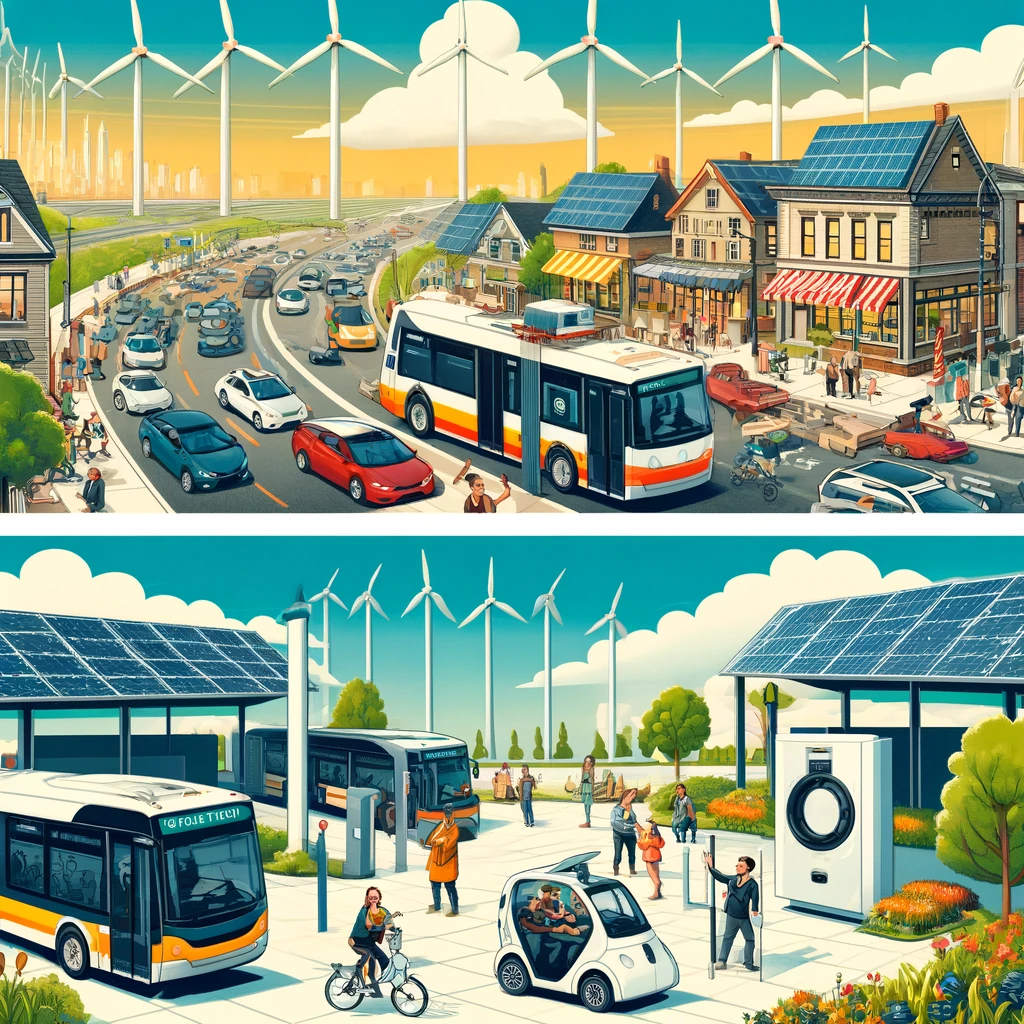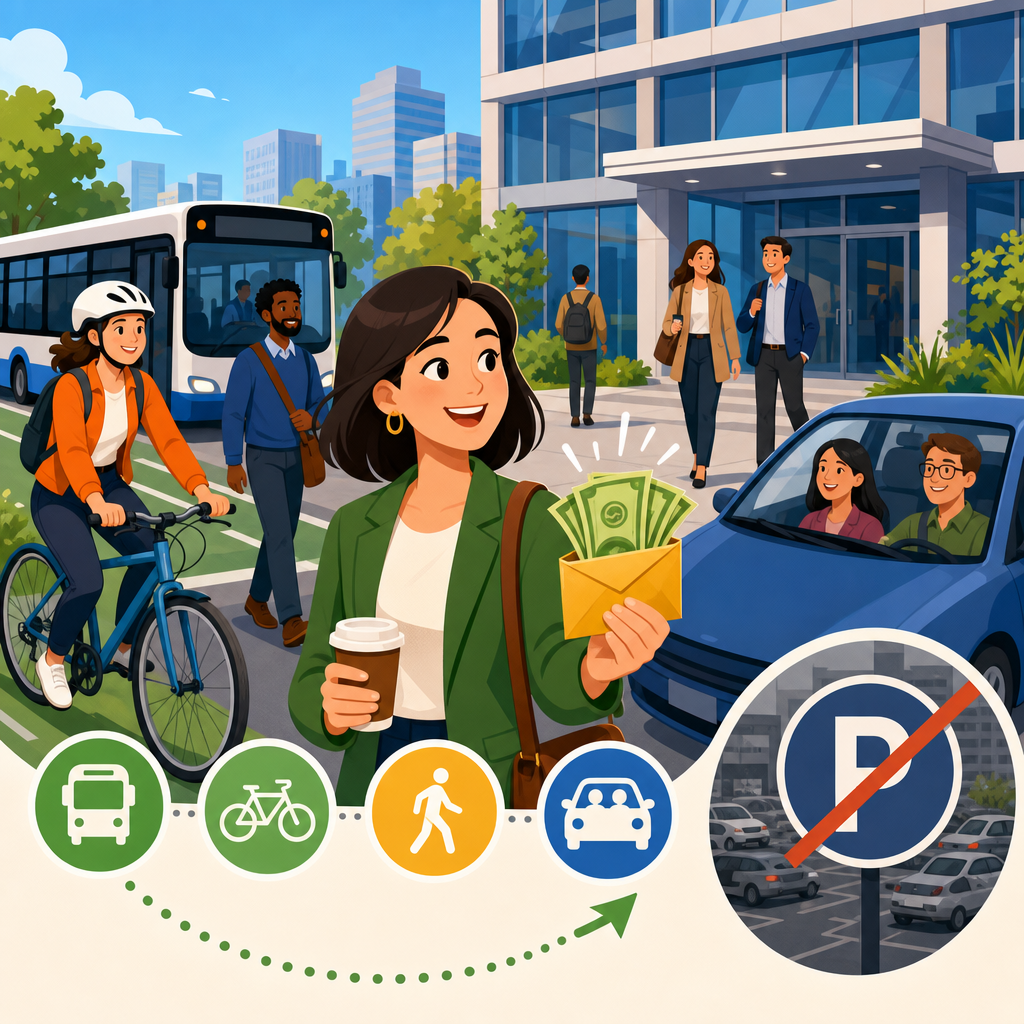
Parking cash-out programs and employer transportation demand management are practical policy tools that reduce solo driving, lower commuting costs, and help cities use land more efficiently. A parking cash-out program gives employees the option to receive the cash value of a workplace parking subsidy instead of taking the parking space. Employer transportation demand management, often shortened to TDM, is the broader set of strategies employers use to influence how, when, and why workers travel to a jobsite. In practice, that can include transit benefits, vanpool support, bicycle facilities, flexible schedules, remote work policies, guaranteed ride home programs, and pricing signals that make the cost of driving visible.
I have worked with employers that offered “free” parking without ever calculating its real cost, and the pattern is remarkably consistent: when parking is bundled into compensation, driving alone becomes the default even when other modes are available. Structured parking can cost tens of thousands of dollars per space to build, while leased spaces in central business districts can cost hundreds of dollars each month. Yet many employees who ride transit, bike, walk, or carpool receive nothing equivalent. Cash-out addresses that inequity by converting a hidden subsidy into a transparent choice.
This topic matters because commuting sits at the intersection of climate policy, labor economics, public health, and real estate strategy. Transportation is a leading source of greenhouse gas emissions in the United States, and commute trips intensify congestion during peak periods when road capacity is most stressed. Employers also feel the effects directly. Parking supply consumes developable land, raises operating costs, and can complicate recruiting in urban areas where workers value multimodal access. For local governments pursuing sustainable urban development, employer commute programs are one of the few interventions that can change travel behavior quickly without waiting for major infrastructure construction.
At its core, employer transportation demand management is about shifting demand rather than endlessly expanding supply. Instead of asking how many parking spaces a site can build, the better question is how many drive-alone trips can be avoided through incentives, information, and flexible work design. Parking cash-out is especially powerful because it corrects a distorted market signal. Employees who drive can still park, but they no longer receive a larger employer benefit simply because they choose the most space-intensive mode. That simple change can increase fairness, support cleaner travel choices, and align corporate commuting policy with broader sustainability goals.
What parking cash-out programs are and how they work
A parking cash-out program is straightforward: if an employer subsidizes parking for a commuter, the employee can decline that parking and receive the subsidy, or a defined portion of it, in cash or a cash-equivalent benefit. The amount usually reflects the fair market value of the parking space or the employer’s actual monthly parking cost. For example, if an employer leases a downtown parking space for $220 per month, an employee who rides transit instead may receive that value as taxable compensation, a transit benefit where permitted, or another structured payment consistent with payroll and benefit rules.
The program can be mandatory under local or state law, or voluntary as part of a company’s commute strategy. California’s parking cash-out law is the best known example in the United States. It applies in certain circumstances when employers lease parking and subsidize it for employees. The policy logic is simple and well supported: commuters respond to price signals. Donald Shoup’s research helped establish that when employers stop hiding the cost of parking, some employees switch modes, and total vehicle travel can decline. The mechanism is not coercion; it is choice architecture tied to a real economic value.
Implementation requires clear eligibility rules. Employers need to define which sites are covered, whether spaces are assigned or pooled, how often employees can change their election, and what documentation is needed if someone chooses transit, cycling, or carpooling. In my experience, the most successful programs keep administration simple. Employees should not need to prove every bike trip. They should only need to decline a parking privilege and confirm understanding of the benefit terms. Excessive paperwork suppresses participation and undermines the behavior change the policy is designed to create.
How cash-out fits within employer transportation demand management
Cash-out works best as one component of a broader employer transportation demand management program rather than as a stand-alone benefit. A complete TDM strategy starts with commuter data: employee home ZIP codes, work schedules, parking utilization, transit access, bicycle network quality, and existing reimbursement policies. Employers then match benefits to actual travel markets. A suburban office near a commuter rail station may emphasize last-mile shuttles and pre-tax transit benefits, while a hospital with round-the-clock shifts may focus on carpool matching, emergency ride home, and schedule coordination for lower-wage workers who cannot rely on infrequent late-night service.
In practice, I have seen cash-out succeed when employers also communicate alternatives in operational detail. That means telling employees not only that a transit option exists, but which route serves the campus, what the frequency is, where sheltered bike parking is located, how to access showers, and how to request a backup ride in an emergency. TDM fails when it remains aspirational. It succeeds when mode choice becomes easier than driving alone. Cash-out adds the missing economic signal by rewarding workers who free up a space the employer would otherwise fund.
Employers should also understand that commuter behavior varies by wage level, caregiving duties, disability status, and job function. A one-size-fits-all program can unintentionally favor office staff while leaving service workers with limited options. That is why transportation demand management must include equity analysis. If the parking subsidy is large and transit service is weak for night shifts, simply offering cash may not change behavior. In those cases, employers may need vanpool subsidies, employer-funded shuttles, staggered start times, or partnerships with local transit agencies to improve service quality before cash-out reaches its full potential.
Business, employee, and citywide benefits
The clearest business benefit is cost control. Every parking space has a direct or opportunity cost. Surface parking consumes land that could support buildings, open space, loading, or stormwater improvements. Structured parking is capital intensive and often requires debt, maintenance, lighting, security, and ventilation. When a cash-out program reduces parking demand, employers can avoid leasing additional spaces, defer construction, or repurpose underused lots. Those savings are not theoretical. They show up in occupancy reports, lease negotiations, and capital plans.
Employees benefit because the program treats transportation as part of compensation rather than a hidden perk reserved for drivers. Someone who already takes the bus or bikes to work often feels penalized when coworkers receive free parking worth significant monthly value. Cash-out makes benefits more neutral. It can also improve retention in urban labor markets where many workers do not own cars or prefer not to drive. For employees facing high fuel, insurance, and maintenance costs, the combination of transit support and cash-out can materially improve household budgets.
Cities and regions benefit through lower vehicle miles traveled, reduced congestion pressure, and better land use outcomes. Fewer drive-alone commute trips can translate into lower tailpipe emissions, especially in dense corridors where stop-and-go traffic amplifies pollution. TDM also supports municipal goals for complete streets, transit ridership, and downtown revitalization. Importantly, the policy can deliver benefits faster than roadway expansion. A well-designed employer program can change commuter choices within a single benefit cycle, while major transportation projects typically require years of planning, environmental review, funding assembly, and construction.
| Program element | Primary purpose | Typical employer metric | Real-world effect |
|---|---|---|---|
| Parking cash-out | Unbundle parking subsidy | Parking take-up rate | More employees consider transit, biking, walking, or carpooling |
| Transit benefit | Lower out-of-pocket fare cost | Transit pass enrollment | Higher ridership on viable corridors |
| Carpool or vanpool support | Increase vehicle occupancy | Registered shared rides | Fewer cars arriving during peak periods |
| Bike facilities | Remove end-of-trip barriers | Bike room utilization | Short-distance commuters shift from driving |
| Flexible or hybrid schedules | Reduce peak demand | Average weekday occupancy | Lower parking and congestion pressure |
Program design, compliance, and operational details
Good program design starts with parking inventory and policy mapping. Employers should identify whether parking is employer-owned, bundled into a lease, reimbursed, or paid directly by employees. They should calculate the monthly value of each subsidy, including taxes, validations, and overflow parking contracts. Legal review matters because cash payments, pre-tax commuter benefits, and payroll treatment are governed by different rules. In the United States, Internal Revenue Code Section 132(f) shapes how certain qualified transportation fringe benefits are handled, while local ordinances may impose additional requirements on covered employers or developments.
Administration should be predictable. Set enrollment windows, define the effective date for opting out of parking, and specify what happens if an employee later needs parking because of a schedule change or temporary medical issue. The best programs include exceptions without undermining policy integrity. For example, an employee recovering from surgery may need temporary parking access while keeping the option to return to transit afterward. Building managers and human resources teams should coordinate closely, because a cash-out promise loses credibility if an employee declines parking but still finds uncontrolled parking demand and waitlist confusion at the site.
Measurement is where many programs mature. Employers should track mode split, parking occupancy, waitlists, transit benefit usage, bike facility utilization, and employee satisfaction. Annual commuter surveys are useful, but access control data, permit records, and payroll enrollment often provide stronger operational evidence. When possible, compare before-and-after conditions by site, shift, and season. A downtown office may show rapid response to pricing, while a dispersed industrial site may change slowly. That does not mean the policy failed; it means the employer needs complementary measures matched to the transportation context.
Common challenges and how leading employers address them
The most common objection is cultural rather than technical: some leaders fear that charging for parking or offering cash-out will upset employees accustomed to “free” parking. The way through that resistance is transparent framing. Employers should explain that parking is not free; it is a substantial business expense currently distributed unevenly. Presenting the policy as a fairness measure is often more effective than presenting it only as a sustainability initiative. In organizations I have advised, participation improved when employees could see the dollar value of the existing subsidy and compare it with the cash alternative.
A second challenge is limited travel options. Cash-out cannot compensate for the absence of safe sidewalks, reliable transit, or practical carpool opportunities. Employers in these settings should phase programs. Start by pricing and managing parking more accurately, then add targeted commute supports. Shuttle links to transit hubs, partnerships with transportation management associations, and vanpool subsidies can create alternatives where none seemed viable. Transportation demand management is most successful when employers treat it as an operations program with budgets, service standards, and performance targets, not as a one-time campaign run only during Earth Day.
There are also tax, legal, and labor relations considerations. Cash payments may be taxable income, unionized workplaces may require bargaining over benefit changes, and local mandates can vary. These are manageable issues, but they require disciplined implementation. Employers should document the policy, train managers, coordinate with payroll, and communicate with employees in plain language. They should also avoid overclaiming environmental benefits. If most workers at a site face long, transit-poor commutes, mode shift may be modest at first. Honest expectations build trust and support long-term improvement.
How to build an effective hub for sustainable urban development strategy
Parking cash-out belongs in the center of sustainable urban development because it connects transportation, land use, housing affordability, and employer competitiveness. A city cannot build its way out of peak-hour congestion by adding parking. More supply often induces more driving, while valuable urban land remains tied up in low-productivity storage for private vehicles. When employers unbundle parking and manage demand, they support compact development patterns, reduce pressure for expensive garage construction, and make it easier to align projects with transit-oriented goals.
For practitioners building a broader strategy, the next step is simple: audit every parking subsidy, quantify its value, and redesign commute benefits so employees can choose the option that works best for them. Start with one site if necessary, measure results carefully, and refine the program over time. Parking cash-out programs and employer transportation demand management deliver the greatest value when they are treated as permanent business systems rather than symbolic sustainability gestures. Done well, they reduce unnecessary driving, improve benefit fairness, and help urban places grow with less congestion and lower environmental impact. If your organization is reviewing parking, begin the audit now and turn hidden subsidy into informed choice.
Frequently Asked Questions
What is a parking cash-out program, and how does it work in practice?
A parking cash-out program allows employees who are offered a subsidized workplace parking space to choose an equivalent cash benefit instead of using the parking spot. In practical terms, if an employer pays for parking directly, leases spaces from a building owner, or otherwise provides parking as part of compensation, the employer can give workers a choice: keep the parking benefit or receive its cash value, often through payroll or another approved reimbursement method. The goal is to remove the hidden incentive that favors driving alone to work simply because parking appears “free” to the employee, even though the employer is covering a real cost.
In day-to-day operation, the employer first determines the fair value of the parking subsidy. Then employees can opt out of the parking benefit and receive that value, subject to applicable tax and payroll rules. Some organizations pair cash-out with other commuting benefits, such as transit passes, vanpool support, bicycle benefits, or flexible work arrangements, so employees have several realistic alternatives to driving alone. This makes the program more effective because workers can compare the value of parking against other commuting options and choose what best fits their budget and schedule.
From a policy perspective, parking cash-out is important because it makes transportation benefits more equitable and transparent. Employees who do not drive alone are no longer effectively excluded from a valuable workplace subsidy. Instead, the employer gives workers a more balanced set of choices, which can reduce solo commuting, ease parking demand, and support broader transportation demand management goals.
How does parking cash-out fit into employer transportation demand management programs?
Parking cash-out is one of the most direct and measurable tools within an employer transportation demand management, or TDM, program. TDM refers to the strategies employers use to influence how, when, and why employees travel, with the aim of reducing congestion, improving access, lowering transportation costs, and supporting more efficient use of land and infrastructure. While many TDM strategies focus on creating alternatives to driving, parking cash-out addresses the financial side of commuting behavior by changing the incentives tied to workplace parking.
In a typical TDM program, parking cash-out works best when combined with complementary measures. These can include subsidized transit passes, employer-supported vanpools or carpools, secure bicycle parking, showers and lockers, telework policies, compressed workweeks, flexible schedules that avoid peak congestion, and commuter education. Together, these tools create a system in which employees are not pushed toward solo driving by default. Instead, they can make choices based on actual cost, convenience, and available options.
Employers often value cash-out because it aligns with several TDM objectives at once. It can reduce demand for expensive parking leases, help manage limited on-site parking capacity, support sustainability and climate goals, and improve employee satisfaction by offering flexibility. For cities and regions, cash-out can reinforce public investments in transit, walking, and cycling by making those options more competitive relative to employer-paid parking. In that sense, parking cash-out is both a stand-alone benefit design and a central building block of a broader TDM strategy.
What are the main benefits of parking cash-out programs for employers, employees, and cities?
Parking cash-out programs deliver benefits across multiple levels, which is one reason they continue to attract attention from planners, employers, and policymakers. For employers, one of the biggest advantages is cost management. Parking is rarely free in real estate terms, even when it appears that way in a benefits package. Employers may be paying directly for leased spaces, dedicating valuable land to parking, or absorbing facility costs tied to structured parking. When employees choose cash instead of a parking space, employers may be able to reduce parking demand, avoid expanding parking supply, and use land or budget more efficiently.
For employees, the benefit is fairness and flexibility. Under a traditional parking subsidy, workers who drive alone receive a valuable benefit while employees who ride transit, bike, walk, carpool, or work remotely may receive little or nothing comparable. Cash-out helps correct that imbalance by allowing workers to access the value of the parking subsidy even if they do not use the parking space. This can lower commuting costs, increase take-home compensation in some circumstances, and give employees more control over how they travel. It can be especially meaningful for workers who live near transit, prefer active transportation, or want to reduce vehicle ownership and fuel costs.
Cities and metropolitan areas also benefit because parking cash-out can reduce solo driving and vehicle miles traveled. When fewer commuters drive alone, there may be less congestion, lower emissions, and reduced pressure to build or subsidize additional parking. That supports more efficient land use, particularly in areas where land is scarce and expensive. Instead of devoting prime urban land to parking, communities can support offices, housing, retail, public space, or mobility infrastructure. Over time, cash-out can contribute to cleaner air, more balanced transportation systems, and stronger returns on public transit investments.
Are parking cash-out programs legally required, and what should employers consider when implementing one?
Whether a parking cash-out program is legally required depends on the jurisdiction. Some states, regions, or local governments have adopted laws or ordinances that require certain employers to offer cash-out when they subsidize employee parking under specific conditions. In other places, cash-out is voluntary but encouraged as part of sustainability, commute trip reduction, or TDM planning requirements. Because legal rules vary, employers should review applicable state and local regulations, tax treatment, labor considerations, and any lease terms that affect how parking is provided and priced.
Implementation usually starts with understanding the current parking arrangement. Employers need to identify whether they own parking, lease spaces separately, bundle parking into a building lease, or provide parking through a third-party operator. They should then determine the actual subsidy value associated with each employee parking space and establish a clear policy for employees who opt out. Administrative issues matter as well, including enrollment periods, payroll handling, documentation, communication materials, and procedures for employees who later want to resume parking access if space is available.
Employers should also think carefully about program design and workforce realities. A successful cash-out program is easier to adopt when employees have practical alternatives to solo driving, such as reliable transit service, safe biking routes, or carpool matching support. Organizations with shift workers, multiple sites, or limited transportation options may need a more customized TDM package so the program remains equitable and operationally workable. Clear communication is essential: employees need to understand that the program expands choice rather than removing a benefit. Framed correctly, parking cash-out can become a positive part of compensation and mobility planning instead of being viewed as a restriction.
How can employers measure whether a parking cash-out or TDM program is successful?
Success should be measured using both transportation outcomes and business outcomes. On the transportation side, employers often track drive-alone commute rates, parking occupancy, transit use, carpool and vanpool participation, bicycle commuting, and telework adoption. Employee commute surveys are one of the most common tools because they provide direct insight into how workers travel and why they make those choices. Employers may also review parking permit data, badge access information, transit benefit enrollment, and peak-period arrival patterns to understand whether commuting behavior is changing over time.
Business metrics are equally important. Employers should look at parking cost savings, avoided capital expenses for new parking supply, reduced lease costs where applicable, employee recruitment and retention impacts, and overall satisfaction with commute options. A well-designed cash-out program can also support environmental, social, and governance reporting by documenting reductions in solo driving, fuel use, or greenhouse gas emissions associated with commuting. For companies with sustainability goals, these data points can help show measurable progress rather than relying on general claims.
It is also helpful to evaluate success over multiple time frames. In the short term, an employer may focus on participation rates and employee awareness. Over the medium term, the organization can assess changes in parking demand and mode share. Over the long term, the strongest sign of success is often that commuting choices become more resilient and less dependent on subsidized parking alone. When employees consistently use a mix of transit, shared rides, walking, cycling, and flexible work arrangements, the employer’s TDM program is doing more than managing parking—it is reshaping travel behavior in a practical, lasting way.