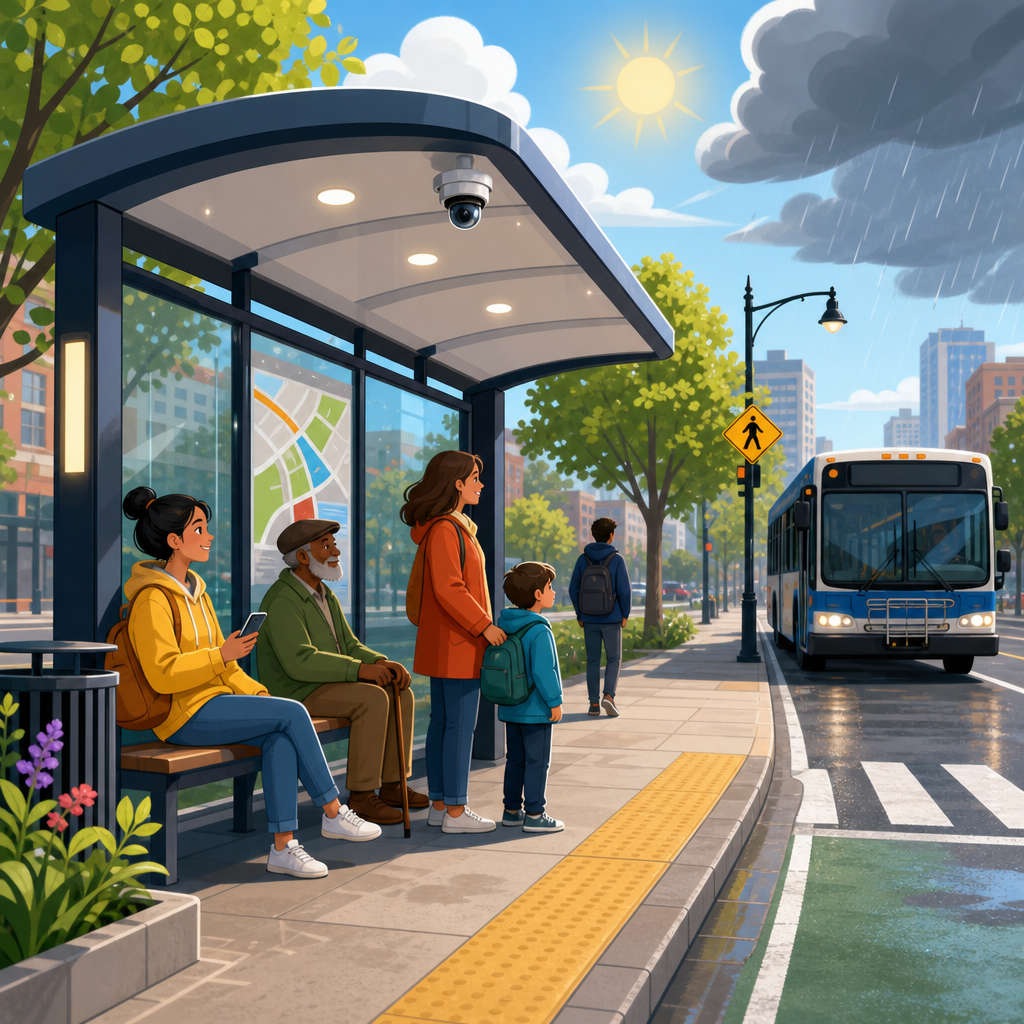
Designing better bus stops for weather, safety, and visibility is one of the most practical ways a city can improve public transit without rebuilding an entire network. A bus stop is more than a signpost or a shelter. It is the point where street design, passenger comfort, accessibility, operations, and public trust meet. When a stop keeps people dry, feels safe after dark, and is easy for drivers to see, it supports higher ridership, shorter dwell times, and a better daily experience for everyone from school children to older adults. In my work reviewing stop layouts with planners, transit agencies, and street maintenance teams, I have seen small design changes produce immediate improvements in use and satisfaction.
Good bus stop design starts with a clear definition of the problem. Weather protection means reducing exposure to rain, wind, sun, heat, and snow while maintaining airflow and visibility. Safety includes both traffic safety and personal security. Traffic safety covers sight lines, curb geometry, speed environment, boarding conditions, and conflict points with bikes, turning vehicles, and delivery activity. Personal security covers lighting, passive surveillance, maintenance, emergency communication, and the sense that the space is watched and cared for. Visibility works in two directions: riders must be able to identify the stop and approaching bus, and bus operators must be able to identify waiting riders, the curb edge, and any obstructions.
These details matter because bus stops are the front door of transit. According to the National Association of City Transportation Officials and the Federal Transit Administration, stop placement, curb access, and pedestrian connections strongly influence reliability and accessibility. If passengers must stand in mud, cross an uncontrolled multilane road, or wait in darkness behind an advertising panel, they read the service as inconvenient and unsafe even if the bus itself is frequent. By contrast, a well-designed stop communicates competence. It tells riders the agency expects regular use, values dignity, and has accounted for real conditions on the street. For sustainable urban development, that is critical: mode shift depends not only on route maps and fares but on whether the first and last minutes of the trip feel manageable.
Choosing the right location and orientation
The best bus stop design begins before any shelter is ordered. Location determines whether every later investment works. Far-side stops, placed after an intersection, often reduce conflicts with right-turning vehicles, improve signal progression, and make it easier for buses to pull away. Near-side stops can serve major generators positioned before the junction and may reduce walking distance, but they can interfere with turning movements and hide waiting riders behind parked cars. Midblock stops can work near campuses, hospitals, or long blocks with strong pedestrian demand, yet they require especially careful crossing design and curb management.
Orientation matters just as much as placement. In windy or rainy climates, the opening of a shelter should avoid prevailing storms while still facing arriving buses. In hot regions, the design must consider solar angle, not just midday shade. A transparent west-facing shelter can become a heat trap in the afternoon if glazing is untreated. I have seen stops improved simply by rotating the side panels, extending a roof edge by a few feet, and trimming vegetation that blocked sight lines. These changes cost far less than full reconstruction and often improve both comfort and boarding visibility immediately.
Clear space around the stop is essential. Agencies commonly use standards drawn from ADA requirements for boarding and alighting areas, with a firm, stable pad connected to an accessible pedestrian route. The stop should not be squeezed between utility poles, newspaper boxes, sandwich boards, and scooter parking. If there is no room to stand, riders spread into the sidewalk or street. If there is no direct path from nearby crossings, people create their own path through landscaping or wait in unsafe positions. Effective siting treats the stop as part of the walking network rather than as an isolated transit object.
Weather protection that works in real conditions
Weather protection fails when it is based on catalog images instead of field conditions. A useful shelter has a roof deep enough to cover seated and standing passengers, side panels positioned to block prevailing wind-driven rain, drainage that keeps runoff away from the waiting area, and materials that do not create glare or trap excessive heat. In snow climates, the shelter must allow snow storage strategy and plow operations to coexist. Too many stops are technically sheltered but practically exposed because drifting snow blocks the entrance or meltwater refreezes at the curb edge.
Bench placement should support both comfort and circulation. A bench pushed against the only clear boarding path forces wheelchair users and people with strollers to maneuver around seated passengers. Lean rails can supplement benches where space is tight, but they should not replace seating at stops serving older riders, clinics, or long headways. Roof height also matters. A very high canopy can reduce weather protection, while a very low one can feel cramped and limit sight lines. The best shelters balance enclosure with openness, creating refuge without hiding people from the street.
Climate-responsive details make a measurable difference. Perforated or louvered upper panels can preserve airflow in humid regions. High-albedo roofing and shaded glazing reduce heat gain. Durable anti-corrosion finishes matter in coastal areas. In places with frequent sun exposure, adjacent tree canopy is often the most effective comfort measure if root zones and branch clearance are managed properly. Cities such as Barcelona, Singapore, and Phoenix have all tested combinations of shade structures, vegetation, and reflective materials because thermal comfort at stops directly affects willingness to wait. When designing for weather, comfort should be evaluated across seasons and times of day, not just in a mild-weather site visit.
Safety, lighting, and passive surveillance
Safety at bus stops depends on visibility, predictability, and maintenance. Riders should be visible from nearby buildings, passing traffic, and the bus operator’s seat. That means avoiding opaque ad panels that create blind corners, trimming landscaping to preserve lines of sight, and placing shelters where they are not hidden behind parking or oversized utility cabinets. Lighting should illuminate faces, the curb edge, the timetable area, and the surrounding pedestrian approach. Uniform lighting is better than a bright fixture inside the shelter surrounded by darkness because harsh contrast can make the space feel less secure and reduce camera performance.
Personal security improves when a stop looks actively managed. Graffiti removal, repaired glazing, functioning real-time displays, and litter collection all send strong social signals. Broken infrastructure tells riders nobody is paying attention. In reviews I have done after evening site visits, the most common issue was not total darkness but inconsistent lighting between the stop and the crosswalk. Riders left the bus into one pool of light and then had to navigate a dark sidewalk gap. Good design therefore extends beyond the shelter footprint to the entire waiting and access zone.
Traffic safety requires deliberate curbside management. Bus bulbs can reduce merge delays and shorten pedestrian crossing distance, but they must be designed carefully on streets with protected bike lanes or heavy truck traffic. Floating stops can separate bikes from boarding activity when paired with clear markings and accessible crossings. On higher-speed roads, agencies should strongly consider stop consolidation, crossing upgrades, speed management, and refuge islands rather than treating the stop as a standalone object. A safe bus stop is not simply one with a shelter. It is one located in a forgiving street environment where motorists, cyclists, and pedestrians can predict each other’s movements.
Visibility for riders and operators
Visibility is often underestimated because it seems obvious until it fails. Riders need to know where to stand, which routes serve the stop, when the next bus is coming, and where the front door is likely to align. Operators need to see waiting passengers early enough to pull in smoothly and stop accurately at the curb. Sign clutter, poor numbering, reflective glare, and hidden stop markers all interfere with this simple exchange. The result is missed pickups, abrupt braking, and uncertainty that especially affects visitors and infrequent riders.
Stop markers should be legible from a distance and positioned to avoid obstruction by trees, parked vehicles, banners, or shelter roofs. Consistent route information matters. The route number shown on the flag should match printed and digital naming conventions, and temporary detour notices should be obvious without obscuring permanent information. Real-time passenger information displays are valuable, but they should supplement, not replace, static information because outages and data gaps still occur. In practice, the most effective stops use layered information: a visible flag, a simple route listing, a local area map, and a reliable countdown display or QR access point.
| Design element | Main purpose | Common failure | Better practice |
|---|---|---|---|
| Stop flag | Helps riders and operators identify the stop early | Hidden by trees or parked vehicles | Mount high with clear setback and regular visibility checks |
| Shelter panels | Provide weather protection | Opaque sides block sight lines | Use transparent or selectively screened panels |
| Lighting | Supports personal security and boarding safety | Bright interior with dark approaches | Light the full access path and curb edge evenly |
| Real-time display | Reduces uncertainty about arrivals | Unreadable in sun or out of service | Use glare-resistant screens and keep static information posted |
Operator visibility also depends on curb condition and alignment. Faded red curbs, illegal parking, and drainage grates in the docking zone can prevent a bus from pulling close. Even a gap of several inches affects boarding for wheelchair users and anyone with limited mobility. Transit agencies that conduct regular stop audits usually score not only amenities but also docking quality, sight lines, and curbside obstruction frequency. That broader approach is correct. Visibility is not merely visual; it is operational. If a bus cannot see, approach, and serve the stop consistently, the stop is not performing.
Accessibility, maintenance, and the long-term operating view
Accessibility must be built into every decision, not added after the shelter arrives. The boarding and alighting area should provide a firm pad, adequate clear width, compliant slope, and an uninterrupted connection to the sidewalk and crossing network. Tactile warnings, detectable edges where appropriate, and readable information at accessible heights help riders with vision, mobility, and cognitive disabilities use the stop independently. Audio wayfinding or push-button information systems can be useful in some contexts, but the basics matter most: clear paths, predictable layout, and consistent boarding position.
Maintenance planning is where many otherwise good designs break down. Materials should withstand vandalism, UV exposure, deicing salts, and frequent cleaning. Drainage must be checked against actual gutter flow, not just a drawing. Trash receptacles need servicing plans. Snow clearance responsibilities between transit agencies, public works departments, and adjacent property owners must be explicit. In several cities, I have seen shelters installed with no agreement on who clears snow behind the curb, making an accessible pad unusable for days. Design is only successful when it can be operated reliably within local budgets and staffing.
The long-term view also includes data. Agencies should track boardings, complaints, crash history, maintenance calls, and shelter condition, then prioritize upgrades where need and impact are highest. Stops near schools, hospitals, senior housing, transfer points, and corridors with frequent service usually deliver the greatest return from better weather protection, lighting, and visibility upgrades. Pilots are useful, but only if they are measured consistently. Cities that combine field observation, passenger feedback, and curbside data make better decisions than cities that choose shelter types solely by unit cost. The goal is a stop that is comfortable, legible, safe, and serviceable year after year.
Better bus stops are not a cosmetic extra. They are core transit infrastructure that shape whether public transportation feels dependable, dignified, and easy to use. The strongest designs start with location, then solve for weather, safety, visibility, accessibility, and maintenance as one connected system. They use clear sight lines, climate-appropriate sheltering, even lighting, readable information, and curb space that lets buses dock properly. They also recognize tradeoffs. A fully enclosed shelter may block surveillance. A larger canopy may conflict with utilities. A premium display means little if snow blocks the pad. Good design resolves these tensions through field observation and operating discipline, not guesswork.
For sustainable urban development, improving bus stops is one of the highest-value street investments available. It supports transit ridership, extends access for people who cannot drive, and strengthens confidence in the public realm with relatively modest capital cost. The practical lesson is simple: treat every stop as a small piece of civic infrastructure, not a leftover fragment of sidewalk. Audit existing stops, prioritize the highest-need locations, and build a repeatable standard your agency can maintain. When cities design bus stops for weather, safety, and visibility, they make transit work better from the very first minute of the trip.
Frequently Asked Questions
Why does bus stop design matter so much if the transit route itself stays the same?
Bus stop design has an outsized effect on how people experience public transit because the stop is where waiting, boarding, visibility, and personal comfort all come together. Even if the route, schedule, and vehicles do not change, a better stop can make transit feel more reliable, more dignified, and easier to use. Riders notice whether they have a place to stand out of the rain, whether the curb is easy to approach with a stroller or wheelchair, whether lighting makes the area feel safe, and whether buses can pull in and out efficiently. Those details influence whether people choose transit repeatedly or avoid it whenever possible.
From an operations standpoint, well-designed stops can also reduce dwell times and improve consistency. Clear boarding zones, unobstructed access to the curb, and visible stop placement help operators align the bus quickly and safely. That means fewer delays caused by blocked approaches, confused boarding patterns, or passengers gathering in awkward locations. In short, improving a stop is one of the most cost-effective ways to upgrade a transit system because it improves comfort, accessibility, safety, and efficiency without requiring a full network rebuild.
What features help protect riders from weather without making a bus stop feel cramped or closed off?
The best weather-protective bus stops balance shelter with openness. A strong design usually includes a roof large enough to cover the main waiting area, side panels placed to block prevailing wind and rain, and drainage that keeps water from pooling around the boarding zone. Materials matter as well. Durable roofing, corrosion-resistant framing, and panels that can withstand temperature shifts and repeated cleaning help a stop perform well over time. The goal is not simply to add a shelter, but to create a waiting area that stays useful in real local conditions, whether that means intense sun, winter snow, coastal wind, or frequent downpours.
At the same time, shelters should not create blind corners or make people feel boxed in. Transparent or semi-transparent panels can preserve sightlines, improve natural surveillance, and help both riders and approaching bus operators see one another. Adequate internal space is important so riders using mobility devices, parents with strollers, and standing passengers can share the stop comfortably. Seating should be placed so it supports people who need it without obstructing circulation. In warmer climates, ventilation and shade may be just as important as rain protection. A well-designed stop is one that responds to local weather patterns while still feeling open, visible, and easy to move through.
How can bus stops be designed to improve safety, especially at night?
Safety starts with visibility and predictability. A bus stop should be easy to locate from the street, well lit after dark, and positioned where riders are visible to passing traffic, nearby businesses, and surrounding pedestrians. Good lighting is one of the most important investments because it improves personal security, makes tripping hazards easier to spot, and helps drivers identify waiting passengers sooner. Lighting should be even and practical, illuminating the shelter, sidewalk, curb edge, and boarding area rather than creating harsh glare or deep shadows.
Beyond lighting, safer stops are typically those with clear sightlines, limited visual clutter, and strong connections to the pedestrian network. Overgrown landscaping, opaque advertising panels, hidden recesses, and poorly placed street furniture can create unnecessary concealment or confusion. Sidewalks leading to the stop should be continuous and accessible, with safe street crossings nearby so riders are not forced to dash across traffic. In higher-activity areas, additional measures such as emergency call information, passive surveillance from adjacent land uses, and routine maintenance can further improve perceived and actual safety. Cleanliness also matters more than many people realize. A stop that is maintained, free of broken fixtures, and clearly cared for tends to feel safer and signals that the space is actively managed.
What makes a bus stop more visible for both riders and bus drivers?
Visibility works in two directions: riders need to identify the stop easily, and bus operators need to spot waiting passengers and the stop zone in time to approach safely. For riders, strong visibility starts with clear signage, legible route information, and placement that makes sense within the street environment. A stop should not be hidden behind parked cars, utility poles, oversized ad panels, or dense landscaping. It should be positioned where someone walking along the sidewalk can recognize it quickly and understand where to wait. Consistent branding, reflective materials, and real-time information displays can further improve recognition, particularly in busy corridors or poor weather conditions.
For drivers, the approach to the stop is just as important as the stop itself. The curb zone should be easy to see from a distance, with minimal obstructions and enough clear space for the bus to pull in smoothly. High-contrast markings, daylighting near intersections, and restrictions on parking too close to the stop can greatly improve approach visibility. The boarding area should also allow operators to see passengers clearly, including those seated under the shelter or standing to the side. When visibility is improved, buses can stop more precisely, riders are less likely to miss their bus, and the overall interaction becomes safer and more efficient for everyone.
How do accessibility and comfort work together in better bus stop design?
Accessibility and comfort should never be treated as separate goals because the features that help one group of riders often improve the experience for everyone. An accessible stop typically includes a firm, stable waiting surface, a clear path of travel, enough space for wheelchair maneuvering, an accessible connection to the sidewalk network, and a curbside boarding area free of obstacles. Tactile warnings, readable signage, and seating with appropriate placement can support a wider range of users, including older adults, people with low vision, and riders carrying bags or traveling with children. These are not niche improvements; they are fundamental parts of a stop that works well in everyday life.
Comfort adds another essential layer. People are more likely to use transit regularly when waiting does not feel physically stressful or uncertain. Shade, weather protection, seating, lighting, and accurate information all reduce friction during the trip. When those features are integrated with accessible design, the result is a stop that is easier to understand, easier to reach, and less exhausting to use. That has a direct impact on ridership and public trust. A city does not build confidence in transit only through frequency and coverage; it also builds confidence by showing riders that every stop has been designed with real people, real weather, and real mobility needs in mind.