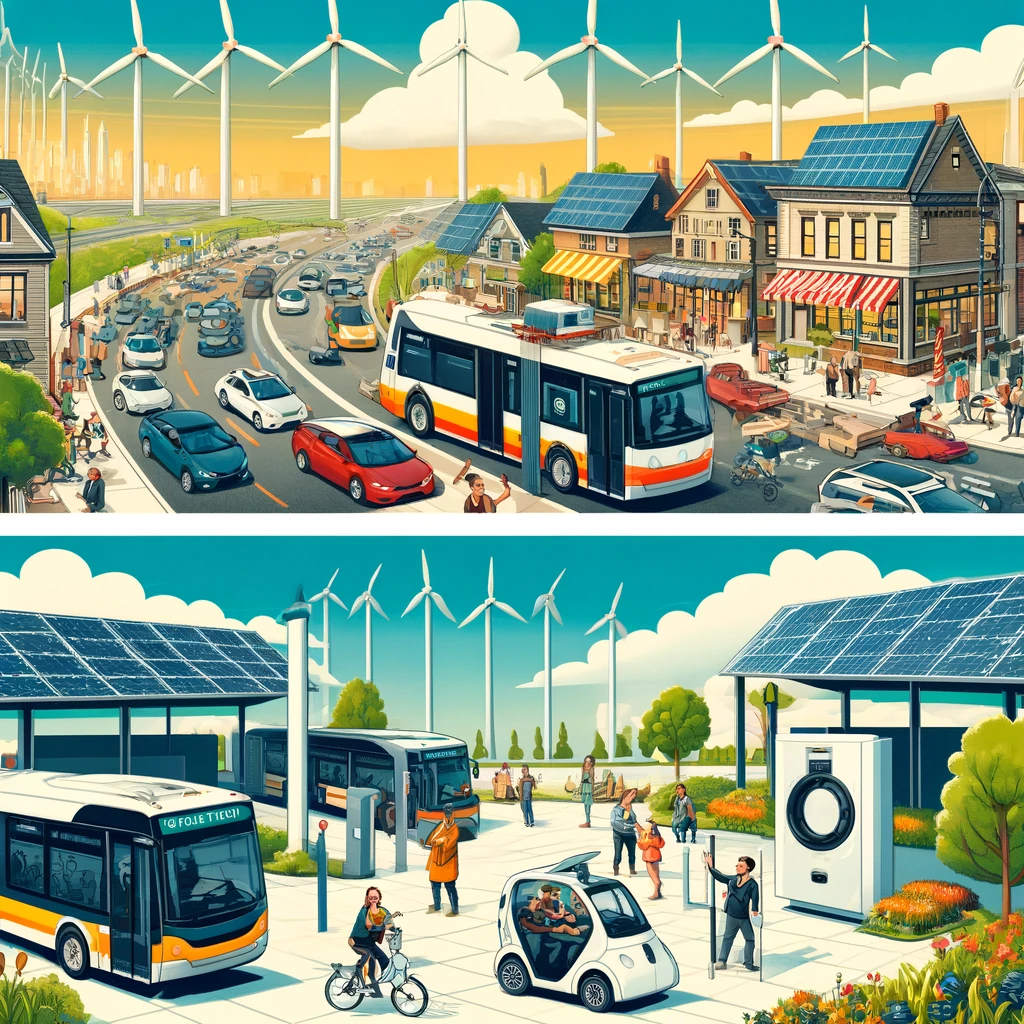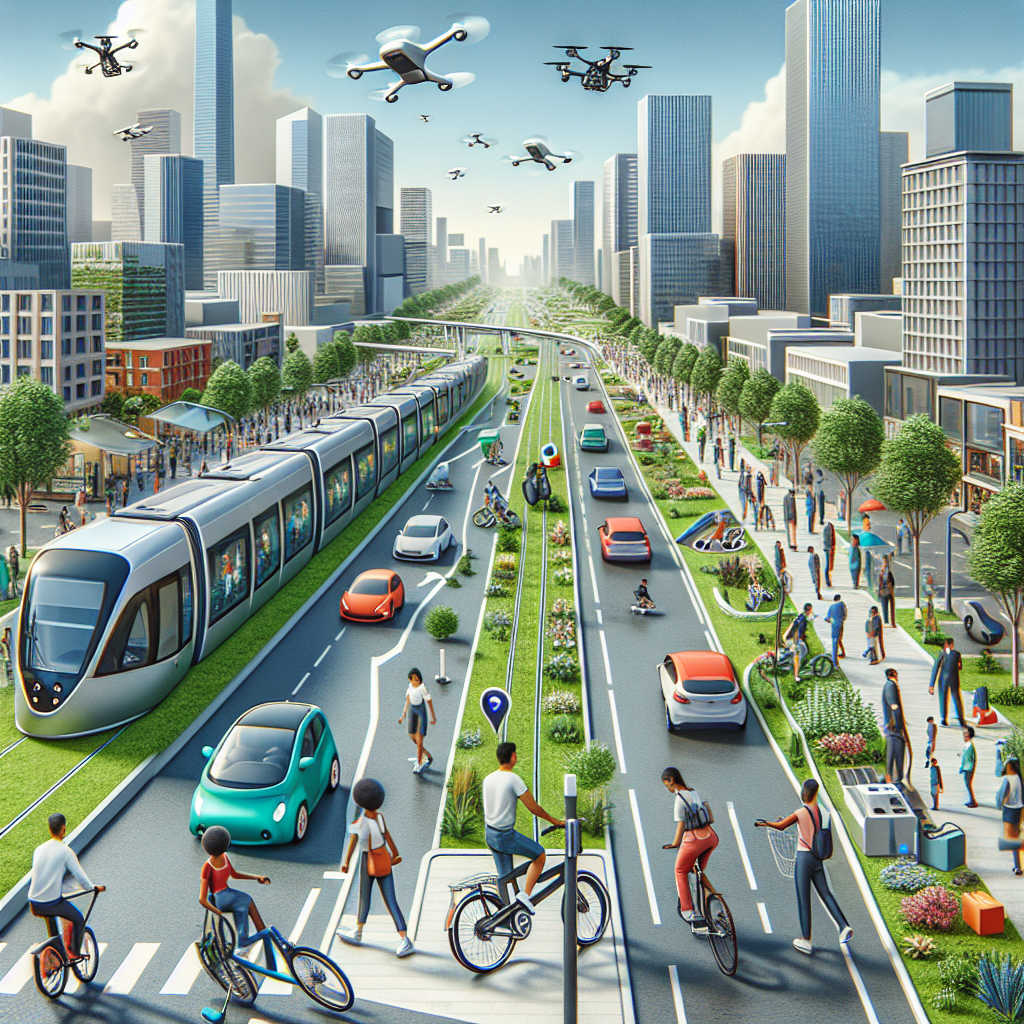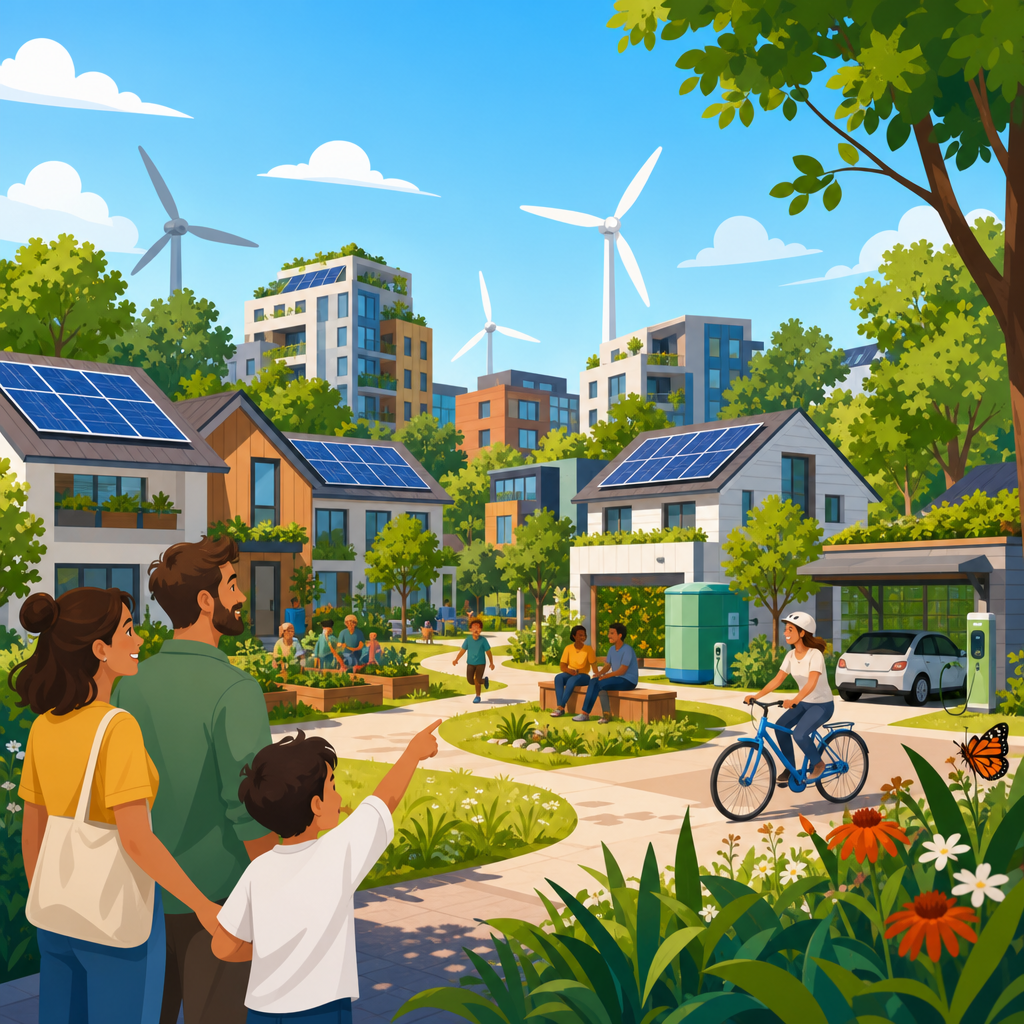
Net-zero neighborhoods are communities designed to balance the energy they use and the greenhouse gases they produce with the clean energy they generate or the emissions they avoid over the course of a year. In plain language, a net-zero neighborhood aims to make daily life—heating homes, cooling apartments, lighting streets, charging vehicles, and running shops—work without adding long-term climate pollution to the atmosphere. For non-engineers, the concept can sound highly technical, but the underlying idea is practical: design neighborhoods so buildings, infrastructure, and transportation systems need less energy, then supply the remaining demand with renewable sources.
The term matters because cities are where climate goals are won or lost. According to the United Nations, roughly 55 percent of the world’s population already lives in urban areas, and that share is expected to rise. Buildings and construction are also responsible for a large portion of global energy-related carbon emissions. When I have worked on urban sustainability planning, the clearest lesson has been that individual green buildings are helpful, but neighborhood-scale design produces much larger gains. Shared energy systems, walkable street layouts, stormwater management, and coordinated transit reduce emissions more effectively when planned together rather than one property at a time.
A net-zero neighborhood is not simply a housing development with solar panels. It combines efficient buildings, low-carbon mobility, resilient utilities, careful land use, and measurable performance targets. Key terms are useful here. “Operational carbon” means emissions from energy used in daily operations, such as electricity and heating. “Embodied carbon” refers to emissions created by producing materials like concrete, steel, and insulation, and by constructing the neighborhood itself. “District energy” describes shared heating and cooling systems serving multiple buildings. “Demand reduction” means lowering energy needs before adding renewables. These concepts shape every serious project.
Why does this matter to residents, city officials, and developers? A well-executed net-zero neighborhood can lower utility bills, improve indoor comfort, reduce exposure to fuel price swings, and make streets safer and healthier. It can also help cities meet climate commitments while improving local air quality and reducing heat island effects. The real value is not one technology but a systems approach. When people understand how the pieces fit together, net-zero stops sounding futuristic and starts looking like disciplined, practical urban design.
What Makes a Neighborhood Net-Zero
A neighborhood reaches net-zero by treating energy, carbon, water, mobility, and land use as one connected system. The first step is reducing demand. Buildings are oriented for daylight, insulated to high standards, and built with efficient windows, airtight envelopes, heat recovery ventilation, and electric heat pumps. Public lighting uses LEDs and controls. Streetscapes are designed to support walking, cycling, and transit so residents do not need to rely on private gasoline vehicles for every trip. Once demand is reduced, renewable energy—often rooftop solar, carport solar, community solar arrays, geothermal loops, or renewable electricity from the grid—covers the remaining load.
At neighborhood scale, efficiency measures can do more than isolated upgrades in one building. Shared systems spread costs and smooth peaks in demand. A district thermal network, for example, can move low-temperature heat between buildings with different needs. One office building rejecting heat from cooling loads can help warm nearby residences or domestic hot water systems. Battery storage can capture midday solar production and use it in the evening when people return home. Smart controls coordinate this exchange automatically. The result is lower total energy use and less strain on the electric grid.
Real projects illustrate the point. BedZED in London, one of the earliest eco-neighborhoods, combined efficient homes, passive solar design, and reduced car dependence. Vauban in Freiburg, Germany, emphasized transit access, energy-efficient buildings, and car-light planning. More recent districts such as Hammarby Sjöstad in Stockholm integrated energy, waste, and water systems through coordinated planning. Not every project reaches perfect net-zero performance every year, but the best ones prove that neighborhood-scale design outperforms piecemeal sustainability measures.
Buildings, Energy Systems, and the Role of Renewables
Buildings are usually the biggest part of the equation because they operate every day and lock in energy demand for decades. For that reason, the standard sequence is efficiency first, electrification second, renewables third. Efficiency means high-performance envelopes, quality insulation, reduced thermal bridging, triple-glazed windows in colder climates, exterior shading in warmer climates, and balanced ventilation with heat recovery. Electrification means replacing fossil fuel boilers, furnaces, and water heaters with electric heat pumps and induction cooking where possible. Renewables then supply the cleaner electricity those systems need.
At neighborhood scale, planners often compare several energy strategies before construction begins. In my experience, the strongest plans model hourly loads instead of relying only on annual averages, because winter morning peaks and summer evening peaks can determine infrastructure sizing and cost. The table below summarizes common options used in net-zero neighborhoods.
| System | Best Use | Main Advantage | Key Limitation |
|---|---|---|---|
| Rooftop solar PV | Low-rise buildings with good sun exposure | Direct on-site generation | Limited roof area in dense districts |
| Community solar | Mixed-density neighborhoods | Serves many buildings from one array | Needs shared ownership or billing structure |
| Ground-source heat pumps | District heating and cooling | Very efficient year-round operation | Higher upfront drilling cost |
| Air-source heat pumps | Individual buildings or retrofits | Flexible and increasingly affordable | Performance varies with climate and design |
| Battery storage | Solar-heavy neighborhoods | Shifts power to peak hours | Adds capital cost and replacement planning |
Standards and tools matter here. Passive House principles are widely used to cut heating and cooling demand. Energy Use Intensity, measured in kBtu per square foot per year or kWh per square meter per year, helps teams compare building performance objectively. ASHRAE standards guide ventilation and thermal comfort. LEED for Neighborhood Development and similar frameworks can support planning, though certification alone does not guarantee net-zero outcomes. The decisive factor is measured performance after occupancy, not design intent on paper.
Transportation, Public Space, and Everyday Behavior
A neighborhood cannot credibly claim net-zero if transportation emissions are ignored. In many urban districts, resident travel can rival or exceed building emissions, especially in car-dependent suburbs. The most effective solution is not simply replacing every car with an electric vehicle. It is reducing the need to drive in the first place. That means mixed land use, shorter block lengths, safe sidewalks, protected bike lanes, street trees, traffic calming, nearby schools, local shops, and reliable transit. When daily destinations are close and streets feel safe, people choose lower-carbon travel without being forced.
This is where urban design becomes visible to non-engineers. A grocery store within a ten-minute walk changes emissions more than a distant supermarket paired with token bicycle racks. A bus arriving every ten minutes changes behavior more than a bus arriving twice an hour. Secure bike parking in apartment buildings matters. So does curb management for deliveries, ride-hailing, and accessible loading. If those details are poorly handled, residents fall back to private car use even in otherwise efficient developments.
Electric mobility still plays an important role. Net-zero neighborhoods usually include shared charging infrastructure, fleet electrification for maintenance vehicles, and planning for school buses, delivery vans, and car-share vehicles. The advantage of coordinated charging is that it can be timed with solar generation or lower grid demand. Smart charging systems are now common and can reduce costly peak loads. In well-designed districts, transportation strategy supports public health too: fewer combustion engines mean lower local nitrogen oxides and particulate pollution, while walkable public space increases physical activity and social interaction.
Water, Waste, Materials, and Climate Resilience
Although energy gets most of the attention, durable net-zero neighborhoods also address water, waste, and materials because these systems affect emissions and resilience. Water-efficient fixtures reduce the energy needed to pump, heat, and treat water. Blue-green infrastructure—bioswales, rain gardens, permeable paving, retention basins, and green roofs—manages stormwater while cooling streets and reducing flood risk. In hotter cities, trees and shade structures can lower surface temperatures significantly, making public space more usable and reducing cooling demand in nearby buildings.
Waste systems also matter. Organic waste can be composted or processed through anaerobic digestion in some municipal systems, reducing methane emissions from landfill disposal. Construction waste management plans divert reusable materials from landfill and lower project impacts. More important, however, is embodied carbon in new construction. Cement production alone contributes around 7 to 8 percent of global carbon dioxide emissions. That is why many leading projects use lower-carbon concrete mixes, recycled steel, mass timber where appropriate, and adaptive reuse of existing buildings when feasible.
Resilience is inseparable from net-zero planning because climate hazards are increasing. A low-carbon neighborhood that fails during heat waves, floods, or grid outages is not a successful model. Resilient districts include backup power for critical loads, passive survivability measures such as shading and natural ventilation, elevated equipment in flood-prone zones, and microgrids where regulations allow. I have seen teams make the mistake of optimizing annual carbon while neglecting resilience; the better projects test both. Residents care less about engineering diagrams than whether their homes remain safe, cool, and functional during disruptions.
Costs, Governance, and How Success Is Measured
One of the first questions non-engineers ask is whether net-zero neighborhoods are too expensive. The honest answer is that some features increase upfront capital costs, but lifecycle economics are often favorable when projects are designed well. Better envelopes, district systems, and durable materials can cost more initially, yet they lower operating expenses over decades. The biggest financial mistakes usually come from late design changes, fragmented decision-making, or trying to add sustainability features after land use, massing, and infrastructure have already been fixed. Early integrated planning is cheaper than retrofitting a flawed concept.
Governance is equally important. A neighborhood-scale energy system requires ownership models, maintenance responsibility, utility coordination, and transparent billing. Community associations, special districts, public-private partnerships, and utility-led structures are all used, each with tradeoffs. Affordability must be protected deliberately. If green infrastructure leads only to premium housing and displacement, the neighborhood may perform technically while failing socially. Strong projects include mixed-income housing, tenant protections where possible, and clear reporting so residents understand costs and benefits.
Measurement should be straightforward. Track energy use, renewable generation, peak demand, travel behavior, water use, waste diversion, and indoor environmental quality. Use post-occupancy evaluation, not only design models. Commissioning and ongoing monitoring-based commissioning are essential because poorly tuned systems can erase expected gains. A net-zero neighborhood is not defined by marketing language. It is defined by verifiable performance data over time. For cities and developers, the takeaway is simple: set measurable targets, publish results, and improve operations continuously.
Net-zero neighborhoods explained for non-engineers comes down to one principle: design communities to need less, waste less, and run on clean energy. The most effective neighborhoods do not rely on a single breakthrough technology. They combine efficient buildings, electrified heating and transport, renewable power, walkable planning, water-smart landscapes, lower-carbon materials, and resilient infrastructure. When those elements are coordinated from the start, the neighborhood becomes cheaper to operate, healthier to live in, and better prepared for climate risk.
The key insight is that scale matters. A single efficient building can reduce energy use, but a neighborhood can share systems, reshape travel patterns, and manage land and infrastructure in ways one parcel never can. That is why this topic sits at the center of sustainable urban development. It connects architecture, planning, utilities, mobility, public health, and finance in one framework residents can actually feel in their daily lives.
If you are evaluating a project, ask practical questions. What is the target for operational and embodied carbon? How will performance be measured after occupancy? Where will renewable energy come from? Can residents meet daily needs without driving? How will the project handle heat, flooding, and outages? Clear answers to those questions usually separate real net-zero planning from surface-level branding. Use this page as your starting point, then explore each connected subtopic in depth to assess what truly makes a neighborhood net-zero.
Frequently Asked Questions
What is a net-zero neighborhood in simple terms?
A net-zero neighborhood is a community designed so that, over the course of a year, the energy it uses and the climate pollution it would normally create are balanced by clean energy generation and emissions reductions. In everyday language, it means the homes, apartments, streets, stores, and shared services in a neighborhood are planned to meet daily needs without adding long-term greenhouse gas pollution to the atmosphere. That does not mean the neighborhood never uses electricity from the grid or never consumes energy. It means the community is built and operated so efficiently, and produces or offsets so much clean energy, that its overall annual impact is brought down to net zero.
For non-engineers, the easiest way to think about it is as a neighborhood-wide budget. First, the community works hard to reduce “spending” by using less energy through better insulation, efficient heating and cooling, LED lighting, smart controls, and thoughtful design. Then it increases “income” by generating clean power, often through solar panels, battery storage, district energy systems, and electrified transportation. The result is a neighborhood that aims to support comfortable living while dramatically lowering pollution. The idea is not futuristic magic. It is a practical combination of efficient buildings, clean power, better planning, and long-term community management.
How is a net-zero neighborhood different from a single net-zero home or building?
A single net-zero home focuses on one property balancing its own energy use and clean energy production. A net-zero neighborhood takes that same idea and applies it across many buildings and shared systems. This larger scale matters because neighborhoods include more than private homes. They also involve apartment buildings, shops, schools, public lighting, parking, roads, water systems, and transportation infrastructure. Looking at the community as a whole makes it possible to solve problems more efficiently than if every building had to do everything on its own.
For example, some buildings may have large roofs that are ideal for solar panels, while others may not. In a neighborhood-scale approach, clean energy can be generated where it works best and shared across the community. The same is true for heating and cooling. Instead of every building relying on separate equipment, some net-zero neighborhoods use district energy systems that serve multiple buildings more efficiently. Transportation can also be addressed collectively through walkable design, bike infrastructure, electric vehicle charging, and access to public transit. In short, the neighborhood model creates flexibility. It allows planners and developers to optimize land use, energy systems, and emissions reductions in a way that is often more practical, affordable, and effective than trying to make each individual building operate in isolation.
What technologies and design features usually make a neighborhood net-zero?
Most net-zero neighborhoods rely on a combination of good design, high-efficiency buildings, clean electricity, and smart infrastructure rather than one single breakthrough technology. The first step is usually reducing energy demand. That includes well-insulated walls and roofs, high-performance windows, airtight construction, efficient appliances, LED lighting, and modern heating and cooling systems such as heat pumps. Street layouts and building orientation may also be planned to capture daylight, reduce summer overheating, and improve walkability. These design choices lower the amount of energy the neighborhood needs before any renewable power is added.
After reducing demand, the neighborhood typically adds clean energy systems. Solar panels are common, either on rooftops, over parking areas, or in shared installations. Some communities use battery storage to help manage power supply and demand. Others use shared geothermal or district heating and cooling systems to improve efficiency. Electric vehicle charging is often included so transportation can shift away from fossil fuels. Smart meters and energy management software may help balance usage across homes and buildings, especially during peak times. Water-saving systems, shade trees, cool roofs, and green infrastructure can also support the broader sustainability goals of the neighborhood. What makes the model effective is the way these pieces work together. Net-zero is usually achieved through integration, not through any single device.
Does net-zero mean residents have to give up comfort, convenience, or normal lifestyles?
No. A well-designed net-zero neighborhood is supposed to maintain or even improve comfort and convenience, not reduce them. In fact, many of the features that help a neighborhood reach net-zero also make daily life better. Better insulation and airtight construction can make homes quieter and more comfortable year-round. Efficient electric heating and cooling systems can provide more stable indoor temperatures. Walkable streets, nearby services, and safer bike routes can make errands easier and reduce time spent driving. Cleaner air, reduced traffic emissions, and better public spaces can improve health and quality of life for residents.
There may be some differences in how systems operate. For instance, residents may live in all-electric homes instead of homes using natural gas, and they may be encouraged to use smart thermostats, efficient appliances, or timed charging for electric vehicles. But these changes are generally designed to be simple and user-friendly. The goal is not to ask people to live with less. The goal is to provide the same or better services with far less waste and pollution. In many cases, net-zero neighborhoods also lower utility costs over time because efficient buildings need less energy and clean power can reduce exposure to rising fossil fuel prices. So for most people, net-zero should feel less like a sacrifice and more like a better-designed place to live.
Why do net-zero neighborhoods matter for climate goals and the future of cities?
Net-zero neighborhoods matter because climate pollution does not come only from power plants or factories. A large share comes from the places people live, work, shop, travel, and gather every day. Buildings use energy for heating, cooling, lighting, and appliances. Transportation adds emissions from cars and delivery vehicles. Public infrastructure consumes power as well. When neighborhoods are designed in the usual way, these sources of pollution add up year after year. Net-zero neighborhoods address many of them at once by improving building performance, shifting to clean electricity, and reducing dependence on fossil fuels across the community.
They also matter because cities are where much of future growth will happen. If new neighborhoods are built with inefficient buildings and car-dependent layouts, emissions can be locked in for decades. By contrast, net-zero neighborhoods create a model for growth that is more resilient, efficient, and climate-friendly from the start. They can also help communities prepare for a changing energy system by supporting local power generation, storage, and flexible demand. Beyond climate benefits, these neighborhoods can support cleaner air, lower operating costs, healthier living environments, and stronger local energy security. In that sense, net-zero neighborhoods are not just an environmental idea. They are a long-term planning strategy for building communities that are easier to sustain economically, socially, and environmentally.