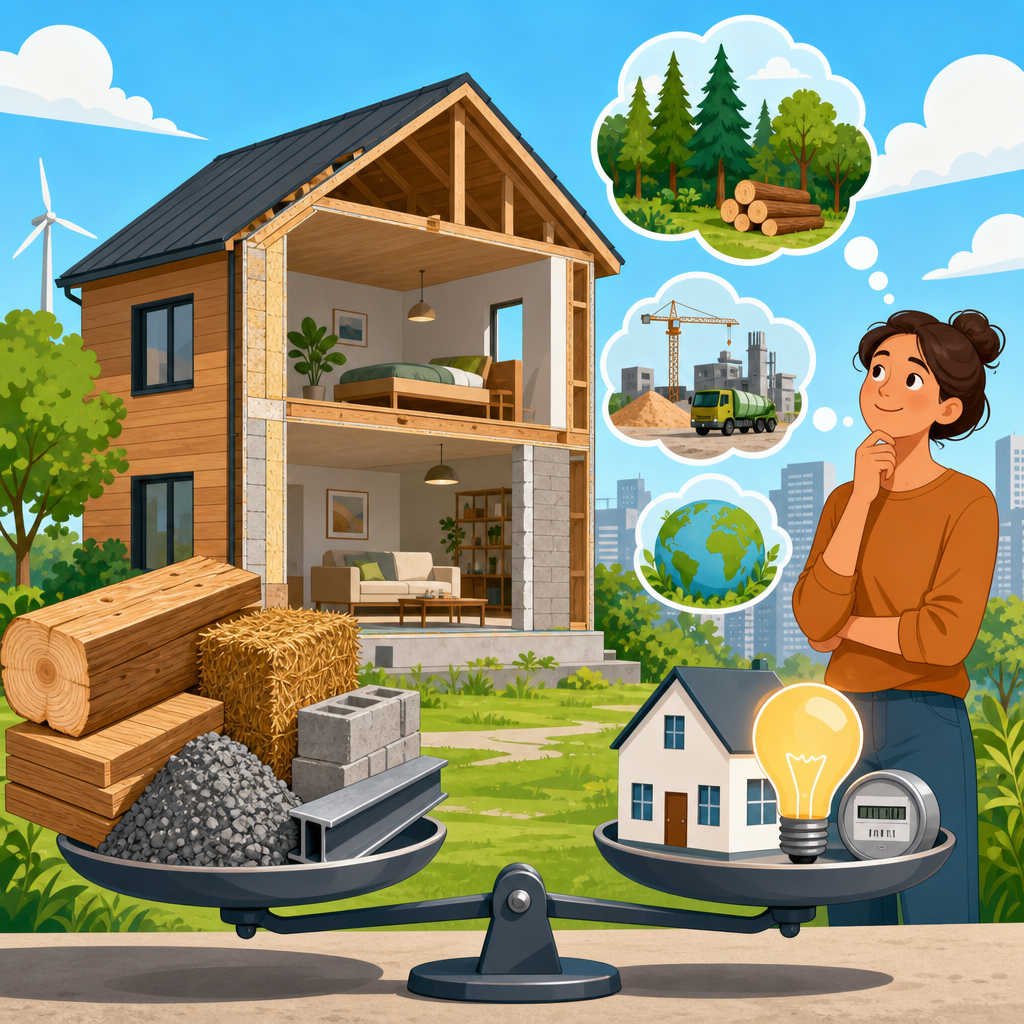
Embodied carbon in housing is no longer a niche concern reserved for green building specialists; it has become central to how cities, developers, architects, and homeowners judge whether a home is truly sustainable. The term describes the greenhouse gas emissions created before a building is occupied, including extraction of raw materials, manufacturing, transport, construction, maintenance, replacement, and eventual demolition or reuse. Operational carbon, by contrast, comes from heating, cooling, lighting, and powering a home once people live there. For years, housing policy focused mostly on energy bills and appliance efficiency because those costs were visible every month. Yet in low-energy homes, I have repeatedly seen material choices dominate the climate impact long before the first utility statement arrives.
This shift matters because housing is built at enormous scale. Every apartment block, row house, and suburban development locks in decades of emissions through decisions about concrete, steel, insulation, brick, timber, glazing, and finishes. According to the United Nations Environment Programme, buildings and construction account for roughly 37 percent of energy- and process-related carbon dioxide emissions worldwide when both operational and material impacts are counted. As grids become cleaner and better building codes cut energy demand, embodied carbon represents a larger share of total emissions. In practical terms, a home with excellent insulation and a heat pump can still carry a heavy climate burden if it relies on carbon-intensive structural systems and wasteful construction methods.
Understanding embodied carbon in housing helps answer a question buyers, planners, and policymakers increasingly ask: what is the true climate cost of a home? The answer requires life-cycle thinking. A kilogram of aluminum window framing, a cubic meter of ready-mix concrete, or a pallet of ceramic tile each carries a measurable emissions footprint. These impacts are commonly assessed through life-cycle assessment, often using standards such as EN 15978, ISO 14040, and ISO 14044, with product information documented in Environmental Product Declarations. For housing, this means sustainability cannot be reduced to rooftop solar panels or a lower winter gas bill. Materials matter as much as energy bills because they create emissions upfront, at the moment the climate can least afford delay, and because better choices already exist.
For a sub-pillar hub under sustainable urban development, embodied carbon in housing links planning, architecture, construction, finance, and household decision-making. It connects density debates to structural systems, renovation policy to demolition waste, and affordable housing strategies to procurement standards. The most useful way to approach the topic is not as a single technology but as a framework for choosing less carbon-intensive homes across the whole life cycle. That starts with measuring where emissions come from, then using design and procurement tools to reduce them without compromising durability, safety, health, or cost performance.
Where embodied carbon comes from in a home
Embodied carbon in housing comes from every stage of a building’s material life cycle. The largest sources are usually structure and enclosure: foundations, slabs, columns, load-bearing walls, roof systems, insulation, windows, and exterior cladding. In many mid-rise and high-rise residential projects I have reviewed, concrete and steel account for the majority of upfront embodied carbon because cement production releases carbon dioxide during both fuel combustion and the calcination of limestone. Steel is similarly energy intensive, although recycled content and electric arc furnace production can reduce impacts significantly compared with blast furnace routes.
Housing also contains many smaller components that add up. Gypsum board, floor finishes, kitchens, bathroom fixtures, ductwork, piping, and built-in cabinetry may be replaced several times over a building’s service life, making recurring embodied carbon important. Transport emissions are usually smaller than manufacturing emissions, but they grow when heavy materials travel long distances or when projects depend on fragmented supply chains. Construction practices matter too. Over-ordering materials, site damage, and demolition waste all increase the footprint of a housing development without improving performance for residents.
The timing of these emissions is critical. Operational carbon is released gradually over decades, while embodied carbon is concentrated upfront, often before residents move in. Climate science makes this especially important because emissions released now contribute to near-term warming and use up the remaining carbon budget sooner. That is why many practitioners distinguish between whole-life carbon and upfront carbon. For housing delivered in the next ten years, reducing upfront emissions can produce immediate climate benefits that operational improvements alone cannot match.
Why low-energy homes can still have high emissions
A common misunderstanding is that an energy-efficient home is automatically a low-carbon home. That is not always true. Passive design, airtightness, high-performance glazing, and heat pumps dramatically reduce operational energy demand, which is essential. But some of the products used to achieve those targets can carry substantial manufacturing emissions, especially when over-specified or applied without a full life-cycle assessment. Triple glazing, large quantities of foam insulation, aluminum-heavy façade systems, and deep basement structures can improve certain performance metrics while increasing embodied carbon beyond what is justified by the operational savings.
I have seen this tension most clearly in premium housing projects where teams pursued certification points without questioning material intensity. A building may advertise net-zero operational energy while relying on oversized structural grids, extensive concrete transfer slabs, imported stone cladding, and frequent interior fit-out replacements. In those cases, the marketing message is technically incomplete. The home may have low energy bills, but the material footprint remains large. The right goal is not choosing between operational and embodied carbon; it is optimizing both together.
Grid decarbonization strengthens this argument. As electricity systems add more wind, solar, storage, and cleaner generation, emissions from operating electric homes fall. That means the relative share of embodied carbon rises. In parts of Europe and North America with cleaner grids, studies already show that embodied emissions can represent 40 to 70 percent of a new residential building’s life-cycle total. For highly efficient homes, the share can be even higher. This is why building policy is shifting from simple energy targets toward whole-life carbon accounting.
How designers and developers reduce embodied carbon
The most effective strategy is often building less, not just building better. Right-sizing homes, simplifying structural spans, reducing excavation, and avoiding unnecessary basement parking can cut large quantities of concrete and steel before product selection even begins. Adaptive reuse is usually even better. Retaining an existing structure preserves the carbon already invested in it and avoids demolition emissions. In urban housing, converting offices, warehouses, or older apartment blocks can deliver major savings when structural suitability, fire safety, and housing quality are addressed properly.
Material substitution is the next major lever. Lower-carbon concrete mixes use supplementary cementitious materials such as ground granulated blast-furnace slag, fly ash where still available and appropriate, calcined clay, or limestone fillers to reduce clinker content. Responsibly sourced timber can lower structural emissions in many low-rise and mid-rise applications, especially when replacing concrete or steel in floors, walls, and roofs. Recycled steel, cellulose insulation, mineral wool with verified product data, and reused brick or finishes can also reduce impacts. The key is specification discipline: ask for Environmental Product Declarations, compare products by function, and avoid assuming all materials within a category perform the same.
Design for durability and disassembly also matters. A longer-lasting façade, a flexible floor plate, or demountable interior partitions can reduce the need for replacement and enable future reuse. This is particularly relevant in housing, where kitchens, bathrooms, and interior finishes are often renovated long before the structural frame reaches the end of its life. Procurement teams increasingly use carbon caps, contractor reporting requirements, and digital quantity takeoffs linked to life-cycle assessment tools such as One Click LCA, EC3, eTool, or Tally. These methods turn embodied carbon from an abstract idea into a measurable design variable.
| Housing decision | Higher-carbon default | Lower-carbon alternative | Why it helps |
|---|---|---|---|
| Structure | High-cement concrete and virgin steel | Optimized concrete mix, recycled steel, or timber where suitable | Reduces emissions from the largest material sources |
| Existing site | Full demolition and rebuild | Reuse structure or partial retention | Preserves invested carbon and cuts waste |
| Layout | Long spans and deep basements | Compact spans and minimized excavation | Lowers concrete and reinforcement demand |
| Envelope | Over-specified façade systems | Performance-based specification | Balances operational gains against material impacts |
| Interiors | Short-life finishes | Durable, repairable, replaceable components | Reduces recurring embodied carbon |
What embodied carbon means for housing policy and urban development
Embodied carbon is not just a design issue; it is a city-shaping policy issue. Housing targets often emphasize unit counts and speed of delivery, but the material consequences of those targets differ widely depending on urban form, code requirements, and procurement rules. Mid-rise infill housing can be materially efficient because it shares walls and services while avoiding some of the structural intensity of very tall towers. At the same time, poorly planned sprawl may use lower-rise construction but generate more road infrastructure, longer utility runs, and larger per-capita material use. Urban development decisions therefore influence embodied carbon far beyond individual buildings.
Several governments and municipalities are starting to regulate whole-life carbon. The Netherlands, France, Sweden, Denmark, and parts of Canada have moved toward mandatory assessment or carbon limits for new buildings. London’s planning framework requires whole-life carbon assessments for referable developments, pushing design teams to quantify and justify material choices early. These policies matter because what gets measured gets managed. Once developers must report emissions from structure, envelope, and replacements, carbon becomes part of mainstream cost-benefit analysis rather than a voluntary add-on.
Affordable housing should be part of this conversation, not exempt from it. Lower embodied carbon does not have to mean premium construction. In fact, many cost-effective strategies align with affordability: simpler forms, fewer underground levels, durable finishes, modular coordination, renovation over rebuild, and local material sourcing where practical. The challenge is capacity. Public agencies, housing associations, and smaller developers need access to benchmarks, verified product data, and clear procurement templates so carbon reduction does not depend on a highly specialized consultant team.
How homeowners, buyers, and housing providers can act now
Most residents will never run a full life-cycle assessment, but they can still make better decisions. If you are buying a new home, ask whether the developer has quantified embodied carbon and whether products were selected using Environmental Product Declarations. Ask about structural system, recycled content, concrete mix design, and whether any existing building elements were retained. If you are renovating, prioritize keeping what already works. Retaining walls, floors, kitchens, doors, and windows where feasible is often more climate-friendly than replacing them for cosmetic reasons alone.
Housing providers can start with a practical hierarchy. First, avoid unnecessary new construction. Second, reuse buildings and components whenever possible. Third, reduce material quantities through efficient design. Fourth, specify lower-carbon products with verified data. Fifth, plan for maintenance, repair, and eventual disassembly. This sequence works because the biggest savings usually come from demand reduction and reuse, not from minor product swaps at the end of design. It also helps teams manage tradeoffs, such as balancing fire performance, moisture durability, acoustics, and structural safety against carbon goals.
The broader benefit is better housing quality, not just lower emissions. Projects that consider embodied carbon early often become more disciplined in layout, detailing, procurement, and long-term asset management. They waste less, demolish less, and document materials more carefully. For sustainable urban development, that creates homes that are not only cheaper to run but also smarter to build. If you influence housing decisions in any role, start treating materials with the same seriousness as energy bills, and use embodied carbon as a standard test for what responsible housing really means.
Frequently Asked Questions
What is embodied carbon in housing, and how is it different from operational carbon?
Embodied carbon refers to the greenhouse gas emissions linked to a home before and throughout its physical life cycle, apart from the energy used to run it day to day. That includes emissions from extracting raw materials, manufacturing products such as cement, steel, insulation, glass, and finishes, transporting those materials to factories and job sites, assembling them during construction, maintaining and replacing them over time, and finally demolishing, recycling, or reusing them at the end of the building’s life. Operational carbon, by contrast, comes from the energy a home consumes once it is occupied, such as heating, cooling, ventilation, lighting, and powering appliances.
This distinction matters because a house can be highly energy efficient in use but still carry a very large carbon footprint from the materials and systems chosen to build it. In many new homes, especially those designed to be ultra-efficient, embodied carbon can account for a substantial share of total lifetime emissions. As grids become cleaner and homes use less energy, operational emissions often fall, which makes the emissions locked into the building materials even more important. In simple terms, operational carbon is about how a home performs; embodied carbon is about what it took to create, maintain, and eventually dispose of that home. A truly low-carbon housing strategy has to address both.
Why are building materials so important when judging whether a home is sustainable?
Materials matter because every product used in a home carries an emissions history long before it reaches the construction site. Some of the most common structural and finishing materials are also some of the most carbon-intensive. Cement production releases large amounts of carbon dioxide, steel manufacturing is energy intensive, aluminum has a high processing footprint, and petrochemical-based products can add significant emissions as well. When these materials are used in large quantities, the carbon impact can be enormous before anyone has even moved in.
That is why sustainability cannot be measured by energy bills alone. A home with low utility costs may still have required high-emission materials, excessive quantities of finishes, or frequent replacement components that raise its overall climate impact. By contrast, homes designed with lower-carbon materials, efficient structural systems, durable assemblies, and thoughtful reuse of existing elements can dramatically cut emissions at the outset. Materials also influence durability, indoor comfort, maintenance needs, and future adaptability, all of which affect whether a home remains sustainable over decades. In practice, the best housing projects look beyond efficient equipment and ask a broader question: what is this home made from, how much of it is needed, how long will it last, and what happens to it at the end of its life?
Which housing materials typically have the highest embodied carbon, and are there lower-carbon alternatives?
In most residential projects, concrete, cement-based products, steel, aluminum, and some foam or plastic-based materials are among the biggest contributors to embodied carbon. Concrete is especially important because it is used in foundations, slabs, and sometimes structural frames, and its cement content is highly emissions intensive. Steel can also be a major source of emissions in framing, reinforcement, and structural components. Aluminum, often used in window frames and cladding, requires large amounts of energy to produce. Even when individual products seem small in isolation, their impact adds up quickly when used across an entire house.
Lower-carbon alternatives depend on the project, location, and performance requirements, but there are many viable options. These can include using less concrete through optimized foundations, specifying lower-cement mixes, increasing recycled content in steel, choosing responsibly sourced timber where appropriate, reusing existing materials, selecting durable finishes that need less frequent replacement, and favoring products with transparent environmental data such as Environmental Product Declarations. Bio-based materials, including timber, cellulose insulation, cork, and other plant-derived products, can often reduce upfront emissions when sourced and used responsibly. However, no material is automatically “green” in every case. The best approach is to compare products based on verified data, structural needs, fire and moisture performance, local availability, transportation impacts, and expected lifespan. Good embodied carbon decisions are usually about smart design and careful specification, not just swapping one material for another.
How can developers, architects, and homeowners reduce embodied carbon in new housing projects?
The biggest opportunities usually come early in design, not at the very end when finishes are being selected. One of the most effective strategies is simply building efficiently: using no more material than necessary, designing compact forms, avoiding unnecessary basements or oversized structural systems, and right-sizing the home instead of overbuilding. Reusing existing buildings or retaining parts of them is often even better, because the carbon already invested in foundations, walls, and structural elements is preserved rather than discarded. This is why renovation, retrofit, and adaptive reuse are increasingly important parts of low-carbon housing policy.
Beyond overall form and size, project teams can reduce emissions by choosing lower-carbon structural systems, specifying products with recycled or reclaimed content, prioritizing long-life materials, and selecting assemblies that are easy to maintain and adapt over time. Contractors can help by reducing construction waste, sourcing locally when feasible, and planning logistics efficiently. Homeowners also play a role by asking practical questions: Do we need this much floor area? Can an existing structure be upgraded instead of replaced? Are there lower-carbon options for insulation, flooring, windows, or foundations? Is the design durable enough to avoid major replacement in fifteen years? Embodied carbon reduction is most successful when it becomes a design priority from the start, supported by whole-life carbon assessment rather than treated as a minor add-on.
Why is embodied carbon becoming more important now, especially in energy-efficient homes?
Embodied carbon is gaining attention because the climate timeline is immediate. Emissions released during material extraction, manufacturing, and construction happen upfront, at the very moment the world needs rapid reductions. Unlike some operational emissions, which occur gradually over many years, embodied carbon is largely emitted before or around the time a home is completed. That makes it especially important in the near term, because those emissions cannot be taken back once the building is finished.
It is also becoming more important because building operations are starting to improve. Better insulation, tighter building envelopes, heat pumps, efficient appliances, and cleaner electricity grids are lowering operational carbon in many regions. As that happens, the relative share of total emissions coming from materials rises. In highly efficient or net-zero-energy homes, embodied carbon can represent a surprisingly large portion of the home’s total climate impact. This shift is changing how professionals define sustainable housing. It is no longer enough to deliver a home that is cheap to heat and cool; the materials, construction methods, maintenance cycle, and end-of-life plan must also be part of the conversation. In short, if operational carbon tells us how a home performs after move-in, embodied carbon tells us whether the home was climate-conscious from the very beginning.