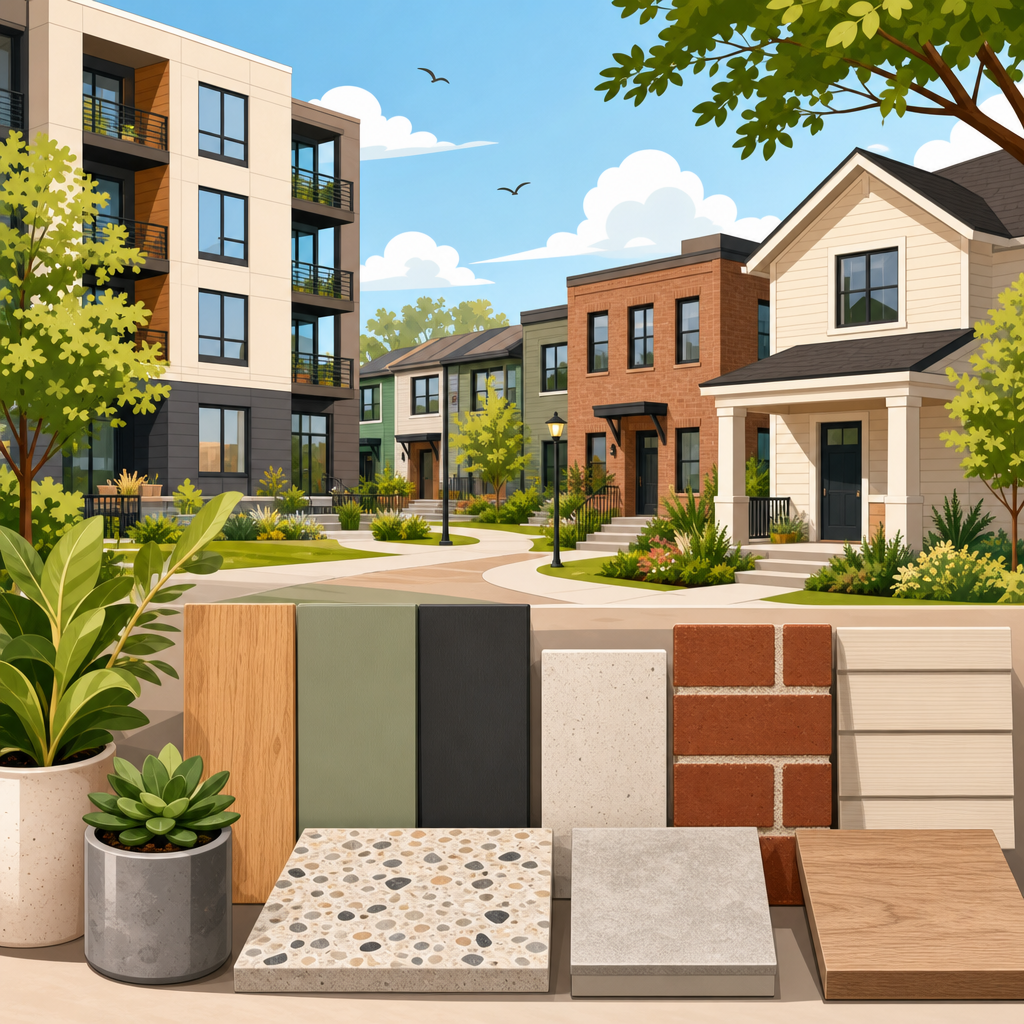
Material palettes that age well in affordable and market-rate housing are the foundation of durable, low-maintenance, and dignified homes that perform over decades instead of just looking good on opening day. In housing, a material palette is the coordinated set of exterior and interior finishes, assemblies, and detailing choices that shape cost, appearance, maintenance burden, energy performance, and resident experience. When those choices are made well, buildings retain value, resist wear, support healthy indoor conditions, and reduce replacement cycles. When they are made poorly, owners inherit recurring repair costs, residents live with failing surfaces, and neighborhoods absorb the visual and financial consequences of premature deterioration.
I have worked on housing projects where the initial budget drove every decision, only for operating teams to spend the next ten years replacing delaminated casework, repainting damaged corridors, and patching water-stained façades. I have also seen modestly budgeted projects outperform luxury developments because the design team chose simple, proven materials and detailed them correctly. That is why this topic matters across both affordable and market-rate housing. The question is not whether a building is inexpensive or premium. The question is whether its materials can tolerate sunlight, moisture, cleaning chemicals, abrasion, resident turnover, and deferred maintenance without losing function or credibility.
For this hub, aging well means more than surviving. It means materials hold color reasonably, clean easily, resist impact, allow repair, and develop patina rather than obvious failure. It also means the palette works as a system: cladding, flashing, sealants, flooring, wall protection, cabinetry, and countertops must respond to the same realities of occupancy and climate. In sustainable urban development, long-life materials are not a cosmetic preference. They are a practical strategy for lowering embodied replacement impacts, stabilizing operating budgets, and preserving housing quality at scale.
What makes a housing material palette age well
A material palette ages well when it balances durability, maintainability, repairability, and visual resilience. Durability means resistance to water, ultraviolet exposure, impact, thermal movement, and repeated cleaning. Maintainability means custodial staff can clean it with standard products and access replacement parts without specialty fabrication. Repairability matters because no housing project remains untouched; unit turns, leaks, moving damage, and accessibility upgrades all happen. Visual resilience is equally important. Some materials show every scuff, fade unevenly, or look dated as soon as trends shift. Others, including brick, fiber cement, terrazzo-look porcelain, solid-surface trim, and high-pressure laminate in the right application, can absorb wear with little drama.
Climate and building type shape the answer. In freeze-thaw zones, porous masonry must be paired with correct cavity drainage and flashing. In hot, humid regions, vapor-open exterior assemblies and mold-resistant interior finishes become more important. In mid-rise urban infill, street-facing ground floors need higher impact resistance than upper levels. Family housing, senior housing, and supportive housing also wear differently. Corridors in senior housing may need softer acoustics and stronger handrail integration, while family buildings often need tougher stair finishes and more forgiving wall protection.
Cost should be measured over service life, not bid day. A lower-cost resilient floor that needs replacement in seven years can be more expensive than a denser product that lasts fifteen. Likewise, attractive thin panel systems can become liabilities if replacement pieces are unavailable after a short product cycle. The strongest palettes rely on common formats, standard dimensions, and products with stable manufacturer support. Owners should ask direct questions: How is it cleaned? What fails first? Can one damaged section be replaced? Is the warranty meaningful, and does the installer network support claims?
Exterior materials that perform over decades
Exterior envelopes take the harshest punishment, so they deserve the most disciplined material decisions. Brick remains one of the best long-life options for housing because it resists UV degradation, handles impact, and generally improves visually with age. Its success, however, depends on full wall design: drainage cavities, weeps, shelf angles, movement joints, and stainless or well-protected ties. Many failures blamed on brick are actually failures of water management or poor movement detailing. For affordable and market-rate buildings alike, a limited palette of brick with disciplined coursing often outperforms more complex façades that promise variety but deliver maintenance headaches.
Fiber cement siding and panels can also age well when used in rainscreen assemblies with generous back-ventilation and careful edge treatment. I recommend avoiding overly intricate joint patterns that magnify installation error. Simple module layouts, protected bottom edges, and color selections that hide dust and minor streaking tend to hold up best. Metal panels can be durable too, especially prefinished aluminum or galvanized steel with robust coating systems, but only when the detailing controls oil canning, thermal expansion, and galvanic corrosion. Thin gauge decorative metal used as a budget substitute often looks tired quickly.
At grade, the rule is straightforward: use harder materials where people, bicycles, pets, and maintenance equipment make contact. Concrete masonry units, glazed block in limited interior-adjacent zones, porcelain pavers on pedestal systems, and robust concrete stoops generally outperform delicate cementitious finishes. Stucco and EIFS can be successful in some climates and price points, but they demand rigorous detailing at penetrations, kick-out flashing, sealant joints, and impact-prone locations. On projects with uneven maintenance capacity, simpler drained assemblies usually offer better long-term reliability.
| Material | Best use | Common risk | Aging profile |
|---|---|---|---|
| Brick veneer | Street façades, high-impact walls | Poor flashing and movement joints | Excellent if drainage is correct |
| Fiber cement | Upper levels, secondary façades | Edge swelling, joint misalignment | Good with rainscreen detailing |
| Prefinished metal | Accents, screened equipment areas | Oil canning, coating damage | Good to very good with proper gauge |
| Stucco or EIFS | Selective low-cost wall areas | Water intrusion at penetrations | Variable; highly detail dependent |
Interior finishes for turnover, cleaning, and daily wear
Inside the building, aging well depends on repeated cleaning, occupant movement, and the speed of unit turnover. In common corridors, I have seen paint-only gypsum walls fail within months in busy family housing, while a combination of abuse-resistant gypsum board, corner guards, chair rails, and scrubbable eggshell or satin coatings stayed presentable for years. Paint choice matters. High-performance acrylic coatings from manufacturers such as Sherwin-Williams, Benjamin Moore, and PPG often justify their cost because they tolerate touch-up and routine washing more consistently than builder-grade products.
Flooring deserves special scrutiny. Sheet vinyl and luxury vinyl tile are common because they are affordable, quiet, and easy to replace in sections, but quality varies dramatically. Thicker wear layers and better dimensional stability reduce curling and telegraphing. In lobbies and elevator areas, color-body porcelain tile usually outlasts many alternatives, especially when matte finishes reduce slip risk and visual scratching. Broadloom carpet often underperforms in multifamily common areas unless backed by exceptional maintenance. Carpet tile can be workable in offices or amenity rooms, but in most housing corridors hard-surface flooring with acoustic underlayment is easier to maintain.
Within units, the best interior palettes are simple and forgiving. Plastic laminate cabinetry with impact-resistant edges often outlasts painted MDF doors in moderate-income and luxury rentals alike. Quartz countertops have become standard in many market-rate projects because they resist staining and need no sealing, yet post-consumer recycled content surfaces and well-detailed high-pressure laminate counters can still make sense in cost-sensitive work. For backsplashes, painted drywall behind sinks is rarely a durable choice; ceramic tile or integral countertop upturns reduce moisture damage. In bathrooms, large-format porcelain walls in wet zones lower grout maintenance compared with small tile mosaics.
Balancing upfront cost with life-cycle value
The most reliable way to choose a durable palette is to compare service life, replacement labor, resident disruption, and maintenance frequency rather than material price alone. Owners often underestimate soft costs. Replacing failed flooring in occupied units requires scheduling access, moving furniture, protecting adjacent finishes, and sometimes relocating residents temporarily. Repainting dark corridor walls every year costs staff time and creates persistent disruption. A material that cuts those cycles can be the better financial decision even if the first cost is modestly higher.
Life-cycle costing should be practical, not theoretical. Teams can assign expected service life ranges based on manufacturer data, ASTM-tested performance where relevant, and local facilities experience. For example, a porcelain tile lobby floor may carry a higher installed cost than resilient flooring, but its service life can exceed several replacement cycles if grout selection, substrate preparation, and maintenance are competent. Similarly, factory-finished fiber cement may be more expensive than field-painted alternatives, yet it often reduces repainting frequency and yields more consistent appearance over time.
Affordable housing especially benefits from this discipline because operating reserves are finite and public funding layers often leave little room for corrective work later. Market-rate housing benefits too because visual decline directly affects leasing velocity, online reviews, and rent retention. In both segments, the strongest project teams involve property management and maintenance staff during design development. They know which door hardware loosens, which sealants discolor, and which flooring SKUs are impossible to patch invisibly after a leak.
Design details that determine whether materials succeed
Good materials fail under bad detailing. This is one of the clearest lessons from built housing. Exterior wall systems need capillary breaks, drainage planes, end dams, sloped sills, and sealant joints sized for movement. Window perimeters should be designed to shed water, not merely hide sealant behind trim. Roof edges, balcony connections, and parapets deserve special attention because small leaks there can stain façades and trigger interior replacement work far from the source. The Building Science Corporation and ASTM guidance documents consistently support this principle: assemblies must manage water, air, vapor, and movement as systems.
Interior detailing matters just as much. Base conditions should anticipate wet mopping and impact from carts. Door frames in common areas should be selected for abuse level; hollow metal often outperforms lighter alternatives in high-traffic entries. Millwork needs protected edges and coordinated reveals that can absorb construction tolerances. In bathrooms and kitchens, sealant joints should be limited to locations where movement requires them, because sealant is a maintenance item and eventually discolors or fails. Wherever possible, choose details that rely on mechanical protection and overlap rather than perfect caulk lines.
Mockups and closeout planning are part of durability. A façade mockup can reveal staining patterns, awkward terminations, or maintenance access problems before hundreds of units repeat the mistake. Interior finish mockups help teams compare cleanability under real lighting. At closeout, owners need attic stock, touch-up procedures, approved cleaning products, and exact product data. Without that handoff, even strong palettes can degrade because replacements do not match or staff use harsh chemicals that void warranties.
How to build a resilient housing palette
A resilient palette starts with restraint. Limit the number of primary materials, repeat details, and use variation strategically rather than everywhere. Pair hard-wearing base materials with replaceable accent elements. Select mid-range colors and textures that hide dirt, patching, and normal wear better than stark white, pure black, or highly directional patterns. Evaluate every finish at three scales: first impression, daily contact, and year-ten maintenance. If a finish looks impressive from the street but cannot be cleaned after a winter of salt spray or stroller traffic, it is not aging well.
The best next step is to audit one existing property. Walk exterior walls after rain, inspect corridor corners, open sink cabinets, and ask maintenance staff what they replace most often. Then use those observations to guide specifications, standards, and future renovations.
Frequently Asked Questions
What does it mean for a material palette to “age well” in affordable and market-rate housing?
A material palette ages well when it continues to perform, look respectable, and remain serviceable over many years of daily use without requiring constant repair or premature replacement. In both affordable and market-rate housing, this means finishes and assemblies are selected not just for first cost or opening-day appearance, but for how they handle moisture, impact, UV exposure, cleaning, maintenance cycles, and occupant wear over time. A good palette supports dignity and long-term value by resisting staining, fading, denting, delamination, and chronic maintenance problems that can make even relatively new buildings feel neglected.
In practical terms, aging well is about balancing durability, repairability, and consistency of appearance. Exterior materials should tolerate weather, thermal movement, and water exposure without frequent failure at joints, edges, and transitions. Interior materials should stand up to carts, furniture movement, cleaning chemicals, and high resident turnover where applicable. The best palettes also account for how materials weather together. A brick base, fiber cement panel, prefinished metal trim, and resilient interior flooring may all perform well individually, but the real test is whether they remain coherent, maintainable, and visually stable as a system.
For affordable housing in particular, aging well often means reducing lifecycle costs and minimizing maintenance burdens for owners and operators who may be working with tight operating budgets. For market-rate housing, it also protects brand value, resident satisfaction, and leasing performance. In both cases, a well-chosen palette avoids the false economy of inexpensive but failure-prone finishes that quickly show damage, require patchwork fixes, or create recurring complaints. The goal is not luxury for its own sake, but durable, straightforward materials that continue to support healthy, attractive, and high-functioning homes over decades.
Which exterior materials tend to perform best over time in housing projects with tight budgets?
The exterior materials that tend to perform best over time are usually the ones with long track records, simple detailing requirements, and clear maintenance expectations. Masonry, fiber cement siding or panels, quality stucco systems in appropriate climates, and well-detailed prefinished metal elements are frequently strong choices when durability and cost control both matter. These materials can provide a clean, enduring appearance while holding up better than many trend-driven or highly delicate cladding systems that may look striking initially but prove expensive to maintain.
Masonry remains one of the most reliable options for high-wear zones, especially at ground floors, entries, trash enclosures, and other areas vulnerable to impact and moisture. Brick and concrete masonry units can withstand abuse, weather well, and often age with character rather than obvious deterioration. Fiber cement is another common workhorse because it is comparatively economical, noncombustible in many applications, and more dimensionally stable than some lower-cost wood-based products. It can be effective in lap, panel, or trim applications, particularly when installers respect clearance requirements, flashing details, and moisture management principles.
Prefinished metal can work very well for coping, trim, canopies, and accent areas because factory-applied finishes are often more durable and consistent than site-applied coatings. However, success depends on careful detailing that prevents oil canning, corrosion at cut edges, and water intrusion at joints. Stucco and EIFS can also perform acceptably in certain markets, but they demand disciplined design and installation. The issue is rarely the concept alone; it is usually poor detailing around windows, parapets, and transitions that creates moisture problems later.
Budget-conscious teams should remember that durability often depends less on selecting the most expensive product and more on reducing complexity. Fewer material transitions, better drainage planes, clear flashing strategies, protected horizontal surfaces, and easy-to-access maintenance points can extend service life significantly. A restrained palette of robust materials usually outperforms a visually busy facade with many thin, exposed, or difficult-to-repair components. In housing, simplicity is often a major durability advantage.
How should interior finish selections differ when the goal is long-term durability rather than short-term visual impact?
When long-term durability is the goal, interior finishes should be chosen for wear resistance, cleanability, ease of replacement, and their ability to hide minor scuffs and aging gracefully. That usually means prioritizing resilient flooring, durable wall surfaces, solid-feeling trim and hardware, and cabinet and countertop materials that can withstand repeated use. The most successful interiors are not necessarily the ones with the flashiest textures or the most dramatic color contrasts; they are the ones that still feel orderly and dignified after years of cleaning, moving, family life, and routine maintenance work.
For flooring, many housing projects favor high-quality luxury vinyl tile, sheet vinyl in certain settings, polished concrete in select common areas, or other resilient products with proven maintenance records. Carpet may still have a place in some market-rate applications, but in many multifamily settings it introduces more frequent replacement cycles, odor retention, and staining concerns. For walls, eggshell or satin paint in thoughtfully selected mid-range tones often outperforms very flat paint or very dark colors that reveal every mark. In corridors and common areas, wall protection, durable corner guards, or more resilient wainscot materials can greatly reduce maintenance over time.
Casework, doors, and countertops also deserve careful attention. Thermally fused laminate, high-pressure laminate, and other durable surfacing products can offer much better lifecycle value than materials that chip easily or require special care. Quartz and solid surface counters are often chosen because they hold up better than some lower-grade laminates or porous stone options in kitchens and baths. Hardware should feel sturdy and standard enough to replace easily. This matters more than many teams realize, because maintenance staff need products that can be serviced without custom lead times or expensive specialty components.
Just as important, durable interiors should avoid overly precious detailing. Open edges, thin veneers in vulnerable locations, delicate light fixtures, and hard-to-match custom finishes often create headaches later. Long-term success comes from materials that are practical, consistent, and easy to maintain while still being warm and welcoming. In well-designed housing, durability and comfort are not opposing ideas. The right interior palette can support both.
How can designers balance affordability with a sense of quality and dignity in material choices?
Balancing affordability with quality starts by focusing resources where residents interact most directly with the building and where wear is most visible. Not every surface needs a premium finish, but the overall palette should feel intentional, coherent, and durable. Residents notice when entries are welcoming, corridors are well lit and easy to maintain, apartment kitchens and baths feel clean and solid, and exterior materials communicate permanence rather than disposability. A modest budget can still produce a high-quality experience when materials are used strategically and detailed carefully.
One of the most effective approaches is to limit the number of materials and use each one well. A smaller palette with strong proportions, thoughtful color relationships, and durable transitions often feels more refined than a more expensive but cluttered mix of finishes. Designers can place more robust and tactile materials at touchpoints such as lobbies, mail areas, unit entries, stairwells, and shared amenity spaces, while using simpler cost-efficient materials in lower-impact areas. This creates a hierarchy of investment without compromising overall cohesion.
Dignity also comes from avoiding materials that visibly telegraph short-term thinking. Finishes that peel, swell, discolor, or dent quickly can make residents feel that the building was designed to meet a budget rather than support daily life. By contrast, durable flooring, well-detailed window trims, substantial door hardware, protected corners, and easy-to-clean surfaces signal care and respect. These choices matter in affordable housing just as much as in market-rate projects, and arguably more so, because they influence resident experience over the full life of the building.
Ultimately, quality is not only about cost per square foot. It is about permanence, usability, and consistency. Buildings feel better when the material palette is calm, durable, and thoughtfully assembled. Owners benefit from lower maintenance and stronger long-term performance, while residents benefit from homes that continue to feel stable and well cared for. That is the real intersection of affordability and dignity.
What are the most common mistakes that cause housing material palettes to age poorly?
One of the most common mistakes is prioritizing visual novelty over proven performance. Materials that photograph well or appear current for leasing and marketing can fail quickly if they are sensitive to moisture, impact, UV exposure, or routine cleaning. This often shows up in thin decorative panels, poorly protected composite products, dark finishes that fade unevenly, or complex facade compositions with too many joints and transitions. In housing, repeated use exposes weak decisions fast, so materials need a track record under real operating conditions, not just appeal in a rendering.
Another major mistake is underestimating detailing. Even durable materials can fail if they are assembled poorly. Inadequate flashing, insufficient drainage cavities, horizontal ledges that trap water, exposed cut edges, incompatible sealants, and hard-to-maintain joints are all common problems. Many buildings do not age poorly because the core material was wrong; they age poorly because the interfaces were never resolved with enough care. Water management is especially critical, since moisture-related failures often trigger staining, swelling, corrosion, mold risk, and cascading maintenance costs.
Teams also get into trouble when they ignore operations and replacement realities. A finish may seem affordable initially but become costly