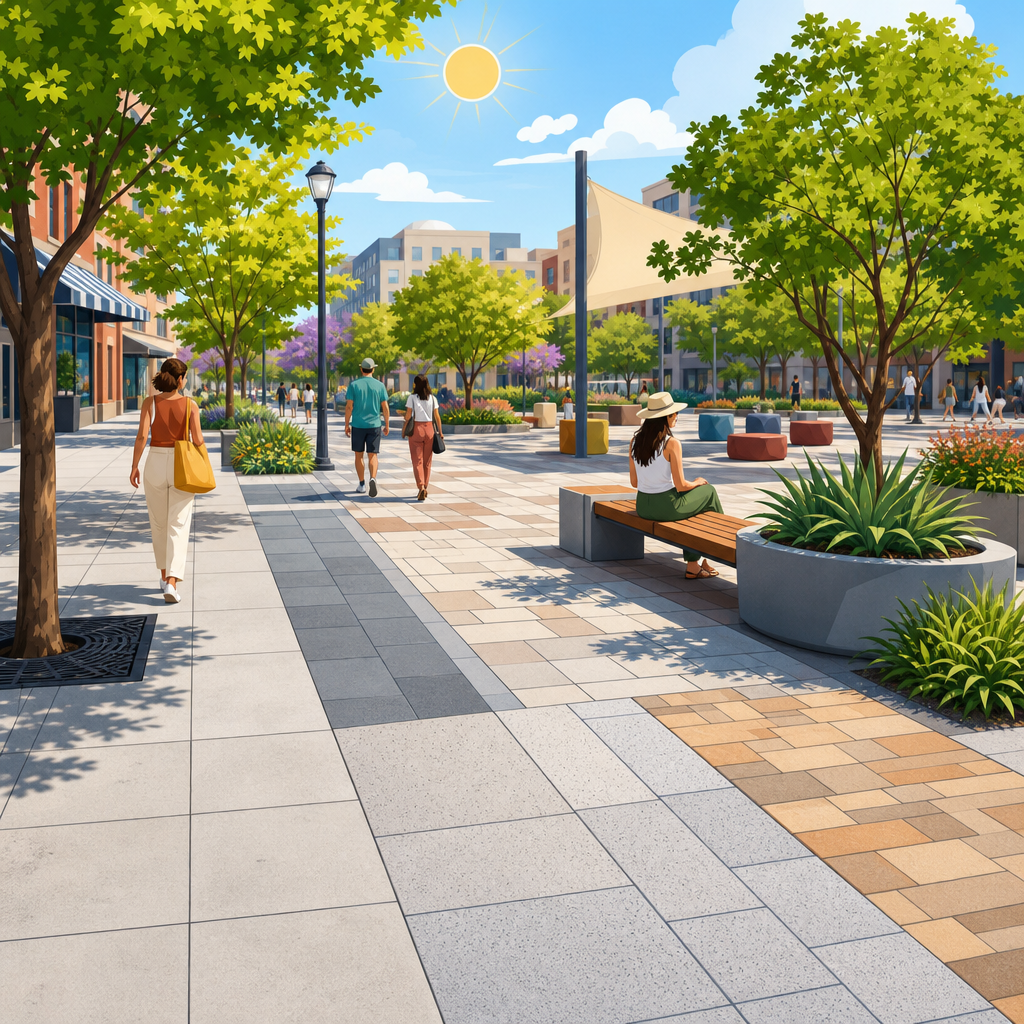
Heat-resilient hardscape materials for sidewalks and public squares are becoming a core part of sustainable urban development because cities are warming faster than surrounding rural areas, and paving choices directly influence surface temperature, pedestrian comfort, maintenance costs, and stormwater performance. Hardscape refers to built landscape elements such as paving, curbs, plazas, steps, seat walls, and edging, while heat resilience means a material can limit heat absorption, reduce heat storage, and stay functional under repeated thermal stress. In practice, that usually involves high solar reflectance, suitable emissivity, lower thermal mass where appropriate, permeability, durable jointing, and installation methods that prevent cracking or rutting during heat waves. I have worked on streetscape specifications where the wrong paving made a plaza noticeably hotter by midafternoon, forcing redesign of shade and maintenance plans within two summers.
The topic matters because public right-of-way is one of the largest controllable surfaces in any city. According to the U.S. Environmental Protection Agency, conventional pavements and roofs contribute to urban heat island conditions by absorbing and re-radiating solar energy, pushing local air and surface temperatures upward. Surface temperatures on dark pavements can exceed ambient air temperature by tens of degrees Fahrenheit under strong sun, which increases radiant heat exposure for pedestrians, transit riders, older adults, and outdoor workers. Public squares amplify the problem because they often combine broad sunlit paving with limited tree canopy, sparse soil volume, and dense surrounding buildings that trap heat. Material selection therefore affects not only comfort but also equity, accessibility, and public space usability during longer and more frequent heat events.
Choosing the right material is not as simple as picking the lightest color. A successful heat-resilient pavement balances thermal performance with slip resistance, freeze-thaw durability, load capacity, maintenance demands, lifecycle cost, glare control, and local climate. Light pavements can reduce surface temperature yet create uncomfortable reflected radiation if they are too bright and unshaded. Permeable systems can cool through evaporation but may fail if subgrades are poorly drained or winter sanding clogs joints. Dense stone may remain cooler at the surface than asphalt in direct sun but can store heat and release it after sunset. The best specifications consider solar reflectance index, albedo retention over time, ASTM and AASHTO test methods, infiltration rates, compressive strength, and expected pedestrian and service vehicle traffic patterns, then pair paving with shade, water management, and maintenance plans.
For cities building a subtopic hub under sustainable urban development, heat-resilient hardscape is a foundational subject because it connects climate adaptation, public health, urban design, transportation, and infrastructure asset management. Sidewalks and squares are everyday civic spaces, and the materials beneath people’s feet shape whether those spaces remain safe and inviting in hotter summers. This guide explains which materials perform best, how they compare, where each works well, and what tradeoffs planners, landscape architects, engineers, and facility managers should evaluate before writing specifications or approving a capital project.
Why hardscape materials shape urban heat
Urban pavements affect heat through four primary mechanisms: reflection, absorption, storage, and release. Solar reflectance describes how much incoming sunlight a surface reflects. Thermal emittance describes how effectively it sheds absorbed heat. Materials with higher reflectance and high emittance generally run cooler under peak sun. Asphalt is a classic low-reflectance surface; it absorbs substantial solar energy, becomes soft under elevated temperatures, and radiates heat long after sunset. By contrast, lighter concrete, some natural stones, and specially engineered cool pavements reflect more solar radiation and often maintain lower daytime surface temperatures. In one streetscape retrofit I reviewed, replacing dark unit pavers with a lighter high-albedo concrete system reduced measured afternoon surface temperatures enough to improve plaza occupancy during summer lunch hours.
Material geometry and assembly matter as much as composition. Segmental pavers with open joints can cool differently from monolithic slabs because joints permit drainage and, in permeable systems, evaporative cooling. Surface texture also changes heat response. Rough textures can trap dust and lower long-term reflectance, but they may reduce glare and improve slip resistance. Thickness and base design affect thermal storage and structural resilience. A heavy stone slab may not spike as quickly as thin black asphalt, yet once heated it can continue warming the pedestrian environment into the evening. Designers therefore evaluate not just peak surface readings but daytime comfort, nighttime heat release, and interaction with nearby walls, trees, and seating areas.
Best heat-resilient materials for sidewalks and plazas
The strongest options for most cities are light-colored concrete, permeable interlocking concrete pavers, resin-bound mineral systems in selected settings, stabilized decomposed granite for low-load paths, and certain natural stones with moderate reflectance and proven durability. Each can work well, but none is universally best. Portland cement concrete remains the standard municipal sidewalk material because it combines durability, structural reliability, ADA-compatible smoothness, and relatively high reflectance compared with asphalt. It also supports utility access, scoring patterns, detectable warnings, and straightforward repair practices. Its weakness is embodied carbon, though lower-cement mixes, supplementary cementitious materials such as slag or fly ash where available, and optimized slab design can reduce impacts.
Permeable interlocking concrete pavers perform especially well in public squares and curb extensions where stormwater management is a parallel goal. The paver units are typically light in color, joints promote infiltration, and the stone reservoir below can store water temporarily. When moisture is present, evaporative cooling can lower surface temperatures compared with dense impermeable systems. These systems also simplify spot repairs because individual units can be lifted and reset after utility work. The main constraints are maintenance discipline, suitable soils or underdrain design, and careful detailing to avoid sediment clogging. They are not maintenance free, but where municipalities commit to vacuum sweeping and joint aggregate replenishment, they can outperform conventional pavements on both heat and drainage.
Natural stone occupies a more nuanced position. Granite, sandstone, quartzite, and limestone vary widely in color, density, porosity, and thermal behavior. Pale granite or limestone can be excellent in prestige civic spaces if slip resistance, freeze-thaw durability, and salt exposure are addressed. Some limestones weather beautifully but are vulnerable in deicing environments. Sandstone can remain comfortable underfoot in dry climates yet deteriorate in regions with severe freeze-thaw cycling. Basalt and other dark stones look elegant but often become too hot for broad unshaded expanses. I usually recommend stone selectively: use it in shaded zones, edges, seating areas, or feature bands rather than as the dominant paving across the hottest open area.
| Material | Heat Performance | Key Benefits | Main Limitations | Best Use |
|---|---|---|---|---|
| Light broom-finish concrete | Good daytime temperature control | Durable, accessible, familiar municipal standard | Can glare if too bright; lower permeability | Primary sidewalks |
| Permeable interlocking concrete pavers | Very good when moist and maintained | Stormwater control, repairable, modular | Higher maintenance, clogging risk | Public squares, curb extensions |
| Light natural stone | Good to excellent depending on stone | High visual quality, long service life | Cost, sourcing, variable salt resistance | Civic plazas, accents |
| Resin-bound mineral aggregate | Moderate to good | Smooth finish, customizable, can be permeable | UV stability and substrate quality matter | Low-speed plazas, park connectors |
| Asphalt | Poor in heat events | Low upfront cost, rapid installation | High surface temperatures, softening, shorter life | Avoid for primary pedestrian heat mitigation |
Cool pavements, permeability, and coating systems
Cool pavement strategies fall into three broad groups: inherently reflective materials, permeable systems that support evaporative cooling, and surface treatments or coatings designed to raise solar reflectance. Inherently reflective materials are generally the most durable choice because their thermal properties are built into the material itself rather than applied as a thin layer. Light concrete and some pale aggregate mixes fit this category. Permeable systems add another mechanism by allowing water to infiltrate and later evaporate, which can produce meaningful localized cooling during and after rain or irrigation. This benefit is strongest where there is periodic moisture and an aggregate base designed to retain and drain water correctly.
Reflective coatings and sealers can be useful retrofits for existing pavements, especially when budgets do not support full reconstruction. However, their performance varies sharply by product chemistry, substrate preparation, traffic load, and maintenance cycle. Acrylic or elastomeric coatings may improve reflectance at first, then lose performance as they wear, darken with dirt, or delaminate under turning movements and deicing regimes. They also alter slip resistance and can complicate future repairs. I treat coatings as tactical or transitional tools rather than permanent solutions for heavily used public squares. Where cities test them, they should request accelerated weathering data, wet and dry slip testing, and a documented recoating interval rather than relying on initial appearance alone.
Permeability deserves special attention because it is often misunderstood. A permeable surface does not automatically mean a cool surface, and a cool surface does not guarantee lower radiant discomfort. Performance depends on moisture availability, color, pore structure, and maintenance. In dry climates without supplemental water or rainfall, some permeable systems lose much of their evaporative advantage for long periods. In humid climates, daytime cooling may still occur, but nighttime drying can be slower. The right approach is to match the pavement system to local hydrology, tree strategy, maintenance staffing, and winter operations, then verify assumptions with pilot installations and infrared monitoring during heat events.
Design and specification decisions that determine success
Material choice alone will not create a heat-resilient public realm. The highest-performing projects align paving with shade, orientation, drainage, and operational realities. Tree canopy is usually the most effective companion measure because shade lowers both surface temperature and mean radiant temperature, the latter being a major driver of human heat stress. A moderately reflective pavement under healthy shade trees often outperforms a highly reflective unshaded surface from the pedestrian’s perspective. For that reason, pavement specifications should be coordinated with soil cell layouts, root paths, irrigation plans, and furniture placement rather than issued as isolated civil details.
Specifications should define measurable properties, not just product names. For sidewalks, that often means requiring minimum compressive strength, slip resistance, freeze-thaw durability, joint stability, and where relevant, initial and aged solar reflectance or solar reflectance index. ASTM standards for concrete, pavers, and slip testing, plus local transportation agency specifications, provide the baseline language. Agencies should also require mockups in the actual light conditions of the site. I have seen approved samples look excellent in a yard and then read too bright, too pink, or too dark once installed next to stone façades and street trees. Mockups help evaluate glare, texture, accessibility, and color stability before procurement is locked in.
Lifecycle costing usually changes the decision. Asphalt often appears cheapest on bid day, yet repeated resurfacing, heat-related softening, patching around utilities, and reduced comfort can make it more expensive over twenty years than concrete or unit pavers. Segmental systems cost more upfront but can lower future utility restoration expense because crews can reopen and relay the surface without visible trench scars. Natural stone can last for decades, sometimes generations, when detailed properly, but transport cost, skilled labor, and sourcing transparency must be assessed carefully. Municipal owners should compare not only capital cost but cleaning frequency, expected service life, replacement cycles, stormwater fee impacts, and the cost of public space downtime during repairs.
Common mistakes and how cities can avoid them
The most common mistake is treating color as the only decision criterion. Very light surfaces can reduce heat absorption but may increase glare, especially in open squares with low-angle morning or evening sun. Glare affects comfort, legibility, and safety for older adults and people with visual sensitivity. The solution is not to reject reflective materials entirely but to specify balanced reflectance, textured finishes, strategic shade, and varied paving fields that break up large reflective expanses. Another frequent error is selecting a permeable system without a maintenance budget. Once joints clog with fines, infiltration falls and the thermal benefit declines. Cities that succeed usually assign vacuum sweeping schedules, train crews, and protect permeable areas from nearby soil stockpiles during construction.
Poor detailing around utilities, edges, and tree pits also undermines performance. Heat-resilient pavements still fail if differential settlement creates trip hazards or ponding. Sidewalks need stable subgrades, root-friendly detailing, and edge restraints suited to expected loads. In plazas, service vehicles often exceed what the original landscape concept anticipated, leading to cracked pavers or displaced joints. Designers should map delivery routes, emergency access, and event loads early. Another avoidable problem is relying on product claims without field evidence. Manufacturers may publish favorable laboratory reflectance values, but those values can change quickly with dirt accumulation, sealers, and local wear patterns. Cities should inspect comparable installations that are at least two or three years old in a similar climate before standardizing a product.
Finally, hardscape decisions should be framed as part of a broader heat action strategy. Materials help, but they work best with trees, shade structures, drinking water access, cooling centers, transit shelters, and maintenance protocols that protect vulnerable residents during extreme heat. If your city is updating standards for sidewalks or public squares, start with pilot sites, instrument them, and compare real summer performance. Then write specifications based on evidence, not assumption. Done well, heat-resilient hardscape materials reduce surface temperatures, improve comfort, support stormwater goals, and extend the useful life of public spaces. That combination makes them one of the most practical investments available in sustainable urban development, and it is a strong place to begin your next streetscape or plaza upgrade.
Frequently Asked Questions
What makes a hardscape material “heat-resilient” for sidewalks and public squares?
A heat-resilient hardscape material is one that helps limit how much solar heat a surface absorbs, how hot it becomes during peak sun, and how much heat it stores and releases back into the surrounding environment later in the day. In practical terms, this usually comes down to a combination of solar reflectance, thermal emittance, permeability, and overall material composition. Lighter-colored surfaces often reflect more sunlight than darker ones, which can help lower daytime surface temperatures. Materials with good thermal emittance can also release heat more efficiently rather than holding it for hours after sunset. In some cases, permeable systems add another layer of performance by allowing moisture movement and evaporative cooling, which can improve pedestrian comfort in heavily paved public spaces.
Heat resilience also has to be evaluated in context, not just in a lab. A material that performs well on paper may behave differently depending on local climate, shade patterns, pedestrian volume, maintenance practices, and adjacent buildings. For example, a bright pavement may reduce surface temperature but still create glare if it is used too broadly without considering user comfort. Similarly, a durable paver may resist heat-related wear but contribute little to cooling if it is installed over a dense, heat-retaining base with no stormwater strategy. That is why cities and designers increasingly assess hardscape materials as part of a broader urban heat mitigation approach that includes trees, canopy structures, planting, water management, and the geometry of the space itself.
Which hardscape materials are commonly used to reduce heat buildup in public spaces?
Several categories of hardscape materials are commonly selected for better heat performance in sidewalks, plazas, and civic gathering areas. High-albedo concrete is one of the most widely used options because it can be engineered in lighter tones and offers a favorable balance of durability, cost control, and thermal performance. Unit pavers, including light-colored concrete pavers and selected natural stone products, are also popular because they can be replaced individually, designed for permeability, and specified in finishes and colors that reduce heat absorption. Natural stones such as granite, limestone, and some sandstones can perform well depending on finish, color, density, and regional availability. Permeable pavers and porous pavement systems are especially valuable where stormwater management is also a priority, since they can support infiltration and contribute to cooling through moisture exchange.
Newer cool pavement coatings and surface treatments are also gaining attention, particularly for retrofit projects where complete reconstruction is not feasible. These products are designed to increase solar reflectance on existing pavement, although long-term performance depends heavily on traffic conditions, weather exposure, maintenance cycles, and how quickly the surface becomes soiled. In high-profile public squares, designers may also combine materials strategically, using cooler paving in open sun-exposed areas while reserving darker or more decorative materials for shaded zones, edges, or accent bands. The best material is rarely chosen on heat performance alone; it typically must meet accessibility standards, slip resistance requirements, structural loading needs, maintenance expectations, and the visual character of the public realm.
How do heat-resilient paving materials affect pedestrian comfort and public space usability?
Heat-resilient paving materials can significantly improve pedestrian comfort because the ground plane strongly influences the temperatures people actually feel while walking, sitting, waiting, or gathering outdoors. When pavement gets extremely hot, it raises the radiant temperature around the body, which can make a space feel much harsher than the air temperature alone would suggest. Cooler paving helps reduce that heat load, making sidewalks more comfortable for daily travel and making public squares more usable for events, seating, and social activity during warm weather. This matters especially for children, older adults, transit riders, street vendors, and anyone spending extended time outdoors in paved urban environments.
Better heat performance can also support public health, accessibility, and economic vitality. If a square or sidewalk remains more tolerable during hot periods, people are more likely to walk, linger, patronize nearby businesses, and participate in community life. Cooler surfaces can reduce thermal stress on mobility devices, strollers, pets, and people with greater heat sensitivity. That said, pedestrian comfort depends on more than paving temperature alone. Shade from trees or structures is often the single most powerful comfort strategy, and it works best in combination with heat-resilient materials rather than as a substitute for them. Well-designed public spaces usually layer multiple strategies together: cooler pavements, shaded seating, vegetation, airflow, and where appropriate, permeable surfaces that help moderate both heat and runoff.
Are heat-resilient hardscape materials more expensive to install and maintain?
They can be, but the answer depends on the specific material, project scale, local labor market, and the performance goals of the space. Some heat-resilient solutions, such as lighter-colored concrete or thoughtfully specified standard pavers, may involve only a modest premium compared with conventional paving. Others, including premium natural stone, specialized cool coatings, or fully engineered permeable pavement systems, may have higher upfront costs. However, initial cost does not tell the full story. Public agencies and property owners are increasingly looking at life-cycle value, which includes maintenance frequency, repairability, replacement intervals, stormwater compliance benefits, and how well a material holds up under heat, freeze-thaw cycles, deicing practices, and heavy pedestrian use.
In many cases, a more heat-conscious hardscape strategy can reduce hidden long-term costs. Permeable systems may lower demand on drainage infrastructure. Modular pavers can simplify localized repairs. Better-performing surfaces can help preserve public space usability during extreme heat and reduce the likelihood of premature surface distress caused by thermal expansion, binder degradation, or repeated temperature stress. Maintenance remains critical, though. Reflective or coated surfaces may lose effectiveness if dirt, tire residue, or organic buildup accumulates. Permeable pavements require routine vacuuming or sediment management to preserve infiltration. The most cost-effective solution is usually not the cheapest material at bid time, but the one that delivers reliable thermal performance, durability, and manageable maintenance over the full service life of the sidewalk or plaza.
How should cities and designers choose the best heat-resilient materials for sidewalks and plazas?
The best approach is performance-based and site-specific. Cities and designers should start by defining what they need the hardscape to accomplish: lower surface temperatures, improve pedestrian comfort, manage stormwater, withstand high foot traffic, support maintenance efficiency, or meet aesthetic and historic district requirements. From there, they can compare materials using criteria such as solar reflectance, emissivity, permeability, compressive strength, slip resistance, durability under local climate conditions, and repair practicality. It is also important to look at real-world performance data, not just product claims. Pilot installations, mockups, maintenance records, and case studies from similar climates can provide much more reliable insight than a specification sheet alone.
Good material selection also requires thinking beyond the paving unit itself. Base layers, jointing systems, surface finish, color choice, surrounding shade, drainage design, and tree integration all affect how a public space performs thermally. A successful sidewalk or square typically results from coordinated design decisions rather than a single “miracle” material. Municipalities should involve landscape architects, engineers, maintenance teams, accessibility specialists, and sometimes public health or sustainability staff early in the process. That collaboration helps ensure the chosen material supports heat resilience without compromising safety, operations, or long-term budget management. In short, the strongest results come from treating heat-resilient hardscape as part of a complete urban design and climate adaptation strategy, not just a paving specification.