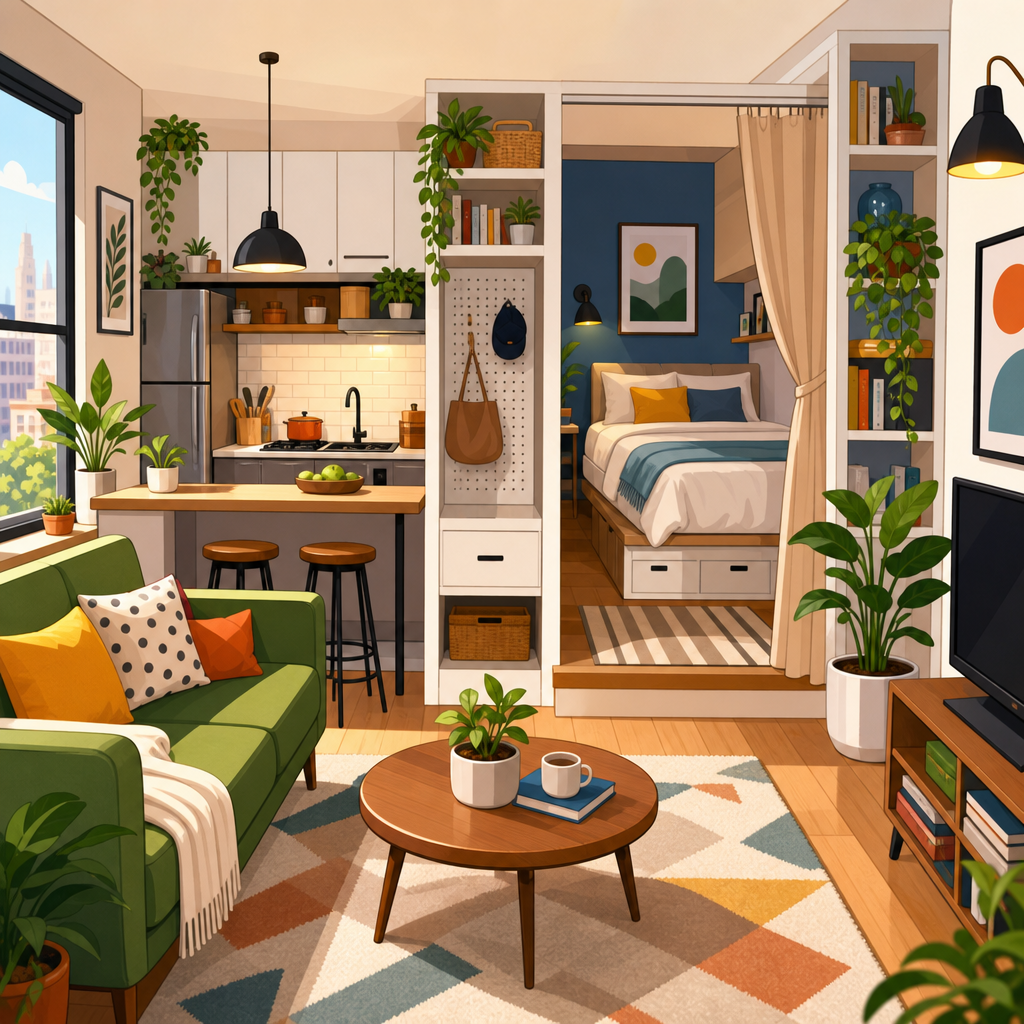
Designing small apartments that still feel livable requires more than clever furniture placement. It demands a disciplined approach to space planning, daylight, storage, comfort, and adaptability so a compact home supports daily life without feeling cramped. In urban development, small apartments are often treated as a simple response to rising land costs and housing demand, yet size alone does not determine whether a home works. I have reviewed many compact units that met area targets on paper but failed in use because circulation was awkward, storage was missing, or windows were poorly placed. Livability is the practical and emotional quality that allows residents to cook, rest, work, host, and recover with dignity. In small apartment design, that means every square foot must perform, and every design decision must reduce friction rather than add it.
Key terms matter because they shape better decisions. A small apartment usually refers to a studio, micro-unit, or one-bedroom with limited floor area, but the exact threshold varies by market and building code. Livable design refers to layouts and systems that support health, privacy, comfort, accessibility, and long-term usability. Good compact housing is not just minimal housing. It is housing that uses proportion, built-in functionality, and environmental quality to make limited space feel generous. This matters for residents, developers, and cities. Well-designed small apartments can lower housing costs, reduce per-capita energy use, support walkable neighborhoods, and increase housing supply near jobs and transit. Poorly designed ones create turnover, dissatisfaction, and pressure on shared building amenities because the unit itself does not work.
The most successful projects start by accepting a simple truth: small apartments fail when they try to imitate larger homes at reduced scale. They succeed when the design is organized around compact living patterns. Residents need a clear place to enter, unload groceries, prepare food, sleep without glare, store seasonal items, and sit without balancing on the bed. They also need acoustic control, fresh air, and enough visual order to keep stress low. In practice, livable small apartment design blends architecture, interiors, building systems, and policy. The best results come from early coordination between architects, developers, planners, and operators, because decisions about window openings, plumbing stacks, structural bays, and zoning constraints directly shape what residents can do inside the unit.
For a sustainable urban development strategy, this topic sits at the center of housing quality. Dense cities need compact homes, but density is only socially durable when residents can live well in smaller footprints. The following sections explain the principles that consistently make small apartments feel livable, with examples drawn from real design practice and standards used across multifamily housing.
Start with layout efficiency, not furniture afterthoughts
The layout determines whether a small apartment feels calm or chaotic. In my experience, the biggest mistake is allowing circulation to consume too much area. Hallways, oversized swing clearances, and disconnected corners can waste more space than a missing room. A livable compact unit usually relies on a simple geometry: an efficient entry zone, a consolidated kitchen and bath core tied to plumbing lines, and a main living area with uninterrupted usable wall lengths. Open floor plans work only when they preserve functional zones. A studio should still offer separation between cooking, sleeping, and lounging, even if that separation is created by millwork, changes in ceiling height, shelving, or curtains rather than walls.
One proven method is to design around activity sequences instead of room labels. A resident comes home, drops keys, stores shoes, hangs a coat, puts away groceries, prepares food, eats, relaxes, and sleeps. If the layout forces these actions to overlap badly, the apartment feels smaller than it is. I have seen 420-square-foot apartments perform better than 520-square-foot apartments because the smaller unit had a direct entry with storage, a galley kitchen with real counter space, and a sleeping alcove that did not face the refrigerator. Structural planning matters too. Wider column spacing and carefully placed shear walls allow uninterrupted furniture layouts, while awkward projections can eliminate the only wall where a sofa or wardrobe would fit.
Use built-in storage to reduce visual noise and daily friction
Storage is not an accessory in small apartment design; it is infrastructure. When there is nowhere to put cleaning supplies, luggage, winter coats, or a vacuum, even a well-finished unit feels disorderly within weeks. The goal is not simply to maximize volume, but to place storage where it supports habits. Entry storage should catch coats, bags, umbrellas, and shoes. Kitchen storage should include full-height pantry capacity where possible, deep drawers for cookware, and trash and recycling pullouts. Bedroom storage should prioritize hanging space, folded storage, and room for bedding. Bathroom storage should include medicine storage, under-sink organization, and shelving that does not block ventilation or lighting.
Built-ins outperform freestanding pieces because they use overlooked dimensions. Full-height millwork above doors, banquettes with under-seat storage, platform beds with drawers, and wardrobes fitted into recesses all reclaim space that residents rarely use efficiently on their own. Visual calm is as important as volume. Open shelving can look attractive in photographs, but in daily life it exposes clutter and shrinks the perceived room size. Closed-front cabinets, flush panels, and consistent material finishes create a cleaner visual field, which makes compact spaces feel larger. In multifamily development, modest investments in millwork often pay back through higher resident satisfaction and stronger leasing because the apartment appears organized from the first tour.
Daylight, views, and lighting design shape perceived spaciousness
Small apartments feel livable when natural light reaches deep into the plan and artificial lighting supports multiple uses after dark. Daylight is not just aesthetic. Access to windows and sky view is linked to mood, circadian rhythm, and overall comfort. The best compact units avoid blocking windows with oversized partitions and use glazing placement to distribute light across the main living area. Borrowed light through transoms, interior glazing, or partial-height dividers can help where code and privacy allow. Light-colored finishes can improve reflectance, but they do not compensate for poor orientation or tiny openings. Ceiling height also changes perception. Even a modest increase in height can make a small room feel less compressed, especially when paired with tall curtains or full-height cabinetry that emphasizes vertical dimension.
Artificial lighting should be layered. A single ceiling fixture leaves corners dim and makes a unit feel flat. Effective compact apartments combine ambient lighting, task lighting at counters and desks, and accent lighting that adds depth. Warm color temperatures in living and sleeping zones generally feel more residential, while kitchens and bathrooms benefit from brighter task conditions. Mirrors can amplify light when placed carefully, but using them indiscriminately can create glare or awkward reflections. The principle is simple: a compact home needs visual depth. When residents can see light variation, outside views, and defined zones, the apartment feels more generous than its measured area suggests.
Furniture must be flexible, scaled correctly, and genuinely usable
Small apartment furniture is often discussed in abstract terms, but selection should be rigorous. Overscaled sofas, coffee tables with heavy bases, and dining sets sized for suburban homes quickly destroy circulation. At the same time, furniture that is too small can make a unit feel temporary and uncomfortable. The right approach is scaled flexibility. A compact sofa with a raised leg profile shows more floor area. Drop-leaf tables support both solo meals and guests. Nesting side tables, wall-mounted desks, and benches that double as storage all increase utility without crowding the room. Murphy beds and transformable systems can work well, but only when residents will realistically use them every day. If converting the bed requires clearing half the room, the system becomes an annoyance rather than a benefit.
Durability also matters. In rental apartments, folding hardware, sliding tracks, and lift-up mechanisms should be commercial grade, not novelty products. I have seen high-concept transformable units fail because the moving parts wore out faster than the lease cycle. Ergonomics must stay intact. Dining chairs still need proper back support. Work surfaces should align with standard seated heights. Kitchen stools should not become the default task chair for remote work. Livability depends on whether furniture supports real routines over time, not whether it looks ingenious during a showing.
Comfort depends on acoustics, ventilation, and thermal control
Residents forgive small size more easily than poor comfort. Acoustics are especially important in compact homes because the resident is always close to noise sources. Sound transmission from corridors, adjacent units, elevators, plumbing risers, and mechanical equipment can make a small apartment exhausting. Better wall assemblies, resilient channels, acoustic sealants, and careful placement of bedrooms away from noisy shafts all matter. Solid-core entry doors and proper perimeter seals reduce corridor noise significantly. Inside the unit, soft finishes, rugs, and upholstered surfaces help moderate reverberation, particularly in studios with hard flooring and exposed concrete.
Ventilation and thermal control are equally essential. A compact kitchen without effective exhaust spreads odors into sleeping areas. In tightly sealed buildings, balanced ventilation or well-designed operable windows improve air quality and reduce condensation risk. Thermal zoning is often limited in small apartments, but residents still need control. Overheating is a common complaint in west-facing micro-units with large glazing areas and inadequate shading. Exterior shading devices, high-performance glazing, ceiling fans, and right-sized HVAC systems improve comfort more than decorative upgrades ever will.
| Design factor | Common failure | Livable solution |
|---|---|---|
| Layout | Excess hallways and dead corners | Direct circulation and multiuse zones |
| Storage | No place for bulk or seasonal items | Full-height built-ins and entry millwork |
| Light | Single light source and blocked windows | Layered lighting and clear daylight paths |
| Furniture | Oversized pieces that impede movement | Scaled, flexible, durable furnishings |
| Comfort | Noise, odors, overheating | Acoustic detailing, ventilation, shading |
Design for routines, accessibility, and longer-term adaptability
A small apartment becomes truly livable when it supports changing needs instead of a single idealized resident. Many units are marketed to young professionals, yet real occupancy patterns are broader: couples, older adults, part-time caregivers, students, and remote workers all use compact homes differently. Accessible design principles improve livability for everyone. Clear maneuvering space at entries and bathrooms, lever hardware, curbless showers where feasible, reachable storage, and adequate door widths reduce daily friction and help residents age in place. These features should not be treated as special additions. They are part of quality housing design.
Adaptability also has a sustainability dimension. If a small apartment can support remote work, temporary caregiving, or a partner moving in, residents are more likely to stay longer, reducing turnover and material waste from repeated fit-outs. I advise design teams to identify at least one flexible wall, one reliable work zone, and one storage strategy for life changes. A window-adjacent niche can serve as a desk today and a nursery dresser location later. Sliding partitions can create privacy for video calls or overnight guests. Even modest measures, such as extra electrical outlets, integrated data connections, and blocking in walls for future shelving or grab bars, make a unit more resilient over its life cycle.
Building and neighborhood context complete the livability equation
No small apartment exists in isolation. Building-level amenities, circulation design, and neighborhood access can either relieve pressure on the unit or expose its weaknesses. Shared laundry, secure bicycle storage, package rooms, common terraces, and reservable work rooms expand what a compact apartment can support. However, these amenities should complement the unit, not excuse poor in-unit function. Residents still need enough kitchen capacity, personal storage, and seating at home. I have seen developments overinvest in flashy lounges while omitting basic entry closets and pantry space, which leads to predictable frustration.
Neighborhood context is equally important in sustainable urban development. Small apartments work best near transit, grocery stores, parks, libraries, and daily services. When residents can meet many needs within a short walk, they can live comfortably with less private storage and fewer in-unit redundancies. Policy and codes matter here. Minimum unit sizes, light and air requirements, inclusionary housing rules, and energy standards all shape outcomes. The best projects treat compliance as a baseline and aim higher by coordinating unit design with mobility, public realm quality, and long-term building operations.
Designing small apartments that still feel livable comes down to disciplined priorities. Efficient layouts, integrated storage, strong daylight, layered lighting, flexible furniture, acoustic control, ventilation, thermal comfort, accessibility, and context all matter more than decorative trends. Compact homes succeed when they support daily routines with less effort and less stress. That is the real measure of livability.
For cities, the benefit is substantial. Well-designed small apartments can expand housing supply in walkable locations, lower resource use per resident, and make urban density more humane. For developers and design teams, quality compact units lease better, retain residents longer, and generate fewer complaints because the fundamentals work. For residents, the reward is simple: a home that feels orderly, comfortable, and dignified despite limited square footage.
If you are planning, designing, or evaluating small apartments, start with lived experience rather than area alone. Test real furniture, map everyday routines, review storage volumes, study daylight paths, and check comfort conditions before finalizing the plan. Small can be excellent, but only when every decision earns its place.
Frequently Asked Questions
What makes a small apartment feel livable rather than just efficient?
A livable small apartment does more than fit the required rooms into a limited footprint. It supports the way people actually live day to day, including cooking, resting, working, storing belongings, hosting a guest, and moving comfortably through the space without constant compromise. Many compact apartments look acceptable on a floor plan because they technically meet area targets, but they fail in real use when circulation is awkward, storage is inadequate, daylight is weak, or furniture layouts only work in theory. Livability comes from the quality of planning, not just the quantity of square footage.
The most successful small apartments are organized around clear priorities. There should be a strong relationship between entry, kitchen, living area, bathroom, and sleeping zone so the home feels intuitive to use. Rooms and functions should not compete with one another for the same inches unless that overlap is intentional and well resolved. Ceiling height, window placement, sightlines, and access to natural light all contribute to whether a compact home feels open or boxed in. Even small adjustments, such as aligning openings, reducing unnecessary corridors, or creating built-in storage at the perimeter, can make a modest apartment feel significantly more comfortable.
Comfort also matters as much as efficiency. A home should allow privacy, acoustic separation where possible, and enough flexibility for changing routines. If a resident cannot sit comfortably, store daily items, prepare food sensibly, or maintain a sense of order, the apartment will quickly feel smaller than it is. In practice, livability is the result of disciplined space planning that balances function, light, proportion, and adaptability, rather than relying on novelty furniture or decorative tricks alone.
How important is storage in a small apartment design?
Storage is one of the most important factors in whether a small apartment remains livable over time. In a compact home, clutter has an immediate effect on how spacious the apartment feels, because every visible object occupies not only physical space but also visual attention. When storage is insufficient, residents are forced to use open surfaces, corners, and circulation paths to hold everyday items, which quickly makes the apartment feel cramped and disorganized. That is why storage should be treated as core infrastructure, not as an optional add-on after the main layout is complete.
Good storage planning begins by understanding categories of use. A small apartment needs places for coats, shoes, cleaning supplies, luggage, pantry items, kitchen tools, linens, seasonal clothing, and the miscellaneous items that come with normal life. Without this variety, even an apartment with one large closet can still function poorly. Built-in storage is often more effective than loose furniture because it can use full wall heights, fit awkward dimensions, and maintain cleaner lines. Storage placed near the point of use is especially important, such as entry storage near the door, kitchen storage near prep areas, and bedroom storage integrated around the sleeping zone.
Well-designed storage also improves the perception of space. When cabinetry is consistent, integrated, and visually quiet, the apartment feels calmer and more intentional. Tall millwork, under-bed drawers, window-seat storage, recessed shelving, and multi-purpose joinery can all increase capacity without crowding the room. The key is to avoid treating storage as hidden bulk that steals usable area. Instead, it should be part of the architectural logic of the apartment, helping shape the plan while keeping daily life manageable and comfortable.
How can lighting and daylight make a small apartment feel bigger?
Lighting has a powerful influence on how large, open, and comfortable a small apartment feels. Natural daylight in particular helps define depth, reveal surfaces clearly, and reduce the sense of confinement that can occur in compact interiors. When daylight reaches deep into the apartment, spaces feel more connected and less segmented. Conversely, if windows are blocked by poor furniture placement, oversized partitions, or heavy materials, the apartment can feel undersized even if the floor area is reasonable.
Effective small apartment design preserves the path of light. This often means placing enclosed rooms, full-height storage, or opaque dividers carefully so they do not cut off the brightest parts of the plan. Glass partitions, partial-height elements, open shelving used selectively, and lighter finishes near windows can help daylight travel farther. Layout matters just as much as material choices. If the primary living functions are positioned to benefit from the best light, the apartment usually feels more generous and more pleasant to inhabit throughout the day.
Artificial lighting should then reinforce that sense of openness rather than flatten the space. A single overhead fixture is rarely enough in a compact home. Layered lighting, including ambient, task, and accent lighting, helps distinguish activities and create a more refined sense of depth. Under-cabinet kitchen lighting, bedside reading lights, wall washers, and dimmable fixtures all improve usability while making the apartment feel intentionally designed. In small spaces, lighting is not simply decorative. It is a practical planning tool that shapes mood, function, and the perceived volume of the home.
Are multifunctional furniture and flexible layouts always the best solution for small apartments?
Multifunctional furniture and flexible layouts can be very effective in small apartments, but they are not automatically the best solution in every case. The idea is appealing because one piece can serve multiple purposes, such as a sofa bed, folding dining table, wall bed, or storage bench. However, if every daily activity requires transforming the room, lifting components, or constantly rearranging furniture, the apartment can become tiring to use. Good small-space design should reduce friction in everyday life, not introduce more of it.
The best use of flexibility is selective and strategic. It makes sense when a space genuinely needs to support more than one important function, such as a living room that also works as an occasional guest room or a dining surface that doubles as a work area. In those cases, the furniture should be durable, easy to operate, and sized properly for the room. It should also allow the apartment to feel stable when not being transformed. Residents should not feel as though they are setting up and taking down their home every day just to live normally.
In many successful small apartments, the strongest design move is not extreme transformability but a calm, efficient layout with a few well-chosen adaptable elements. A fixed bed with integrated storage, a compact dining table that can extend when needed, or a built-in desk that closes discreetly may be more practical than highly mechanical solutions. Flexibility works best when the base plan is already sound, circulation is clear, and core needs are comfortably met. In other words, adaptable furniture should support good design, not compensate for a poor layout.
What are the most common mistakes that make small apartments feel cramped?
One of the most common mistakes is focusing too narrowly on fitting in all expected functions without considering how those functions interact spatially. This often leads to layouts packed with undersized furniture, leftover circulation, and awkward room proportions. On paper, everything may be present, but in reality the apartment feels congested because there is no hierarchy, no breathing room, and no clear relationship between major activities. A compact home needs discipline, which means deciding what deserves priority and what can be simplified or combined intelligently.
Another frequent mistake is over-partitioning the plan. Designers sometimes add too many walls or separate zones too rigidly in an effort to create privacy, but the result can be dark, fragmented interiors with poor airflow and weak sightlines. At the other extreme, completely open plans can also fail if there is no sense of order, privacy, or dedicated storage. The goal is balance. A small apartment should feel connected without becoming chaotic. Thoughtful thresholds, partial divisions, built-ins, and furniture placement often achieve this better than either excessive enclosure or total openness.
Other problems include inadequate storage, poor kitchen usability, badly placed doors, furniture scaled too large for the room, and neglect of vertical space. Visual clutter is another major issue. Too many materials, colors, and decorative objects can make a compact apartment feel busier and smaller than it is. Finally, many small apartments are designed around idealized living rather than real routines. If there is nowhere to place groceries at the entry, no practical bathroom storage, no comfortable work surface, or no room for daily essentials, the apartment will feel frustrating very quickly. The best small apartment designs avoid these mistakes by treating livability as the central goal from the beginning.