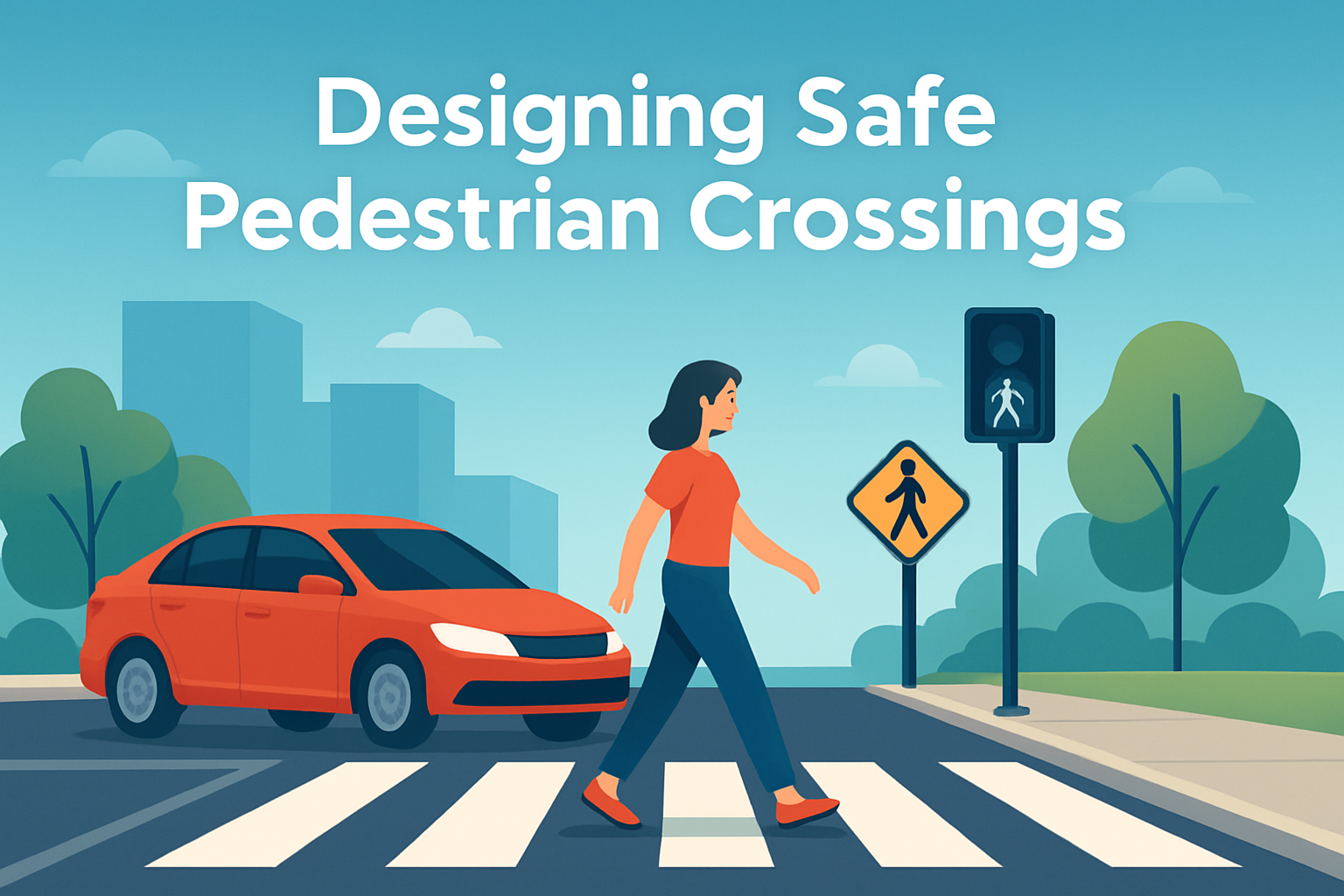
Designing safe pedestrian crossings starts with a simple principle: people on foot should be able to move through streets comfortably, predictably, and without facing unreasonable risk from vehicles. A pedestrian crossing is any designated point where people walk across a roadway, from painted zebra crossings and signalized intersections to raised crosswalks, median refuges, and school crossing zones. In transport planning, safe crossing design means more than adding paint. It combines geometry, visibility, speed management, signal timing, lighting, accessibility, and human behavior. I have worked on site audits where a crossing technically met minimum markings standards yet still felt unsafe because turning vehicles entered too fast, sightlines were blocked, or crossing distances were excessive. That gap between compliance and real safety is why this topic matters.
Safe pedestrian crossings matter because walking is the first and last part of almost every trip, and because pedestrians are physically vulnerable in crashes. When vehicle speeds rise, injury severity rises sharply. Guidance from organizations such as the National Association of City Transportation Officials, the Federal Highway Administration, and the World Health Organization consistently shows that lower speeds, shorter crossings, and clearer priority reduce deaths and serious injuries. Good crossing design also supports equity. Children, older adults, wheelchair users, and people with low vision need crossings that account for slower walking speeds, tactile information, and forgiving layouts. From an SEO, AEO, and practical planning standpoint, the central question is straightforward: what features make a pedestrian crossing safe? The answer is a system of design choices that reduce conflict, increase conspicuity, and make driver yielding the default behavior rather than a matter of chance.
Core principles of safe pedestrian crossing design
The safest pedestrian crossings are built around five core principles: reduce exposure, slow vehicles, improve visibility, communicate priority clearly, and accommodate all users. Reduce exposure by shortening the distance a person must spend in the roadway. That usually means narrowing lane widths where appropriate, tightening curb radii, adding curb extensions, or installing median refuge islands on wider streets. On a four-lane road, a refuge island can turn one long crossing into two shorter decisions, allowing pedestrians to focus on one direction of traffic at a time. In field reviews, I have seen a six-lane arterial become substantially easier to cross after a median island reduced effective exposure and discouraged aggressive weaving.
Speed management is the single most important safety factor because a marked crossing alone does not protect a person from a fast-moving vehicle. Designers use raised crosswalks, speed tables, tighter intersection geometry, and lane reductions to bring operating speeds closer to survivable levels. For local streets near schools or parks, vertical deflection often works better than relying on signs alone. Visibility is the next requirement. Parking setbacks, daylighting near corners, advance yield lines, and focused lighting all help drivers detect pedestrians earlier. Priority must also be unmistakable. High-visibility markings, pedestrian signals, leading pedestrian intervals, and regulatory signs reduce ambiguity. Finally, accessibility is nonnegotiable. Crossings should include curb ramps aligned with the direction of travel, detectable warning surfaces, accessible pedestrian signals where warranted, and timing based on realistic walking speeds rather than idealized assumptions.
Choosing the right crossing type for the roadway context
No single pedestrian crossing treatment fits every street. The correct design depends on traffic volume, vehicle speed, number of lanes, sight distance, nearby land uses, and pedestrian demand. On low-speed, low-volume neighborhood streets, a marked crosswalk with curb extensions and daylighting may be enough. On multi-lane collector roads, that same treatment may be inadequate without a refuge island or traffic signal. On high-speed arterials, designers should first ask whether the street itself needs reconfiguration before adding crossing markings, because paint on a road designed for speed can create false confidence. This is a key professional lesson: a crossing is only as safe as the approach environment on both sides.
Signalized crossings are often appropriate where pedestrian volumes are high or where gaps in traffic are too infrequent for safe crossing. A pedestrian hybrid beacon, commonly called a HAWK beacon, can be effective on busy corridors because it creates a clear stop requirement for drivers while limiting unnecessary delay when no pedestrian is present. Rectangular rapid flashing beacons are another proven option at unsignalized crossings, especially on two-lane or three-lane roads, though their effectiveness depends on driver compliance and roadway speed. Raised crossings work well in town centers, campuses, and school areas where the design intent is to emphasize pedestrian priority. Grade-separated crossings, such as footbridges or underpasses, are sometimes proposed, but they often underperform unless they match the natural walking path, feel secure, and are fully accessible. People usually prefer direct, convenient routes at street level.
| Crossing type | Best use case | Main safety benefit | Key limitation |
|---|---|---|---|
| Marked zebra crossing | Low-speed, lower-volume streets | Clarifies crossing location and priority | Weak on multi-lane or high-speed roads without added measures |
| Raised crosswalk | School zones, main streets, campus roads | Forces lower approach speed and increases visibility | May affect drainage, emergency response, and maintenance |
| Median refuge island | Wide roads with steady traffic | Shortens exposure and simplifies crossing decisions | Needs adequate width and careful curb ramp placement |
| RRFB beacon | Unsignalized crossings with driver yielding issues | Improves conspicuity and yielding rates | Less suitable where speeds and lane counts are very high |
| Pedestrian hybrid beacon | Arterials with strong crossing demand | Provides controlled stopping without full signalization | Requires driver education and signal warrant analysis |
Geometry, visibility, and signal timing that prevent crashes
Many pedestrian crashes are rooted in basic geometric and operational problems. Long crossing distances increase exposure time. Wide curb radii let turning vehicles maintain speed. Multiple threat situations occur when one vehicle stops but another in an adjacent lane continues through. Effective crossing design addresses all three. Curb extensions shorten the crossing path and move pedestrians into a more visible position. Tighter turning radii slow right-turn and left-turn movements. Advance yield lines placed 20 to 50 feet before an unsignalized crossing can reduce the risk of a driver stopping too close and screening the pedestrian from another lane. On streets with multiple lanes in one direction, these details are not optional; they are central crash-prevention tools.
Signal timing is equally important. A leading pedestrian interval gives pedestrians a head start, typically three to seven seconds, before parallel vehicle traffic receives a green signal. That simple timing change increases pedestrian visibility and reduces turning conflicts. At larger intersections, protected turn phases may be warranted where heavy turning volumes create persistent failure-to-yield problems. Crossing time should include enough walk and flashing don’t walk time for slower users, especially near medical facilities, senior housing, transit stops, and schools. The old assumption of a brisk walking speed can leave vulnerable users stranded in the roadway. Accessible pedestrian signals with audible and vibrotactile indications help blind and low-vision travelers identify when and where to cross. Good lighting matters as much at night as markings matter during the day; the crossing and waiting area should be illuminated so drivers see people, not just reflective paint.
Accessibility, maintenance, and behavior in real-world operation
A safe pedestrian crossing must work for everyone on the worst ordinary day, not just in perfect weather after fresh striping. Accessibility starts with curb ramps that are aligned with the crossing, not aimed into the center of the intersection. Detectable warning surfaces should be placed consistently, and refuge islands must be wide enough for wheelchairs, strollers, and mobility devices to wait safely out of traffic. Cross slopes, surface smoothness, drainage, and snow clearance all affect whether a crossing is actually usable. I have inspected crossings where a puddle at the ramp base pushed wheelchair users into the travel lane, effectively defeating the design. That is not a minor maintenance issue; it is a safety failure.
Human behavior also shapes outcomes. Drivers respond to cues from the street. If lanes are wide, corners are sweeping, and the road reads like a speed corridor, compliance at the crossing will be weak no matter how many signs are installed. Pedestrians also choose convenience. If the marked crossing is far from the desire line, people will cross elsewhere. That means designers should study origin and destination patterns, transit stops, school entrances, retail frontages, and path connections before placing a crossing. Post-installation evaluation is essential. Agencies should track yielding rates, vehicle speeds, nighttime visibility, and near-miss patterns, using tools such as video conflict analysis, speed studies, and community feedback. Safe design is iterative. If a treatment is ignored, blocked, worn out, or misunderstood, it should be adjusted quickly rather than defended because it looked adequate on paper.
How cities can prioritize and improve pedestrian crossings systematically
Cities improve pedestrian crossings fastest when they treat them as a network issue instead of isolated projects. A practical program starts by mapping demand near schools, transit corridors, parks, senior centers, commercial streets, and documented crash locations. Agencies then screen sites using factors such as posted and operating speed, lane count, traffic volume, pedestrian volume, lighting conditions, and the presence of vulnerable users. This kind of risk-based prioritization aligns with the Safe System approach, which accepts that human mistakes will occur and therefore designs roads so those mistakes are less likely to be fatal. In my experience, the most effective programs combine quick-build changes with longer-term capital upgrades. Flexible posts, temporary curb extensions, daylighting, and retiming signals can improve safety quickly while permanent reconstruction is designed and funded.
Funding decisions should favor treatments with proven safety value, not just visible ribbon-cutting appeal. A median island on a wide arterial may save more lives than decorative streetscape elements, and a leading pedestrian interval may outperform a more expensive intervention at a turning-conflict intersection. Coordination across departments matters too. Traffic engineers, public works crews, school officials, disability advocates, law enforcement, and transit agencies each see different parts of the problem. When these groups work from shared standards, crossings become more consistent and legible across the city. For readers planning upgrades, the key takeaway is clear: start with speed, shorten the crossing, improve visibility, make priority obvious, and verify that the design works for people with different abilities. Audit your crossings, compare them with current guidance, and fix the highest-risk locations first.
Frequently Asked Questions
What makes a pedestrian crossing truly safe?
A truly safe pedestrian crossing does much more than mark a place where people are allowed to walk across the road. It is designed to reduce conflict between pedestrians and vehicles by making movements clear, speeds lower, and crossing distances shorter. In practice, that means looking at roadway geometry, vehicle approach speeds, sight lines, traffic volumes, pedestrian demand, lighting, and driver expectations. A crossing should be easy for pedestrians to find, easy for drivers to recognize, and structured so that both groups understand who has priority and when.
Several design features usually work together to improve safety. High-visibility markings help drivers notice the crossing earlier. Curb extensions shorten the distance pedestrians must travel and increase visibility by moving waiting pedestrians into clearer view. Raised crosswalks and speed tables physically slow vehicles, which is critical because lower speeds dramatically reduce the likelihood and severity of injury in a collision. Median refuge islands allow people to cross one direction of traffic at a time, making wide roads more manageable. Good nighttime lighting is also essential, since many pedestrian crashes happen in low-light conditions where visibility is limited.
Equally important, a safe crossing must be appropriate for its setting. A school zone, a downtown main street, and a multilane suburban arterial all require different treatments. The safest design is not always the most complex one, but the one that matches actual conditions and user needs. When crossings are planned as part of the whole street environment rather than added as an afterthought, they are far more likely to perform well and support safe, comfortable walking.
Why is paint alone usually not enough for safe pedestrian crossing design?
Painted crosswalk lines are useful because they define where pedestrians are expected to cross and alert drivers to that location. However, paint by itself does not control vehicle speed, improve yielding behavior, or solve visibility problems on roads where traffic moves quickly or in multiple lanes. On low-speed, low-volume streets, markings may be sufficient when paired with good sight distance and predictable traffic patterns. On higher-risk roads, though, relying on paint alone can create a false sense of security if the surrounding design does not support safe driver response.
For example, a marked crossing on a wide multilane road may still leave pedestrians exposed to several moving lanes of traffic, especially if one driver stops but another in the next lane does not. This is a common concern on roads with higher operating speeds and inconsistent yielding. In those environments, additional measures are often needed, such as pedestrian refuge islands, flashing beacons, curb extensions, lane narrowing, raised crossings, or signal control. These features actively influence driver behavior rather than simply indicating where crossing is supposed to happen.
Safe crossing design works best when visual cues are reinforced by physical and operational changes. Drivers respond more reliably when the road itself communicates that pedestrians are expected and speeds should be lower. That is why modern pedestrian safety practice focuses on layered design: markings, signage, lighting, geometry, and traffic control all working together. Paint remains important, but it is only one component of a safer, more complete crossing strategy.
How do raised crosswalks, refuge islands, and curb extensions improve pedestrian safety?
These features improve safety by addressing three of the most important risk factors in pedestrian crossings: vehicle speed, exposure time, and visibility. Raised crosswalks elevate the pedestrian path to a level closer to the sidewalk, which makes the crossing more prominent and acts as a vertical traffic calming device. Because drivers must slow down to pass over the raised surface comfortably, vehicle speeds are reduced at the exact point where pedestrians and cars interact. Lower speed at the crossing greatly increases the chance of yielding and reduces crash severity if a collision does occur.
Refuge islands, sometimes called median refuges, are especially valuable on wide roads. They allow pedestrians to cross in two stages, dealing with one direction of traffic at a time instead of trying to find a gap across the full width of the road. This reduces the complexity of the crossing task and provides a protected waiting area in the middle. For older adults, children, and people with mobility limitations, that extra pause point can make a major difference in comfort and safety. Refuge islands can also visually narrow the roadway, which encourages slower driving.
Curb extensions, or bulb-outs, improve both visibility and crossing distance. By extending the sidewalk into the parking lane or edge of the roadway, they move pedestrians closer to the travel lane where they can see and be seen sooner. They also shorten the crossing path, reducing the amount of time a pedestrian spends in the street. In urban areas, curb extensions can additionally discourage illegal parking too close to the crosswalk, which often blocks sight lines. Used together, these elements create crossings that are more forgiving, more visible, and more responsive to how people actually move through streets.
What should be considered when designing crossings for children, older adults, and people with disabilities?
Designing for vulnerable users is one of the clearest ways to improve pedestrian safety overall. Children may act unpredictably and have more difficulty judging speed and distance, especially near schools, parks, and residential streets. Older adults may walk more slowly, need more time to react, and be more vulnerable to serious injury in a crash. People with disabilities may require specific features for mobility, orientation, and independence, including smooth surfaces, ramps, tactile cues, audible signals, and enough time to cross safely.
Accessible crossing design starts with basics that should never be overlooked: level and slip-resistant walking surfaces, curb ramps aligned with the direction of travel, detectable warning surfaces at transitions between sidewalk and street, and signal equipment placed within reach. At signalized intersections, pedestrian timing should account for users who move at slower walking speeds. Audible pedestrian signals and vibrotactile features can help people with vision impairments understand when it is safe to cross. Median refuges should be wide enough to accommodate wheelchairs, strollers, and mobility devices without forcing users into traffic.
The surrounding environment matters just as much as the crossing itself. School crossing zones may need lower speed limits, crossing guards, bright signage, and street designs that discourage speeding. Areas serving senior centers, medical facilities, or transit stops may need more frequent crossing opportunities and shorter crossing distances. The best approach is universal design: create crossings that work for as many people as possible without requiring special adaptation. When crossings are intuitive, visible, and accessible for those with the greatest needs, they become safer and more comfortable for everyone.
How do planners decide which type of pedestrian crossing treatment to use?
Planners and engineers choose crossing treatments by evaluating both the risks present at a location and the needs of the people using it. Key factors include traffic speed, traffic volume, number of lanes, pedestrian volume, nearby land uses, crash history, roadway width, sight distance, and the presence of schools, transit stops, shops, parks, or senior facilities. A crossing on a quiet neighborhood street may need only markings and signage, while a crossing on a busy arterial may require refuge islands, flashing beacons, signalization, or more substantial street redesign.
Context is critical. If people are already crossing at a location because it connects to a bus stop, school entrance, trail, or commercial destination, the design should respond to that desire line rather than force a long detour to a less convenient spot. The objective is not just technical compliance but real-world usability. If a crossing is too far from where people naturally want to go, many pedestrians will cross elsewhere, often under less safe conditions. Good planning therefore combines engineering analysis with direct observation of pedestrian behavior and local travel patterns.
In many cases, the best solution is a package of improvements rather than a single feature. For example, a multilane corridor might benefit from a median refuge, rapid flashing beacon, improved lighting, and curb extensions all at once. After installation, agencies should also monitor performance to see whether drivers are yielding, pedestrians are using the crossing as intended, and vehicle speeds have changed. Safe pedestrian crossing design is most effective when it is treated as an ongoing process of analysis, design, and refinement rather than a one-time installation.