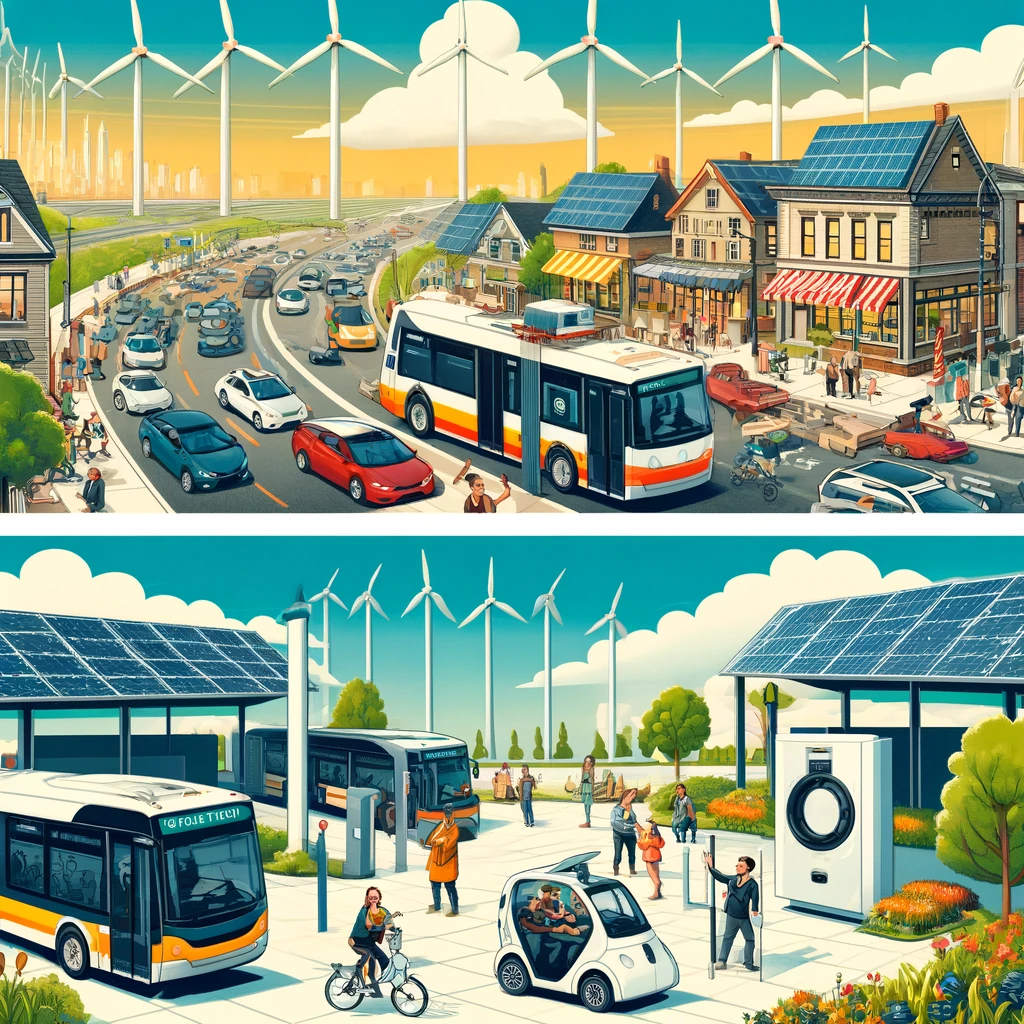
Circular construction is the practical strategy cities use to keep buildings, components, and materials in use for as long as possible, cutting demolition waste, lowering embodied carbon, and reducing pressure on landfills and virgin resource extraction. In day-to-day planning and project delivery, it means designing for adaptability, prioritizing maintenance and refurbishment over teardown, recovering materials at high value, and creating local markets that can absorb reclaimed products. I have worked on urban redevelopment programs where demolition seemed like the fastest answer, yet the numbers repeatedly showed that knocking down serviceable structures creates avoidable waste streams, procurement costs, transport emissions, and community disruption. For municipalities managing growth, housing demand, aging infrastructure, and climate targets at the same time, circular construction is not a niche sustainability idea; it is an operational framework for getting better long-term value from the built environment.
Demolition waste includes concrete, brick, metals, timber, plasterboard, glass, insulation, fixtures, and mechanical equipment removed during renovation or building removal. In many cities, construction and demolition debris represents one of the largest waste streams by mass, often exceeding household garbage. The problem is not only volume. Conventional demolition destroys material value because mixed debris is hard to separate cleanly, contaminated fractions fetch poor prices, and reusable elements such as doors, structural steel, raised flooring, and facade systems are often crushed or discarded. A circular approach changes the sequence. Instead of asking how to dispose of a building, city teams ask what can be retained, what can be adapted, what can be disassembled, and what local reuse pathways already exist. That shift matters because every ton reused or recycled displaces extraction, manufacturing, and haulage that would otherwise occur elsewhere.
For cities, the business case is broad. Retaining foundations or structural frames can shorten schedules and reduce material spend. Deconstruction creates more labor hours than mechanical demolition, which can support local jobs and training. Salvage marketplaces and municipal reuse hubs keep money circulating regionally. Circular construction also helps with policy compliance. Cities facing landfill constraints, carbon disclosure rules, green public procurement obligations, and resilience planning can use material recovery targets to make progress across several agendas at once. Most importantly, it turns redevelopment into a higher-resolution process. Rather than treating existing buildings as waste in waiting, municipalities can manage them as material banks. That perspective is essential for sustainable urban development because the cleanest building material is often the one already in place, and the cheapest ton of demolition waste is the ton never created.
Why demolition waste is a city-scale problem
Demolition waste becomes a city problem when redevelopment cycles accelerate faster than municipal systems can recover value from outgoing buildings. Population growth, rezoning, infrastructure upgrades, flood resilience works, and public housing renewal can produce concentrated waves of teardown. When those projects rely on standard demolition, mixed loads move quickly from site to transfer station or landfill, and recovery rates drop. Concrete and metals may still be captured because markets are established, but finishes, fit-out materials, timber, and composite products are commonly lost. On large urban programs, that loss compounds across dozens of sites, creating avoidable truck movements, dust, noise, disposal fees, and carbon emissions tied to replacement materials.
The environmental impacts are straightforward. Cement, steel, aluminum, and glass are energy-intensive to manufacture. If a city demolishes structurally sound assets and rebuilds from scratch, it effectively discards embodied carbon already invested in those structures. The social impacts are less discussed but equally real. Fast demolition can erase affordable spaces for small businesses, remove culturally significant building elements, and reduce opportunities for local repair and salvage enterprises. In neighborhoods already dealing with redevelopment pressure, this can intensify distrust toward public projects. I have seen community consultations change tone when project teams present retention and reuse scenarios instead of only demolition plans, because residents understand the difference between wasteful replacement and careful transformation.
Measurement is the first corrective step. Cities need baseline data on construction and demolition waste generation by project type, recovery route, contamination level, and destination. Weight-based reporting is useful, but volume, material category, and reuse value tell a more actionable story. A crushed concrete ton and a reclaimed hardwood flooring ton both count as diverted waste, yet their economic and carbon implications differ sharply. Municipal reporting frameworks should therefore distinguish between direct reuse, component remanufacture, closed-loop recycling, downcycling, energy recovery, and landfill. Without that granularity, cities can claim high diversion while still destroying most of the value embedded in buildings.
What circular construction looks like in practice
Circular construction is not one tactic but a hierarchy of decisions. The highest-value action is often to keep the whole building in use through maintenance, retrofitting, or adaptive reuse. If a warehouse becomes housing, a school becomes offices, or a shopping center becomes a health campus, the city avoids the waste and carbon spike associated with full replacement. Where whole-building retention is not possible, teams can preserve major structural elements such as foundations, slabs, columns, or steel frames. Even partial retention can materially reduce waste tonnage and procurement costs. On one civic project, preserving the concrete frame required more upfront survey work, but it removed months of demolition, reduced truck trips, and simplified permitting for adjacent streets.
The next level is design for disassembly. New municipal buildings, transit stations, schools, and housing can be detailed so future components come apart with standard tools rather than destructive demolition methods. Bolted steel connections, mechanical fixings, reversible facade systems, modular partitions, accessible service zones, and standardized component dimensions all improve recoverability. This is not merely a technical preference. It changes residual value. A curtain wall panel that can be safely removed, tested, and reused has market potential; a glued composite assembly usually does not. Material passports, building information modeling, and asset registers make that future value legible by documenting specifications, installation dates, maintenance history, and likely reuse pathways.
Selective deconstruction is the bridge between existing stock and circular outcomes. Instead of sending excavators straight through a building, crews sequence removal to harvest high-value components first: lighting, sanitary fixtures, doors, cabinetry, structural timber, ceiling grids, brick, pavers, and steel sections. Success depends on pre-demolition audits, contamination testing, storage logistics, and buyer coordination. Cities that treat deconstruction as a specialty service rather than an afterthought recover more value and generate better data. The method is slower than conventional demolition, but that tradeoff can be offset when salvage revenues, avoided disposal fees, local employment, and reduced procurement of replacement materials are fully counted.
Policies cities can use to reduce demolition waste
Municipal policy is the lever that turns isolated good projects into standard practice. The strongest starting point is a mandatory pre-demolition audit for buildings above a defined size or permit threshold. These audits identify reusable components, hazardous materials, structural retention opportunities, and probable recovery rates before permits are issued. Cities such as London, Vancouver, and several Dutch municipalities have used versions of this approach to improve project planning and material recovery. The audit should be linked to permit conditions, not treated as voluntary guidance. Otherwise it becomes paperwork with little effect on site behavior.
Procurement rules are equally important because public projects can create stable demand for reclaimed and low-impact materials. Tender documents can require waste management plans, minimum salvage percentages, retained-structure options, and documentation of recycled or reclaimed content. Performance-based specifications work better than overly rigid product lists because they allow contractors to source locally available materials. Public agencies should also allow whole-life cost assessment rather than lowest first cost alone. In practice, circular options often need slightly more planning and coordination, but they can reduce maintenance, disposal, and replacement costs over the asset life.
| Policy tool | How it works | City benefit |
|---|---|---|
| Pre-demolition audits | Inventory reusable and recyclable materials before permit approval | Higher recovery rates and better project planning |
| Deconstruction ordinances | Require selective dismantling for older or designated buildings | More salvage, more jobs, less landfill |
| Green public procurement | Set reuse, recycled content, and retention requirements in tenders | Creates dependable market demand |
| Landfill pricing signals | Increase tipping fees or restrict mixed C&D disposal | Makes recovery financially attractive |
| Material exchange platforms | Match outgoing components with local buyers and projects | Keeps value circulating within the city |
Zoning, taxation, and permitting can also encourage circularity. Cities can fast-track adaptive reuse projects, reduce fees where substantial structural retention is demonstrated, or provide density bonuses linked to preservation and material recovery outcomes. Landfill bans on certain recoverable materials, if paired with viable processing infrastructure, can shift contractor behavior quickly. However, bans without enforcement or market support often lead to illegal dumping or long-distance hauling. The lesson from implementation is clear: policy tools work best as a package combining regulation, incentives, data reporting, and procurement demand.
Markets, infrastructure, and technology that make reuse possible
Cities cannot reduce demolition waste by policy alone; they need functioning reuse infrastructure. That includes salvage yards, municipal storage depots, materials exchange platforms, certified recyclers, remanufacturing partners, and transport networks sized for urban projects. Reuse often fails for logistical reasons, not technical ones. Components may be available, but there is nowhere to test, store, clean, or list them before they are needed on another site. In my experience, a modest covered warehouse near active redevelopment areas can unlock far more reuse than another guidance document. Timing matters. Contractors demolish on one schedule, while new projects procure on another. Storage and brokerage close that gap.
Digital tools are improving coordination. Building information modeling can support material inventories and indicate where reusable assets are embedded. Material passport systems record composition, dimensions, fire ratings, and maintenance history, making resale or redeployment more credible. Online exchanges allow developers, demolition contractors, architects, and community groups to search available products before new materials are ordered. Some cities are experimenting with geolocated material banks that map recoverable items from upcoming projects. When linked to permit pipelines, these systems give buyers advance notice, which is crucial for specifying reclaimed products in time.
Quality assurance remains essential. Reclaimed structural steel, timber, brick, or facade units need clear testing and certification pathways to satisfy insurers, code officials, and design teams. Standards from organizations such as ASTM, ISO, CEN, and local building authorities help here, but municipal leadership is still needed to normalize acceptance. Cities can publish approved protocols for grading salvaged timber, documenting steel provenance, or verifying recycled aggregate performance. They can also support pilot projects that prove reclaimed materials meet fire, acoustic, structural, and durability requirements. Once a few public buildings demonstrate compliance, market confidence improves substantially.
Barriers cities face and how to overcome them
The main barriers are predictable: time pressure, fragmented responsibility, uncertain resale value, contamination risk, and conservative procurement habits. Developers often assume demolition is cheaper because the direct contract price appears lower. That assumption ignores landfill fees, replacement material costs, carbon impacts, and social externalities. Contractors may resist deconstruction if schedules are fixed without allowing for audits and salvage sequencing. Designers may avoid reclaimed products because dimensions vary or documentation is incomplete. Building officials may be cautious where codes do not explicitly address reused components. None of these issues are insurmountable, but they must be managed early rather than left to site teams after permits are issued.
A practical response is to build circular requirements into the project gateway process. Before approving demolition, cities should require an options appraisal comparing retention, adaptation, partial dismantling, and full teardown. The appraisal should include whole-life carbon, waste projections, program fit, structural feasibility, and financial sensitivity. Hazardous materials surveys must happen early because asbestos, lead paint, PFAS-containing products, and contaminated soils can drastically affect recovery strategies. Training also matters. Procurement officers need model clauses, inspectors need clear criteria, and contractors need a pipeline of work to justify investing in deconstruction skills and equipment.
Economic barriers can be reduced through predictable demand. If a city commits that public schools, parks, libraries, and housing projects will assess reclaimed products as a first option for certain categories, suppliers can scale with confidence. Small grants or low-interest loans for salvage facilities, testing labs, and reuse cooperatives can also unlock local capacity. The broader principle is simple: circular construction succeeds when cities treat materials as assets requiring governance, not as waste requiring disposal.
How a city can build a circular construction roadmap
A credible roadmap starts with inventory and targets. Cities should map their building stock by age, type, structural system, and redevelopment pressure, then estimate likely demolition waste streams over five to ten years. From that baseline, they can set targets for building retention, component reuse, recycled content, landfill reduction, and embodied carbon savings. The next step is governance: assign responsibility across planning, waste management, procurement, public works, and economic development so circular goals are not isolated in one sustainability team. Pilot projects should follow quickly, because practical lessons from one school retrofit or depot redevelopment are more valuable than abstract strategy documents.
Roadmaps also need market development and public communication. Municipalities should identify which materials have strong local reuse potential, such as brick, pavers, structural steel, mass timber elements, doors, sanitary fixtures, or acoustic panels, and then support collection and resale channels for those categories first. Reporting should be public and consistent, showing not just tons diverted but assets retained, carbon avoided, jobs created, and procurement savings achieved. When city leaders explain that circular construction protects budgets, reduces landfill dependence, and preserves useful materials already paid for by previous generations, the policy becomes easier to defend.
Circular construction gives cities a disciplined way to reduce demolition waste by preventing unnecessary teardown, recovering materials at higher value, and building local systems that make reuse routine instead of exceptional. The core actions are clear: measure waste accurately, require pre-demolition audits, prioritize retention and adaptive reuse, design new buildings for disassembly, create procurement demand, and invest in reuse infrastructure. Cities that follow this path cut landfill volumes, reduce embodied carbon, support skilled jobs, and stretch capital budgets further. For any municipality shaping sustainable urban development, the next move is simple: choose one upcoming project, test a circular construction workflow from audit to procurement, and use the results to set a citywide standard.
Frequently Asked Questions
What is circular construction, and how does it help cities reduce demolition waste?
Circular construction is an approach to building, renovating, and deconstructing the built environment so materials and components stay in use for as long as possible. Instead of the traditional linear model of take, build, demolish, and dispose, cities using circular construction focus on extending building life, adapting structures to new uses, repairing components, salvaging materials, and returning those materials to productive use at the highest possible value. In practical terms, that means preserving existing buildings when feasible, designing new ones for disassembly and flexibility, and planning projects so valuable materials are recovered rather than crushed or sent to landfill.
For cities, the waste reduction benefits are significant. Demolition generates large volumes of concrete, wood, metals, drywall, glass, fixtures, and finish materials, much of which is often discarded because recovery was not planned early enough. Circular construction changes that outcome by requiring pre-demolition audits, selective deconstruction, and procurement policies that encourage reuse and recycled content. This reduces landfill demand, cuts hauling and disposal impacts, and lowers the need for virgin raw materials. It also reduces embodied carbon, because reusing existing structures and reclaimed products usually avoids the emissions associated with extracting, manufacturing, and transporting new materials. Over time, cities that adopt circular practices can turn demolition waste from a cost and environmental burden into a local resource stream.
Why is refurbishment often better than demolition and rebuilding in urban development?
Refurbishment is often the more circular and more sustainable choice because the greenest building elements are frequently the ones that already exist. When a city preserves and upgrades a structure instead of demolishing it, it retains the embodied carbon already invested in the foundations, frame, floors, and envelope. Demolition and full reconstruction typically require large amounts of new concrete, steel, insulation, finishes, and transport, all of which add emissions and generate waste. Refurbishment can avoid much of that impact while still improving safety, energy performance, accessibility, and functionality.
There are also practical urban advantages. Refurbishment can reduce disruption to neighborhoods, shorten project timelines in some cases, and preserve architectural character and community identity. Existing buildings can often be adapted for new uses such as converting offices to housing, warehouses to mixed-use developments, or outdated public buildings into modern civic spaces. This adaptability is central to circular construction because it treats buildings as long-term material banks rather than disposable assets. Of course, refurbishment is not always possible or cost-effective, especially where structures are unsafe or fundamentally unsuitable. But when cities evaluate reuse first, they often find opportunities to reduce demolition waste, save resources, and deliver more resilient development outcomes.
How can cities create strong local markets for reclaimed building materials?
Local markets are essential if cities want recovered materials to be reused at scale rather than stockpiled or discarded. A strong reclaimed materials market depends on supply, demand, trust, and logistics. On the supply side, cities can require or incentivize pre-demolition material inventories so valuable items such as structural steel, brick, timber, doors, lighting, raised flooring, ceiling systems, and architectural fixtures are identified early. They can also support selective deconstruction instead of mechanical demolition, which preserves material quality and makes resale more viable.
On the demand side, public procurement can play a major role. Municipal governments can specify reused or reclaimed content in public projects where appropriate, helping establish reliable demand and giving suppliers confidence to invest. Cities can also support digital material exchange platforms, local reuse warehouses, and certification systems that verify condition, dimensions, and performance. This matters because designers, contractors, and building owners need confidence that reclaimed products are safe, code-compliant, and available on schedule. Training and standardization are equally important. If architects know how to design with reclaimed materials, and contractors know how to source and install them, market friction falls dramatically. Over time, a local ecosystem of deconstruction firms, salvage retailers, testing services, and material brokers can make circular construction much more practical and economically attractive.
What policies and planning tools can cities use to support circular construction?
Cities have a wide range of policy levers that can normalize circular construction across planning, permitting, procurement, and waste management. One of the most effective tools is requiring waste management and material recovery plans for major demolition and redevelopment projects. These plans can set expectations for audits, diversion targets, selective dismantling, and reporting. Some cities also require pre-demolition assessments that identify reusable and recyclable materials before permits are issued, making recovery part of project planning rather than an afterthought.
Zoning and building policy can also encourage adaptability and life extension. For example, cities can support flexible building uses, incentivize retrofit over replacement, and streamline approvals for renovation projects that preserve existing structures. Public procurement standards can prioritize durability, modularity, design for disassembly, and minimum reclaimed or recycled content. Data tools are increasingly useful as well. Material passports, digital building records, and urban resource mapping can help cities understand what materials are already embedded in the building stock and how they might be recovered in the future. Financial incentives, landfill pricing, deconstruction grants, and pilot programs can further shift market behavior. The strongest city strategies combine regulation, incentives, technical guidance, and public-sector leadership so circular construction becomes a default development pathway rather than a niche sustainability initiative.
What are the biggest barriers to circular construction, and how can cities overcome them?
The biggest barriers are usually economic, operational, and cultural rather than purely technical. In many markets, demolition is still faster and more familiar than deconstruction, and virgin materials can appear cheaper because environmental costs are not fully reflected in pricing. Project teams may also worry about uncertain supply, inconsistent quality, storage needs, insurance questions, or code compliance when specifying reclaimed products. On top of that, many buildings were never designed to be adapted or taken apart cleanly, which makes material recovery more difficult and labor-intensive.
Cities can address these obstacles with a combination of policy clarity and market development. Clear standards for material testing, reuse documentation, and code acceptance can reduce uncertainty for designers and contractors. Training programs can build local expertise in deconstruction, salvage, and circular design. Incentives can help bridge cost gaps during early market development, while landfill taxes or disposal fees can make wasteful practices less attractive. Timing is another critical issue: reclaimed materials must be available when projects need them, so cities should support storage hubs, exchange platforms, and better coordination between demolition and construction schedules. Just as important, city leaders need to shift the mindset around existing buildings and used materials. When the built environment is treated as a valuable stock of future resources rather than tomorrow’s waste, circular construction becomes a practical framework for reducing demolition waste, lowering carbon emissions, and strengthening urban resilience.