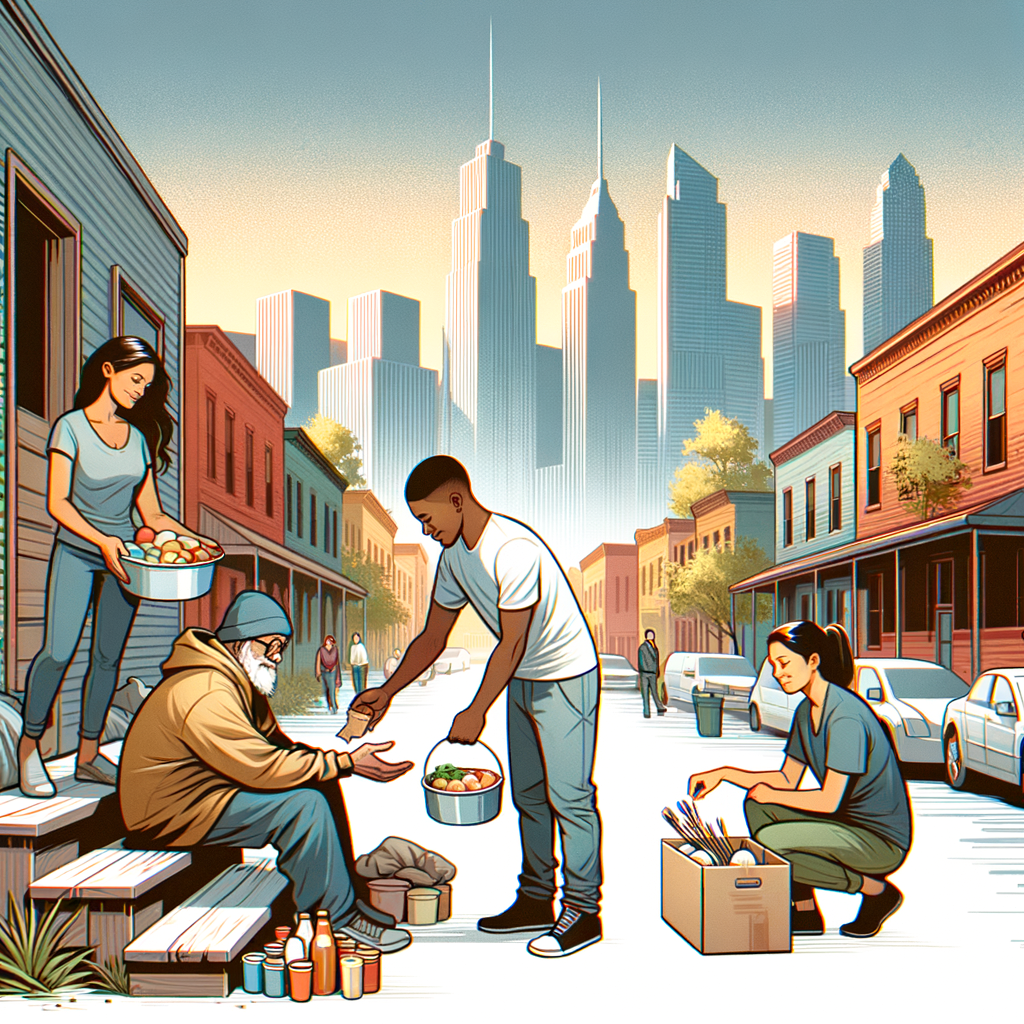
Urban segregation refers to the unequal distribution of people across geographical spaces, influenced predominantly by factors such as race, income, and social class. This phenomenon has deep roots and vast implications for societal dynamics, affecting everything from access to education and healthcare to economic opportunities and community safety. In modern cities around the world, urban segregation perpetuates systemic inequalities, creating cyclical disadvantages for marginalized communities. It results in distinct socio-economic and cultural disparities, often operating in under-the-radar yet profoundly influential ways. Addressing urban segregation is not merely a matter of fairness and equality; it underpins the broader push toward cohesive, vibrant, and just societies. Recognizing the multifaceted nature of urban segregation is crucial, prompting policymakers to craft integrated strategies that bridge these divides. This article delves into the policies targeting urban segregation, offering insights into their implementation and impact.
Policy Intervention: Affordable Housing
One of the primary drivers of urban segregation is the distribution and availability of housing. Affordable housing initiatives aim to provide quality housing options to low-income families, integrating them into diverse neighborhoods that offer better access to amenities, schools, and job opportunities. Historically, cities like Vienna have implemented successful housing models that ensure inclusivity. Vienna’s approach involves a combination of municipal housing and partnership with private developers to offer below-market rents, making living costs manageable for various income brackets. Consequently, this has facilitated a more socially diverse urban landscape, reducing economic ghettos. Effective affordable housing policies incorporate zoning regulations that enable mixed-income developments, subsidies to incentivize private developers, and rent control measures to prevent displacement.
Education and School Zoning Reform
Education is another critical realm where urban segregation manifests and perpetuates inequality. School zoning policies often confine students to schools in their residential areas, which in segregated cities, results in stark disparities in educational quality and resources. One innovative approach to mitigate this is the introduction of controlled choice policies, blending aspects of choice with socioeconomic balancing. For instance, the Cambridge, Massachusetts, school district employs a model that allows families to indicate school preferences while the allocation algorithm ensures a balanced socioeconomic mix. This model has been instrumental in improving educational equity, promoting social cohesion, and preparing students for a more diverse world. Educational reforms also extend to curriculum adjustments, where multicultural education is emphasized, fostering an understanding and appreciation of diversity from a young age.
Public Transportation Accessibility
Segregation is not only about where people live but also their capacity to move freely and conveniently throughout urban areas. Public transportation plays a significant role in this regard, linking isolated neighborhoods to economic centers and services. Curitiba, Brazil, exemplifies successful integrative urban planning through its renowned Bus Rapid Transit (BRT) system. The city designed its transportation network to prioritize accessibility, ensuring that all neighborhoods, irrespective of socio-economic status, are connected to the city’s core via efficient and affordable buses. Such initiatives diminish spatial isolation, promoting a more integrated urban environment. Progressive cities invest in expanding and maintaining public transit networks, offering subsidized fares for low-income users and innovating to ensure environmentally sustainable operations.
Community Development and Local Economic Empowerment
To effectively combat urban segregation, policies must also focus on local community development and economic empowerment. Community development initiatives aim to enhance the social and economic fabric of segregated communities themselves. The Harlem Children’s Zone in New York is a shining example of a comprehensive community-based approach. This initiative offers a pipeline of youth programs and family services aimed at breaking the patterns of generational poverty. It integrates education, housing assistance, and health programs to uplift the community holistically. Empowering local economies through microfinance, entrepreneurship training, and strategic investments in local businesses fosters economic growth and independence within these communities, reducing reliance on external resources and encouraging self-sufficiency.
Inclusive Urban Planning and Civic Engagement
Urban planning and policy formulation must be inclusive, reflecting the diverse voices and needs of the entire population. Incorporating civic engagement in urban planning ensures that all groups — particularly marginalized ones — are represented in decision-making processes. Porto Alegre, Brazil, is renowned for its participatory budgeting model, where residents have direct input on allocating parts of the municipal budget. Such engagement not only democratizes urban space but empowers communities to drive change from within, fostering an inclusive and equitable city environment. Planners should aim for integrated approaches that consider cultural, economic, and social aspects, ensuring that urban environments cater to diverse populations and reduce socio-spatial divisions.
| Policy Focus | Example City | Key Impact |
|---|---|---|
| Affordable Housing | Vienna, Austria | Social Diversity and Economic Integration |
| School Zoning Reform | Cambridge, USA | Educational Equity |
| Public Transportation | Curitiba, Brazil | Connected Neighborhoods |
| Community Development | New York City, USA | Holistic Community Empowerment |
| Urban Planning | Porto Alegre, Brazil | Empowered Civic Participation |
The Role of Government and Non-Profit Organizations
The collaboration between government bodies and non-profit organizations is crucial for the success of integration policies. Governments provide the regulatory framework and resources necessary for implementing deep-seated changes, while non-profits often bring innovative approaches, grassroots engagement, and specialized knowledge. The partnership between these entities can be seen in initiatives like the Inner City 100 in the United States, which recognizes and supports fast-growing urban businesses that generate employment opportunities for local communities. Such collaborations leverage public policy directions with on-the-ground execution capabilities, enhancing the impact and sustainability of integration efforts.
Technology and Data-Driven Solutions
In today’s data-driven world, technology offers powerful tools to address urban segregation. Geographic Information Systems (GIS) and data analytics are increasingly being used to map socio-economic patterns, analyze migration trends, and predict the impacts of urban policies. These insights enable city planners and policymakers to identify segregation hotspots and tailor interventions appropriately. For example, predictive analytics have been used in cities like Los Angeles to optimize public service deliveries, ensuring equitable distribution of resources such as public transport and social services to all urban segments. Leveraging technology in this way supports informed decision-making and enhances the precision of integration policies.
Cultural Integration and Social Cohesion
Beyond economic and infrastructural strategies, cultural integration plays a pivotal role in achieving genuine urban integration. This involves creating spaces and opportunities for people from different backgrounds to interact, share experiences, and learn from one another, breaking down stereotypes and building mutual respect. Cities like Toronto have celebrated cultural diversity through festivals and public events, which not only enhance cultural understanding but also encourage social interactions and community bonding. Embracing cultural diversity in everyday city life promotes inclusivity and strengthens the social fabric, acting as a foundation for sustained urban integration.
Conclusion: Moving Towards Integration
In conclusion, addressing urban segregation requires a multifaceted approach that encompasses housing, education, transportation, community development, civic engagement, technology, and cultural integration. The examples highlighted from cities around the world demonstrate that while the challenge of urban segregation is significant, it is not insurmountable. By implementing thoughtful policies that are inclusive and adaptable over time, cities can transform into integrated spaces offering opportunities equally to all residents. The reader, whether a policymaker, an activist, or an engaged citizen, can contribute to this transformation by advocating for comprehensive approaches and supporting initiatives that foster equality and integration. The path forward is clear: push for inclusive policies, participate in civic dialogues, and champion efforts that bridge social divides. It’s time for cities to unite and thrive as spaces for everyone. Engage, educate, and elevate — let this be your call to action.
Frequently Asked Questions
1. What is urban segregation, and how does it manifest in modern cities?
Urban segregation refers to the systematic separation and unequal distribution of population groups across different geographic areas, predominantly based on race, income, and social class. In modern cities, this segregation is visible in various forms. For instance, certain neighborhoods may predominantly house affluent, single-race residents with access to high-quality education, healthcare, and job opportunities, while others, often with a higher concentration of racial minorities or lower-income residents, may face overcrowded schools, limited healthcare access, and fewer economic opportunities.
Urban segregation goes beyond mere spatial distance. It influences life outcomes and perpetuates a cycle of disadvantage. People living in segregated, underserved areas often face stigmatization and limited social networks, which can restrict their upward mobility and perpetuate poverty across generations. For cities, this polarization can lead to heightened social tensions and inhibit overall economic potential, as a significant portion of the population remains marginalized.
2. Why is it important to address urban segregation, and what are the consequences if we don’t?
Addressing urban segregation is critical for fostering more equitable, thriving, and resilient communities. When left unchecked, segregation exacerbates inequality and restricts access to essential resources such as quality education, healthcare, and employment opportunities. This unequal distribution of resources prevents marginalized groups from fully participating in and contributing to the broader economy.
If we fail to address urban segregation, the entrenched societal disparities tend to deepen, leading to persistent poverty, crime, and poor health outcomes in segregated neighborhoods. This can increase economic costs for cities, as governments may need to allocate more resources to manage social problems linked to segregation, such as crime and health issues. Socially, segregation can foster divisions and tensions between different groups, compromising social cohesion and undermining mutual trust and cooperation. Furthermore, it stifles innovation and cultural exchange that can result from diverse, integrated communities.
3. What are some effective policies that have been implemented to address urban segregation?
Various policies have been implemented around the world to combat urban segregation, focusing on addressing the root causes and mitigating its effects. These include:
- Affordable Housing Initiatives: Programs that incentivize or mandate the inclusion of affordable housing units within new residential developments. These policies aim to integrate diverse income groups within neighborhoods, promoting socioeconomic diversity.
- Regulatory Zoning Changes: Adjusting zoning laws to allow for mixed-use developments can increase housing diversity and accessibility, helping to integrate neighborhoods economically and socially.
- Education Integration Programs: Initiatives aimed at integrating schools, offering equal educational opportunities, and fostering diverse learning environments. These can include creating magnet schools and revising school districting policies.
- Public Transportation Enhancements: Improving public transit systems to connect segregated areas with broader city resources and job markets can help reduce the isolation of marginalized neighborhoods.
- Economic Development Programs: These initiatives focus on revitalizing underserved neighborhoods by attracting businesses, improving infrastructure, and creating local job opportunities, which can help uplift marginalized communities.
Such policies require commitment and collaboration across multiple sectors, including government, private industry, and community organizations, to ensure effective implementation and lasting impact.
4. How can community engagement play a role in combating urban segregation?
Community engagement is a powerful tool in addressing urban segregation, as it ensures that the voices of those directly affected are heard and integrated into policy-making processes. Inclusive engagement strategies involve partnerships with local organizations, stakeholders, and residents to identify challenges and co-create solutions. This helps ensure that interventions are culturally and contextually appropriate and meet the immediate needs of the community.
By involving residents in decision-making, cities can build trust and empower communities to take control over their future. Engagement can take various forms, including public forums, community planning sessions, workshops, and participatory budgeting. These platforms enable dialogue between the residents and policymakers, fostering a sense of ownership and accountability.
Active community engagement also helps uncover hidden assets within communities, such as social networks and local knowledge, which can be leveraged to support integration efforts. Ultimately, when empowered by active participation in the planning and development processes, communities can foster environments where diversity is celebrated and segregation becomes a thing of the past.
5. What challenges do cities face when trying to implement policies to address urban segregation, and how can they overcome them?
Addressing urban segregation is complex, and cities often encounter several challenges during policy implementation, such as:
- Political or Public Opposition: Resistance can occur from political leaders or residents opposed to changes in zoning laws or the introduction of affordable housing. Overcoming this requires effective communication strategies that highlight the broader benefits of integration, including economic growth and social cohesion.
- Funding Constraints: Limited financial resources can hinder the effective execution of policies. Cities need to explore diverse funding avenues, such as public-private partnerships, grants, and incentives, to support integration efforts.
- Bureaucratic Hurdles: Policy implementation can be slowed down by complex bureaucratic processes. Streamlining decision-making, improving inter-agency coordination, and adopting flexible implementation strategies can help overcome these obstacles.
- Displacement and Gentrification: Efforts to revitalize neighborhoods can inadvertently lead to displacement of long-standing residents. Implementing protective measures, such as rent control and property tax stabilization, can help mitigate these effects.
To successfully address these challenges, cities must remain committed to inclusive, evidence-based policy-making, drawing on lessons learned from global case studies and continuously engaging with affected communities.