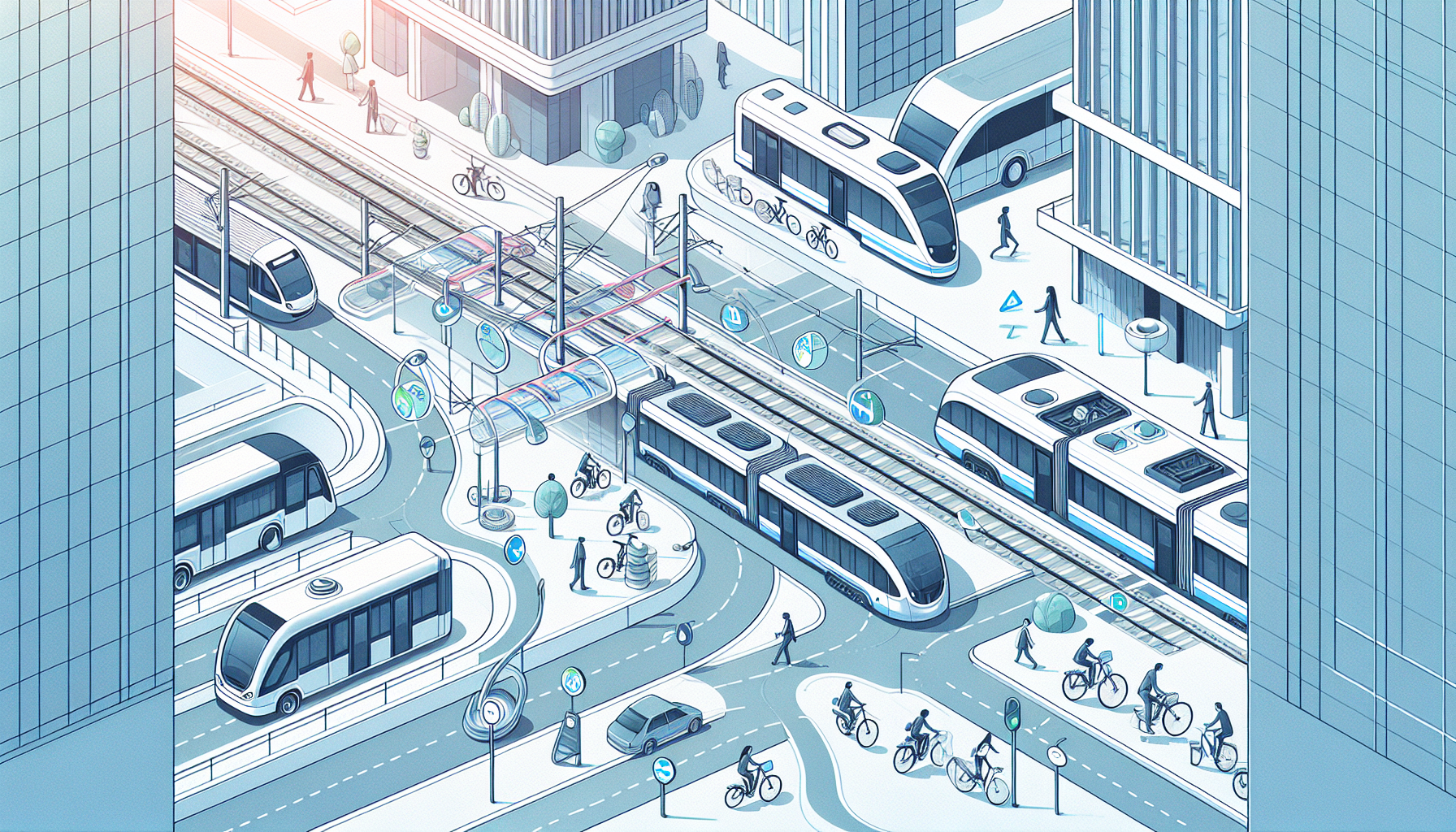
Integrated transit networks make urban travel faster, fairer, and more resilient by connecting buses, rail, trams, ferries, bike share, walking routes, and payment systems into one coordinated system. In transportation planning, integration means more than placing different modes near each other. It includes synchronized timetables, unified fares, accessible stations, wayfinding, data sharing, network planning, and governance that treats mobility as a public service rather than a set of isolated operators. I have worked on mobility content and transit research long enough to see a consistent pattern: cities with strong integration deliver shorter door-to-door travel times, higher ridership, lower household transport costs, and better access to jobs, education, and healthcare.
The topic matters because most trips are multimodal even when travelers do not describe them that way. A commuter may walk to a bus stop, transfer to rail, and use a shared scooter for the final kilometer. If any link fails, the whole trip feels unreliable. That is why integrated transit networks are central to urban mobility and transportation strategy. They reduce friction at every stage of travel: planning, paying, transferring, waiting, and arriving. They also help cities meet wider policy goals, including lower emissions, safer streets, more productive labor markets, and more inclusive access for older adults, disabled riders, students, and lower-income households.
For a miscellaneous hub page, integration is the thread that ties many transit topics together. Fare policy, station design, digital ticketing, last-mile connections, bus priority, transit-oriented development, accessibility, and real-time passenger information all support the same outcome: a seamless journey. When agencies neglect this systems view, riders pay the price through missed transfers, duplicated routes, confusing fare rules, and uneven service quality. When agencies coordinate well, the network feels legible and dependable. That shift is not cosmetic. It changes whether people choose transit daily or reserve it only for trips when driving is impossible.
Understanding the benefits of integrated transit networks starts with a practical definition of success. A strong network lets people travel across a metro area with minimal penalties for transferring between services. It uses common standards, such as open payment, GTFS for schedule data, and GTFS-realtime for live updates, to make information and operations consistent. It aligns service design with actual travel demand rather than agency boundaries. Most important, it recognizes that riders judge the entire journey, not the performance of a single line. That principle explains why integration is one of the highest-return investments available to cities seeking better mobility outcomes.
Faster, simpler trips for everyday riders
The clearest benefit of integrated transit networks is that they reduce generalized travel cost, a planning term that combines time, money, uncertainty, and inconvenience. Riders do not just count minutes spent moving; they also feel the burden of waiting, transferring, and figuring out what to do next. Good integration cuts those burdens. Coordinated schedules reduce missed connections. Unified payment removes the need to buy separate tickets. Clear wayfinding lowers cognitive load, especially in complex hubs. Real-time information helps passengers adjust before a delay becomes a failed trip.
In practice, these improvements are measurable. Research from multiple metropolitan areas shows that passengers often perceive transfer time as significantly more onerous than in-vehicle time, which means a badly designed interchange can erase the value of a fast line. I have seen this in station audits: a nominal four-minute transfer becomes a stressful ten-minute experience once stairs, gates, poor signage, and uncertain platform changes are included. Integrated design tackles the hidden frictions. Level boarding, short transfer paths, timed feeder services, and platform displays create journeys that feel continuous instead of fragmented.
London offers a familiar example. The strength of the network comes not only from the Underground, but from the way buses, suburban rail, Overground, Elizabeth line, cycling links, and contactless payment work together. A traveler can cross modes with little thought about ticket validity or agency ownership. Zurich, often cited by planners, shows the power of timed transfers at a regional scale. Services are arranged around pulse scheduling so trains, trams, and buses meet at predictable intervals, making transfers a feature of the system rather than a penalty. These are not aesthetic choices; they directly expand the number of practical origin-destination pairs the network can serve.
Higher ridership and better return on public investment
Integrated transit networks make expensive infrastructure work harder. A metro line, bus rapid transit corridor, or commuter rail service reaches more people when local buses, safe walking routes, and fare integration feed riders into it. Without that coordination, high-capacity assets underperform because many potential passengers cannot conveniently reach stations or complete the last segment of their journey. I have reviewed transit cases where agencies focused almost entirely on capital expansion while ignoring feeder service redesign, and the result was predictable: impressive map coverage, disappointing ridership, and persistent car dependence.
Ridership growth is not only about adding service. It depends on network usefulness. Jarrett Walker’s concept of “ridership versus coverage” is useful here: agencies must balance broad geographic access with frequent service where demand is strongest. Integration helps them do both more intelligently. Frequent trunk routes can connect with lower-frequency feeders if schedules, fares, and transfer environments are aligned. That arrangement protects resources while preserving access. It also improves operating efficiency because agencies can reduce unnecessary route duplication and redeploy service to corridors where frequency matters most.
Public investment returns improve when agencies share assets and information. Common ticketing platforms cut collection costs and reduce fare evasion opportunities. Integrated control centers can respond faster to disruptions because they see the full network rather than one mode in isolation. Shared data standards make trip planners more accurate, which supports ridership and customer trust. These gains may sound administrative, but they affect real outcomes. Every avoided delay, every simplified transfer, and every rider retained contributes to a system that justifies sustained funding more convincingly than isolated projects ever can.
| Integration feature | Direct rider benefit | System-level benefit |
|---|---|---|
| Unified fares | One payment method across modes | Faster boarding and simpler revenue management |
| Timed transfers | Shorter waits between services | Expanded effective network reach |
| Real-time information | Better trip decisions during disruptions | Lower perceived unreliability |
| Co-located stations | Easier transfers and shorter walking distances | Higher interchange volumes and station productivity |
| Integrated planning | More logical routes and frequencies | Less duplication and better resource allocation |
Equity, accessibility, and broader opportunity
One of the most important benefits of integrated transit networks is that they improve access to opportunity for people who have the fewest travel options. In many cities, lower-income households spend a larger share of income on transportation and are more likely to depend on multiple buses or bus-to-rail transfers. Fragmented systems punish these riders with double fares, long waits, inaccessible stops, and poor information. Integration reduces those penalties. Fare capping, transfer discounts, and all-door boarding can materially lower the cost and stress of daily travel.
Accessibility is not a side issue; it is a design test for whether integration is real. A station is not truly connected if elevators are unreliable, tactile paving is incomplete, audio announcements are inconsistent, or a transfer requires crossing wide roads without protected signals. Standards from the Americans with Disabilities Act, Transport for London’s step-free guidance, and universal design principles all point in the same direction: mobility must work for people with diverse physical, sensory, and cognitive needs. When agencies treat accessibility features as essential network infrastructure, the entire system becomes easier for everyone to use.
The opportunity effects are substantial. Better integration expands the number of jobs reachable within a reasonable commute, a metric many planners track through accessibility analysis. It also improves access to schools, childcare, clinics, and social networks. In sprawling regions, coordinated suburban buses linked to frequent rail can make the difference between a ninety-minute unpredictable trip and a manageable daily commute. That matters for labor force participation and household stability. In my experience, the strongest public support for transit often emerges when residents can point to specific life improvements: getting to work reliably, reaching a hospital without paying for multiple rides, or traveling independently despite age or disability.
Environmental, street safety, and public health gains
Integrated transit networks support environmental goals because they make it easier for people to substitute private car trips with lower-emission travel. A single rail line may look green on paper, but the climate benefit depends on whether people can reach it conveniently and trust it enough to leave the car at home. Integration increases that substitution effect. Safe walking access, protected bike links, secure parking, bus priority, and coordinated regional fares help turn transit into a practical default for more trip types, not just downtown commuting.
The emissions case is strongest when transit integration is paired with land use and street design. Dense, mixed-use districts around stations increase the pool of riders within a short walk. Bus lanes and transit signal priority improve reliability and reduce idling. Clean vehicle fleets further reduce local air pollution. Cities such as Copenhagen, Vienna, and Singapore show that network quality, not one technology alone, drives mode share. Even where private vehicles become electric, integrated transit still delivers benefits electric cars cannot fully match: less congestion, lower parking demand, fewer road fatalities, and more efficient use of limited urban space.
Public health gains extend beyond emissions. Walking to and from transit adds routine physical activity. Safer transfer environments with lighting, passive surveillance, and lower traffic speeds reduce crash risk and improve personal security. Strong networks also make cities more resilient during fuel price spikes or extreme weather because people have multiple travel options. During service disruptions, integrated systems can reroute passengers across modes more effectively than fragmented ones. That redundancy is a serious operational advantage. A city with several connected mobility layers can absorb shocks far better than one that relies heavily on private cars or a single transit mode.
What makes integration succeed in the real world
Successful integration depends on governance as much as engineering. Many regions have multiple operators with different funding structures, labor agreements, and political priorities. Riders do not care about these boundaries, but they shape everything from fare policy to service planning. The most effective metropolitan systems establish coordinating institutions or binding agreements that set common standards for ticketing, branding, customer information, and transfers. They also align incentives so agencies gain from cooperation rather than protecting ridership silos. Without that framework, integration remains partial and fragile.
Technology helps, but it does not replace policy. Account-based ticketing, Mobility as a Service platforms, open data, and demand modeling tools can improve customer experience and planning precision. Yet digital layers only work when the underlying service is coherent. I have seen cities launch polished apps while riders still faced long transfer walks, duplicate fares, and unreliable feeder buses. The lesson is straightforward: fix network design first, then use technology to remove remaining friction. The strongest implementations combine frequent service, simple fare rules, real-time information, and station design that supports intuitive movement.
For cities building this hub of urban mobility topics into an action plan, the sequence is clear. Start with a network audit of transfers, fares, accessibility gaps, and data quality. Redesign routes around high-frequency corridors and dependable feeder links. Introduce integrated fares with caps or free transfers. Standardize passenger information across modes. Prioritize interchange upgrades, bus lanes, and safe access by foot and bicycle. Track results through ridership, on-time performance, transfer success rates, and access-to-jobs metrics. Integrated transit networks are not a niche planning preference. They are the operating model that turns separate services into a system people can trust and use every day.
The benefits of integrated transit networks are practical, measurable, and wide-ranging. They shorten travel times, simplify transfers, increase ridership, improve the return on infrastructure spending, widen access to jobs and services, and support cleaner, safer cities. Most important, they reflect how people actually travel: across modes, across operators, and across neighborhoods. When transit is planned as one connected network rather than a collection of separate lines, the rider experience improves immediately and the long-term value of public investment rises.
This hub page for miscellaneous urban mobility and transportation topics should anchor that larger lesson. Fare systems, accessibility, station design, real-time data, first-mile and last-mile links, service planning, and governance are not isolated issues. They are the building blocks of integration. Cities that coordinate them well create transit that feels intuitive, reliable, and worth choosing. Cities that ignore them leave riders to solve the gaps on their own, usually with more time, more money, and more frustration.
If you are evaluating transit policy, planning local advocacy, or building out a broader urban mobility content strategy, start with integration. Examine where transfers fail, where fares double-charge riders, where information breaks down, and where accessibility is weakest. Then connect those findings to specific improvements. Better networks do not happen by accident. They are designed, coordinated, and continuously refined. Make integrated transit the standard, and every other transportation investment will perform better.
Frequently Asked Questions
What is an integrated transit network, and how is it different from simply having multiple transport options in one city?
An integrated transit network is a transportation system designed to function as one connected service rather than a collection of separate modes. A city may have buses, commuter rail, trams, ferries, bike share, and pedestrian routes, but that alone does not make the network integrated. True integration means those services are planned, operated, and experienced as parts of a unified mobility system. That includes coordinated schedules, simple transfers, shared payment methods, clear wayfinding, accessible stations, and service planning that considers the entire journey from origin to destination.
In practice, the difference is significant. In a fragmented system, a rider may face different fare rules, long wait times between services, confusing station layouts, and separate agencies that do not coordinate disruptions or service changes. In an integrated system, transit agencies align timetables where possible, use unified fares or fare capping, provide consistent signage and passenger information, and design transfer points so moving between modes is easy and safe. The goal is not just proximity between services, but a seamless travel experience.
This matters because most urban trips are not single-mode journeys. A person may walk to a bus stop, transfer to rail, and then use bike share for the last mile. When those links are intentionally connected, travel becomes faster, more reliable, and less stressful. Integration also supports broader policy goals by making public transportation more competitive with private car use, improving access to jobs and services, and creating a system that serves more people more equitably.
How do integrated transit networks make travel faster and more convenient for everyday riders?
Integrated transit networks improve speed and convenience by reducing the hidden friction that often makes public transportation feel slower than it should. Travel time is not only about how fast a bus or train moves. It also includes walking to a stop, waiting, transferring, finding the right platform, paying fares, and recovering from delays. Integration improves these parts of the journey, which can dramatically enhance the overall rider experience even when vehicle speeds remain the same.
One of the biggest advantages is synchronized transfers. When buses, rail lines, trams, and ferries are scheduled with one another in mind, riders spend less time waiting between services. That is especially important for trips that require multiple legs. Unified fare systems also make journeys easier by allowing passengers to use one card, app, or contactless payment method across the network, instead of navigating separate tickets and payment rules for each mode. This reduces uncertainty and shortens boarding times.
Integrated wayfinding and real-time information also play a major role. Consistent signage, digital trip planning tools, and live service updates help passengers understand how to move through the system with confidence. At stations and interchanges, thoughtful design can shorten walking distances, improve visibility, and make transfers more intuitive. When riders do not have to guess where to go or whether they will miss a connection, transit becomes far more convenient.
Convenience also comes from network planning. In a well-integrated system, routes are designed to complement one another rather than compete or leave gaps. Frequent trunk lines can be supported by local feeder services, bike connections, and safe walking routes, allowing more direct and efficient travel. The result is a network that feels coherent, dependable, and practical for daily use, whether someone is commuting to work, taking children to school, or making nontraditional trips outside peak hours.
Why are integrated transit networks considered more fair and accessible?
Integrated transit networks are often described as fairer because they improve access to mobility for a wider range of people, not just those who own cars or live near premium transport corridors. When transit is fragmented, the burden of complexity falls hardest on riders with the least flexibility: low-income households, older adults, people with disabilities, shift workers, caregivers, and those with limited time or language access. Integration helps remove these barriers by making the system easier to use, more affordable, and more geographically inclusive.
Fare integration is a major equity benefit. If each leg of a trip requires a separate payment, riders who must transfer can end up paying more than those on direct routes, even when they are traveling similar distances. Unified fares, transfer discounts, and fare capping create a more just pricing structure by ensuring riders are not penalized for the way the network is organized. This is especially important for people living in outer neighborhoods, where multi-leg trips are common.
Accessibility is another core feature. An integrated network pays attention to station design, platform access, curb cuts, elevators, tactile guidance, audible announcements, and readable information. It also considers whether the entire trip chain is usable, including sidewalks, crossings, and transfers. Accessibility is not achieved if one rail station is step-free but the connecting bus stop is unsafe or unclear. Integration helps agencies think beyond isolated assets and focus on whether the whole journey works for everyone.
There is also a social fairness dimension in how services are planned. When cities treat mobility as a public service rather than a series of disconnected operations, they can better coordinate coverage, frequency, and reliability across neighborhoods. That can improve access to jobs, healthcare, education, and public life. In this way, integrated transit networks do more than move people efficiently; they support inclusion by making opportunity easier to reach.
How do integrated transit networks improve resilience and reliability in cities?
Integrated transit networks are more resilient because they give cities multiple, coordinated ways to move people when conditions change. Urban transportation systems regularly face disruptions, including severe weather, traffic congestion, mechanical failures, labor shortages, special events, and long-term infrastructure repairs. In a fragmented system, these events can create cascading problems because agencies operate independently and riders have limited alternatives. In an integrated network, different modes and operators can support one another, helping the system absorb shocks and recover more quickly.
One important advantage is redundancy. If a rail line is disrupted, a coordinated bus service, tram route, ferry option, or bike share connection can help maintain mobility. That backup only works well when agencies share data, communicate in real time, and plan routes and transfer points strategically. Integration allows for contingency planning across the network, not just within individual services. It also helps passenger information systems guide riders to alternatives quickly and clearly during disruptions.
Reliability improves when operations are managed as part of one system. Shared control centers, common data standards, and coordinated service management can help agencies respond faster to delays and bottlenecks. Synchronized timetables and better transfer design reduce the impact of minor delays that might otherwise cause missed connections and long waits. Even simple features such as unified alert systems and platform information can make the network feel far more dependable from a rider’s perspective.
Over the long term, integrated networks also support resilience in planning and investment. Cities can prioritize infrastructure and service improvements based on systemwide needs rather than mode-by-mode silos. That leads to smarter capital spending, better alignment between land use and mobility, and a stronger ability to adapt as travel patterns evolve. In an era of climate risk, population growth, and changing work habits, that flexibility is one of the most important benefits an integrated transit network can provide.
What are the long-term economic and environmental benefits of investing in integrated transit networks?
The long-term benefits are substantial because integrated transit networks improve how efficiently cities function. Economically, better integration expands access to labor markets by making it easier for people to reach jobs across a metropolitan area. Employers benefit from a larger pool of workers, and workers benefit from more reachable opportunities. Reliable, connected transit also supports retail activity, tourism, and local business districts by bringing more people to commercial areas without requiring extensive parking infrastructure.
Integrated systems can also deliver better value from public investment. When services are coordinated, agencies can reduce duplication, improve ridership, and target spending where it has the greatest networkwide effect. A transfer hub, for example, becomes more valuable when fares, schedules, pedestrian access, and passenger information are all aligned. Likewise, investments in high-capacity rail are more productive when buses, walking routes, and bike share make stations easy to reach. Integration increases the return on transportation spending by making each part of the system work harder.
From an environmental perspective, integrated transit networks help shift trips away from private cars by making sustainable travel more practical and attractive. When public transportation, walking, and cycling connect seamlessly, more people are willing to leave their cars at home for a wider range of trips. That can reduce greenhouse gas emissions, traffic congestion, noise pollution, and local air pollution. It also supports more compact, transit-oriented development patterns that use land more efficiently and shorten trip distances over time.
There are public health and quality-of-life benefits as well. Better walking access, cleaner air, and less traffic can improve everyday urban living. Households may also save money when they can rely less on car ownership, fuel, maintenance, and parking. Over time, integrated transit networks help create cities that are not only more mobile, but also more competitive, sustainable, and livable. That is why many transportation planners see integration not as a technical add-on, but as a foundational strategy for urban success.