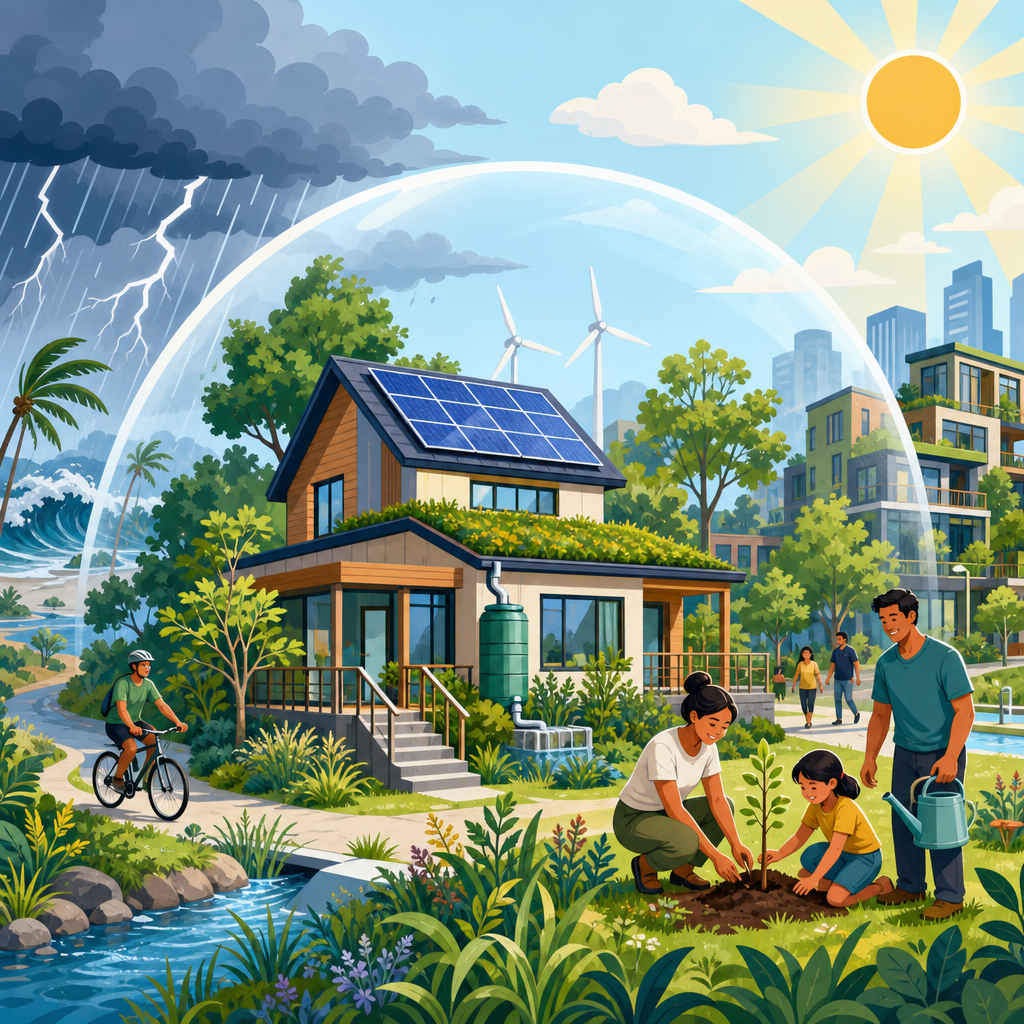
Climate-resilient housing belongs in every sustainability plan because homes sit at the intersection of safety, energy use, public health, infrastructure, and long-term economic stability. In practice, climate-resilient housing means dwellings designed, built, retrofitted, and managed to withstand climate hazards such as heat waves, flooding, wildfire smoke, stronger storms, drought, and grid disruptions while remaining affordable and livable. Sustainability plans often emphasize emissions, transit, waste, and green space, yet housing is where climate risk becomes personal: a family overheats during a blackout, mold spreads after repeated flooding, or utility bills spike because an inefficient building cannot buffer extreme temperatures. I have seen municipalities make strong climate commitments while treating housing adaptation as a side issue, and that gap quickly becomes expensive. When homes fail, hospitals, schools, employers, insurers, and public budgets all absorb the shock. Integrating climate-resilient housing early creates more durable neighborhoods, lowers lifecycle costs, reduces displacement, and protects vulnerable residents first.
The case is stronger now because climate risks are no longer abstract. The Intergovernmental Panel on Climate Change has documented rising extremes across regions, while urban planners, builders, and insurers are adjusting standards in response to measurable losses. Heat already kills more people in many countries than other weather hazards, and flood damage remains one of the most common and costly forms of disaster loss. Housing quality determines who suffers most. A well-insulated apartment with external shading and backup ventilation performs very differently from an older top-floor unit with poor air sealing and no passive cooling. Likewise, a raised structure with proper drainage, flood-resistant materials, and protected electrical systems recovers faster than a building designed only for historical weather patterns. For cities pursuing sustainable urban development, resilient housing is not a niche add-on. It is a foundational strategy that connects mitigation, adaptation, equity, and fiscal responsibility in a single, tangible policy area.
Climate-Resilient Housing Defines Practical Sustainability
A sustainability plan should answer a basic question: can people live safely and affordably in a changing climate without driving higher emissions or resource use? Climate-resilient housing is the most direct way to answer yes. At the building scale, resilience includes passive survivability, the capacity of a home to maintain habitable indoor conditions during power outages or service interruptions. This depends on insulation, air sealing, high-performance windows, reflective or vegetated roofs where appropriate, moisture control, durable materials, and building orientation. It also includes hazard-specific measures such as elevating structures in flood-prone areas, using ember-resistant vents in wildfire zones, or anchoring roofs and openings for wind loads in hurricane regions. These are not speculative features; they are established techniques in building science and disaster risk reduction.
Resilience also extends beyond the structure itself. Housing sits within drainage networks, power systems, transportation corridors, water supplies, and emergency services. A net-zero apartment building located in a flood basin with one access road is not truly sustainable. Conversely, modest multifamily housing near transit, built above expected flood levels, connected to district cooling or efficient heat pumps, and supported by tree canopy and permeable streets, delivers multiple public benefits at once. This is why climate-resilient housing should anchor land-use planning, capital budgets, zoning reforms, and social policy. It aligns private investment with public resilience goals. In work with development teams, the strongest projects were never those with the flashiest technology; they were the ones that paired simple passive design decisions with realistic maintenance plans, emergency preparedness, and neighborhood-scale infrastructure upgrades.
Why Housing Is the Front Line of Climate Risk
Homes are where climate hazards become health emergencies, financial losses, and displacement. During extreme heat, indoor temperatures in poorly insulated homes can exceed outdoor temperatures overnight, especially in upper stories and dense urban areas with strong heat-island effects. Older adults, infants, outdoor workers returning to hot apartments, and people with cardiovascular or respiratory conditions face heightened risk. During floods, damage often spreads beyond visible water. Wet gypsum board, trapped moisture in insulation, contaminated ductwork, and compromised electrical systems can make a home unsafe long after the water recedes. Wildfire events show a similar pattern: even where structures do not burn, smoke infiltration can make homes unhealthy, especially for residents with asthma. Climate-resilient housing reduces these cascading harms by keeping buildings habitable longer and recoverable faster.
There is also a clear economic reason to prioritize resilience in sustainability planning. Disaster recovery is usually more expensive than pre-disaster mitigation. FEMA, the National Institute of Building Sciences, and many insurers have repeatedly shown that upfront resilience investments can reduce future losses substantially, though returns vary by hazard and location. The building sector also faces tightening insurance markets in high-risk regions, which affects mortgage access, rent stability, and municipal tax bases. When repeated climate damage makes housing unaffordable or uninsurable, communities can lose residents and employers. Resilient design helps preserve property value and social continuity. Importantly, this is not an argument for hardening every home in place regardless of risk. In some locations, especially repetitive loss flood zones or unstable coastlines, managed retreat or redevelopment may be the safer and more fiscally honest path. Sustainability plans should acknowledge that nuance rather than promising universal permanence.
Core Design Strategies That Work Across Hazards
The most effective climate-resilient housing combines passive performance with targeted protective systems. Passive measures are valuable because they continue working when power fails or equipment breaks. Good insulation, airtight construction, thermal mass where suitable, and external shading can cut heat gain and reduce winter losses. Operable windows designed for secure night flushing can improve comfort in climates with cooler evenings. Cool roofs lower roof surface temperatures, while rain screens and capillary breaks help walls dry after moisture exposure. In flood-prone areas, elevating critical equipment such as electrical panels, boilers, and water heaters often prevents catastrophic repair costs. In wildfire regions, Class A roofs, noncombustible cladding details, ember-resistant vents, and defensible space are essential. In storm zones, continuous load paths, impact-rated openings, and roof tie-downs improve wind resilience. These measures are strongest when guided by local hazard maps and updated codes rather than generic checklists.
Mechanical systems still matter, but they should support, not replace, passive design. High-efficiency heat pumps provide cleaner heating and cooling, yet they perform best in homes with strong envelopes. Balanced ventilation with filtration can protect indoor air quality during smoke events and humid conditions. Backup power may be appropriate for medically vulnerable households or multifamily buildings serving large populations, but batteries and generators should be sized around critical loads, not unrealistic whole-building expectations. Water resilience also deserves attention. Low-flow fixtures, leak detection, rainwater strategies where permitted, drought-tolerant landscaping, and efficient irrigation reduce strain during shortages. The practical planning lens is simple: first reduce exposure, then improve building tolerance, then protect critical systems, then prepare operations and recovery plans. That order consistently delivers better value than adding technology to fundamentally weak buildings.
| Climate hazard | Housing vulnerability | Resilient response | Main benefit |
|---|---|---|---|
| Extreme heat | Poor insulation, solar gain, weak ventilation | External shading, cool roof, airtight envelope, heat pump, filtered ventilation | Lower indoor heat stress and energy demand |
| Flooding | Low floor elevation, absorbent materials, exposed utilities | Elevation, flood-resistant materials, backflow valves, raised equipment | Faster recovery and lower repair costs |
| Wildfire smoke and embers | Air leakage, combustible details, vulnerable vents | Filtered ventilation, sealed envelope, ember-resistant vents, defensible space | Better indoor air quality and reduced ignition risk |
| Storms and high winds | Weak roof connections, fragile openings | Continuous load paths, roof tie-downs, impact-rated windows or shutters | Less structural damage and safer sheltering |
Equity, Affordability, and Public Health Cannot Be Separated
Climate-resilient housing matters most where residents have the fewest resources to adapt on their own. Low-income households, renters, informal settlers, elderly residents, and people with disabilities often live in buildings with deferred maintenance, inefficient systems, and high exposure to pollution or flood risk. They also spend a larger share of income on energy and transportation, leaving less room to recover from disasters. In many cities, historic disinvestment and discriminatory land-use decisions concentrated vulnerable populations in hotter neighborhoods with fewer trees or in low-lying areas near industrial uses. A sustainability plan that ignores housing resilience can unintentionally widen these inequalities. Green upgrades in already secure neighborhoods may improve metrics while leaving frontline communities exposed.
The better approach is targeted resilience with affordability protections. That means prioritizing weatherization, cooling access, moisture remediation, and healthy materials in subsidized housing and naturally occurring affordable housing. It means pairing retrofit grants or low-interest loans with anti-displacement measures, rent stabilization tools where legal, and tenant protections during rehabilitation. It also means setting minimum habitability standards for heat, ventilation, and mold prevention, not just winter heating. Public health evidence strongly supports this integration. Chronic dampness increases respiratory illness, extreme indoor heat raises emergency visits, and smoke infiltration worsens cardiovascular outcomes. I have seen small interventions make outsized differences: exterior shading on west-facing facades, corridor pressurization improvements in older apartment buildings, and simple attic air sealing that made top-floor units dramatically more tolerable during summer peaks. Resilience is most credible when residents can feel the benefit immediately in comfort, bills, and health.
How Cities Can Embed Resilient Housing Into Sustainability Plans
For local governments, the first step is to treat housing resilience as core infrastructure policy rather than a standalone building issue. Comprehensive plans, climate action plans, hazard mitigation plans, housing elements, and capital improvement programs should use shared risk data and consistent priorities. Cities can start with parcel-level exposure maps, building age data, tenure patterns, energy burden analysis, and public health indicators to identify where interventions will matter most. From there, policy tools become clearer: update zoning to allow safer infill in lower-risk areas, encourage multifamily housing near transit and cooling resources, reform parking minimums that consume land needed for stormwater management, and tighten performance standards for municipal-funded housing. Building codes should align with current hazards, and stretch codes or green building standards can raise performance where markets allow.
Funding is equally important. Resilient housing can be supported through weatherization programs, green banks, resilience bonds, tax credits, stormwater fees, utility efficiency incentives, and federal or state grants. Public housing authorities and affordable housing developers often need braided finance because resilience measures span energy, health, and disaster categories. Measurement should focus on outcomes, not only installations. Track peak indoor temperatures, post-flood recovery time, insurance claims, utility burden, resident health complaints, and displacement after events. Strong plans also define maintenance responsibilities. A beautifully designed bioswale fails if no one clears sediment, and high-performance ventilation fails if filters are not replaced. Resilience succeeds when governance is as practical as design. Cities that institutionalize cross-department coordination usually outperform cities that rely on one climate office to influence housing indirectly.
The Long-Term Payoff for Communities and Markets
When climate-resilient housing becomes standard practice, the benefits compound over decades. Residents gain safer indoor conditions, lower operating costs, and more reliable shelter during disruptions. Governments reduce emergency spending, preserve the tax base, and improve confidence in public planning. Health systems face fewer preventable heat and respiratory cases. Utilities benefit when efficient buildings flatten demand peaks. Lenders and insurers gain more predictable risk profiles, which matters increasingly in areas where climate exposure is reshaping premiums and coverage. Developers also benefit from clearer expectations. In my experience, the market responds better to consistent resilience requirements than to uncertain, post-disaster rule changes. Predictability lowers friction, helps contractors build skills, and supports supply chains for better materials and systems.
The central lesson is straightforward: a sustainability plan that does not include climate-resilient housing is incomplete. Housing is where adaptation becomes visible, measurable, and socially meaningful. It is also where mitigation and resilience can reinforce each other instead of competing. Better envelopes cut emissions and protect residents during outages. Shade trees cool neighborhoods and improve stormwater performance. Smarter siting reduces hazard exposure and transportation burdens together. The next step for any city, institution, or developer is to audit housing risk, prioritize the most exposed residents, and translate climate goals into building standards, financing tools, and neighborhood investments. Make housing resilience a permanent part of sustainable urban development planning, and the broader sustainability agenda becomes more credible, more equitable, and far more durable.
Frequently Asked Questions
What is climate-resilient housing, and how is it different from simply building “green” homes?
Climate-resilient housing is housing that is planned, designed, built, retrofitted, and managed to keep people safe and healthy during climate-related stresses and shocks. That includes extreme heat, flooding, wildfire smoke, stronger storms, drought, poor air quality, and power outages. A climate-resilient home is not just efficient under normal conditions; it is able to continue functioning when conditions become dangerous or unpredictable. That means it can better maintain safe indoor temperatures, reduce moisture and mold risk, protect indoor air quality, manage water effectively, and support occupant safety even when infrastructure systems are strained.
By contrast, a home can be “green” in the traditional sense by reducing energy or water use without necessarily being prepared for climate hazards. For example, a highly efficient building still may not be able to handle prolonged heat waves, backup power needs, flood exposure, or smoke intrusion. In other words, sustainability and resilience overlap, but they are not identical. Truly forward-looking housing policy combines both. It lowers emissions and resource use while also reducing vulnerability to climate impacts that are already happening.
This distinction matters because homes sit at the center of daily life. They affect health, utility costs, emergency preparedness, neighborhood stability, and long-term public investment. When sustainability plans focus only on carbon reduction and ignore housing resilience, they miss a critical opportunity to protect residents and reduce future losses. Climate-resilient housing brings these priorities together by making homes safer, more efficient, more durable, and more livable over time.
Why should climate-resilient housing be included in every sustainability plan?
Climate-resilient housing should be part of every sustainability plan because housing is where climate risk becomes personal and immediate. Most people experience climate impacts first and most intensely at home: overheating during heat waves, respiratory distress from smoke infiltration, water damage from flooding, loss of refrigeration and medical equipment during outages, or displacement after storms. A sustainability plan that does not address housing resilience leaves a major gap between high-level environmental goals and real-world human outcomes.
Including resilient housing also improves the effectiveness of broader sustainability strategies. Homes are deeply connected to energy systems, water systems, transportation access, public health, and local economic stability. When housing is built or upgraded to handle climate stress, communities are less likely to face expensive emergency response, avoidable hospital visits, repeated rebuilding costs, and prolonged displacement. That reduces pressure on public budgets and critical infrastructure while helping residents remain safely housed.
There is also a strong equity case. Climate hazards do not affect everyone equally. Low-income households, renters, older adults, people with disabilities, and communities that have experienced historic underinvestment often live in buildings that are less able to withstand heat, moisture, smoke, and grid disruptions. Making climate-resilient housing a standard part of sustainability planning helps ensure that adaptation is not treated as a luxury feature available only to higher-income homeowners. It becomes a public-interest priority tied to fairness, health, and long-term community resilience.
In practical terms, integrating housing resilience into sustainability planning encourages better building codes, smarter retrofits, healthier indoor environments, and more durable infrastructure coordination. It shifts the conversation from reacting after disasters to preparing before they happen. That is exactly what strong sustainability planning is supposed to do: reduce harm, improve quality of life, and create systems that can endure change.
What features make a home climate-resilient?
A climate-resilient home combines good design, durable materials, efficient systems, and hazard-specific protections. The exact features depend on local climate risks, but several core strategies apply across many regions. For heat resilience, homes need strong insulation, high-performance windows, exterior shading, reflective or cool roofs, ventilation strategies, and efficient electric heat pumps that can provide both heating and cooling. These measures help keep indoor temperatures safer during heat waves while lowering routine energy use.
For flood resilience, important features may include elevated mechanical systems, water-resistant materials in vulnerable areas, proper site drainage, backflow prevention, flood barriers where appropriate, and building placement that accounts for current and future flood risk. In wildfire-prone areas, climate-resilient homes may include ember-resistant vents, noncombustible roofing and siding, defensible space landscaping, and enhanced air sealing and filtration to limit smoke intrusion. In storm-prone regions, resilience can involve wind-resistant roof assemblies, impact-resistant windows or shutters, reinforced connections, and backup power strategies for essential systems.
Indoor environmental quality is another critical component. Resilient homes should be able to maintain healthy indoor air during smoke events or pollution spikes through high-quality filtration, controlled ventilation, and tight building envelopes. Moisture control is equally important, since flooding, humidity, and temperature swings can lead to mold growth and structural damage. Water efficiency and drought preparedness may include low-flow fixtures, drought-tolerant landscaping, rainwater strategies where permitted, and plumbing systems designed to reduce waste and improve reliability.
One often overlooked feature of resilience is passive survivability. This refers to a home’s ability to remain tolerable and safe for a period of time even if power or other services fail. A well-insulated, tightly sealed, properly shaded home can maintain more stable indoor conditions during outages than a poorly performing one. When paired with solar power, battery storage, or other backup systems, that resilience becomes even stronger. The best climate-resilient homes do not rely on a single technology. They use layered strategies so that if one system is stressed, the home still protects the people inside it.
Is climate-resilient housing affordable, or does it make housing more expensive?
Climate-resilient housing can involve upfront costs, but treating it as too expensive is often a short-term view that ignores much larger long-term savings and avoided losses. The true cost of housing is not just the purchase price or construction budget. It also includes utility bills, maintenance, insurance, health impacts, repair costs after disasters, and the financial consequences of displacement. Resilient design and retrofit measures can reduce many of these ongoing costs by lowering energy demand, minimizing damage, and making homes safer to occupy during extreme events.
Some resilience measures are relatively low-cost when incorporated early in planning or during scheduled upgrades. Better insulation, air sealing, shading, drainage improvements, filtration, moisture control, and strategic material choices can be highly cost-effective, especially when bundled with efficiency improvements. The cost problem often becomes worse when resilience is ignored until after repeated damage or a major disaster. Retrofitting in crisis conditions, replacing lost belongings, or relocating families is almost always more expensive than preparing ahead of time.
Affordability also depends on policy design. If governments and institutions want climate-resilient housing to be broadly achievable, they need financing tools, incentives, grants, code support, insurance reform, and targeted assistance for lower-income households, renters, and affordable housing providers. Without that support, resilience investments can become unevenly distributed. With it, resilient housing can be scaled in a way that lowers lifetime costs and reduces the burden on the people least able to absorb climate-related losses.
It is also important to remember that affordability and resilience are not competing goals. In many cases, they reinforce each other. A home that stays cooler with less energy, has fewer moisture problems, better air quality, and lower damage risk is usually more affordable to live in over time. The strongest sustainability plans recognize this and frame climate-resilient housing as a cost-management and risk-reduction strategy, not just a construction upgrade.
How can cities, developers, and homeowners start incorporating climate-resilient housing into sustainability strategies?
The starting point is to connect housing decisions to local climate risk data. Cities and organizations should identify the hazards most likely to affect residents, such as extreme heat, inland flooding, coastal flooding, wildfire smoke, drought, or storm-related outages, and then map where housing vulnerability is highest. That allows sustainability strategies to move beyond general goals and focus on the buildings and populations facing the greatest risks. The most effective plans prioritize neighborhoods with older housing stock, high energy burdens, poor air quality, limited tree cover, or a history of underinvestment.
From there, local governments can update building codes, zoning approaches, capital plans, and housing programs to support resilience directly. That may include requiring or incentivizing cool roofs, flood-resistant construction, better ventilation and filtration, efficient electric heating and cooling, shaded site design, backup power for critical multifamily systems, and stronger performance standards for affordable housing. Public funding for retrofits can be aligned with resilience goals so that weatherization, electrification, and hazard mitigation happen together rather than in separate silos.
Developers can incorporate resilience from the earliest design stages by considering site selection, orientation, material durability, stormwater management, passive cooling, and envelope performance. They can also design for operational resilience by making sure buildings are easier to maintain, better able to preserve indoor health, and less dependent on fragile single-point systems. For multifamily housing in particular, this can include common-area cooling strategies, robust ventilation, emergency communication systems, and protection for elevators, pumps, and electrical infrastructure.
Homeowners can begin with practical assessments and phased improvements. A home energy audit, resilience assessment, or hazard inspection can help identify priority upgrades. Many households start with air sealing, insulation, filtration improvements, drainage fixes, roof upgrades, heat