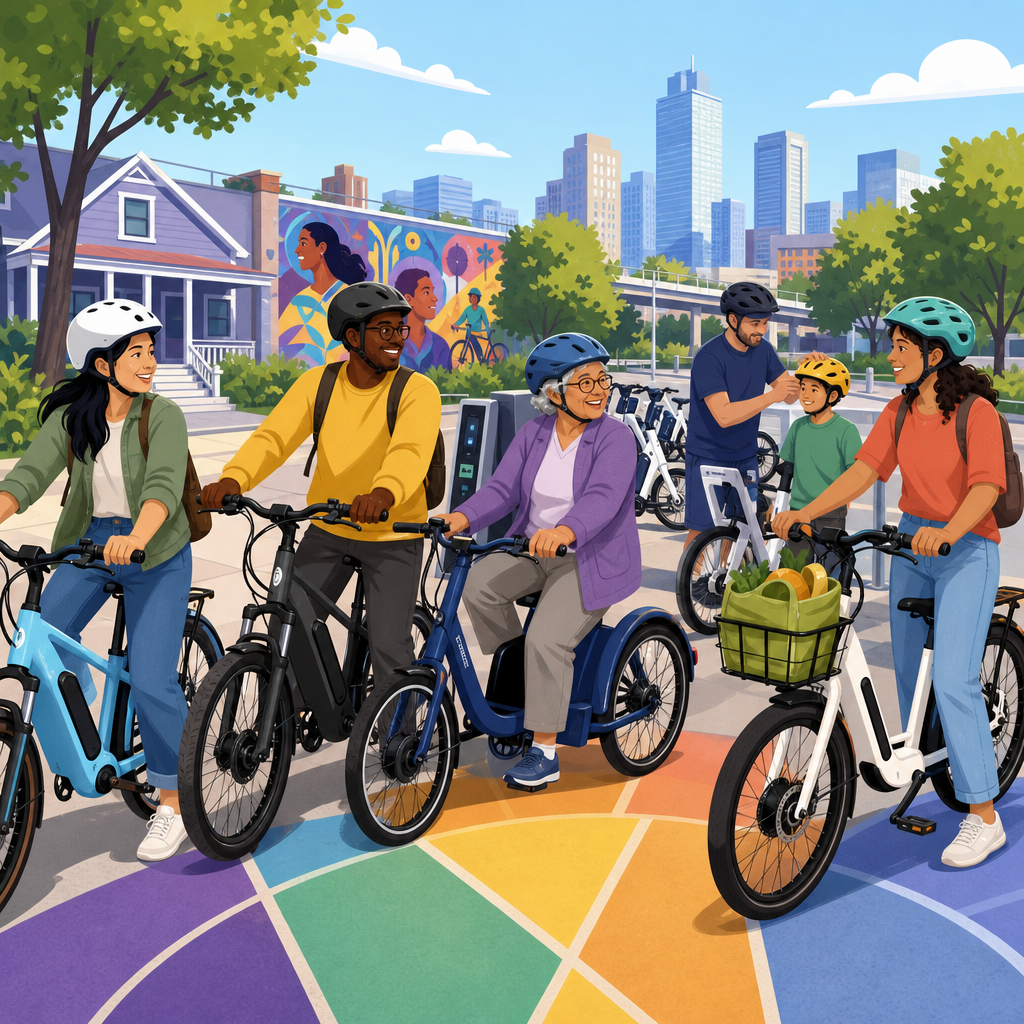
Equity is the difference between an e-bike program that looks successful on paper and one that measurably expands mobility, cuts transportation costs, and improves access for people who have historically been left out of clean transportation investments. An equitable e-bike program is not simply a rebate with a green label. It is a public, employer, utility, school, or nonprofit initiative designed so low-income households, renters, older adults, delivery workers, people with disabilities, and residents of underserved neighborhoods can realistically obtain, use, store, charge, and maintain an electric bicycle. In practice, that means eligibility rules, funding design, outreach, retailer networks, financing terms, safety training, theft prevention, and infrastructure all have to work together. I have helped evaluate mobility incentive programs, and the pattern is consistent: when agencies focus only on the point of sale, participation skews toward people who already ride, already have credit access, and already live near bike-friendly streets. When agencies build for real-world barriers, adoption broadens. This matters because transportation is the second-largest household expense for many families, and short car trips account for a large share of urban emissions, congestion, and local air pollution.
E-bikes are especially important in sustainable urban development because they extend the practical range of cycling, flatten hills, reduce physical strain, and make replacing car trips more realistic for errands, commuting, and caregiving trips. Studies from the National Renewable Energy Laboratory, the Mineta Transportation Institute, and European city programs have shown that e-bikes increase trip frequency and can shift travel from cars to bicycles more effectively than conventional bikes alone, particularly for longer distances and mixed topography. Yet benefits do not distribute themselves automatically. If a city offers a first-come, first-served voucher, requires online applications in English only, reimburses purchases months later, and approves only premium retailers in affluent districts, the program will underserve the people it claims to prioritize. Equity in this context means fair access, fair outcomes, and fair process. It asks who can apply, who receives assistance, who can actually redeem it, whether the bike remains usable after purchase, and whether the program reduces disparities in mobility rather than reproducing them.
Equity Starts With Clear Goals and Measurable Outcomes
The first feature of an equitable e-bike program is a precise definition of success. If the only metric is total bikes distributed, agencies will naturally optimize for speed and volume. A fairer approach sets outcome targets tied to mobility and inclusion: percentage of incentives awarded to income-qualified households, redemption rates by ZIP code, replacement of car trips, commute access to jobs, participation by public housing residents, and retention after one year. In my experience, these measures change program design immediately. For example, a city that wants to reach transit-poor neighborhoods may need neighborhood-based enrollment events and a retailer network near bus corridors, not just a slick website. A utility program focused on emissions reduction should measure vehicle miles traveled displaced, but it should also track whether savings accrue to households with the highest transportation burden. Clear goals also prevent mission drift. If a program intends to support essential workers and families, it should say so in guidelines, budgets, vendor agreements, and evaluation plans.
Good metrics combine access, use, and outcomes. Access includes application completion rates, approval times, language support, and retailer proximity. Use includes trip frequency, charging reliability, safety incidents, and maintenance visits. Outcomes include money saved, time saved, job access, healthcare access, and reductions in missed appointments. Agencies should disaggregate all of this by income, race, age, geography, disability status where appropriate, and housing tenure, while protecting privacy. Equity cannot be inferred from citywide averages. A program may report high uptake overall while leaving entire neighborhoods behind. The strongest programs publish dashboards, explain tradeoffs, and adjust rules based on evidence rather than anecdotes.
Program Design Must Remove Upfront Cost Barriers
Upfront price is the biggest barrier for most households. A quality commuter e-bike often costs $1,500 to $3,500, and cargo or adaptive models can cost far more. For a family living paycheck to paycheck, a reimbursement model is effectively no incentive at all because it requires cash first and reimbursement later. Equitable programs therefore prioritize instant point-of-sale discounts, pre-approval certificates usable like cash, or direct-to-retailer payments. This is not an administrative detail; it determines who can participate. California’s evolving e-bike incentive efforts, local rebate pilots, and utility-backed clean mobility programs have repeatedly surfaced the same lesson: reducing friction at the moment of purchase matters more than broad marketing promises.
Income targeting is also essential, but it must be implemented carefully. A tiered incentive structure usually works best. Higher subsidies should go to lower-income applicants, residents of disadvantaged communities, and buyers of cargo or adaptive bikes when those models replace car trips or serve accessibility needs. Programs should allow multiple forms of income verification, including participation in SNAP, Medicaid, housing assistance, or school meal programs. Requiring tax returns alone excludes informal workers, recent immigrants, students, and others with complicated documentation. Fair design also means covering accessories that make the bike usable: helmets, locks, lights, child seats, panniers, and basic rain gear. I have seen participants receive a voucher large enough to buy the bike but not the lock, then lose the bike to theft within weeks. A partial solution is not equitable if it leaves obvious failure points untreated.
Application Processes Need to Be Simple, Multilingual, and Offline-Friendly
Many programs unintentionally screen out the exact residents they want to serve through cumbersome application design. An equitable e-bike program keeps forms short, uses plain language, and supports mobile devices because many low-income applicants rely on phones rather than desktop computers. It offers materials in the languages commonly spoken in the service area and provides phone, text, and in-person help. It also plans for people with limited digital literacy, limited broadband access, or irregular work schedules. Libraries, schools, community development corporations, tenant associations, workforce centers, and clinics can serve as trusted enrollment partners. That community-based distribution model consistently outperforms mass online launches for reaching underrepresented groups.
Lottery systems are often fairer than first-come, first-served releases, especially when demand is high. First-come systems reward people with fast internet, flexible schedules, and familiarity with grant applications. A weighted lottery, by contrast, can prioritize lower-income applicants, high-burden neighborhoods, and people with demonstrated transportation need. Agencies should publish the selection method in advance and explain waitlist rules clearly. Transparency matters because public trust can collapse if residents suspect incentives are going to insiders or early adopters. Accessibility standards matter too. Forms should be screen-reader compatible, customer support should include relay options, and program materials should explain whether adaptive cycles qualify. Equity is not just about who gets selected; it is about whether the process treats applicants with dignity from the first click or first conversation.
Retail Access, Service Networks, and Product Fit Determine Real Usability
An e-bike voucher is only valuable if people can redeem it for a bike that fits their daily life and can be serviced locally. Programs should approve a diverse retailer network that includes neighborhood bike shops, worker-owned cooperatives, mobile mechanics, and community bike hubs, not just high-end stores in central business districts. Retail coverage should be mapped against target populations. If the nearest participating shop requires two bus transfers, redemption rates will drop. Vendor contracts should also set minimum standards for assembly, sizing, battery information, warranty disclosure, and customer education. I strongly recommend requiring bikes and batteries that meet recognized safety standards such as UL 2849 for e-bike electrical systems and UL 2271 for battery packs, because battery fire risk rises when low-quality equipment enters the market.
Product fit is another equity issue that agencies often underestimate. Residents may need step-through frames for easier mounting, long-tail cargo bikes for family trips, trikes for stability, or adaptive models for disability access. Delivery workers may need durable high-mileage drivetrains and larger battery capacity. Hills, weather, and trip distance also shape suitability. A weak entry-level e-bike sold into a hilly city may become an expensive disappointment. Programs should allow several classes and form factors while setting clear safety and quality criteria. They should also train retailers to discuss intended use honestly rather than pushing the cheapest or highest-margin model. Equitable design respects the fact that transportation is practical, not symbolic. The right bike for a nurse with childcare duties is different from the right bike for a student on a flat campus.
| Program element | Inequitable approach | Equitable approach |
|---|---|---|
| Incentive delivery | Reimbursement after purchase | Instant discount or direct retailer payment |
| Application timing | First-come online release | Weighted lottery with community enrollment support |
| Retail network | Limited to premium central-city shops | Distributed network including neighborhood service providers |
| Eligible equipment | Bike only | Bike plus lock, helmet, lights, racks, child seat |
| Quality standards | No battery or electrical requirements | Recognized safety certifications and warranty minimums |
| Evaluation | Total vouchers issued | Access, redemption, use, savings, and disparity reduction |
Storage, Charging, and Theft Prevention Are Core Equity Issues
Safe storage and charging are decisive barriers, especially for apartment residents and lower-income households. A homeowner with a garage experiences e-bike ownership differently from a renter in a walk-up building with no elevator and no secure bike room. If a program ignores this, participation will skew toward households with private space. Equitable programs pair incentives with building-level improvements such as secure indoor parking, weather-protected racks, access-controlled bike rooms, and safe charging outlets. Cities can support this through zoning updates, multifamily retrofit grants, and design standards for affordable housing. Employers, campuses, and transit stations can contribute with secure lockers and monitored parking. These investments have spillover value beyond a single rebate cycle because they make bicycling viable for many users over time.
Theft prevention should be treated as a standard operating component, not an afterthought. At minimum, programs should include a high-quality lock, registration guidance, and education on secure locking practices. Better programs subsidize GPS trackers, insurance, or recovery partnerships with local police and community organizations. In neighborhoods where theft rates are high, community bike rooms and staffed parking can make the difference between sustained use and quick abandonment. Charging guidance is equally important. Participants need clear instructions on battery handling, storage temperature, charger compatibility, and replacement options. Fire departments and housing agencies increasingly pay attention to battery safety, and programs that specify certified equipment and user training reduce both risk and public backlash.
Training, Maintenance, and Community Trust Sustain Long-Term Impact
Buying a bike is the start of participation, not the finish line. Equitable programs invest in rider education, maintenance support, and trusted messengers so residents can use the bike confidently for years. Training should cover local traffic rules, route planning, battery care, theft prevention, and carrying children or cargo safely where relevant. New riders often need a short supervised ride to build confidence, especially older adults and people returning to cycling after many years. Community-based organizations are especially effective here because they understand neighborhood travel patterns and can provide culturally competent support. I have seen completion rates and post-purchase usage rise when agencies fund group classes, test rides, and follow-up check-ins rather than assuming the transaction alone creates mobility change.
Maintenance support is one of the strongest predictors of durable benefit. Brake pads wear, tires puncture, drivetrains stretch, and batteries degrade. A household that cannot afford a $120 repair may stop riding altogether. Programs should include a free tune-up period, service vouchers, or partnerships with local mechanics. Some of the best models train residents as bicycle technicians, creating workforce pathways while improving service access in underserved areas. Trust also depends on how agencies communicate. Residents respond to programs that acknowledge tradeoffs honestly, explain waiting periods, publish results, and adapt based on feedback. Sustainable urban development is not achieved by distributing devices alone. It is achieved when public investment lowers transportation burden, expands opportunity, and gives people reliable alternatives to car dependence. If your city or organization is building an e-bike program, start with barriers, measure outcomes that matter, and design every step so the people with the greatest need can actually benefit.
Frequently Asked Questions
1. What does equity mean in an e-bike program?
Equity in an e-bike program means designing the program so the people who face the biggest transportation barriers can actually benefit from it. That includes low-income households, renters, older adults, delivery workers, people with disabilities, and communities that have historically received fewer clean transportation investments. An equitable program does not assume everyone starts from the same place. Instead, it recognizes that income, housing type, language access, banking status, credit history, digital access, and physical ability all affect whether someone can participate.
In practice, equity means removing predictable barriers rather than simply offering a rebate and hoping it reaches the right people. A program may look successful on paper because it distributed a large number of incentives, but if those incentives mostly went to higher-income households who already had the time, storage space, internet access, and cash flow to buy an e-bike upfront, the mobility benefits are not being shared fairly. Equity focuses on outcomes, not just participation totals.
A truly equitable e-bike program is usually built around targeted eligibility, simple applications, culturally competent outreach, flexible payment structures, and support services such as maintenance education, safety training, and secure parking. It also considers whether the e-bikes offered are appropriate for real-world needs, such as carrying children, hauling groceries, or supporting delivery work. The goal is not only to increase e-bike adoption, but to expand reliable, affordable mobility for people who have been left out of previous transportation solutions.
2. Why is a standard rebate alone usually not enough to make an e-bike program equitable?
A standard rebate often fails on equity because it assumes participants can pay the full purchase price first and wait to be reimbursed later. That structure automatically excludes many households living paycheck to paycheck. Even a generous rebate may be out of reach if someone has to produce $1,500, $2,500, or more upfront, especially when they are already managing rent, food, childcare, and utility costs. If the program requires a credit card, online portal, tax documentation, or lengthy approval process, those barriers can further narrow who actually benefits.
Another issue is that a basic rebate does not address the broader conditions required to use an e-bike successfully. Someone may qualify for an incentive but still lack secure storage, access to repairs, confidence riding in traffic, or a nearby participating bike shop. Renters may worry about theft. Older adults may want a test ride and hands-on instruction before committing. Delivery workers may need a sturdier cargo option and fast turnaround for maintenance. Without these supports, a rebate can become a transaction rather than a mobility solution.
Equitable programs usually move beyond reimbursement and use point-of-sale discounts, income-tiered incentives, zero-interest financing, leasing options, community-based enrollment, and technical assistance. They may partner with trusted organizations, employers, schools, housing providers, or utilities to reach people directly and make participation realistic. The most effective programs treat affordability, usability, and long-term ownership as connected issues. That is why equity is not just about lowering the sticker price. It is about making the full program workable for the people it is intended to serve.
3. Which features are most important in an equitable e-bike program?
The strongest equitable e-bike programs combine financial support with practical design choices. First, they target benefits to people with the greatest mobility and cost burdens. That often means prioritizing income-qualified applicants, residents of underserved neighborhoods, essential workers, students, or households with limited access to a car or reliable transit. Tiered incentive levels can help ensure that those with the lowest incomes receive the deepest support.
Second, they reduce administrative friction. Applications should be short, mobile-friendly, available in multiple languages, and accessible to people with disabilities. Programs should allow more than one way to verify eligibility and should not rely exclusively on tax returns or formal employment documents. In-person enrollment options, phone support, and assistance through community partners can make a major difference for applicants who are less comfortable with digital systems or who need translation help.
Third, equitable programs include the right equipment and support services. That may involve offering cargo e-bikes, adaptive e-bikes, step-through models, family-friendly accessories, helmets, locks, lights, child seats, and maintenance packages. For many participants, these are not add-ons; they are essential for using the bike safely and consistently. Training, route planning, and riding education can also improve confidence and retention, especially for new riders.
Finally, equitable programs plan for long-term success. They think about repair networks, replacement batteries, secure parking, theft prevention, and connections to bike lanes or low-stress routes. A program is far more equitable when it helps participants keep riding six months or a year later, not just when it counts a bike as distributed. The best programs are built around the full rider experience from application to daily use.
4. How can an e-bike program serve people with different mobility needs, living situations, and work patterns?
An equitable e-bike program recognizes that there is no single “typical” rider. A parent taking children to school, a renter in a small apartment, a warehouse worker commuting early in the morning, an older adult replacing short car trips, and a delivery worker depending on the bike for income all need different things from the same program. Serving these groups well requires flexibility in both equipment and program rules.
For example, renters may need portable charging options, stronger locks, or partnerships that expand access to secure bike parking. Older adults may benefit from step-through frames, local test-ride events, and patient one-on-one orientation. People with disabilities may need adaptive cycles or customized fitting support. Workers with irregular schedules may need evening or weekend enrollment hours, while delivery workers may need heavy-duty models, larger batteries, and faster access to repairs so downtime does not cut into earnings.
Programs should also account for geography and infrastructure. Someone living in a transit-rich area may use an e-bike as a first-and-last-mile tool, while someone in a more spread-out neighborhood may need a longer-range bike that can replace many car trips outright. If the program only offers one bike type or one purchasing channel, it may miss the needs of the very people it aims to include. Flexible equipment choices, multiple vendor options, and partnerships with community organizations can help tailor support to real use cases.
The key is to start with people’s transportation realities rather than assuming all participants want the same product. Programs that listen to residents, pilot different options, and adjust based on feedback are much more likely to deliver equitable results. When the program fits daily life, the bike becomes a durable transportation tool instead of a short-lived benefit.
5. How should success be measured in an equitable e-bike program?
Success should be measured by real mobility outcomes, not just by the number of bikes distributed or rebate dollars awarded. A program can only claim to be equitable if it can show that priority populations were reached and that participants experienced meaningful benefits. Those benefits may include lower transportation costs, more reliable access to work or school, reduced dependence on a car, shorter or easier commutes, improved access to groceries and services, and greater confidence using active transportation.
Good measurement also looks at who participated and who did not. Programs should track demographic and geographic reach, income targeting, language access, approval rates, completion rates, and drop-off points in the application process. If eligible residents start applications but do not finish them, that can reveal hidden barriers. If some neighborhoods are underrepresented, outreach or vendor access may need to change. Equity measurement is strongest when it compares intent to actual results.
Longer-term indicators matter as well. Programs should evaluate whether participants are still riding after several months, whether maintenance needs are being met, whether theft or battery replacement is a problem, and whether the bikes are replacing car trips or expensive ride-hail trips. Surveys, rider interviews, and community partner feedback can provide insights that raw distribution numbers cannot. In many cases, the most useful evidence comes from understanding how an e-bike changed a person’s everyday transportation options and monthly budget.
Ultimately, an equitable e-bike program succeeds when it creates durable access, not one-time participation. If the program measurably expands mobility, reduces transportation costs, and improves access for people historically left out of clean transportation investments, it is doing more than appearing successful on paper. It is delivering the kind of transportation equity that public and community-serving programs are supposed to achieve.