Urban transportation shapes how cities grow, how businesses compete, and how residents access opportunity. In practical terms, urban transportation includes the roads, rail lines, buses, bike networks, sidewalks, ports, and digital systems that move people and goods inside metropolitan areas. Economic development refers to the expansion of jobs, income, productivity, property value, and commercial activity over time. After working on city growth and mobility content for years, I have seen a consistent pattern: when transportation systems become more reliable, affordable, and connected, local economies become more resilient and inclusive. When they fail, congestion, isolation, and uneven growth follow quickly.
This relationship matters because cities now concentrate most economic output. In many countries, metropolitan regions produce the majority of GDP, host the largest labor markets, and generate the most innovation. Transportation is the connective tissue that allows those advantages to function. Employers need access to workers. Workers need access to jobs, schools, and services. Retailers need customers. Manufacturers, hospitals, restaurants, and construction firms all depend on dependable deliveries. Even digital industries rely on physical access, because knowledge workers still travel to offices, airports, universities, and client sites. A city can have strong universities and ambitious developers, but if people and freight cannot move efficiently, growth slows.
Urban transportation and economic development are linked through several measurable channels. First, transport reduces travel time and expands the effective labor market. A worker who can reach more jobs in forty minutes instead of seventy has more options, and employers can recruit from a deeper talent pool. Second, transportation lowers transaction costs for firms. Predictable travel times improve scheduling, inventory management, and customer service. Third, infrastructure changes land use. Transit stations, arterial roads, and logistics corridors influence where housing, offices, warehouses, and shops are built. Fourth, transportation affects social equity, which has economic consequences. If lower-income neighborhoods lack affordable mobility, cities leave talent underused and consumer demand suppressed.
Good urban mobility is not simply a matter of building more roads. Modern city transportation policy balances accessibility, speed, safety, emissions, operating cost, and long-term land value. Accessibility is the key term many planners now prefer, because the real goal is not movement for its own sake but reaching destinations efficiently. This distinction explains why a walkable mixed-use district with strong bus service can outperform a car-dependent area in economic productivity per acre. It also explains why transport investments must be evaluated using more than traffic counts. Measures such as job access, freight reliability, transit ridership, housing production near stations, and crash reduction tell a fuller story.
The economic stakes are high. Congestion wastes labor hours and fuel, unreliable transit limits employment, and unsafe streets raise public health and insurance costs. At the same time, strategic investment can unlock large returns. Bus rapid transit can connect workers to industrial zones faster than fragmented local service. Metro expansions can raise commercial rents and office demand around stations. Protected bike lanes can increase retail foot traffic on neighborhood corridors. Port and rail improvements can strengthen regional export capacity. The core lesson is straightforward: transportation is not a support function operating in the background. It is a primary driver of urban economic performance, business formation, and quality of life.
How transportation infrastructure expands labor markets and productivity
The most direct economic effect of urban transportation is labor market expansion. When travel becomes faster and more predictable, employers gain access to more workers and workers gain access to more employers. Economists often describe this as agglomeration benefit: productivity rises when firms, talent, suppliers, and institutions are located close enough to interact efficiently. Transportation extends that closeness beyond simple geography. A metro line, commuter rail service, or high-frequency bus corridor can make neighborhoods functionally closer even if they are many miles apart.
In real cities, this shows up in hiring and wage data. Central business districts often command higher wages partly because they concentrate firms in finance, law, media, government, and technology, but those firms can only sustain growth if workers from multiple districts can reach them. I have reviewed transit-oriented employment centers where a new rail station changed commuting patterns within a year, allowing hospitals, universities, and office campuses to recruit from areas that were previously impractical for daily travel. Shorter and more reliable commutes also reduce absenteeism and turnover, two costs that employers often underestimate until transportation disruptions expose them.
Productivity gains do not come only from worker movement. Urban transportation supports business-to-business interaction, maintenance visits, client meetings, and service calls. A plumbing company, delivery platform, legal team, or home healthcare provider all depend on navigating the city efficiently. Time lost in congestion is not abstract; it becomes missed appointments, fewer jobs completed per shift, and lower revenue. This is why travel time reliability often matters more to businesses than top speed. A predictable thirty-minute trip is economically more useful than a trip that ranges from twenty to sixty minutes depending on the day.
Accessibility metrics help cities quantify this effect. Instead of asking whether traffic flows faster on one corridor, planners can ask how many jobs a resident can reach within forty-five minutes by transit, walking, cycling, or driving. That measure aligns closely with economic opportunity. It also reveals inequities hidden by broad averages. Two neighborhoods may be the same distance from a job center, yet one may have direct transit service while the other requires two bus transfers and an unsafe walk. The transportation network determines whether residents can realistically participate in the urban economy.
Transit-oriented development, land value, and private investment
Transportation infrastructure changes land economics. New stations, reliable bus corridors, and redesigned streets alter where developers build, where retailers lease space, and where households choose to live. This is the foundation of transit-oriented development, commonly called TOD. TOD combines compact housing, offices, shops, and public space around transit stops so that more trips can be made without long car journeys. When designed well, it increases ridership, reduces parking dependence, and creates stronger local markets.
Property markets respond quickly to accessibility. Areas near high-capacity transit often attract higher land values because businesses and residents place a premium on shorter travel times. This does not mean every station automatically becomes a success. Zoning, safety, school quality, public realm design, and market demand all matter. But in city after city, stations with good pedestrian access and supportive land-use policy have drawn apartment construction, office redevelopment, hotels, and neighborhood retail. Washington Metro corridors, London Overground districts, and transit nodes in cities such as Hong Kong and Copenhagen all demonstrate how transport and land use reinforce one another.
The mechanism is clear. Better transportation reduces generalized travel cost, which includes time, money, and uncertainty. As generalized cost falls, more households and firms are willing to locate in the area. That increased demand raises site values and can justify higher-density development. Local governments can then use value capture tools such as tax increment financing, special assessment districts, air rights, or joint development agreements to help fund infrastructure. These tools work best when agencies are realistic about market conditions and phase investments carefully rather than assuming immediate uplift everywhere.
There are tradeoffs. Rising land value can support tax revenue and revitalization, but it can also displace long-term residents and small businesses. I have seen station area plans praised for economic growth while overlooking rent pressure on older commercial corridors nearby. Strong economic development strategy therefore pairs transportation investment with inclusion policies such as affordable housing requirements, community land trusts, small business support, and anti-displacement funds. Growth is strongest when the people who rely on the network can continue living and working near it.
Freight, logistics, and the hidden economy of urban movement
Public discussion about urban transportation often centers on commuters, yet freight mobility is equally important to economic development. Every supermarket, construction site, pharmacy, restaurant, data center, and hospital depends on reliable urban logistics. Goods movement includes trucks on arterial roads, containers arriving through ports and rail yards, courier vans serving e-commerce, and last-mile deliveries to homes and storefronts. If passenger movement is the visible side of urban mobility, freight is the hidden operating system that keeps the city stocked and functioning.
Efficient freight networks lower costs across the local economy. Manufacturers need parts delivered on schedule. Grocers depend on cold-chain reliability. Construction companies require timed arrivals for concrete, steel, and equipment. When bottlenecks occur at bridges, terminals, or industrial access roads, costs rise quickly through wasted driver time, missed delivery windows, spoiled goods, and inventory buffers. Those costs are eventually passed to consumers. Cities that ignore freight often hurt the very economic sectors they hope to attract, especially advanced manufacturing, wholesale trade, and port-linked industries.
Good freight planning does not mean giving every street to trucks. It means designing the right corridors, curb policies, and delivery windows so goods can move without undermining safety and neighborhood quality. Off-peak delivery programs, designated loading zones, urban consolidation centers, and intelligent transportation systems all help. In dense commercial districts, managing curb space can produce immediate economic benefits. A block with clear loading access, transit priority, and organized pickup zones often performs better for merchants than a block clogged by double parking and delivery conflicts.
| Transportation investment | Primary economic effect | Typical urban example |
|---|---|---|
| Metro or light rail expansion | Raises job access and station area development potential | New mixed-use projects near a downtown-adjacent station |
| Bus rapid transit | Improves affordable mobility at lower capital cost | Workers reaching industrial districts faster from outer neighborhoods |
| Freight corridor upgrade | Reduces delivery delays and logistics costs | Port-linked roads with improved truck access and signal timing |
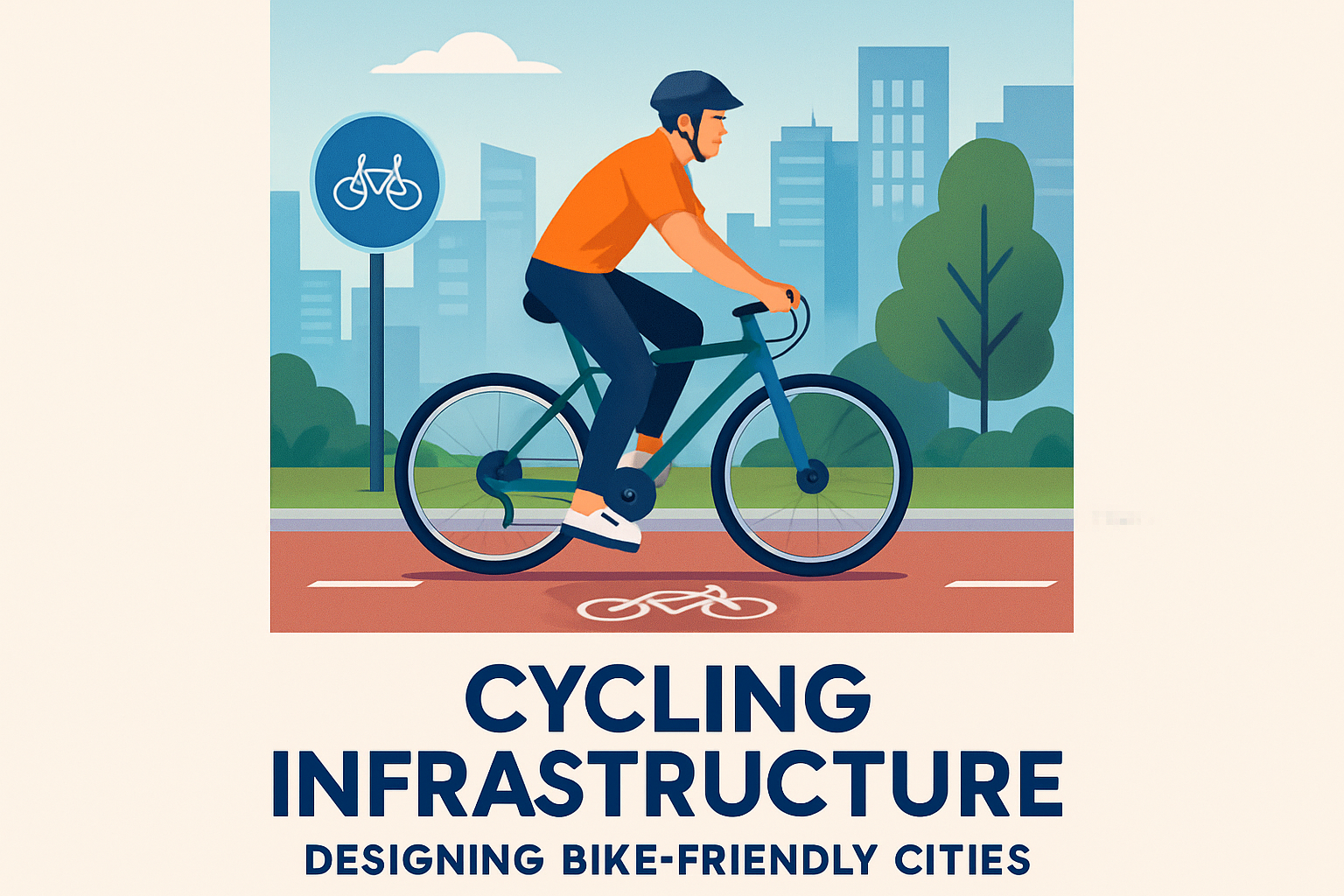
| Protected bike network | Increases local retail access and low-cost commuting | Main street businesses benefiting from higher footfall |
| Complete streets redesign | Improves safety, storefront visibility, and property appeal | Former high-speed arterial converted into a walkable mixed-use corridor |
Ports, airports, and rail terminals amplify these effects at a regional scale. A well-connected airport supports tourism, business travel, and high-value cargo. A modern port strengthens export industries and warehousing. Intermodal rail terminals can shift freight from long-haul trucking, reducing costs and emissions. But these assets only deliver full value when urban connectors work. A world-class port with poor road access or chronic congestion on surrounding links cannot perform at its potential. Economic development agencies and transportation departments need integrated planning, not separate agendas.
Equity, affordability, and inclusive economic growth
Urban transportation is an economic justice issue as much as an engineering one. If mobility is too expensive, too slow, or too unsafe for large parts of the population, the city wastes human capital. Lower-income households often spend a disproportionate share of income on transportation, especially in car-dependent metropolitan areas where owning a vehicle is effectively mandatory. Those costs include loan payments, fuel, insurance, maintenance, parking, and the opportunity cost of time spent in long commutes. Affordable and reliable transit can reduce that burden and free income for housing, food, education, and local spending.
Inclusive growth depends on connecting people to opportunity-rich areas. That means linking residential neighborhoods with job centers, colleges, hospitals, and childcare through networks that run frequently beyond traditional peak commute periods. Many workers in healthcare, hospitality, retail, warehousing, and public services travel early, late, or on weekends. I have seen agencies focus heavily on nine-to-five downtown demand while neglecting reverse commutes and crosstown trips that matter more for lower-wage workers. A transportation system that serves only conventional office patterns does not support the full urban economy.
Accessibility for disabled residents and older adults is also economically significant. Step-free stations, audible signals, curb ramps, and vehicles designed for universal access expand labor force participation and customer access. Safety has similar economic implications. High-injury streets deter walking, cycling, and transit use, while crashes impose medical costs, productivity losses, and long-term trauma. Complete Streets principles, Vision Zero strategies, and context-sensitive design are therefore not just public safety measures; they are economic development tools that make commercial districts more usable and more attractive.
Affordability and inclusion must be built into project evaluation. Cost-benefit analysis remains important, but agencies should also examine who benefits, who bears the burden, and whether a project widens or narrows access gaps. Equity mapping, fare policy analysis, and community engagement are essential here. The strongest transportation plans I have worked around are the ones that pair hard data with practical local knowledge from riders, freight operators, merchants, and residents. Economic development becomes durable when mobility gains reach people across the city rather than concentrating only in already prosperous districts.
Technology, sustainability, and the future of competitive cities
Technology is changing urban transportation, but the economic principle remains the same: cities thrive when mobility becomes more efficient, cleaner, and easier to use. Real-time passenger information, contactless payment, traffic signal optimization, demand management, and integrated journey planning all improve network performance without always requiring massive new construction. Agencies using GTFS data, automatic passenger counters, and digital twins can target service improvements with greater precision. Businesses benefit when workers and deliveries face less uncertainty, and residents benefit when multimodal trips become simpler.
Sustainability now sits at the center of economic competitiveness. Cities facing chronic congestion, poor air quality, and high transport emissions increasingly struggle to attract investment and talent. Younger workers and many employers evaluate quality of life, not just salaries and tax rates. A city with reliable transit, safe cycling routes, walkable districts, and cleaner fleets offers a stronger value proposition than one defined by traffic delays and expensive car dependence. Electrified buses, transit priority lanes, low-emission zones, and compact development patterns can reduce environmental damage while supporting growth.
Still, technology is not a substitute for good fundamentals. App-based mobility services can complement transit, but they cannot replace high-capacity corridors in dense cities. Autonomous vehicle promises remain uncertain, and induced demand continues to limit the long-term congestion benefits of road widening. The strongest urban transportation strategies combine proven tools: maintain existing assets, prioritize high-demand transit, price scarce road and curb space intelligently, improve freight access, and align transportation spending with land-use planning. That is how cities build durable economic advantage rather than chasing novelty.
Urban transportation and economic development succeed together when city leaders focus on access, reliability, and inclusion. Efficient mobility expands labor markets, supports freight, attracts private investment, and raises productivity across industries. Thoughtful transit-oriented development can increase land value and tax revenue, but it must be paired with anti-displacement measures to keep growth broad-based. Freight planning, safety improvements, and universal access are not side issues; they are central to a healthy urban economy. Technology can sharpen results, yet it works best when layered onto sound infrastructure and clear policy goals.
The main benefit of investing in urban transportation is not simply faster travel. It is a stronger city: one where businesses can hire, residents can reach opportunity, goods can move reliably, and neighborhoods can grow without losing their function or character. For policymakers, developers, and civic leaders, the practical next step is clear. Evaluate transportation projects by how well they improve access for people and freight, support equitable land use, and deliver measurable economic value over time. Cities that do this consistently create prosperity that is more competitive, more resilient, and more widely shared.
Frequently Asked Questions
How does urban transportation directly influence economic development in a city?
Urban transportation affects economic development by determining how efficiently people, goods, and services move through a metropolitan area. When transportation networks are reliable, connected, and affordable, businesses can reach customers more easily, workers can access a wider range of jobs, and suppliers can deliver materials on time. That efficiency lowers operating costs, improves productivity, and makes a city more attractive to investors. In contrast, congestion, unreliable transit, and poor infrastructure create delays, increase transportation expenses, and reduce the effective size of the labor market, which can hold back growth.
Transportation also shapes land use and investment patterns. Areas with strong transit access, well-maintained roads, safe sidewalks, and multimodal connections often attract offices, retail, housing, and mixed-use development. Over time, those patterns can increase property values, expand local tax bases, and encourage private sector investment. In practical terms, transportation is not just a support system for economic activity; it is one of the core frameworks that determines where growth happens, who benefits from it, and whether that growth is sustainable over the long term.
Why is public transit often considered so important for local business growth and workforce access?
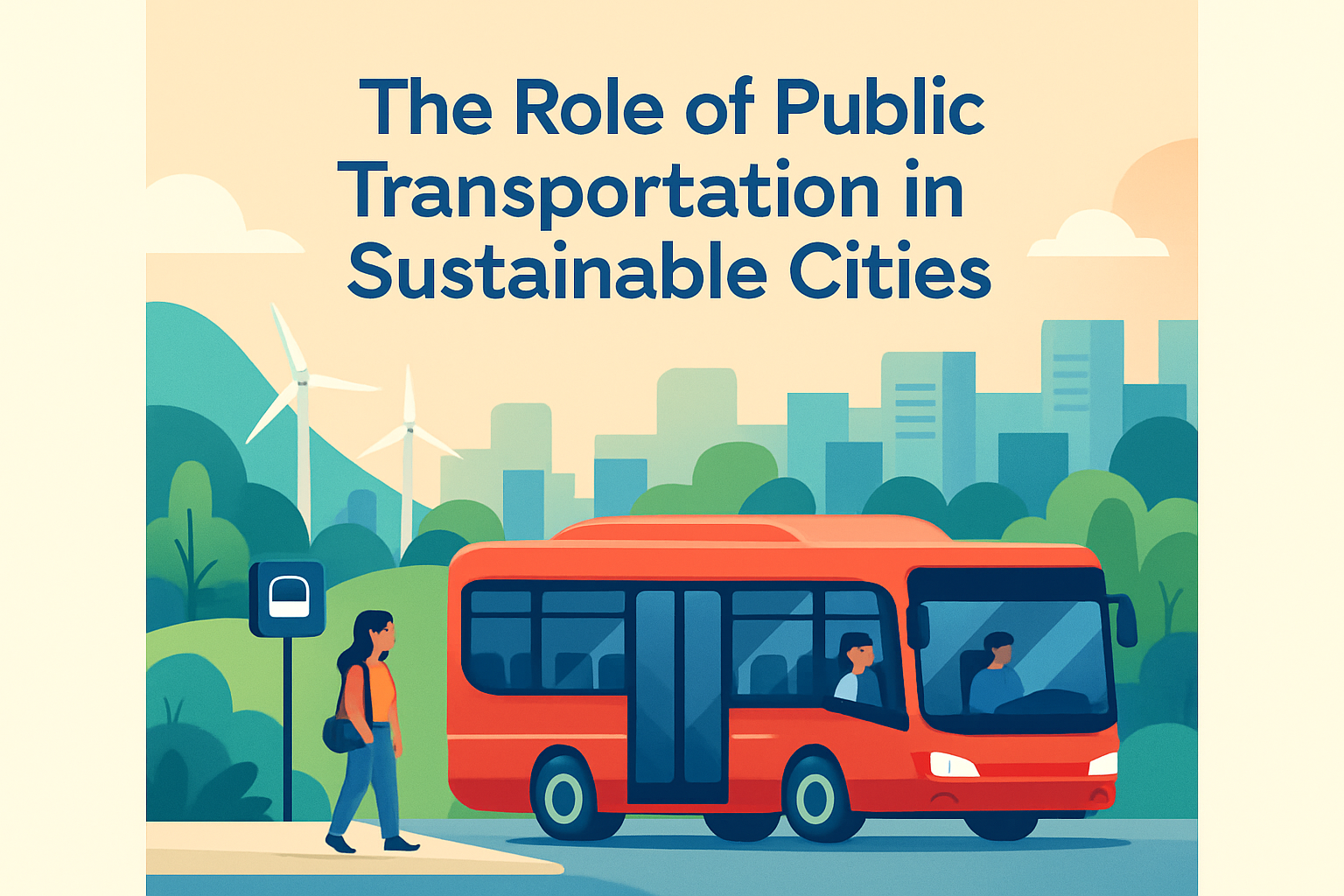
Public transit plays a major role in connecting workers to employment centers and customers to commercial districts. For many cities, transit systems such as buses, subways, commuter rail, and light rail expand access to opportunity by allowing residents to travel without relying entirely on private vehicles. That matters economically because businesses need dependable access to labor. If employers can draw workers from a larger geographic area, they typically have a stronger talent pool, lower turnover risk, and better staffing flexibility. This is especially important in downtowns, medical districts, industrial zones, university corridors, and major service-sector hubs where parking is limited or road congestion is severe.
Transit can also strengthen commercial activity by increasing foot traffic and supporting denser development patterns. Retailers, restaurants, entertainment venues, and service businesses often benefit when customers can arrive conveniently by bus or rail. In addition, households that spend less on car ownership may have more disposable income to spend in the local economy. Well-designed public transit therefore supports both the supply side and the demand side of economic development: it helps employers access labor and helps residents access jobs, education, healthcare, and consumer markets. The strongest results usually come when transit is integrated with walkability, housing policy, and broader land-use planning.
What transportation investments tend to create the greatest long-term economic value?
The highest-value transportation investments are usually the ones that improve connectivity, reliability, and access across the widest range of users rather than simply adding capacity in one corridor. In many urban areas, that includes modernizing public transit, repairing aging roads and bridges, improving freight access, building safer pedestrian and bicycle infrastructure, and using digital traffic management systems to reduce bottlenecks. Long-term value comes from making the system more predictable and efficient, because businesses and households make major decisions based on travel time, delivery certainty, and ease of access.
Projects that connect workers to job centers and link underserved neighborhoods to economic opportunity often produce especially strong returns because they expand participation in the local economy. Freight-oriented improvements, such as better port access, truck routes, rail connections, and last-mile logistics infrastructure, can also be highly valuable in cities with major distribution or manufacturing activity. At the same time, maintenance should not be overlooked. Preserving existing infrastructure is often more cost-effective than allowing systems to deteriorate and later paying for emergency fixes. The best transportation investments are typically those aligned with economic strategy, land-use goals, and measurable outcomes such as employment access, travel-time reliability, safety, productivity, and private investment response.
Can better urban transportation help reduce inequality and expand access to opportunity?
Yes, and this is one of the most important reasons transportation policy matters beyond mobility alone. In many cities, low-income residents, young workers, older adults, and people with disabilities face greater barriers to reaching jobs, schools, healthcare, and essential services. If transportation networks are fragmented, expensive, unsafe, or unreliable, those barriers become economic barriers. A person may live only a few miles from a strong job market but still be effectively cut off from it if there is no practical transit route, if travel times are too long, or if walking and biking conditions are unsafe.
Improved urban transportation can reduce those barriers by expanding affordable, dependable access to opportunity. Frequent bus service, safe sidewalks, protected bike lanes, accessible stations, integrated fare systems, and better first-mile and last-mile connections can make a substantial difference in whether residents can participate fully in the economy. However, the details matter. Transportation improvements should be paired with equitable planning so that benefits are not limited to already prosperous areas. Cities also need to watch for unintended consequences such as displacement near new transit investments. When transportation is planned with inclusion in mind, it can support broader economic mobility by helping more residents reach employment, training, education, and commercial activity consistently and affordably.
How do city leaders measure whether transportation improvements are actually supporting economic development?
City leaders should evaluate transportation through a mix of mobility, economic, land-use, and equity indicators rather than relying on a single metric. Traditional measures such as traffic speed or vehicle throughput only tell part of the story. A more complete assessment includes travel-time reliability, access to jobs within a reasonable commute, freight performance, transit ridership, pedestrian activity, safety outcomes, and infrastructure condition. These indicators help show whether the system is functioning well for workers, businesses, and residents across different modes of travel.
On the economic side, leaders often track changes in employment growth, business formation, commercial occupancy, property values, tax revenues, and private investment near transportation corridors or stations. They may also analyze whether employers are seeing better workforce access or whether logistics costs are improving for local industries. Just as important is measuring who benefits. If a transportation project raises land values but does little to improve access for lower-income neighborhoods, its economic development impact may be uneven. The most effective evaluations combine data analysis with community feedback and are done over time, because transportation investments often influence development patterns gradually. In practice, success is not simply about moving traffic faster; it is about improving access, strengthening competitiveness, and creating broader, more durable economic opportunity.