Urban mobility innovations in developing countries are reshaping how people reach jobs, schools, clinics, and markets in cities where population growth has outpaced roads, public transport, and formal planning. Urban mobility means the movement of people within metropolitan areas through walking, cycling, buses, rail, taxis, paratransit, motorcycles, ferries, and digital platforms that connect these modes. In developing countries, the term covers a wider reality than in wealthy cities because informal transport, cash payments, street vending, flood-prone roads, and unstable electricity are part of daily travel conditions. I have worked on transport content and policy analysis across African, Asian, and Latin American cities, and one lesson is consistent: innovation rarely starts with expensive rail alone. It usually begins with practical fixes that make existing trips faster, safer, cheaper, and more reliable.
This matters because mobility is not just a transport issue. It affects household income, women’s safety, air quality, congestion, access to education, and productivity. The World Bank has repeatedly linked poor urban transport to lost economic output, especially where commuters spend two to four hours each day traveling short distances. In cities such as Lagos, Dhaka, Nairobi, and Manila, many residents live far from formal employment centers and rely on multiple modes for a single trip. When transport systems fail, workers arrive late, deliveries cost more, emergency care slows down, and businesses choose less efficient locations. Better mobility expands opportunity by reducing generalized travel cost, a transport planning concept that combines money, time, uncertainty, and inconvenience.
What makes developing-country innovation distinctive is constraint. City governments often operate with limited budgets, fragmented authority, weak data, and rapidly growing informal settlements. Yet these same conditions have driven some of the most inventive transport solutions in the world. Bus rapid transit, mobile fare payments, app-based motorcycle taxis, electric minibuses, cable cars on steep hillsides, and tactical street redesigns have all emerged or scaled in places where conventional models were too slow or too costly. The most successful ideas do not copy high-income cities blindly. They adapt technology, street design, regulation, and financing to local travel behavior. This hub article explains the main categories of innovation, how they work in practice, where they succeed, and what readers should examine next across this broad and fast-changing mobility landscape.
Mass transit upgrades that move more people with limited street space
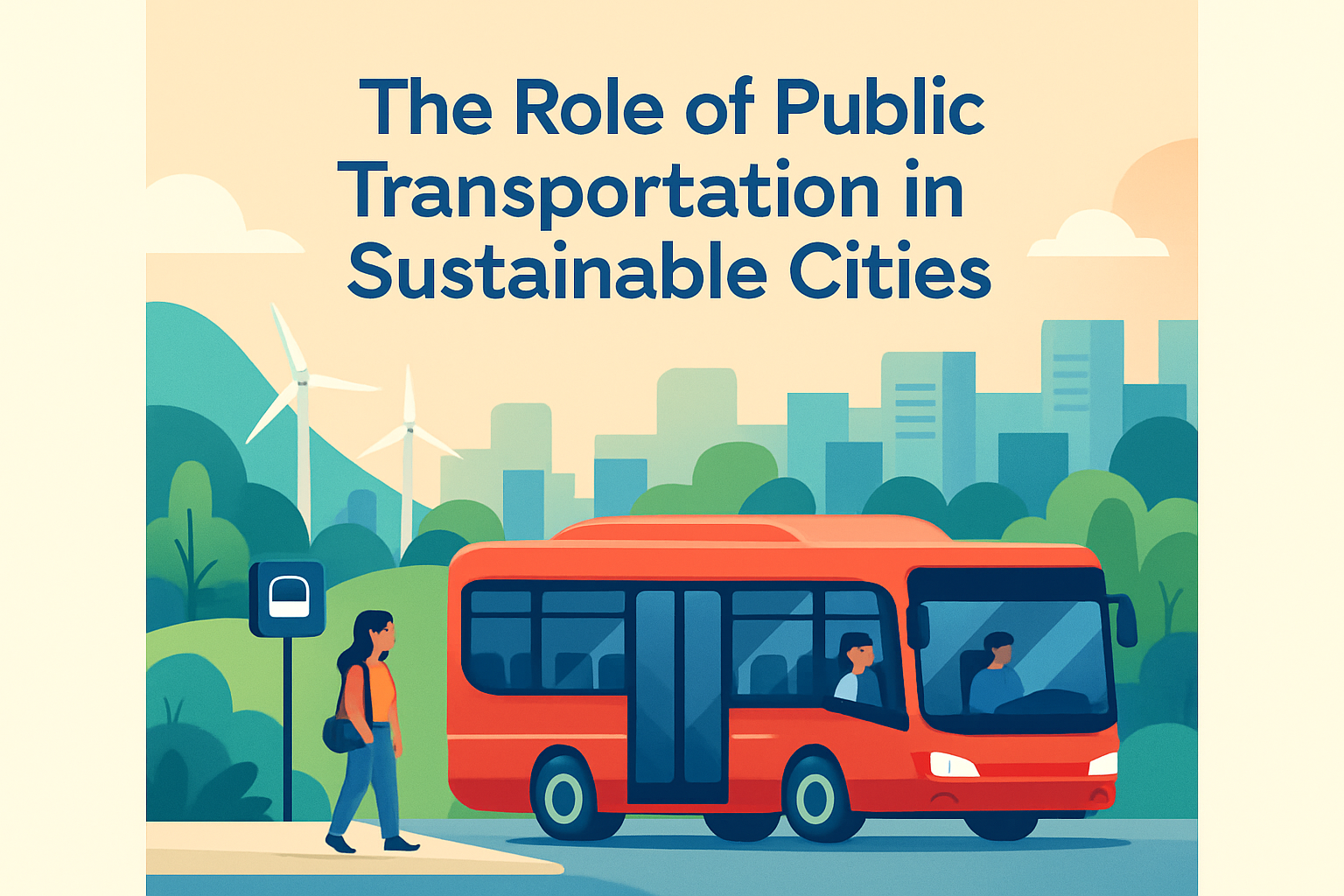
Mass transit remains the backbone of urban mobility because no other mode moves as many passengers per lane at comparable cost. In developing countries, the standout innovation has been bus rapid transit, a system that gives buses rail-like advantages through dedicated lanes, off-board fare collection, platform-level boarding, and centralized operations. Bogotá’s TransMilenio popularized the model, but the concept has traveled widely, influencing systems in Jakarta, Dar es Salaam, Ahmedabad, and Lahore. When designed well, BRT cuts travel time, improves reliability, and increases corridor capacity without the capital cost of metro construction. The Institute for Transportation and Development Policy has documented how median-aligned lanes and enclosed stations significantly improve bus performance compared with mixed-traffic routes.
However, the lesson from implementation is that infrastructure alone is not enough. A city can paint a bus lane and still fail if it does not reorganize routes, manage intersections, enforce lane protection, and integrate feeder services. I have seen corridor projects praised at launch and then lose public support because stations were overcrowded, transfers were confusing, or competing minibuses continued picking up passengers in the same lane. Successful upgrades require network thinking. That means trunk lines feeding neighborhood buses, clear service maps, timed dispatching, and fare systems that allow one payment across modes. Guangzhou’s integrated bus corridor showed how service planning and physical design together can raise bus speeds while preserving access for other road users.
Rail also plays a role, especially in megacities, but heavy metro systems are expensive to build and operate. For that reason, many developing cities are combining selective rail investment with bus network redesign rather than trying to build complete metro coverage at once. Addis Ababa’s light rail, Lagos’s expanding rail lines, and Cairo’s metro all illustrate a common reality: rail works best when it connects with bus, walking, and last-mile services. Without that integration, stations become isolated islands in congested neighborhoods. The practical innovation is not choosing bus or rail as an ideology. It is matching mode choice to corridor demand, street width, available finance, and long-term maintenance capacity.
Informal transport modernization and digital coordination
In much of the developing world, informal transport already provides the majority of public transport trips. Minibuses in Nairobi, jeepneys in the Philippines, danfos in Lagos, angkot in Indonesia, and colectivos across Latin America fill service gaps that formal agencies cannot cover. These systems are often criticized for unsafe vehicles, aggressive driving, and fragmented operations, but they survive because they are flexible, frequent, and deeply embedded in local demand. Urban mobility innovation therefore often means improving informal transport rather than eliminating it. The strongest reforms focus on vehicle standards, route rationalization, driver training, fleet renewal, and operator consolidation into cooperatives or companies.
Digital technology has accelerated this transition. Operators now use GPS fleet tracking, electronic dispatching, mobile wallets, and passenger information apps to reduce uncertainty. In Nairobi and Kigali, mobility startups have worked with matatu and minibus operators to digitize fares and collect operational data. This matters because route-level data is the foundation for better planning. When authorities know boarding volumes, trip patterns, dwell times, and deadheading behavior, they can redesign services based on evidence instead of assumptions. General Transit Feed Specification datasets, once limited mainly to formal transit, are increasingly being created for informal systems, making them visible to trip-planning tools and policy analysis.
There are tradeoffs. Digital platforms can improve transparency, but they can also squeeze small operators if transaction fees are high or if platform rules favor larger fleets. Formalization can raise service quality while reducing driver autonomy and employment flexibility. The best programs recognize these tensions early. They phase in standards, provide financing for vehicle replacement, and involve unions and owner associations in reform design. Cape Town’s minibus-taxi negotiations and Dakar’s bus renewal efforts demonstrate that modernization is as much a governance challenge as a technical one. Informal transport should be treated as a core part of the urban mobility system, not a temporary inconvenience waiting to disappear.
Electrification, cleaner fleets, and resilient energy choices
Electrification is becoming one of the most important urban mobility innovations in developing countries, but the pathway differs by mode. Large cities are electrifying bus fleets, while smaller operators are often moving first into electric two- and three-wheelers because these vehicles have lower upfront costs and simpler charging needs. Shenzhen proved that full-scale electric bus deployment is possible, though its financial and grid conditions are not easily replicated elsewhere. More comparable examples come from Santiago’s electric buses, India’s e-bus procurement under gross cost contracts, and East African startups deploying electric motorcycles for delivery and taxi services. The main advantage is lower operating cost per kilometer, especially where fuel prices are volatile.
Yet electric mobility is not automatically sustainable or affordable. Battery financing, charging infrastructure, grid reliability, and spare-parts supply all matter. In cities with unstable power, depot charging can create operational risk unless fleets have backup planning and smart charging systems. I have found that many pilot programs underestimate maintenance training and overestimate how quickly mechanics can shift from internal combustion engines to electric drivetrains. The more durable business models bundle vehicles, batteries, software, and maintenance into service contracts. Battery swapping for motorcycles in Rwanda and Kenya is a good example because it reduces downtime and separates battery ownership from driver cash flow constraints.
| Innovation area | Main benefit | Common challenge | Real-world example |
|---|---|---|---|
| Bus rapid transit | High capacity at lower capital cost than metro | Lane enforcement and transfer management | Jakarta TransJakarta |
| Informal transport digitization | Better route data and fare transparency | Operator fragmentation | Nairobi minibus data platforms |
| Electric two-wheelers | Lower fuel and maintenance costs | Battery financing and charging access | Rwanda battery-swapping networks |
| Street redesign for walking | Safer access and lower crash risk | Weak enforcement against encroachment | Bogotá tactical urbanism pilots |
Cleaner mobility also includes compressed natural gas, improved fuel standards, inspection regimes, and low-emission zones, although these are transitional rather than final solutions. Cities with severe air pollution need immediate reductions from old diesel fleets, and fleet renewal can deliver health benefits before full electrification is practical. The key is avoiding stranded assets. Procurement should align with expected grid decarbonization, local manufacturing capability, and total cost of ownership over the vehicle life cycle. Cleaner fleets succeed when energy planning, transport policy, and public finance are coordinated rather than treated as separate sectors.
Walking, cycling, and safer streets as foundational mobility policy
The most effective urban mobility policy in developing countries often begins with modes that require the least infrastructure: walking and cycling. In many cities, walking is already the dominant mode for short trips and the unavoidable first and last leg of public transport journeys. Yet sidewalks are narrow or missing, crossings are dangerous, drainage is poor, and street lighting is inconsistent. That means the lowest-income travelers routinely face the worst travel conditions. Safer streets are therefore not cosmetic upgrades. They are core transport investments. The Global Road Safety Facility and World Health Organization have repeatedly shown that speed management, protected crossings, and safer street design reduce fatalities more reliably than enforcement alone.
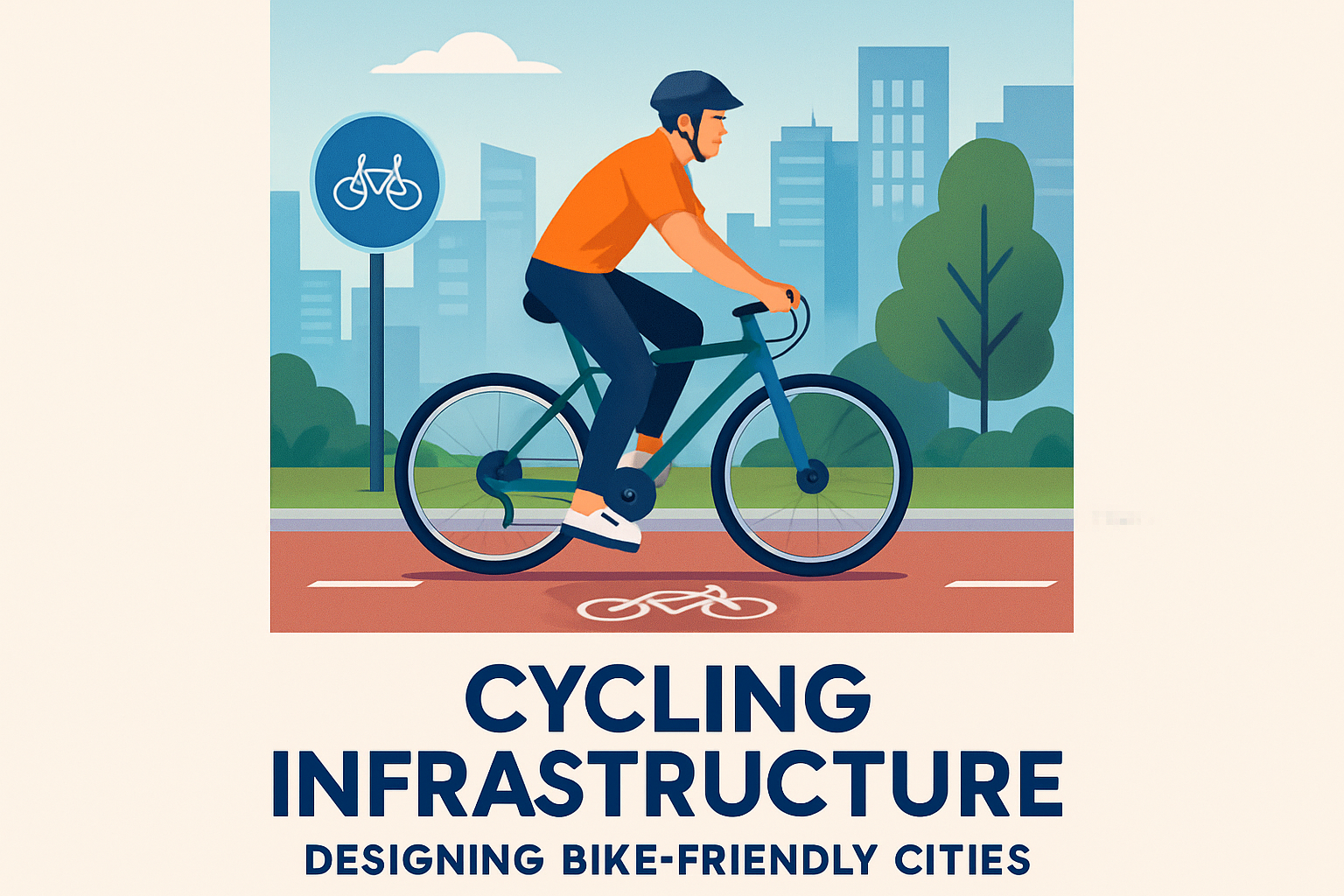
Cycling has expanded where cities created protected lanes, secure parking, and connections to transit. Bogotá’s Cicloruta network remains influential, while cities such as Mexico City and Pune have tested pop-up and permanent bike infrastructure with mixed but instructive results. The main barrier is not cultural resistance, as officials often claim. It is perceived danger. People cycle when routes feel continuous and protected. In dense districts, a protected cycle lane can move more people per meter of street width than mixed-traffic car lanes. For workers who cannot afford daily motorized fares, bicycles and e-bikes can substantially widen access to jobs within a forty-five-minute travel shed.
Street redesign also supports climate resilience. Raised crossings, permeable materials, shade trees, and better drainage improve walkability during heat waves and heavy rain, both increasingly common in tropical cities. Women, children, older adults, and people with disabilities benefit most from these changes because they are disproportionately affected by poor pedestrian conditions. Universal design standards, tactile paving, curb ramps, and audible signals are not luxury features. They determine whether transport systems are actually usable. If a city invests in buses or rail but ignores access streets, it leaves mobility gains incomplete. Safe, comfortable walking is the glue that holds the whole network together.
Data, governance, and financing that determine whether innovation lasts
Urban mobility innovations fail less often because the technology is wrong than because institutions are weak. Lasting progress depends on governance: who plans routes, who collects fares, who maintains assets, who enforces street rules, and who pays for service when fares do not cover costs. Fragmented metropolitan regions struggle because buses may be regulated by one agency, roads by another, parking by a third, and land use by multiple municipalities. Integrated transport authorities help solve this problem by aligning planning and budgets across the travel shed rather than within political boundaries. Transport for Cairo, São Paulo’s planning institutions, and metropolitan agencies in India offer useful lessons, even where performance is uneven.
Data quality is equally important. Automatic vehicle location, automated passenger counters, mobile phone data, and open mapping have transformed diagnosis of congestion and service gaps. During network redesign work, I rely on one basic principle: collect data that can change a decision. Fancy dashboards are useless if agencies cannot convert them into bus priority, stop spacing, or fare policy. OpenStreetMap has become especially valuable in rapidly changing cities where official maps lag behind reality. Combined with household travel surveys and operator interviews, it provides a more truthful picture of how residents actually move through informal settlements, peripheral growth corridors, and mixed-use commercial zones.
Financing remains the hardest issue. Fares alone rarely support affordable, high-quality urban transport. Capital grants, land value capture, fuel taxes, parking revenue, congestion pricing, and development finance all have roles, but each requires administrative capacity and political support. Public-private partnerships can work for depots, ticketing, or fleet leasing, yet poorly structured contracts create hidden liabilities. The durable approach is transparent lifecycle costing: estimate procurement, maintenance, staffing, energy, fare collection, and renewal before launching the project. Cities that do this well are not necessarily richer. They are simply more disciplined. For readers exploring urban mobility and transportation, the next step is to evaluate every innovation through three questions: does it move more people well, does it serve vulnerable users fairly, and can the city operate it reliably over time?
Urban mobility innovations in developing countries succeed when they respond to real travel behavior instead of imported assumptions. The strongest examples share a pattern: they improve existing systems, connect modes, and focus on reliability as much as novelty. Bus rapid transit works when it is integrated with feeders and protected from traffic. Informal transport reform works when operators are included, data is collected, and standards rise gradually. Electrification works when charging, maintenance, and finance are planned together. Walking and cycling investments work when safety and access are treated as transport essentials, not side projects. Across every mode, governance and funding determine whether a promising pilot becomes a durable public service.
The central benefit is broader access. Better urban mobility shortens commutes, lowers household transport burden, supports cleaner air, and expands opportunity for residents who are usually excluded by distance, danger, or cost. It also makes cities more productive because workers, customers, and goods can move with less friction. For a sub-pillar hub on this miscellaneous segment of urban mobility and transportation, the practical takeaway is clear: no single technology solves the challenge. Progress comes from coordinated networks, street-level design, and institutions that can manage change at scale. Use this article as a starting point, then dive deeper into specific modes, policies, and city case studies to identify what fits your urban context best today.
Frequently Asked Questions
What does “urban mobility innovation” mean in developing countries?
Urban mobility innovation in developing countries refers to practical, adaptable ways of helping people move through cities more safely, affordably, and efficiently, even when infrastructure and formal transport systems are under pressure. It includes improvements to traditional public transport such as buses, minibuses, shared taxis, rail, ferries, and motorcycle taxis, as well as newer tools like mobile ticketing, ride-hailing apps, real-time route information, and digital payment systems. Just as importantly, innovation can also mean low-cost street design changes, better sidewalks, protected cycle lanes, traffic management, and transport planning that recognizes how people actually travel rather than how planners assume they travel.
In many developing cities, mobility is not centered on one dominant system. Instead, people often combine walking, informal paratransit, motorcycles, buses, and other services in a single trip to reach work, school, clinics, or markets. Because of that reality, innovation is often about integration rather than replacement. A city may improve commuter access not by building an expensive metro alone, but by connecting feeder buses, formalizing minibus routes, introducing smart fare systems, and making streets safer for pedestrians. The most effective innovations are usually those that respond to local conditions, support everyday trips for lower-income residents, and expand access without making travel more expensive or excluding informal workers who already provide essential transport services.
Why are urban mobility innovations especially important in rapidly growing cities?
They matter because many cities in developing countries are growing faster than roads, transit systems, land-use planning, and public budgets can keep up. As populations expand outward, jobs, schools, health services, and commercial activity often remain concentrated in certain areas, forcing residents to travel longer distances through congested networks. Without mobility innovation, the result is often a daily pattern of unreliable commutes, traffic bottlenecks, high transport costs, dangerous road conditions, and limited access to opportunity for people living in informal settlements or peripheral neighborhoods.
Mobility innovations help cities respond to this pressure by improving the performance of existing systems and making transport more inclusive. For example, bus rapid transit corridors can move large numbers of passengers at lower cost than heavy rail, digital tools can improve route visibility and trip planning, and safer walking infrastructure can make short trips faster and less risky. These changes are not just about convenience. They influence employment, education, public health, and economic productivity. When workers can reach jobs more reliably, students can get to school safely, and patients can access clinics without excessive delay or cost, urban mobility becomes a core development issue rather than a narrow transport topic. In fast-growing cities, transport innovation is one of the clearest ways to improve quality of life while supporting long-term urban resilience.
How do informal transport systems fit into urban mobility innovation?
Informal transport systems are often central to mobility in developing countries, not marginal to it. Minibuses, shared vans, motorcycle taxis, three-wheelers, and other flexible services frequently fill the gaps left by limited formal transit. They serve neighborhoods that large buses may not reach, provide first- and last-mile connections, and respond quickly to changing travel demand. In many cities, these operators move a substantial share of daily passengers, especially lower-income residents. Any serious discussion of mobility innovation must account for this reality rather than treating informal transport as something temporary or irrelevant.
The most effective innovations usually improve these systems through regulation, digitization, safety standards, and network integration rather than trying to eliminate them overnight. Cities can map routes, register operators, standardize fares, improve vehicle quality, support cleaner engines, and connect informal services to bus or rail hubs. Digital platforms can help passengers see estimated travel times, compare routes, and pay electronically, while also giving authorities better data for planning. However, reform needs to be designed carefully. If governments formalize services without considering operator livelihoods or passenger affordability, they can unintentionally reduce coverage or increase costs. A balanced approach recognizes informal transport as a working part of the urban mobility ecosystem and seeks to make it safer, cleaner, more accountable, and better integrated into citywide transport strategies.
What kinds of mobility innovations are making the biggest impact today?
Some of the biggest impacts are coming from solutions that improve access at scale without requiring extremely high capital spending. Bus rapid transit systems, dedicated bus lanes, transit signal priority, and fleet modernization programs are helping cities move more people quickly and predictably. Digital innovations are also playing a major role, including mobile fare payment, transport apps, GPS-based fleet management, and data platforms that help authorities understand demand patterns and optimize routes. These tools are especially useful in cities where fragmented services and inconsistent information have long made travel more difficult for passengers.
At the same time, non-motorized and community-level improvements are proving just as important. Sidewalk upgrades, protected crossings, safer intersections, bike-share systems, cycle lanes, and traffic calming can dramatically improve mobility for people who already rely on walking and cycling for all or part of their trips. Electrification is another area of growing impact, particularly for buses, two-wheelers, and paratransit vehicles, where cleaner fleets can reduce local air pollution and operating costs over time. In coastal or river cities, better ferry systems can also relieve pressure on roads. What stands out across these examples is that the most successful innovations are usually not flashy standalone technologies. They are coordinated measures that improve reliability, safety, affordability, and network connectivity for the greatest number of residents.
What challenges can prevent urban mobility innovations from succeeding?
Several barriers can slow down or weaken the impact of mobility innovation, even when the ideas themselves are sound. One major challenge is governance. Urban transport responsibilities are often split across multiple agencies, municipalities, and ministries, which can make planning and implementation fragmented. Funding is another constraint, particularly for cities trying to expand services while also maintaining roads, managing congestion, and addressing climate and safety concerns. Reliable data may be limited, especially where informal transport dominates, making it harder to design policies based on actual travel patterns. In addition, infrastructure projects can face land constraints, political turnover, procurement delays, and public resistance if people fear disruption, fare increases, or loss of income.
Equity is also a critical issue. Innovations can fail if they primarily serve wealthier commuters while neglecting the needs of low-income households, women, people with disabilities, informal workers, and residents of peripheral settlements. A transport app is less transformative if many users lack smartphones or affordable data. A new transit corridor may improve one route while leaving unsafe walking conditions untouched. Successful mobility innovation requires more than introducing technology or building infrastructure. It depends on long-term planning, institutional coordination, realistic financing, community engagement, and a strong focus on affordability and inclusion. When cities combine those elements, mobility innovation is far more likely to deliver lasting benefits instead of isolated pilot projects that never scale.