Introduction to Urban Greenery and the Circular Economy
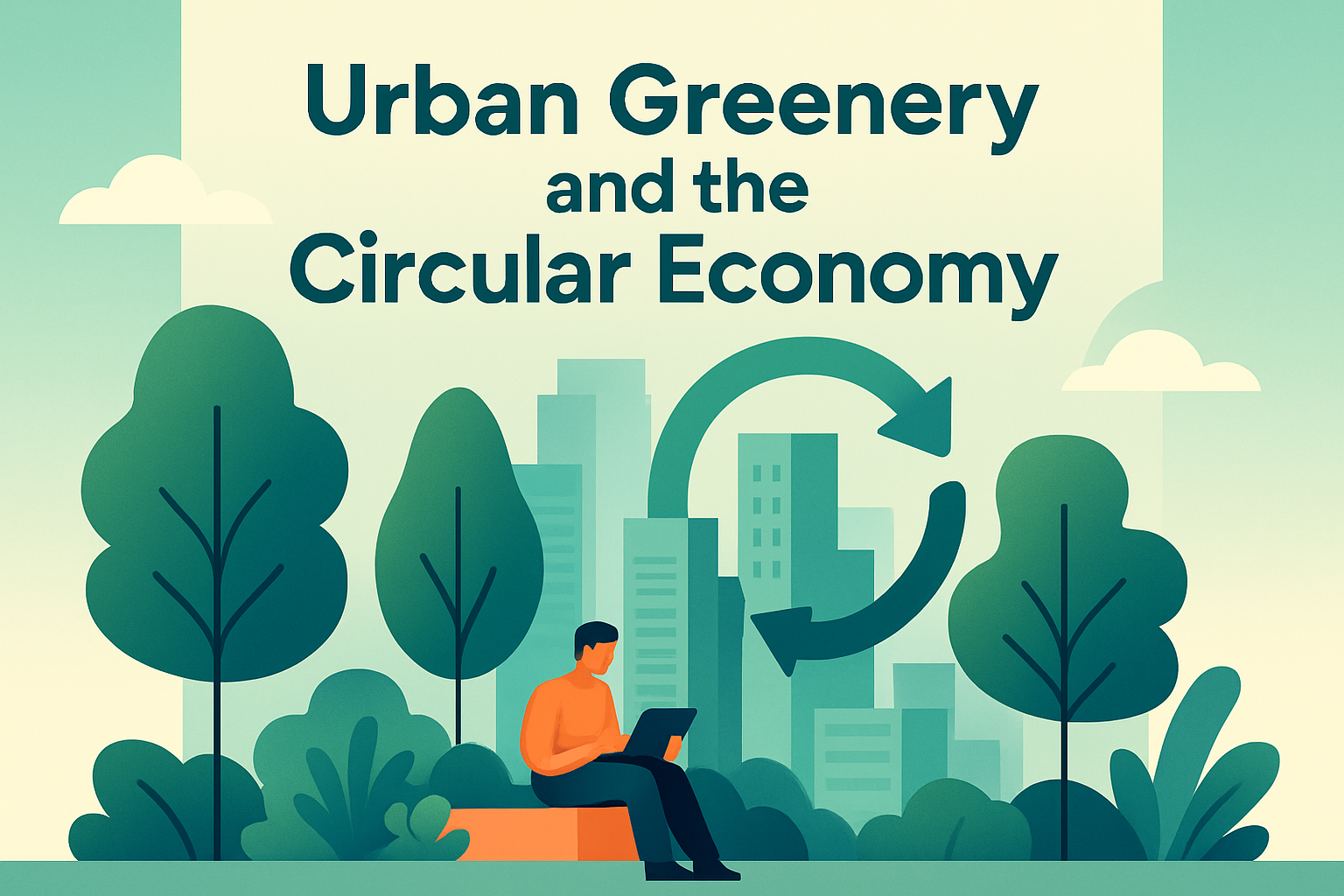
In our rapidly urbanizing world, cities are not just centers of economic growth and innovation but also havens where the challenges of sustainability and resource management converge. One of the critical components in addressing these challenges is the integration of urban greenery, which encompasses everything from small community gardens to expansive city parks. Urban greenery is not just about aesthetics or recreational space; it plays a vital role in the ecological health of our cities, contributing to air quality, temperature regulation, and biodiversity. When paired with the principles of the circular economy, which emphasizes the reuse, recycling, and regeneration of resources, urban greenery becomes a powerful tool for sustainable urban development.
At its core, the circular economy is an economic system aimed at eliminating waste and the continual use of resources. Unlike the traditional linear economy, which follows a take-make-dispose pattern, the circular economy is restorative by design. It seeks to keep products, equipment, and infrastructure in use for as long as possible, maximizing their value across the life cycle. This approach directly supports environmental sustainability and economic resilience, and when integrated with urban greenery initiatives, enhances the livability and functionality of urban spaces.
Urban greenery and the circular economy matter because they present solutions to some of the most pressing environmental challenges of our times. These include climate change, resource depletion, and pollution. By adopting these principles, urban planners, governments, and communities can foster cities that are not only environmentally sound but also economically vibrant and socially inclusive.
The Role of Urban Greenery in Sustainable Cities
Urban greenery serves various ecological functions that are indispensable for creating sustainable urban living spaces. Trees, plants, and green spaces act as natural air filters, absorbing carbon dioxide and releasing oxygen, thus improving air quality. Moreover, greenery helps manage urban heat by providing shade and releasing moisture into the air, thereby cooling the environment. Green roofs and walls can insulate buildings, further contributing to energy efficiency.
A prime example can be seen in Singapore, widely regarded as a leader in integrating greenery into urban landscapes. The city’s extensive network of parks and vertical gardens helps mitigate the urban heat island effect and promotes biodiversity. By fostering habitats for various species in these urban green spaces, Singapore enhances its ecological footprint without expanding its geographical footprint.
Implementing the Circular Economy in Urban Areas
The circular economy in an urban context focuses on designing out waste, reusing materials, and fostering economic productivity. By applying this model, cities can minimize their environmental impact while driving innovation and economic growth. Circular practices in urban areas can be implemented through sustainable construction, waste reduction, and resource management initiatives.
Amsterdam offers an exemplary model, having committed to becoming fully circular by 2050. The city has launched numerous initiatives, such as circular building designs that use recycled and renewable materials. Additionally, Amsterdam’s waste management system emphasizes recycling and composting, significantly reducing waste sent to landfills. The city also encourages its citizens to adopt circular economy principles through community programs and incentives.
Integration of Urban Greenery and the Circular Economy
The integration of urban greenery into the circular economy framework enhances the effectiveness and sustainability of both initiatives. This synergy can be achieved through practices such as composting organic waste to improve soil quality for urban gardens, using recycled materials for park benches or playground equipment, and creating closed-loop water systems in urban green spaces.
Tokyo’s initiatives demonstrate the benefits of this integration. The city’s urban agriculture projects utilize organic waste composting, reducing landfill use while improving soil health. Additionally, Tokyo incorporates rainwater harvesting systems in its parks, reducing reliance on potable water supplies and illustrating a practical application of circular economy principles within urban greenery initiatives.
- Composting organic waste for urban gardens.
- Using recycled materials for public spaces.
- Creating closed-loop water systems in green areas.
Challenges and Opportunities
While the integration of urban greenery and the circular economy presents numerous benefits, it is not without its challenges. Urban areas must overcome constraints such as limited space, funding limitations, and bureaucratic hurdles. To successfully implement these initiatives, cities need policies that prioritize sustainability and foster collaboration between public, private, and community stakeholders.
Nevertheless, these challenges present opportunities for innovation and creativity. Cities can leverage technology and data analytics to optimize green space usage and facilitate circular practices. Collaboration among diverse stakeholders can also drive the development of innovative solutions, such as using vertical farming to maximize limited urban spaces while contributing to local food security.
Summarizing the Benefits and Next Steps
Urban greenery, when combined with the principles of the circular economy, offers a path towards creating cities that are not only sustainable but thriving and resilient. This integration provides environmental benefits, such as improved air quality and biodiversity, while promoting economic growth and community well-being. By shifting towards these practices, cities can become more adaptable to the modern environmental challenges posed by urbanization and climate change.
To take advantage of these benefits, city planners, policymakers, and communities must embrace holistic approaches that incorporate urban greenery and circular economy principles into their strategies. Encouraging public participation, pursuing innovative solutions, and fostering collaboration will be crucial in achieving these sustainable urban transformations.
As citizens, getting involved by advocating for more green spaces, participating in local urban agriculture projects, or supporting circular economy initiatives in our communities are small but impactful actions. Together, through these efforts, we can contribute to building urban environments where both people and nature flourish sustainably. Start by engaging with your local council or community groups today to voice support for initiatives that integrate urban greenery and the circular economy.
Frequently Asked Questions
1. What is urban greenery, and why is it important for cities?
Urban greenery refers to the various forms of vegetation and plant life embedded within urban settings, ranging from trees and shrubs to grass-covered parks and green roofs. This green infrastructure is crucial for cities as it offers a wide array of environmental, social, and economic benefits. Environmentally, urban greenery helps improve air quality by filtering pollutants, aids in stormwater management through natural absorption and reduces the urban heat island effect by providing shade and cooling to city areas. Socially, spaces filled with greenery offer recreational opportunities, foster community engagement, and improve residents’ mental health by providing a respite from concrete and chaos. Economically, enhancing urban greenery can elevate property values, attract tourism, and reduce energy costs by naturally insulating buildings. This integration not only beautifies cityscapes but also makes them more livable and sustainable.
2. How does urban greenery fit into the circular economy model?
A circular economy is an economic system aimed at eliminating waste and the continual use of resources. Urban greenery fits into this model by promoting sustainability through efficient resource use and waste reduction, thus playing a pivotal role in maintaining ecological balance. By supporting biodiversity and integrating natural systems that recycle organic waste into nutrient-rich soil, urban greenery reduces dependency on chemical fertilizers and enriches urban soil naturally. Green spaces within cities can also serve as sites for composting organic waste, transforming what might otherwise end up in a landfill into a valuable resource for growing plants. Moreover, urban greenery can contribute to energy efficiency by promoting green insulation, which reduces heating and cooling needs, effectively repurposing and optimizing the use of natural resources within the urban loop.
3. What are some examples of urban greenery initiatives that align with circular economy principles?
Examples of urban greenery initiatives that exemplify circular economy principles include community gardens that focus on local food production, reducing the carbon footprint associated with transporting food over long distances. Vertical gardens and green walls are also increasingly popular as they maximize space efficiency and enhance urban biodiversity in compact urban areas. Furthermore, ‘green roofs’ on buildings contribute to a building’s insulation, thus reducing heating and cooling needs and repurposing city space for greenery. Infrastructures like green belts and urban forests also play a critical role in enhancing air quality and capturing carbon, crucial components of closing energy and waste loops within urban environments. Another notable initiative is the development of biophilic buildings that integrate natural elements into their design, fostering harmony between architectural practices and the environment.
4. How can citizens actively participate in promoting urban greenery and the circular economy?
Citizens can play a vital role in promoting urban greenery and the circular economy by engaging in actions both at home and in the community at large. At the household level, individuals can incorporate greenery by planting gardens, even if it’s just small balcony containers, to contribute to air purification and food production. People can participate in local tree-planting events or start compost piles to recycle kitchen waste into valuable garden fertilizer. Getting involved with or initiating community gardening projects is another impactful method, as it not only introduces greenery into urban areas but also fosters communal ties and shared responsibilities. Additionally, advocating for more green policies with local government bodies and supporting eco-friendly businesses can amplify citizen influence on shaping sustainable urban environments. Through these collective efforts, residents can significantly impact urban greenery and support a circular economy in their cities.
5. What challenges exist in implementing urban greenery within cities, and how can they be addressed?
Implementing urban greenery faces several challenges, including limited space availability, high costs of green infrastructure development, and maintenance issues. Dense urban areas often struggle to allocate land for parks or green belts due to competing land use priorities, which makes being creative with space utilization crucial. Solutions may include developing vertical gardens, green roofs, and atriums that require minimal ground space. Financial constraints can be addressed by encouraging public-private partnerships and community-involved projects that share the costs and responsibilities. Another challenge involves aligning urban planning policies with green initiatives to ensure that development is sustainable and inclusive of natural elements. Engagement with stakeholders, from local governments to private developers and the community, can create an inclusive approach ensuring all voices are heard and all needs are met. By addressing these challenges strategically, cities can more effectively integrate urban greenery, promoting resilient, liveable environments that adhere to circular economy principles.