Urban environments are often characterized by their dense populations, vast infrastructure, and the buzz of human activity. Amidst this busy landscape, urban greenery, consisting of parks, gardens, green roofs, and street-side flora, plays a crucial role in enhancing urban life. Present within the complexities of a city, urban greenery inherently requires the capacity to adapt to seasonal changes. Seasonal adaptation refers to the ways plants and ecosystems adjust their behavior, growth, and survival tactics in response to seasonal variations like temperature shifts, daylight changes, and precipitation patterns.
Why is this topic important? As urbanization continues to spread, understanding the intricate interplay between urban greenery and seasonal adaptation becomes paramount. These elements contribute not only to ecological sustainability but also to human well-being in cities. Proper adaptation ensures that urban greenery thrives year-round, offering essential benefits such as air quality improvement, urban cooling, biodiversity preservation, and enhanced aesthetic and psychological experiences for urban dwellers.
The Dynamics of Urban Greenery
Understanding urban greenery starts with recognizing its diverse forms. From large urban parks to rooftop gardens, each type has inherent value and contributes uniquely to its urban setting. For instance, Central Park in New York City is a prime example of a well-integrated urban green space, providing a haven of tranquillity against the bustling city backdrop. These spaces are carefully designed to withstand different seasonal impacts, such as winter’s chill and summer’s heat, through strategic planting and maintenance schedules.
Seasonal Challenges and Plant Behavior
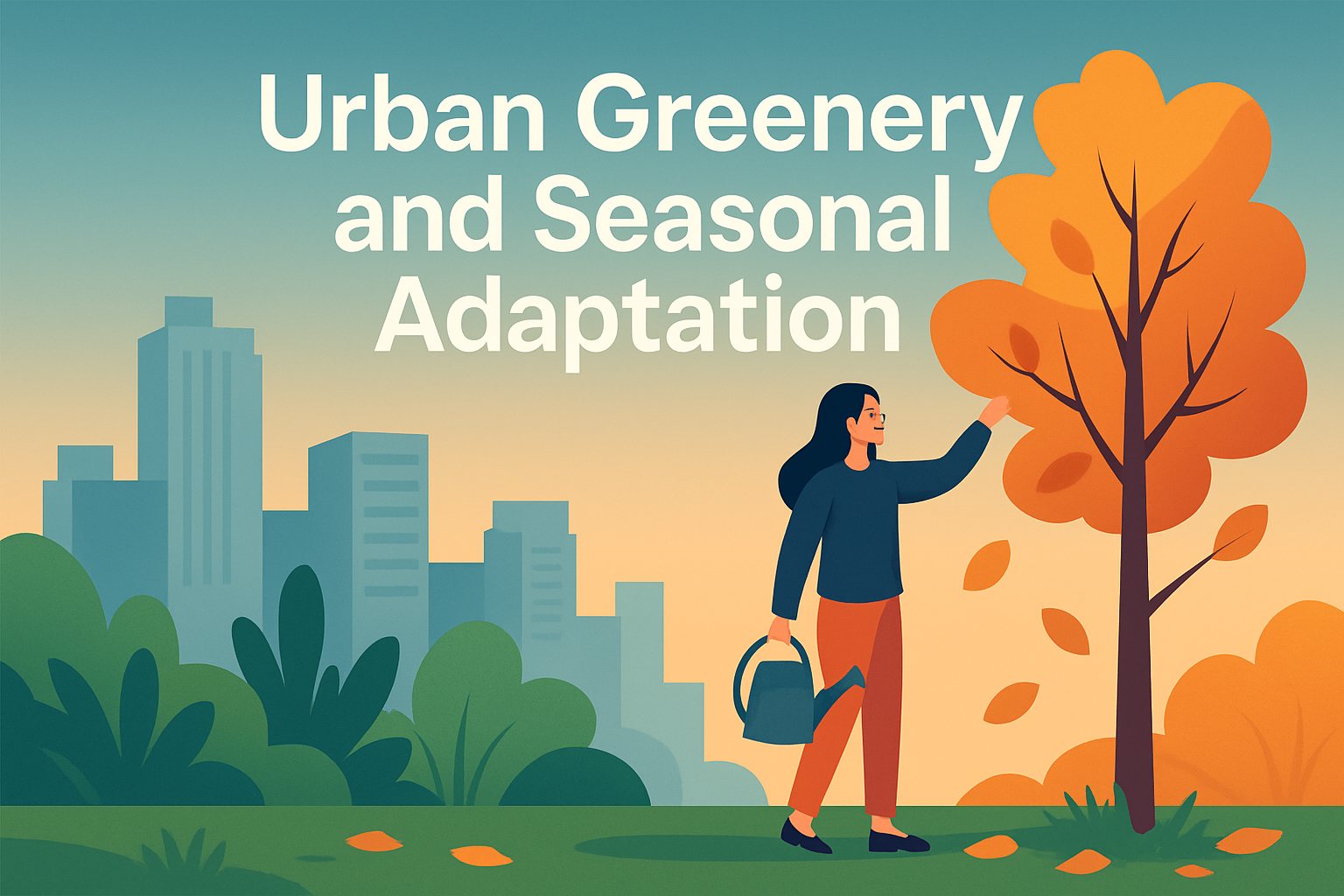
Plants in urban settings face unique challenges each season. In winter, deciduous trees shed their leaves to conserve water and energy, whereas evergreen plants leverage their thick leaves to combat moisture loss while maintaining photosynthetic capabilities. Conversely, spring brings the opportunity for regeneration and growth as temperatures warm and daylight increases. An iconic example of urban seasonal adaptation is the cherry blossoms of Washington D.C., which attract millions of tourists during the peak bloom each spring. These trees have adapted to burst forth with flowers to optimize the short, favorable season for reproduction and growth.
Technological Interventions Supporting Adaptation
As cities embrace smart technologies, urban greenery can benefit from technological interventions designed to aid in seasonal adaptation. Sensors and automated irrigation systems allow for efficient water management, particularly crucial during fluctuating seasonal conditions. For example, Barcelona utilizes a sophisticated network of sensors to monitor the soil moisture and temperature to ensure its urban plants receive optimal care year-round regardless of seasonal changes. These technological advances support a sustainable urban ecosystem, enhancing plant resilience and overall productivity.
Role of Community in Seasonal Adaptation
Community involvement plays an integral role in the seasonal adaptation of urban greenery. Volunteer programs, community gardens, and crowdsourced maintenance efforts foster a sense of ownership and responsibility among urban residents. In Detroit, urban farming initiatives have transformed vacant city lots throughout the city. Residents actively participate in seasonal planting and cultivation efforts, which not only ensure adaptability to seasons but also promote social cohesion and food security.
- Winter: Community-driven snow removal and protective covering of vulnerable plants.
- Spring and Summer: Planting seasons geared towards vegetables and native flora.
- Fall: Harvesting and preparation of soil for the coming winter.
Economic and Health Benefits of Adaptive Urban Greenery
Adaptively managed urban greenery delivers various economic and health benefits. Economically, thriving greenery can increase property values, attract tourism, and decrease municipal costs related to cooling. Chicago’s Green Roof Program, which incentivizes developers to create green roofs with adaptability to seasons, showcases how economic initiatives can align with environmental goals. From a health perspective, consistent exposure to urban greenery contributes to lowered stress levels and increased physical activity, which are essential components of a healthy lifestyle.
| Season | Activity | Key Benefits |
|---|---|---|
| Spring | Planting and restoration | Encourages growth and regeneration |
| Summer | Water management | Prevents overuse of water resources |
| Fall | Soil preparation | Ensures readiness for winter dormancy |
| Winter | Protective measures | Safeguards plant health and infrastructure |
Environmental Impacts of Effective Seasonal Adaptation
Well-adapted urban greenery has a profound impact on the environment, assisting in urban cooling, carbon sequestration, and pollutant filtration. Successful adaptation strategies intensify these ecological roles, mitigating urban heat islands and improving air quality. Singapore, renowned for its commitment to being a “City in a Garden,” implements vertical gardens and extensive park connectors that serve environmental functions year-round through innovative design, without being impeded by seasonal shifts.
Design Strategies for Seasonal Adaptation
Designing urban greenery with seasonal adaptation in mind involves selecting appropriate plant species, designing for microclimates, and considering local environmental constraints. Nature-based solutions like rain gardens not only enhance aesthetics but mitigate runoff issues exacerbated by seasonal rains. Toronto’s green corridor project stands testament to how comprehensive design can harmonize urban development with natural habitats, inviting flora and fauna alike while adjusting to seasonal variations seamlessly.
Concluding Reflections on Urban Greenery and Seasonal Adaptation
In summary, urban greenery’s ability to adapt to seasonal changes is a multifaceted endeavor that incorporates scientific understanding, technological innovation, community engagement, and strategic design. These elements coalesce to offer not only sustainability and ecological benefits but also social and economic advantages. For urban planners, policymakers, and local communities, focusing efforts on seasonal adaptation will ensure lasting, thriving urban ecosystems. As cities progress towards greener futures, we can champion initiatives that enhance adaptability and embrace the dynamic interplay of nature within our urban landscapes. The next step is clear: engage with local greenery projects, support community-driven efforts, and advocate for policies that prioritize sustainable urban living, bridging the divide between urban development and natural systems.
Frequently Asked Questions
1. What is urban greenery and why is it important in cities?
Urban greenery refers to the incorporation of plant life within urban areas, which includes parks, gardens, green roofs, and street-side flora. In the dense and busy landscape of a city, urban greenery offers numerous benefits that significantly enhance the quality of life for its residents. This green infrastructure provides essential environmental functions, such as improving air quality by absorbing pollutants and releasing oxygen, reducing urban heat through the transpiration process, and managing stormwater which helps prevent flooding.
Moreover, urban greenery supports biodiversity by providing habitats for various species, contributing to the overall ecosystem health. It also offers critical social and psychological benefits, as humans have an innate connection to nature. Access to green spaces can reduce stress, promote physical activity, and improve mental well-being. In essence, urban greenery transforms cities into more livable and sustainable spaces, making it a vital component of urban planning and development.
2. How do urban greenery and plants adapt to seasonal changes?
Seasonal adaptation in urban greenery refers to the changes plants and ecosystems undergo to cope with varying climate conditions throughout the year. In the spring, plants in urban settings often experience a growth spurt as temperatures rise and daylight lengthens, spurring flowering and leaf production. During the hot summer months, plants may adapt by developing deeper root systems to access moisture, and some will slow their growth to conserve resources.
In autumn, many plant species prepare for the colder months by shedding leaves, which helps conserve energy and reduce water loss. This process is known as senescence and allows plants to recycle nutrients back into their systems. During the winter, some plants enter a state of dormancy, minimizing metabolic activity to survive the cold temperatures. Despite the challenges posed by urban environments, such as limited soil and water availability, pollution, and temperature fluctuations, urban greenery can exhibit remarkable resilience and adaptability to these seasonal changes.
3. How can urban planners integrate seasonal adaptation into urban greenery design?
Urban planners can effectively integrate seasonal adaptation into urban greenery by selecting plant species that are well-suited to the local climate and seasonal characteristics of the area. This involves considering factors such as temperature variations, precipitation patterns, and potential extreme weather events. Using a diverse range of plant species increases resilience, as different plants respond to seasonal changes in unique ways, ensuring year-round ecosystem functionality.
Additionally, planners can incorporate innovative design strategies such as green roofs and vertical gardens to maximize space and enhance seasonal adaptation. Designing irrigation systems that account for seasonal rainfall variability can also help ensure that plants receive adequate water without wastage. Furthermore, planners can collaborate with ecologists and horticulturists to include native plant species that are inherently adapted to local conditions, thereby enhancing biodiversity and the ability to withstand seasonal changes.
4. What challenges do urban greenery face during seasonal transitions?
Urban greenery faces several challenges during seasonal transitions due to the unique conditions present in cities. One major challenge is the urban heat island effect, which can cause higher temperatures in cities compared to surrounding rural areas, impacting plant growth, especially during the summer. Limited access to sufficient soil depth and quality can restrict root development and access to nutrients, making it harder for plants to adapt to changes in moisture levels during seasonal transitions.
Pollution is another significant challenge, as contaminants in the air and soil can inhibit plant growth and stress ecosystems, altering their natural adaptation processes. Climate change intensifies these challenges by causing unpredictable weather patterns, such as warmer winters or increased frequency of extreme weather events, which can disrupt normal seasonal cycles. To mitigate these challenges, urban planners and maintenance teams need to implement measures like regular soil replenishment, pollution control strategies, and planting climate-resilient species.
5. How can residents contribute to enhancing urban greenery in relation to seasonal adaptation?
Residents play a pivotal role in supporting urban greenery and its seasonal adaptation through community involvement and sustainable practices. By actively participating in local greening initiatives such as community gardens, tree planting events, or park beautification projects, residents can directly contribute to the enhancement of urban green spaces. These activities not only improve greenery but also foster a sense of community and environmental stewardship.
Residents can also adopt sustainable practices at home, such as using native and climate-adapted plants in their gardens, reducing water usage through rainwater harvesting, and composting organic waste for use as natural fertilizers. Supporting local policies and initiatives that promote urban green expansion and sustainable urban development can create a positive impact at a broader scale. By recognizing the value of urban greenery and engaging in collective efforts, residents help promote resilience and adaptation of urban ecosystems to seasonal changes.