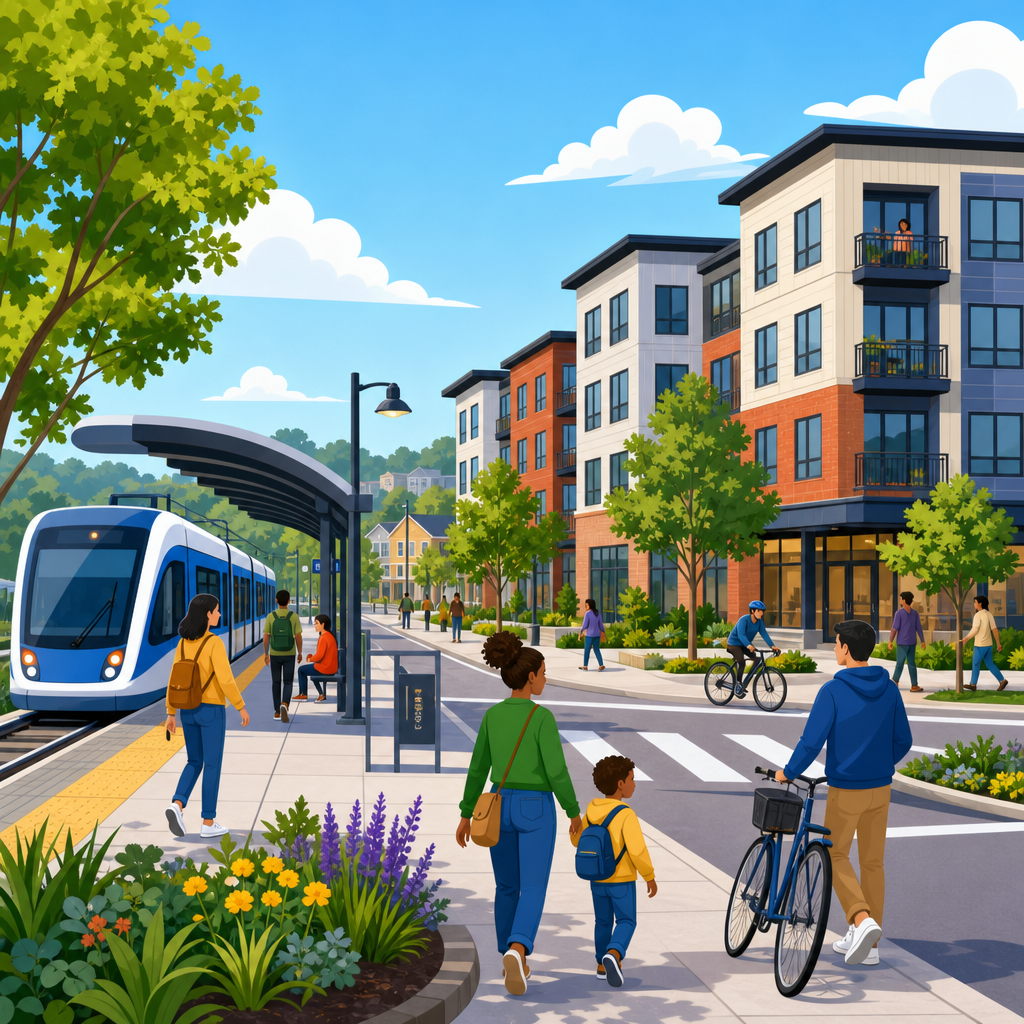
Transit-oriented affordable housing near secondary stations is one of the most practical ways to expand access to jobs, services, and lower-carbon living without concentrating all growth around a city’s busiest downtown hubs. In this context, transit-oriented development means compact, walkable, mixed-use housing and commercial projects located within easy walking distance of rail, bus rapid transit, or high-frequency bus stops. Affordable housing refers to homes priced for lower- and moderate-income households, commonly defined as costing no more than 30 percent of gross income. Secondary stations are the less prominent stops in a transit network: neighborhood rail stations, outer-metro stops, infill stations, or transfer points that do not command the same land values or political attention as a central business district terminal. I have worked on station-area planning where the biggest opportunity was not the flagship downtown station everyone discussed, but the overlooked stop three miles away where land was cheaper, sidewalks were incomplete, and families already depended on transit daily. That is why this topic matters. Secondary stations often offer the best chance to deliver affordable homes at scale, preserve existing communities, and reduce transportation costs at the same time. For households struggling with both rent and car dependence, proximity to reliable transit can function like a substantial income increase, improving access to employment, education, health care, and resilience during fuel price shocks.
Why secondary stations are strategic for affordable housing
Secondary stations are strategic because they combine transit access with lower land acquisition costs than primary downtown stations. In many metropolitan areas, parcels next to signature stations attract luxury office, hotel, and Class A multifamily development, which makes deeply affordable housing financially difficult without extraordinary subsidy. By contrast, secondary stations often sit within older commercial corridors, light industrial edges, or low-rise residential districts where site assembly is more feasible and price expectations are less inflated. That difference matters. When land basis is lower, public subsidy stretches further, more units can be financed, and community-serving ground-floor uses become realistic. The strongest projects I have seen near secondary stations also benefit from an existing daily ridership base: people already use the stop, but the surrounding zoning, parking requirements, or fragmented ownership pattern prevents housing supply from matching that demand.
There is also a transportation equity argument. Many lower-income households already live farther from high-opportunity job centers and spend a disproportionate share of income on transportation. The Center for Neighborhood Technology’s Housing and Transportation Index has long shown that affordability cannot be judged by rent alone. A unit with lower monthly rent but high car dependence may be less affordable overall than a unit near frequent transit with modestly higher rent. Secondary stations help close that gap. They can connect residents to regional employment while also supporting local main streets, schools, and social networks. In practical planning terms, these station areas can absorb incremental density without the level of infrastructure strain, landmark politics, or speculative heat that accompanies major downtown redevelopment districts.
What makes a station area suitable for transit-oriented affordable housing
A suitable station area needs more than a platform and a train schedule. The core ingredients are frequent, reliable service; safe pedestrian access; supportive land use rules; and access to everyday destinations. Most practitioners define a comfortable walkshed as roughly a half mile for rail and a quarter mile for bus, but distance alone is misleading. A half mile along a shaded, well-lit route with protected crossings feels short. A quarter mile across six lanes of traffic without curb ramps can be functionally inaccessible for older adults, parents with strollers, and people with disabilities. Good station-area analysis therefore combines service frequency, travel time to major destinations, sidewalk completeness, topography, crime prevention through environmental design, and the location of grocery stores, schools, clinics, and parks.
Zoning and development controls are equally decisive. If a site allows only single-family use, imposes low height limits, mandates excessive parking, or requires discretionary approvals for basic multifamily housing, affordability goals will stall. Effective station-area policy usually permits mid-rise multifamily housing by right, reduces minimum parking requirements, and allows mixed-use buildings that can support neighborhood retail, childcare, or nonprofit services. Cities such as Minneapolis, Arlington County, and Seattle have demonstrated that changing use allowances and parking rules near transit can materially improve project feasibility. The lesson is straightforward: affordable housing near secondary stations succeeds when transit planning, land use regulation, and public realm investment are aligned rather than treated as separate silos.
Financing models, policy tools, and delivery pathways
No single financing tool delivers transit-oriented affordable housing near secondary stations. Most successful projects stack multiple sources because the goal is to close the gap between what households can pay and what it costs to acquire land, build, finance, and operate quality housing. The Low-Income Housing Tax Credit remains the dominant production tool in the United States, often paired with tax-exempt bonds, HOME funds, Community Development Block Grant resources, local housing trust funds, and state soft loans. Near transit, some agencies also contribute publicly owned land through long-term ground leases, lowering upfront costs while preserving public control. Value capture tools can help when carefully designed. Tax increment financing, joint development agreements, and special assessment districts can channel part of the value created by transit investment back into housing and public realm improvements.
Policy design matters as much as capital stacks. Inclusionary zoning can secure income-restricted units in market-rate projects, but it rarely produces enough deeply affordable units on its own unless paired with density bonuses, fee waivers, or direct subsidy. Land banking is especially useful near secondary stations because it allows cities or mission-driven partners to secure sites before speculation accelerates. Community land trusts can preserve long-term affordability and reduce displacement pressure by separating land ownership from building ownership. Public housing authorities also have an important role through mixed-finance redevelopment, project-based vouchers, and partnerships with transit agencies. When these actors coordinate early, they can shape station areas before land values spike, instead of trying to buy affordability back after luxury development has already reset the market.
| Tool | How it helps near secondary stations | Main limitation |
|---|---|---|
| Low-Income Housing Tax Credit | Provides major equity source for new affordable rental housing | Competitive allocation and complex compliance |
| Public land ground lease | Reduces acquisition cost and preserves long-term control | Requires agencies to coordinate goals and timelines |
| Parking reduction | Lowers construction cost and frees land for housing or open space | Can face neighborhood opposition if curb management is weak |
| Community land trust | Protects long-term affordability and limits speculation | Needs sustained stewardship capacity |
| Inclusionary zoning | Captures affordability in rising markets | Usually insufficient for very low-income households alone |
Design principles that make projects livable, efficient, and durable
Affordable housing near transit should not be treated as a numbers exercise. The best projects work because they are deeply livable. Building form should support walkability, passive surveillance, and climate resilience. That means front doors and common spaces facing streets, weather protection at entrances, active ground floors where feasible, and secure bicycle storage that residents will actually use. Family housing requires larger unit mixes, stroller-friendly circulation, acoustic control, and direct access to play space. Housing for seniors benefits from universal design, elevators, benches along walking routes, and easy access to pharmacies and clinics. Near bus corridors and rail lines, noise attenuation, air filtration, and façade design deserve attention so that transit proximity does not come at the cost of indoor comfort.
Parking strategy is another design lever. Structured parking can add tens of thousands of dollars per stall, which directly competes with affordability. In station areas with frequent service, reduced parking ratios are usually justified, especially when paired with unbundled parking, transit pass programs, car-share access, and strong bicycle infrastructure. I have seen projects improve both finances and resident outcomes by reallocating parking area toward community rooms, courtyards, small retail bays, and additional units. Sustainability features also matter operationally. All-electric systems, high-performance envelopes, heat pumps, and rooftop solar can reduce long-term utility burden if designed with maintenance realities in mind. Durable materials and efficient building systems are not aesthetic luxuries; they protect limited operating budgets and reduce the risk that affordable housing becomes more expensive to run than residents can reasonably support through rents and subsidies.
Preventing displacement and preserving existing affordability
Transit investment can increase land values and trigger displacement if housing policy does not move first. That risk is especially sharp around secondary stations because these areas often contain older apartment buildings, naturally occurring affordable housing, and small businesses operating on thin margins. Preservation should therefore be treated as equal in importance to new construction. Acquisition funds that let nonprofits purchase aging multifamily properties before speculative investors do are one of the most effective tools. Rehabilitation financing can then extend building life while protecting existing tenants through affordability covenants and right-to-return policies. Local governments can also adopt anti-displacement strategies such as notice requirements for sales, tenant opportunity to purchase laws, just-cause eviction protections, rent stabilization where legally allowed, and targeted property tax relief for longtime homeowners vulnerable to rising assessments.
Small business retention is part of the same equation. Secondary station areas often function as neighborhood commercial anchors, with immigrant-owned shops, repair services, and community institutions that residents rely on daily. If redevelopment displaces those uses, the area may gain housing units while losing social infrastructure. Balanced station planning sets expectations for commercial tenancy, supports affordable retail or nonprofit space where justified, and phases construction to minimize disruption. Community benefits agreements can help, but they work best when tied to enforceable timelines and measurable outcomes. The central principle is simple: transit-oriented affordable housing should expand opportunity for current residents, not merely create a transit-rich district for future higher-income households.
Governance, partnerships, and implementation challenges
Implementation is usually harder than concept design. Secondary station projects often involve transit agencies, city planning departments, housing authorities, private developers, lenders, state allocating agencies, utility providers, and neighborhood groups, each working on different timelines. Transit agencies may prioritize ridership, operational safety, and revenue from land assets. Housing agencies prioritize affordability levels and compliance. Developers focus on delivery risk, construction cost, and lease-up. Without a shared framework, projects stall. The most effective governance models establish clear station-area objectives early: target income bands, unit counts, public realm standards, parking assumptions, and community-serving uses. Memoranda of understanding, predictable disposition processes for public land, and transparent scoring criteria for proposals can reduce uncertainty and attract capable partners.
Political challenges should not be underestimated. Even near transit, multifamily housing can face opposition over height, parking spillover, school crowding, or fears about neighborhood change. The strongest response is evidence paired with visible design quality. Travel behavior studies consistently show that households near frequent transit own fewer cars on average, especially when parking is priced separately and daily needs are walkable. School impacts vary by unit mix and local demographics rather than by density alone. Crime claims are often rhetorical and should be addressed through good management, lighting, active frontages, and collaboration with resident service providers, not stigma. In my experience, trust improves when public agencies show exactly how affordability will be maintained, how streets will be made safer, and how existing residents will benefit from the investment.
How cities can build a strong secondary-station housing pipeline
Cities need a repeatable pipeline, not isolated pilot projects. The first step is to map all secondary stations by service frequency, publicly owned parcels, zoning capacity, displacement risk, and nearby amenities. That inventory should identify quick wins, preservation priorities, and longer-term catalytic sites. Next, align capital planning with housing objectives: sidewalk upgrades, bus priority lanes, sewer capacity, and station accessibility improvements should be programmed where affordable housing can realistically proceed. Standardized predevelopment support is also critical. Many nonprofit developers lack the balance sheet to carry site control and early design costs through lengthy approvals, so cities that offer recoverable grants, expedited entitlement pathways, or revolving acquisition funds materially improve delivery odds.
Performance management closes the loop. Agencies should track not only units permitted and built, but also affordability depth, family-sized unit share, resident transit usage, transportation cost savings, preservation outcomes, and displacement indicators. Results should inform future rezoning, subsidy allocation, and station-area investment. Secondary stations are not secondary in social value. They are often where a city can most effectively connect affordable housing, climate goals, and equitable access to opportunity. For planners, transit agencies, developers, and community organizations, the path forward is clear: secure land early, legalize the right building types, reduce unnecessary parking, preserve existing homes, and design station areas around the daily realities of the people who already rely on transit. If you are shaping a sustainable urban development strategy, start with the overlooked stops, build a data-backed housing pipeline around them, and turn secondary stations into primary engines of inclusive growth.
Frequently Asked Questions
1. What is transit-oriented affordable housing near secondary stations?
Transit-oriented affordable housing near secondary stations refers to homes for lower- and moderate-income households built within easy walking distance of smaller rail stops, bus rapid transit stations, or high-frequency bus corridors outside the most heavily concentrated downtown areas. “Transit-oriented” means these homes are part of compact, walkable, mixed-use neighborhoods where residents can reach transit, shops, schools, services, and public spaces without depending on a car for every trip. “Affordable housing” means the homes are priced or subsidized so that households can spend a manageable share of their income on rent or mortgage costs while still covering essentials like food, healthcare, and transportation.
The “secondary station” part is important because it shifts attention away from only the most prominent central stations. Many metro systems have underused or overlooked stops in neighborhood centers, inner-ring suburbs, and emerging job corridors. These locations often have enough transit access to support daily life, but they may have lower land costs, less competition from luxury development, and more room for context-sensitive growth. That makes them especially promising for expanding affordable housing in places where residents can still benefit from strong mobility and shorter commutes.
In practice, this kind of development can include apartments above retail, mixed-income buildings, family-sized units near schools and parks, senior housing close to clinics and bus lines, and supportive housing connected to essential services. The goal is not simply to place housing next to a station, but to create a complete neighborhood where affordable homes, reliable transit, and everyday destinations work together.
2. Why are secondary stations such a strong opportunity for affordable housing compared with major downtown hubs?
Secondary stations are often a more practical and scalable opportunity because they can provide many of the same transportation benefits as major downtown hubs without the extreme land prices, political pressure, and development competition commonly found in central business districts. Around primary stations, land values are frequently driven up by office towers, luxury housing, entertainment uses, and investor demand. That can make it difficult to produce deeply affordable homes unless public agencies commit very large subsidies or already control the land.
By contrast, land near secondary stations may still offer good transit access to jobs, schools, and regional destinations while remaining more financially feasible for mixed-income or income-restricted housing. In many cases, these areas already have neighborhood-serving retail, civic institutions, and existing bus connections, so they are well positioned for incremental growth. This makes it easier to add housing without needing the scale of infrastructure investment often required in newly developing districts.
Secondary stations also support a more distributed pattern of urban growth. Instead of channeling all new housing into a small number of high-profile downtown locations, cities can create multiple accessible centers across the region. That approach can reduce displacement pressure in the core, improve access to opportunity in more neighborhoods, and better match where people actually work and live. For working households, being near a secondary station may also mean easier reverse commutes, better cross-town travel, and daily convenience without the higher costs associated with central-city addresses.
3. How does locating affordable housing near secondary transit stations benefit residents and communities?
The benefits are both household-level and region-wide. For residents, one of the biggest advantages is transportation cost savings. A home with lower rent is only truly affordable if the total cost of living stays manageable, and transportation is often the second-largest household expense after housing. When people live near reliable transit and in walkable neighborhoods, they may be able to own fewer cars, drive less, and spend less on gas, insurance, maintenance, and parking. Those savings can significantly improve financial stability.
Access is another major benefit. Affordable housing near secondary stations can connect residents to jobs, education, healthcare, childcare, grocery stores, and public services without requiring long or expensive trips. This is especially important for households with irregular work schedules, seniors, people with disabilities, young adults, and families balancing multiple daily destinations. If the surrounding area includes safe sidewalks, crossings, lighting, and neighborhood amenities, the value of transit access becomes even stronger because it supports real day-to-day usability.
Communities benefit as well. Concentrating housing in walkable transit-served areas can reduce traffic growth, support local businesses, and lower per-capita greenhouse gas emissions. It can also help public agencies make better use of existing transit investments by increasing ridership at stations that may be underperforming today. When done well, these projects can revitalize commercial corridors, add customers for neighborhood shops, improve street activity, and create a more balanced mix of housing options. The key is thoughtful planning that includes affordability protections, good design, and meaningful community engagement so that growth strengthens the neighborhood rather than undermining it.
4. What challenges can make transit-oriented affordable housing near secondary stations difficult to deliver?
Even when the concept is sound, delivery can be complicated. Financing is often the first major hurdle. Affordable housing typically depends on layered funding sources such as tax credits, local housing trust funds, transit agency partnerships, public land discounts, tax-exempt bonds, and operating subsidies. Putting these sources together takes time and coordination, and rising construction costs can make projects difficult to pencil out, even on sites that are less expensive than prime downtown parcels.
Zoning and land-use rules are another frequent barrier. Secondary station areas may still be governed by low-density zoning, excessive parking minimums, setback requirements, height limits, or approval processes that make compact housing difficult to build. In some cases, the transit service is strong enough to justify more homes, but local policy has not caught up. Updating these rules is often essential if cities want to encourage mid-rise apartments, mixed-use buildings, missing-middle housing, and reduced parking near transit.
There are also social and political challenges. Residents may support affordable housing in principle but oppose specific projects because of concerns about traffic, school crowding, neighborhood character, or misconceptions about lower-income tenants. At the same time, if station-area investment is not paired with anti-displacement strategies, longtime residents and small businesses may worry that neighborhood improvements will raise rents and taxes. Successful projects usually address these concerns directly through transparent planning, inclusive outreach, tenant protections, community benefits, and design choices that fit local context while still allowing enough density to make the housing possible.
5. What policies and strategies help cities create more affordable housing near secondary transit stations?
The most effective strategies combine land use, housing finance, transit planning, and anti-displacement tools. One of the strongest approaches is to update zoning around secondary stations to allow more homes within walking distance of transit, especially multifamily and mixed-use development. Reducing or eliminating parking minimums can also make a major difference because structured parking is expensive and often unnecessary in transit-rich locations. Streamlined approvals for projects that include affordable units can further reduce risk and cost.
Public land policy is another powerful lever. Cities, transit agencies, school districts, and other public entities may own land near stations that can be leased or transferred for affordable or mixed-income housing. When agencies prioritize long-term affordability in these deals, they can shape growth patterns more intentionally and capture the value of public investment for community benefit. Joint development agreements, land banking, and community land trusts can all help preserve affordability over time.
Financial tools matter just as much. Local governments can pair federal and state housing resources with local gap funding, tax abatements, inclusionary housing policies, and preservation funds for existing naturally affordable buildings. Equally important are anti-displacement strategies such as tenant protections, small business support, property tax relief for vulnerable homeowners, and acquisition funds that help nonprofit developers secure sites before speculation drives prices up. Finally, the best results usually come from planning station areas as complete neighborhoods, not just housing sites. That means investing in sidewalks, bike access, safe crossings, parks, childcare, grocery access, and frequent all-day transit service so that affordable housing near secondary stations truly delivers opportunity, mobility, and long-term community stability.