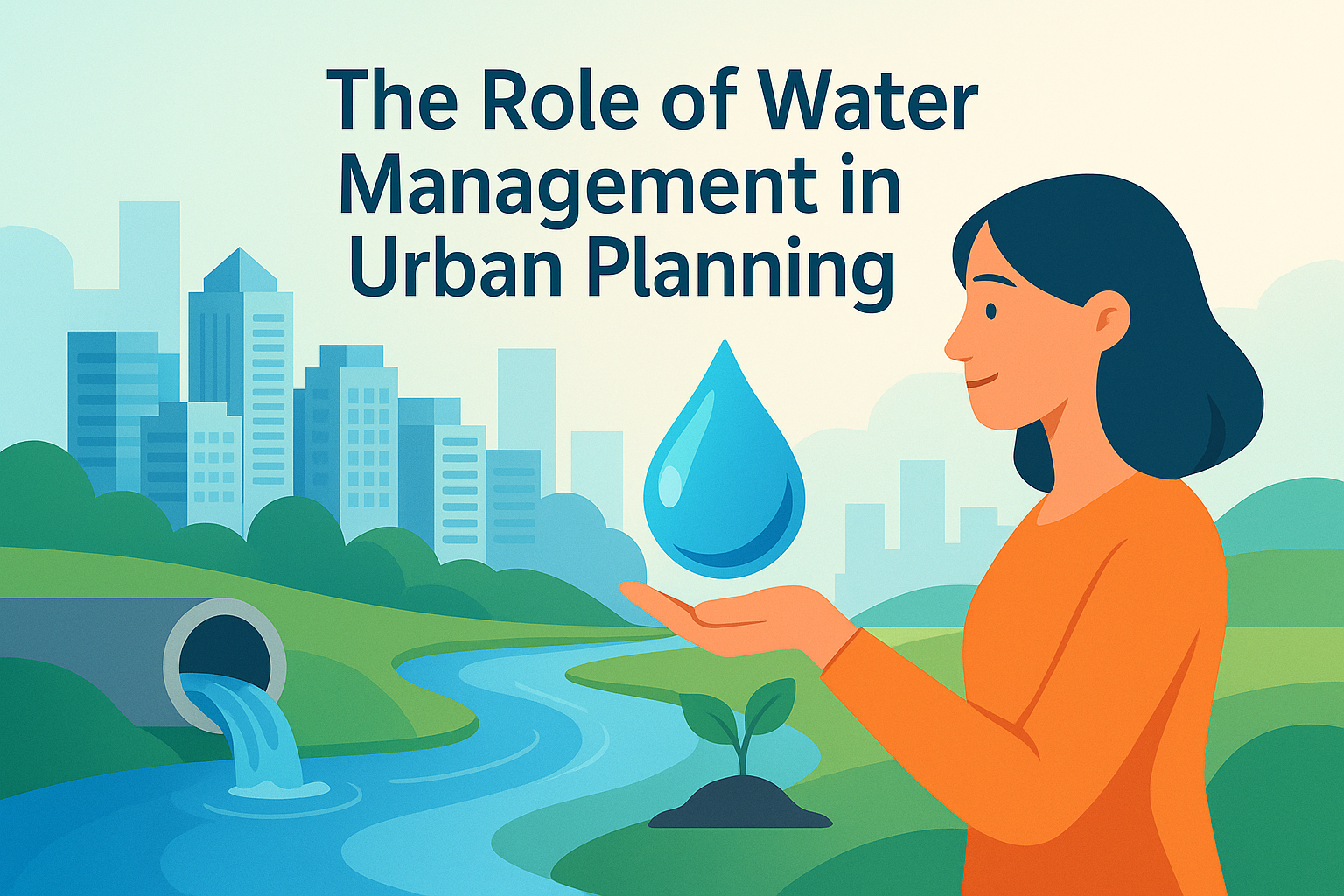
Water management plays a crucial role in modern urban planning. As cities grow and evolve, the demand on water resources increases, necessitating a strategic approach to ensure sustainable and efficient use. To understand the significance of water management in urban planning, we must first define key terms and concepts. Water management involves the coordinated control and oversight of water resources, including the planning, developing, distributing, and managing the optimum use of water resources. Urban planning, on the other hand, is the process of designing and regulating the use of land, resources, facilities, and services to accommodate the growth and development of urban areas. By integrating water management into urban planning, cities can achieve efficient resource use, ensure water security, and enhance environmental sustainability.
One might ask why water management is important in urban planning. The answer is straightforward yet multifaceted. First, urban areas are home to more than half of the world’s population, and the trend is increasing. This population density puts significant pressure on available water resources. Without effective water management, cities risk facing water shortages, deteriorating water quality, and increased risk of flooding. Additionally, climate change introduces further variability and unpredictability in weather patterns, making water management challenges even greater. Recognizing these factors underscores the necessity of integrating comprehensive water management strategies into urban planning to create resilient and sustainable city environments.
The Integration of Water Management in Urban Infrastructure
Incorporating water management into urban infrastructure is a crucial step in ensuring sustainable urban development. Urban infrastructure includes the essential systems and structures needed for a city to function, such as transportation, communication, sewage, potable water, and electric systems. Integrating water management into these systems addresses both the supply and demand aspects of water resources and mitigates risks associated with urban water challenges.
A prime example of this integration is the development of permeable pavements in urban areas. Permeable pavements allow water to infiltrate through surfaces and reach underlying soil layers, reducing surface water runoff and minimizing the risk of flooding. The city of Portland, Oregon, illustrates the successful implementation of this technology. The use of permeable pavements in Portland not only helps manage stormwater but also supports the recharge of groundwater sources, maintaining the natural hydrological balance.
Sustainable Urban Drainage Systems (SUDS)
Sustainable Urban Drainage Systems (SUDS) offer an innovative approach to managing stormwater. Unlike traditional drainage systems, which often aim to dispose of rainwater as quickly as possible, SUDS employ techniques that mimic the natural hydrologic cycle. This approach enhances water quality, reduces flooding risk, and supports ecosystem health within the urban context.
- Green roofs – Roofs covered with vegetation, which absorb rainfall and reduce the amount of stormwater runoff.
- Bioretention areas – Landscaped areas that collect and treat rainwater through soil filtration.
- Rainwater harvesting – Collecting and storing rainwater from roofs for later use, reducing demand on traditional water supply systems.
The city of Melbourne, Australia, provides a practical example of SUDS application. Its commitment to water-sensitive urban design (WSUD) includes the widespread implementation of solutions like green roofs and bioretention to manage stormwater sustainably. As a result, Melbourne has successfully reduced flooding risks while also enhancing urban green spaces.
Water Recycling and Reuse in Urban Areas
Water recycling and reuse play an essential role in optimizing water use efficiency within urban environments. This practice involves treating wastewater to a standard safe for a range of applications, such as irrigation, industrial processes, and even replenishing potable water supplies. Recycling water reduces dependency on freshwater sources and contributes to urban sustainability.
A noteworthy example of successful water recycling is found in Singapore. The country’s NEWater initiative treats reclaimed water using advanced membrane technologies to produce clean, high-quality water. By incorporating water recycling into its urban planning strategy, Singapore has significantly reduced its reliance on imported water, achieving greater water security for its population.
Water-Efficient Buildings and Technologies
Incorporating water-efficient technologies in building design is vital for reducing urban water consumption. This can be achieved by utilizing appliances and systems that minimize water waste and enhance water conservation. For example, dual-flush toilets, low-flow showerheads, and smart irrigation systems significantly decrease water usage in residential and commercial buildings.
The city of Los Angeles, California, demonstrates the impact of promoting water efficiency in urban settings. Through incentive programs and stringent water-use regulations, Los Angeles encourages residents and businesses to adopt water-saving technologies. These measures have led to substantial reductions in per capita water consumption, supporting the city’s long-term water management objectives.
The Role of Policy and Governance in Water Management
Effective policy and governance are critical components of successful water management in urban planning. Policymakers play a pivotal role in establishing regulations and frameworks that guide the sustainable use of water resources. Governance ensures that stakeholders, including government agencies, private entities, and the community, work collaboratively to achieve common water management goals.
An exemplary model of policy-driven water management is seen in the Netherlands, where integrated water resource management (IWRM) principles have been embedded into national governance. By implementing comprehensive policies, the Netherlands effectively manages water resources, addressing challenges such as flood control and water quality protection in its urban areas.
| City | Water Management Strategy | Outcome |
|---|---|---|
| Portland, Oregon | Permeable pavements | Reduced flooding, groundwater recharge |
| Melbourne, Australia | Sustainable Urban Drainage Systems | Enhanced water quality, reduced flooding risk |
| Singapore | Water recycling and reuse | Increased water security |
| Los Angeles, California | Water-efficient technologies | Decreased water consumption |
| Netherlands | Policy-driven IWRM | Effective flood control, resource management |
Challenges to Water Management in Urban Planning
Several challenges complicate water management in urban planning. These include the escalating pace of urbanization, climate change impacts, financial constraints, and fragmented governance. Urban planners and water managers must navigate these obstacles to develop and implement effective water management strategies.
For instance, rapidly urbanizing cities like Lagos, Nigeria, confront challenges such as limited infrastructure capacity and inadequate funding for water management initiatives. Addressing these issues requires comprehensive planning and investment in innovative solutions that can adapt to changing conditions and resource demands.
Technological Innovations in Urban Water Management
Technological innovations offer exciting opportunities for advancing urban water management. Smart water meters, data analytics, and sensor technologies provide real-time information on water consumption and distribution, optimizing resource use and reducing waste. Geographic Information Systems (GIS) and remote sensing enhance urban planners’ ability to monitor and manage water resources efficiently.
The use of technology in urban water management is exemplified by the city of Barcelona, Spain. Barcelona has implemented a smart water grid system that integrates sensors and advanced analytics to detect leaks, monitor consumption patterns, and optimize the water distribution network. These technologies enable the city to manage water resources effectively and proactively address potential issues.
Conclusion: Embracing Water Management for Sustainable Urban Futures
In conclusion, the role of water management in urban planning is multifaceted and critical to ensuring sustainable and resilient cities. By integrating water management strategies into urban infrastructure development, adopting sustainable urban drainage systems, promoting water recycling and reuse, implementing water-efficient technologies, and addressing policy and governance issues, cities can achieve efficient resource use and environmental sustainability.
Real-world examples from cities like Portland, Melbourne, Singapore, Los Angeles, and the Netherlands demonstrate the potential benefits of effective water management strategies. These case studies serve as valuable models for other urban areas striving to address water-related challenges.
As urban populations continue to grow, policymakers, planners, and citizens must prioritize water management as a central component of urban planning efforts. By doing so, they can foster urban environments that are better equipped to support the needs of their residents while preserving vital natural resources. The next step in this journey involves active collaboration among stakeholders to develop innovative, adaptable, and forward-thinking water management solutions.
Frequently Asked Questions
1. What is the significance of water management in urban planning?
Water management is a pivotal component of urban planning that ensures the sustainable and efficient use of water resources. As cities expand and populations grow, the demand for water increases significantly. If not managed correctly, this can lead to shortages and overexploitation of water sources. Effective water management involves planning for adequate water supply, treatment, and distribution systems to ensure that current and future needs of urban populations are met without compromising the ability to maintain ecological balance. Moreover, integrating water management into urban planning helps in safeguarding against water-related challenges such as scarcity, pollution, and climate change impacts, thereby maintaining a high quality of life for city dwellers and preserving the environment.
2. How does water management contribute to sustainable development in urban areas?
Water management contributes to sustainable development by ensuring that urban areas use water in a manner that meets present needs without compromising the ability of future generations to meet their needs. This involves employing strategies that promote water efficiency, such as the use of alternative water sources, recycling, and reuse of water. It also means protecting water sources from pollution and over-extraction, thereby maintaining the health of ecosystems that support human life and biodiversity. Furthermore, sustainable water management enhances resilience against climate change and extreme weather events, reducing the risks of droughts and floods. By integrating these practices into urban planning, cities can develop in a manner that supports economic growth, social well-being, and environmental health.
3. What are some common challenges urban areas face in water management?
Urban areas often face numerous challenges when it comes to water management. One major issue is the increasing demand for water driven by population growth and urbanization, which can surpass the available supply. Another challenge is aging infrastructure that may result in water loss through leaks and inefficient systems. Pollution from industrial, agricultural, and residential sources can compromise water quality, making it unfit for consumption and harming aquatic life. Climate change also poses challenges by altering precipitation patterns, leading to irregular water availability, and increasing the occurrence of extreme weather events like floods and droughts. Additionally, financial constraints in funding water infrastructure projects and lack of effective policies and regulations can impede efficient water management practices.
4. How are cities addressing water scarcity issues through urban planning?
Cities are employing various strategies within urban planning to tackle water scarcity issues. One common approach is the adoption of integrated water resource management, which considers the entire water cycle and promotes coordinated development and management of water, land, and related resources. Cities are also focusing on the development of advanced water treatment and recycling technologies to make use of non-traditional water sources, such as desalination and wastewater reuse. Rainwater harvesting and stormwater management practices are being incorporated to capture and store water for later use. Encouraging water conservation through public awareness campaigns and the implementation of water-saving regulations and incentives also play an essential role. Moreover, cities are investing in green infrastructure, such as green roofs and permeable pavements, that help manage water flow and reduce surface runoff, alleviating pressure on water supply systems.
5. What role does technology play in modern water management for urban planning?
Technology plays a vital role in enhancing water management within the context of urban planning by providing tools and solutions for better monitoring, management, and optimization of water resources. Advanced technologies such as smart water meters and sensors allow for real-time data collection on water usage and leaks, enabling timely responses to issues and promoting efficient usage. Geographic Information Systems (GIS) and remote sensing facilitate mapping and analysis of water resources, guiding urban planners in decision-making processes. Innovations in water purification and treatment technologies have improved the quality and availability of water. Further, predictive modeling and data analytics help cities anticipate and plan for future water demands and climate change impacts. Technology also supports public engagement platforms for raising awareness and encouraging community involvement in water conservation efforts. By leveraging these technologies, urban areas can develop more resilient, efficient, and sustainable water management systems.