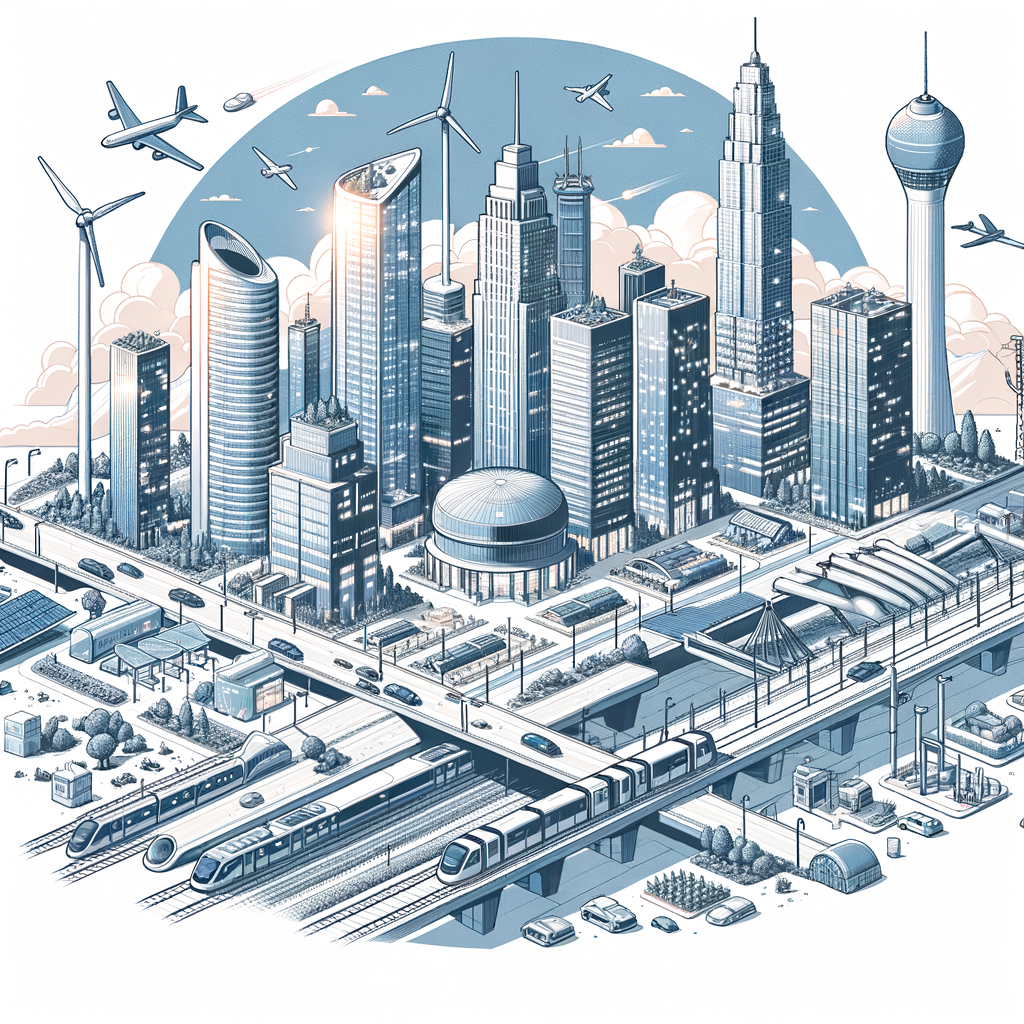
Urban infrastructure plays a quintessential role in improving the livability, functionality, and economic performance of cities around the world. It encompasses an array of elements, including transportation systems, utilities, and services that underpin the daily operations and growth of urban areas. Among its various roles, enhancing urban mobility stands out as both a challenge and a priority for urban planners and policymakers. Cities are dynamic entities characterized by complex networks of people, vehicles, businesses, and services, all interlinked with the basic fabric of infrastructure. As urban populations burgeon, efficient and sustainable mobility becomes paramount to ensuring a seamless flow of goods, services, and people across urban landscapes.
The role of urban infrastructure in mobility is pivotal in fostering inclusivity, accessibility, economic prosperity, and environmental sustainability. Effective infrastructure can help reduce congestion, minimize travel time, and lower pollution levels, directly impacting the quality of life of city dwellers and the ecological footprint of urban communities. This interplay between urban infrastructure and mobility necessitates continuous assessment, innovation, and investment to cater to the evolving needs of cities. This article delves into the significance of urban infrastructure in enhancing mobility and the multifaceted approach required to address emerging challenges. It will examine how technological advances, urban planning, and sustainable practices are reshaping the way cities facilitate movement. This exploration will provide insights into how cities can strengthen their infrastructure to support not only present-day needs but also the future demands of urban mobility.
The Influence of Transportation Networks
Transportation networks are the cornerstone of urban infrastructure that directly impacts mobility. Roadways, railways, airports, and ports constitute the essential components that facilitate the movement of people and goods within and beyond city boundaries. The development and maintenance of these networks are integral to supporting efficient transportation.
One of the primary functions of transportation networks is to reduce travel time. Well-designed roads, effective public transit systems, and expansive cycling paths shorten journeys and enhance accessibility. Urban planning has evolved to prioritize multimodal transport options, ensuring seamless connectivity between different forms of transportation. This approach not only facilitates efficient movement but also reduces the reliance on private vehicles, mitigating congestion.
Public transport systems such as buses, trams, and metro networks are instrumental in supporting urban mobility. These systems offer cost-effective, reliable, and environmentally friendly travel options. With integrated transit systems, passengers can transition between different modes of transport with minimal delays, fostering convenience and efficiency. Cities that invest in public transportation reap the benefits of reduced congestion, lower carbon emissions, and improved air quality—factors that contribute significantly to the overall urban living experience.
Technological Advancements and Smart Infrastructure
The proliferation of technology has spurred the development of smart infrastructure, a key player in the enhancement of urban mobility. Smart infrastructure leverages technology such as the Internet of Things (IoT), data analytics, and artificial intelligence to optimize the use and management of urban resources. One of the hallmarks of smart infrastructure is smart traffic management.
Smart traffic systems utilize sensors, cameras, and connected devices to monitor and manage vehicular movement in real-time. These systems can adapt to changing traffic patterns, optimize traffic signal timings, and provide real-time updates to commuters. The result is a smoother flow of traffic, reduced travel times, and lower instances of road congestion. Moreover, data-driven approaches enable cities to make informed decisions regarding infrastructure development, ensuring investments are directed toward high-impact areas.
Technology is also revolutionizing urban mobility through the rise of mobility-as-a-service (MaaS) platforms. These platforms integrate various transport modes into a single accessible service, allowing users to plan, book, and pay for multi-modal trips efficiently. The convenience of MaaS fosters a shift from private vehicle ownership to shared mobility, contributing to reduced carbon footprints and optimized use of transportation infrastructure.
Infrastructure and Sustainable Mobility
Sustainability is a core consideration in modern urban infrastructure development, directly influencing the mobility landscape. Sustainable infrastructure aims to minimize environmental impacts while supporting long-term urban growth and mobility. Key elements include green spaces, energy-efficient buildings, and infrastructure supporting active travel modes.
Active transportation, which includes cycling and walking, is gaining prominence within urban mobility frameworks. Infrastructure such as dedicated bike lanes, pedestrian zones, and safe crosswalks play a vital role in encouraging residents to adopt healthier, more sustainable travel modes. In cities where these facilities are emphasized, a notable shift toward cycling and walking can be observed, contributing to decreased emissions, improved public health, and lower congestion levels.
Furthermore, sustainable transport aligns with broader environmental objectives, as seen in initiatives aimed at electrifying public transit fleets, developing electric vehicle charging infrastructure, and promoting the use of clean energy. These strategies are pivotal in achieving urban sustainability goals, reducing urban pollution, and fostering resilient cities equipped to handle future demands.
Challenges and Opportunities in Urban Infrastructure
Despite the benefits, enhancing urban mobility via infrastructure presents challenges that require careful consideration and innovative solutions. Urban sprawl, financial constraints, and socio-economic disparities can hinder infrastructure development, necessitating strategic approaches tailored to individual city contexts.
Urban sprawl, characterized by decentralized urban growth, poses a challenge to infrastructure efficiency. Transport networks must adapt to sprawling cities by expanding their reach to reduce car dependency and connect fringe areas. This requires significant investment in public transit and strategic planning to ensure sprawling areas can be seamlessly integrated into the metropolitan fabric.
Economic constraints often limit the scope of infrastructure projects. However, innovative financing models such as public-private partnerships (PPPs), government subsidies, and international aid can help mitigate financial barriers. Collaborative approaches not only share risks and responsibilities but also bring diverse expertise to the table, fostering comprehensive solutions.
Furthermore, socio-economic disparities necessitate inclusive infrastructure planning to ensure equitable mobility for all residents. This includes considering the needs of underserved communities by improving access to affordable public transit, ensuring urban transport systems are inclusive and accessible to individuals with disabilities, and addressing financial affordability concerns.
The integration of smart technologies provides significant opportunities for enhancing urban infrastructure. Innovations in data management, automation, and connectivity are fast-tracking the development of intelligent transport systems. Establishing smart hubs, intelligent transport corridors, and engaging in real-time data analysis are actionable strategies for cities looking to future-proof their transportation infrastructure.
The Role of Policy and Governance
The development and enhancement of urban infrastructure require robust policy frameworks and governance mechanisms. Policies dedicated to land-use planning, transportation, and environmental protection ensure that infrastructure development aligns with overall urban development goals.
Governments play a critical role in infrastructure investment and policy formulation. Political will, backed by sound policies, can drive significant advancements in infrastructure development, ensuring resources are allocated efficiently and equitably. Furthermore, policy coherence across various levels of government—national, regional, and local—is crucial to harmonize efforts and achieve desired service delivery outcomes.
Climate-resilient policies and development plans are becoming increasingly necessary to address the impact of climate change on urban mobility. Proactive climate action can safeguard urban infrastructure against environmental shocks such as flooding and extreme weather, ensuring transport networks remain operational and resilient.
Conclusion
The role of urban infrastructure in enhancing mobility is vital to creating sustainable, efficient, and inclusive cities. From transportation networks to smart technologies, and sustainable practices, multifaceted infrastructure elements work synergistically to support urban mobility. While challenges persist, a proactive approach incorporating innovative solutions, strategic investments, and equitable planning can help cities unlock the transformative potential of their infrastructure.
By prioritizing infrastructure that accommodates diverse mobility needs while aiming to minimize environmental impact, cities can ensure resilient growth. As technological advancements reshape urban landscapes, cities must remain adaptable, embracing change and innovation to foster thriving urban environments. The journey to enhanced mobility is ongoing, requiring concerted efforts from government bodies, private stakeholders, and communities alike.
Ultimately, investing in robust urban infrastructure is an investment in the sustained prosperity and livability of our cities. Through comprehensive planning, inclusive policies, and cutting-edge technologies, the cities of tomorrow can be better equipped to meet the transportation challenges and opportunities ushered in by rapid urbanization and changing societal needs.
Frequently Asked Questions
1. What exactly is urban infrastructure, and why is it important for mobility?
Urban infrastructure is like the backbone of a city. It’s made up of all the essential physical structures and systems that keep a city running smoothly. We’re talking roads, bridges, public transit systems, utilities like water and electricity, telecommunication networks, and more. All these components work together to support not just mobility, but every aspect of life in a city.
When it comes to mobility, urban infrastructure plays a pivotal role by providing the pathways and means through which people and goods move around. A well-planned and maintained infrastructure allows for efficient, safe, and reliable transportation, which is crucial for a city’s economic health, environmental sustainability, and overall quality of life. Without solid infrastructure, everything from commuting to work to accessing healthcare could become a drawn-out, inefficient, and frustrating ordeal, negatively affecting residents’ quality of life. Plus, a city’s ability to attract new businesses and residents can hinge on the state of its infrastructure.
2. How does urban infrastructure enhance transportation and mobility in cities?
Urban infrastructure enhances transportation and mobility in several significant ways. First and foremost, it establishes the physical routes and pathways—think roads, rail lines, and sidewalks—that facilitate movement within the city. Efficiently designed and maintained transit systems, such as subway networks and bus services, enable people to transit quickly and reliably, reducing travel time and congestion.
Beyond just the physical networks, updated infrastructure takes advantage of technological advances to improve mobility. For instance, integrated traffic management systems and digital tracking tools provide real-time information that optimizes traffic flow and reduces congestion. Additionally, implementing smart infrastructure, like adaptive traffic signals and intelligent transportation systems, makes travel quicker and safer.
Moreover, cities that invest in robust bike lanes and pedestrian pathways support cleaner and healthier modes of transportation, larger-scale transportation management strategies like park-and-ride services further improve a city’s mobility by reducing the number of cars in high-density areas. By enhancing transportation options and improving the flow of people and goods, urban infrastructure directly contributes to more efficient mobility, which translates to improved quality of life and economic growth.
3. What are some examples of challenges that urban infrastructure faces in improving mobility?
There are several challenges that urban infrastructure confronts in its mission to enhance mobility. Perhaps one of the greatest hurdles is aging infrastructure, which can lead to frequent repairs and maintenance that disrupt traffic flow and deter efficient transit. Many cities around the globe have infrastructure systems that were designed decades ago and weren’t intended to handle current population densities.
Another pervasive challenge is funding. High costs to build and maintain infrastructure can limit a city’s ability to institute necessary upgrades or expansions. Cities often need significant investments from both government and private sectors to fully address infrastructural needs. The complex regulatory environment involved in urban planning and development can also slow the pace of improvements.
Furthermore, urban planners must consider space constraints in densely built cities, posing a challenge when trying to expand or modernize existing transport networks. Balancing different modes of transportation — pedestrian, cycling, public transit, and vehicles — while ensuring accessibility and inclusivity adds another layer of complexity. Cities must also tackle environmental concerns, emphasizing the need for infrastructure solutions to support sustainable and resilient transportation options.
4. How does investing in urban infrastructure benefit a city’s economy?
Investing in urban infrastructure provides widespread economic benefits and is a catalyst for growth. At the core, improved infrastructure means better mobility, which increases productivity. When people can move efficiently and goods can get to markets more quickly, businesses become more productive and competitive.
Investment in infrastructure also has direct impacts on job creation. The construction, maintenance, and upgrading of infrastructure generate employment opportunities not only in the sectors directly involved but also in ancillary industries, from manufacturing to services.
Moreover, strong urban infrastructure attracts investments and industries looking for locations with stable and reliable transportation and utility services. With increased investment and economic activities, cities see an expansion in their tax base, which helps fund other crucial city services. The long-term economic benefits are significant, creating a positive feedback loop where improved infrastructure begets economic growth, which then fuels further infrastructural enhancements.
5. What role does technology play in shaping the urban infrastructure necessary for enhanced mobility?
Technology is pivotal in shaping modern urban infrastructure and, consequently, enhancing mobility. Smart technologies are revolutionizing the way we design, operate, and maintain urban systems. For instance, intelligent transport systems (ITS) incorporate sensors, cameras, and GPS to monitor and manage traffic flow, helping reduce congestion and improve safety and efficiency.
Ride-sharing and car-sharing services are another example of how technology reshapes the mobility landscape, making it easier and often less expensive for people to get around without relying on personal vehicles extensively. Apps provide real-time public transit information and navigation tools that improve route planning and usability.
Electric mobility is gaining traction with significant infrastructural implications; for example, establishing widespread electric vehicle charging networks is becoming increasingly important. Meanwhile, infrastructure that supports data collection and analytics enables cities to make informed decisions based on traffic patterns, public usage, and wear-and-tear forecasts. These technological advances enhance existing systems and spark innovative models, making urban areas more adaptive, responsive, and efficient.