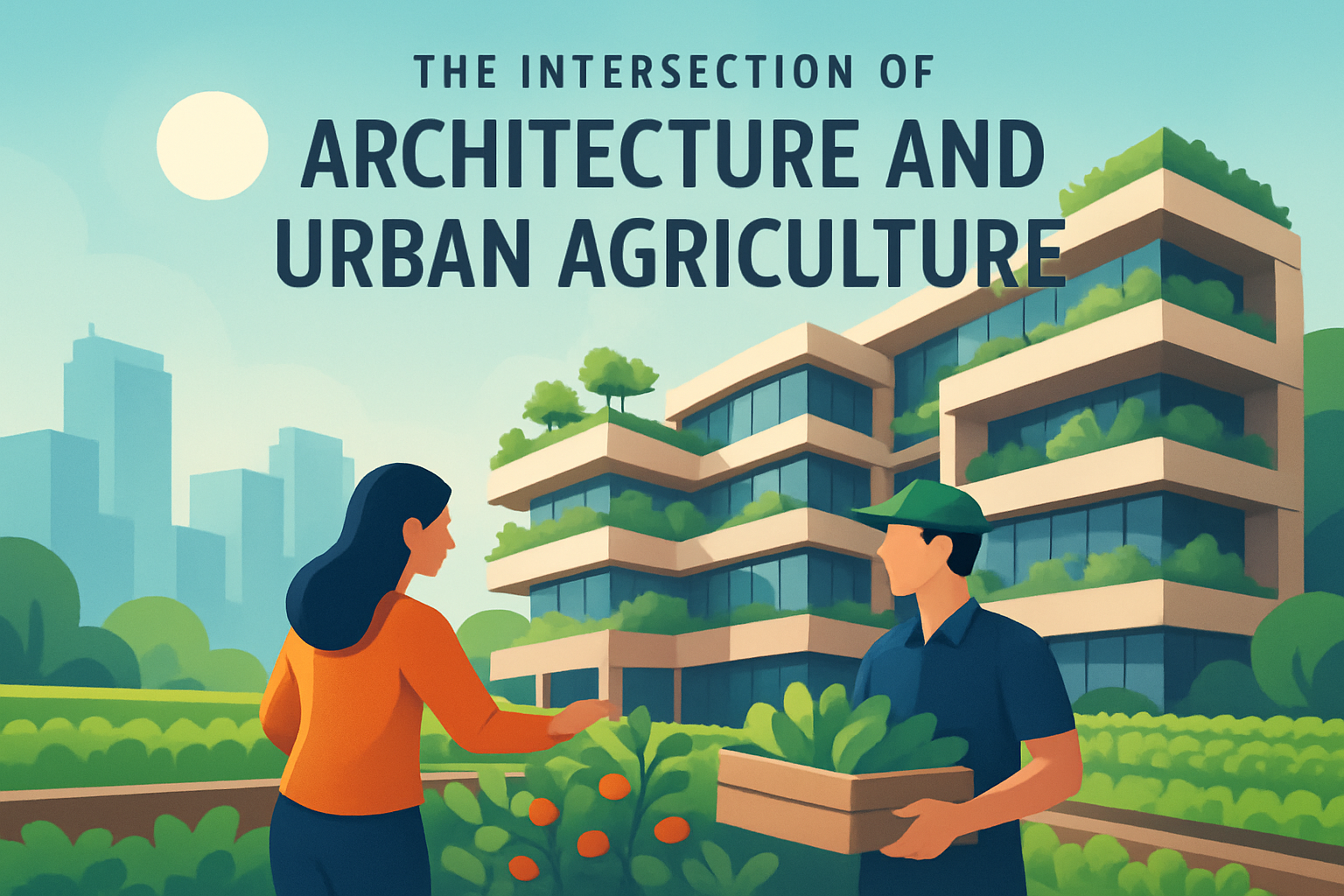
In today’s rapidly urbanizing world, the intersection of architecture and urban agriculture is becoming increasingly pertinent. As cities continue to grow, the demand for sustainable food systems, and eco-friendly living environments is rising markedly. Urban agriculture, in essence, refers to the cultivation of food within city limits, utilizing spaces such as rooftops, community gardens, and even vertical building surfaces. On the other hand, architecture encompasses the design and construction of buildings, playing a critical role in shaping the urban landscape. These two domains converge to address critical challenges related to food security, sustainability, and climate change adaptation. Understanding this intersection and why it matters is crucial for architects, urban planners, policy-makers, and communities striving for a greener and more self-reliant future.
Urban Agriculture Design Elements
Urban agriculture design incorporates diverse elements to optimize space for food production. Rooftop gardens are a quintessential example, transforming underutilized rooftops into fertile grounds for growing vegetables, herbs, and fruits. These gardens contribute to improving the urban microclimate by reducing heat absorption, thereby lowering energy consumption in buildings. For instance, the Brooklyn Grange Rooftop Farm in New York City, sprawled across two rooftops, stands as an iconic urban agriculture project. Apart from producing over 50,000 pounds of organic produce annually, it provides ecological benefits by enhancing biodiversity and mitigating stormwater runoff.
Vertical farming is another architectural marvel, typically involving the stacking of farming systems one on top of another. This method maximizes spatial efficiency, a critical attribute in dense urban settings. Illumitex, an Austin-based company, highlights the advantages through its cutting-edge LED grow lights and hydroponics systems, which have enabled the successful deployment of vertical farms in several urban hubs. These farms utilize controlled environments to produce high yields while limiting resource usage, significantly contributing to urban food supplies.
Innovative Integration Strategies
Integrating urban agriculture into existing and new architectural projects requires innovative strategies. Green architecture emphasizes the inclusion of agricultural elements into building design, ensuring synergy between aesthetics, functionality, and sustainability. The Bosco Verticale (Vertical Forest) in Milan epitomizes this approach, integrating diverse plant life into the building facade. This not only improves air quality by absorbing CO2 but also provides a visually appealing urban forest, contributing greatly to the residents’ well-being and the city’s ecological network.
To further elaborate on integration strategies, sustainable building codes and zoning regulations must adapt to accommodate urban agriculture. This involves redefining land use policies to encourage agricultural practices in urban spaces. Cities like Toronto have introduced green roof bylaws mandating certain buildings to include green spaces, supporting urban agriculture efforts and advancing ecological resilience.
Economic and Social Impact
Urban agriculture’s impact extends beyond ecological benefits; it plays a transformative role economically and socially. Economically, it creates new opportunities, providing employment in urban farming, distribution networks, and related industries. For example, Detroit’s urban farming movement sparked significant economic revitalization, turning vacant lots into productive agricultural sites and fostering commerce in once-declining neighborhoods.
- Economic revitalization
- Community engagement
- Food security improvement
- Local business development
Socially, urban agriculture fosters community collaboration and resilience. Community gardens serve as hubs for social interaction, education, and cultural integration, enhancing neighborhood camaraderie. The Havana urban agriculture model illustrates success by involving local communities in growing produce, which not only feeds families but also empowers residents with agricultural skills and knowledge.
Challenges and Solutions
While the benefits are numerous, integrating urban agriculture with architecture faces certain challenges, such as limited space, high initial costs, and maintenance complexities. Addressing these requires collaborative approaches and policy innovation. Implementing modular farming systems can mitigate space constraints by allowing scalable, customizable agricultural setups. Additionally, public-private partnerships can provide the necessary financial backing, reducing the initial economic burden on developers and encouraging more ventures into urban agriculture.
Technological advancements offer solutions for some hurdles. Innovations like automated irrigation systems, energy-efficient grow lights, and Internet of Things (IoT) applications facilitate efficient resource management. These technologies can significantly reduce maintenance time and costs, making urban agriculture a more viable pursuit for cities worldwide.
Future Outlook and Potential
The future of urban agriculture and architecture foresees integration becoming even more seamless, driven by innovation and necessity. As urban populations swell, cities will continuously seek ways to become self-sufficient and climate-resilient. The development of urban agriculture hubs, combining residential, commercial, and agricultural functions, represents a promising trajectory, as witnessed in Singapore’s Agro-Park initiative. By pioneering urban-agricultural spaces, cities can transform into productive, sustainable ecosystems catering to both human and environmental needs.
Furthermore, the role of policy-makers in steering urban agriculture towards widespread adoption cannot be overstated. Urban planners must champion policies that incentivize sustainable building practices and marry agricultural pursuits with urban environments, fostering a culture of ecological mindfulness and sustainability across all sectors.
Conclusion and Call to Action
The intersection of architecture and urban agriculture presents myriad opportunities for creating thriving, sustainable urban areas. By seamlessly integrating green spaces within cityscapes, we address environmental challenges and enrich urban living qualitatively and quantitatively. Through innovative design, policy support, and technological advancement, cities can secure resilient food systems and foster socio-economic growth, positioning urban agriculture at the forefront of future urban development strategies.
For architects, urban planners, and local governments, the call to action is clear: Begin incorporating urban agriculture in the blueprints of new developments, and transform existing spaces into vibrant green havens. Engage communities in this evolving landscape, empowering them through education and participatory governance. Let us build cities that not only stand as architectural marvels but also nourish their inhabitants and the planet.
Frequently Asked Questions
1. What is the intersection of architecture and urban agriculture?
The intersection of architecture and urban agriculture refers to the collaboration between these two fields to create environments that support sustainable food production within city settings. As urban areas expand, the need for sustainable living and eco-friendly food sourcing becomes increasingly important. Urban agriculture can involve growing food on rooftops, utilizing vertical spaces on buildings, and incorporating community gardens into urban design. Architecture, on the other hand, focuses on designing buildings and spaces that not only serve as functional living and working environments but also promote sustainable practices, including food production. Together, architecture and urban agriculture work towards integrating self-sufficient and sustainable food systems into the fabric of urban environments, helping to reduce the ecological footprint of cities while improving food security and enhancing the quality of life for urban residents.
2. Why is urban agriculture important in modern cities?
Urban agriculture plays a crucial role in modern cities for several reasons. First and foremost, it addresses the growing demand for sustainable and environmentally friendly food systems. By producing food locally, urban agriculture reduces the carbon footprint associated with transporting food over long distances, which helps mitigate climate change. Furthermore, it enhances food security by providing fresh produce directly to urban residents, often at a lower cost compared to store-bought alternatives. Urban agriculture also fosters community engagement and social interaction by encouraging people to participate in growing and sharing food. Additionally, it can contribute to the physical and mental well-being of urban dwellers by providing green spaces that offer respite from the concrete urban environment. These spaces can also help reduce urban heat, improve air quality, and increase biodiversity within cities. As cities continue to grow and evolve, integrating urban agriculture into architectural designs offers an opportunity to create greener, more resilient, and sustainable urban living spaces.
3. How do architects incorporate urban agriculture into their designs?
Architects incorporate urban agriculture into their designs through innovative and creative solutions that blend agricultural practices with urban living. One common approach is the integration of green roofs or rooftop gardens, which utilize otherwise underutilized spaces and transform them into areas for food production. These green spaces can regulate building temperatures, manage stormwater, and improve urban air quality. Vertical farming is another architectural solution, enabling the growth of crops on vertical surfaces of buildings, maximizing space usage, especially in densely populated areas. Additionally, architects might design community gardens within housing complexes or public spaces to promote community interaction and food security. Another method involves developing integrated agricultural systems within buildings, such as balconies designed for small-scale gardening or hydroponic systems fitted into living spaces. By designing buildings with sustainability in mind, architects help create environments that support healthy lifestyles and align with the principles of urban agriculture, ultimately contributing to the creation of sustainable cities.
4. What challenges do architects and urban planners face when integrating urban agriculture?
Integrating urban agriculture into architectural designs and urban planning presents several challenges that professionals must carefully navigate. One major challenge is space constraints, as urban areas are often densely populated with limited open land available for agricultural use. Architects must find innovative ways to incorporate green spaces within existing infrastructure without compromising the functionality and aesthetics of buildings. Another challenge lies in the regulatory and zoning restrictions that vary by region, which can limit the types and scale of agricultural practices permissible within city limits. Additionally, there are technical challenges related to the implementation of sustainable systems, such as ensuring adequate lighting, water supply, and soil quality for growing crops in unconventional urban settings. Economic factors, including the costs associated with implementing and maintaining urban agriculture projects, can also pose barriers, requiring architects and planners to balance affordability with sustainability. Despite these challenges, collaborative efforts and advancements in technology continue to provide new opportunities for integrating urban agriculture effectively into urban design and planning.
5. What are some real-world examples of successful urban agriculture integration in architecture?
There are numerous real-world examples of successful urban agriculture integration in architecture around the globe. One notable example is the Bosco Verticale, or Vertical Forest, in Milan, Italy. This pair of residential towers is adorned with approximately 900 trees and numerous other plant species, creating a green oasis in the urban landscape while contributing to improved air quality and biodiversity. Another example is the Pasona Urban Farm in Tokyo, Japan, where an office building features an indoor farm producing rice, vegetables, and fruits. This innovative design successfully integrates agriculture with the workspace environment, promoting sustainability, education, and employee well-being. In the United States, Brooklyn Grange in New York City operates extensive rooftop farms that supply fresh produce to the local community while educating the public about urban agriculture’s benefits. Such projects demonstrate the potential for urban agriculture to be seamlessly incorporated into architectural designs, leading to more sustainable and livable urban environments.