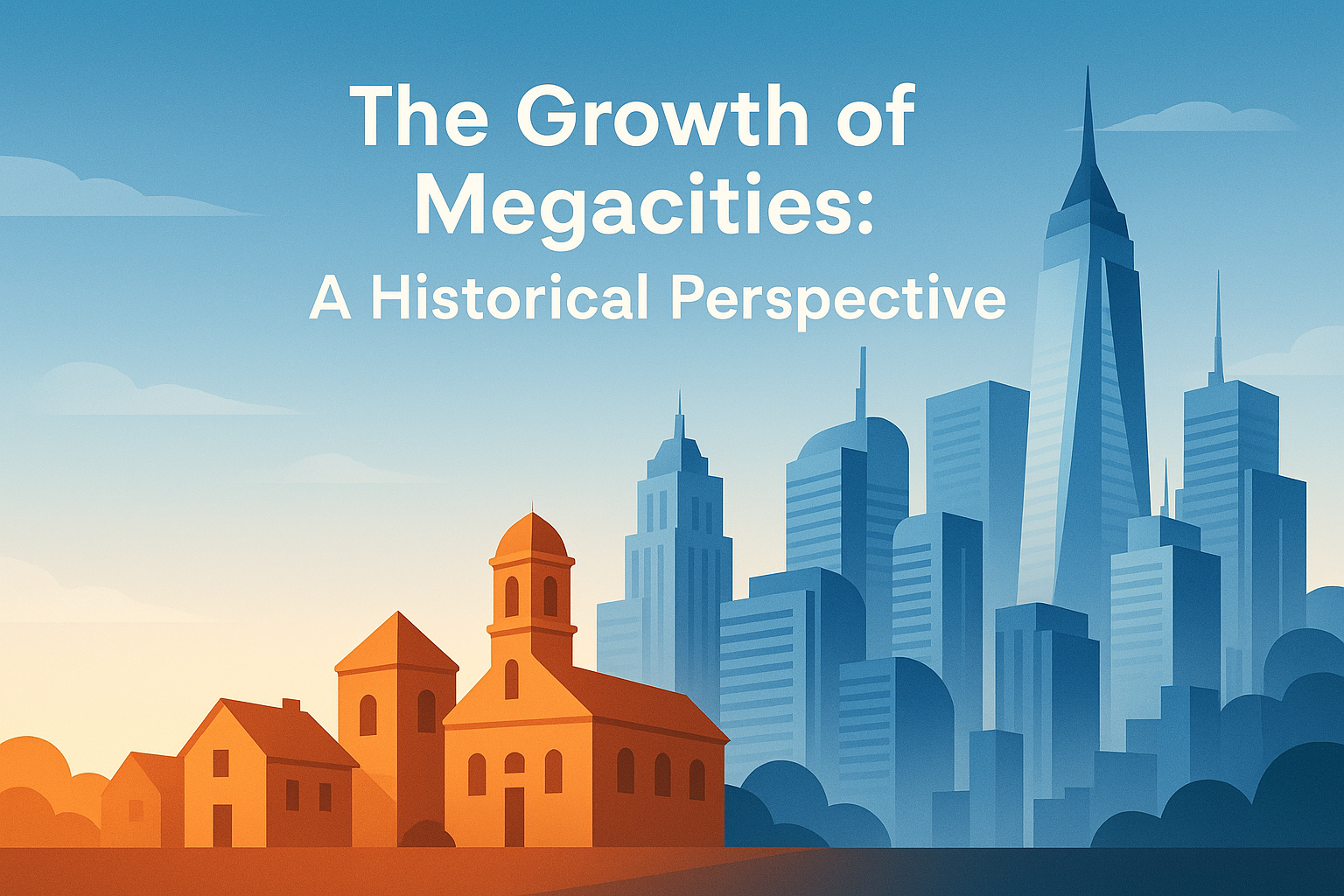
The phenomenon of megacities is an intriguing feature of contemporary urban development, distinguished by the rapid expansion and concentration of populations in urban settings. A megacity is commonly defined as a metropolitan area with a total population surpassing ten million inhabitants. These giant urban centers are reshaping the global landscape, influencing economic activities, cultural movements, and environmental sustainability. Understanding the growth of megacities from a historical perspective offers crucial insights into the transformations of human settlements, highlighting the underlying causes, patterns, and implications for our future. As more people migrate to urban areas in search of better opportunities, the significance of understanding this trend becomes increasingly vital for city planners, policymakers, and everyday citizens who must navigate the complexities of these densely populated environments.
The Birth of the Megacity: Historical Context and Early Examples
The emergence of the megacity can be traced back to industrialization in the 19th century, which marked the beginning of significant urban growth. The Industrial Revolution ignited a dramatic shift as people flocked to cities in search of jobs and improved living conditions. London, often considered the first megacity, experienced explosive growth during this period. By 1800, its population had reached one million, doubling by mid-century as industrial jobs attracted people from rural areas.
Similarly, New York City became a magnet for immigrants and rural migrants seeking economic opportunities. By 1900, New York had burgeoned into a megacity, with more than 3.4 million residents. These early examples of megacities demonstrated a clear pattern: economic opportunities drive urbanization.
Post-War Urbanization and the Global Spread of Megacities
Following World War II, the growth of megacities accelerated, fueled by economic reconstruction and industrial advancements. This era saw the rise of cities like Tokyo, which transformed rapidly due to technological development and significant government investment in infrastructure. By the 1960s, Tokyo had evolved into the world’s largest city, exemplifying the potential of urban transformation when combined with strategic economic policy and planning.
Simultaneously, cities in developing countries began to experience similar growth dynamics. The economic boom in Latin America, for instance, led to the rapid expansion of cities like São Paulo and Mexico City. These megacities emerged not just as economic hubs but also as cultural and political power centers. By 1975, Mexico City’s population exceeded ten million, marking it as one of the world’s largest urban areas.
The Rise of Asian Megacities: Manufacturing and Globalization
The late 20th and early 21st centuries saw Asia become the epicenter of megacity growth, driven by manufacturing and globalization. China and India, two of the world’s most populous nations, witnessed unprecedented urbanization. Shenzhen, a fishing village in the 1980s, evolved into a sprawling megacity due to China’s economic reforms and designation as a Special Economic Zone.
Similarly, Mumbai, formerly known as Bombay, experienced substantial growth as India liberalized its economy in the 1990s. These cities exemplify how strategic economic policy and globalization can transform urban landscapes, creating megacities almost overnight.
- Beijing, China: Population surged from 4.43 million in 1980 to over 21 million today.
- Guangzhou, China: Now home to over 20 million residents.
- Delhi, India: Population doubled from 10.86 million in 1990 to over 29 million.
- Bangkok, Thailand: Grew from 5.87 million in 1990 to over 14 million.
Environmental and Social Impacts of Megacities
While megacities promise economic prosperity and cultural diversity, they also pose significant challenges. Rapid urbanization can lead to severe environmental degradation. Air pollution, waste management, and water scarcity are pressing issues for many megacities. For instance, Beijing’s infamous pollution levels have prompted government interventions and increased investment in renewable energy.
Socially, megacities can exacerbate inequalities. The economic opportunities are often concentrated in high-skilled sectors, leading to income disparities and sprawling slums. For example, in Mumbai, while the city is a financial powerhouse, a significant portion of its population resides in densely packed informal settlements, lacking basic amenities.
The Future of Megacities: Technology and Sustainable Development
As megacities continue to grow, the focus is increasingly on sustainable development. Technology plays a crucial role in shaping the future of urban living. Smart city initiatives, incorporating data analytics, IoT, and artificial intelligence, aim to enhance urban planning and improve quality of life. Cities like Singapore are leading the way by integrating technology into public transport, energy management, and infrastructure to create streamlined and efficient urban environments.
Moreover, there is a concerted effort towards green urban planning, promoting sustainable practices that minimize environmental impact. Urban projects in megacities such as Barcelona and Copenhagen are setting examples with pedestrian-friendly designs and comprehensive waste recycling programs.
| City | Population (2010) | Projected Population (2030) | Key Development Goal |
|---|---|---|---|
| Shanghai | 23 million | 34 million | Smart City Initiatives |
| New Delhi | 25 million | 36 million | Improved Public Transport |
| Dhaka | 14.4 million | 27.4 million | Environmental Sustainability |
Lessons from History: Urban Planning and Policy Implementation
The history of megacities offers valuable lessons in urban planning and policy implementation. Successful megacities have thrived on strong infrastructure, efficient governance, and inclusivity in planning. Tokyo’s proactive approach to public transportation and disaster preparedness stands as a model for other cities grappling with density-related challenges.
Furthermore, community-focused policies can promote inclusivity and equality. Initiatives aimed at affordable housing and equitable access to services can mitigate the negative effects of rapid urbanization. Curitiba in Brazil is renowned for its innovative solutions to urban issues, implementing an extensive public transit network and sustainable waste management practices.
By examining these historical and contemporary approaches, city planners and policymakers can construct more resilient and livable urban environments, ensuring that the evolution of megacities benefits all inhabitants.
Key Takeaways and Future Outlook
The growth of megacities, driven by economic opportunities, industrialization, and globalization, illustrates ongoing shifts in global population dynamics. While they offer immense potential for economic and social development, they also pose considerable environmental and social challenges. Understanding the historical context and impacts of megacities is vital for crafting sustainable urban policies and practices.
Key takeaways include the necessity of balanced urban planning, focusing on sustainable development, inclusivity, and technology integration. As megacities continue to evolve, stakeholders at all levels must prioritize policies that address these challenges, ensuring sustainable and equitable urban spaces.
As a call to action, individuals can voice their support for sustainable urban policies and engage in community initiatives that promote inclusivity and environmental stewardship. Moreover, decision-makers and urban planners should facilitate dialogues and implement policies that harness the potential of technology to combat the complex challenges posed by the growth of megacities. In doing so, they can contribute to creating livable and resilient urban environments for future generations.
The understanding and application of these lessons from history will be quintessential in guiding the development of sustainable and humane megacities, impacting the lives of billions in the decades to come.
Frequently Asked Questions
1. What exactly defines a megacity and why are they so important in today’s world?
At its core, a megacity is a metropolitan region with a population exceeding ten million people. These urban behemoths stand at the forefront of contemporary urbanization trends and are crucial for several reasons. First, their staggering size comes with a concentration of economic activities. The dense population and infrastructure make them hubs for businesses, industries, and innovation. Here, millions of people live, work, and interact, generating significant GDP contributions to their respective nations. Culturally, megacities often become melting pots where diverse cultures blend and create vibrant, dynamic societies. Artists, musicians, and writers often draw inspiration from the multifaceted identities present in these areas, influencing global cultural trends. Environmentally, megacities face challenges but also opportunities. The concentration of resources and population can strain the environment, exacerbating pollution and resource depletion. However, they also provide opportunities to implement innovative solutions for sustainable living, like advanced public transportation systems or green architecture projects. In short, while megacities present challenges, they are vital as they drive global economic growth, cultural evolution, and environmental innovation.
2. How have megacities evolved over the centuries, and what historical events have influenced their growth?
The evolution of megacities is tightly interwoven with humanity’s historical journey, starting from modest settlements to bustling metropolises. Throughout history, several factors and events have catalyzed the growth of these urban giants. Trade has always been a vital force. Cities like Istanbul and Venice began as key trade routes, leveraging their strategic positions to flourish as major urban centers. The Industrial Revolution marked a significant turning point, spurring unprecedented urban growth. As industries emerged, they provided jobs, drawing hundreds of thousands into cities. This period saw cities expanding outwards, rapidly consuming surrounding areas as former rural lands transformed into bustling city districts. The 20th century introduced even more rapid urbanization, fueled by economic opportunities, technological advancements, and infrastructure improvements. After World War II, global economic shifts and technological enhancements like improved transportation and communication further boosted urban growth. Additionally, post-war economic policies in Asia and Africa emphasized urban development, leading to city populations skyrocketing. In modern times, globalization and digital transformation continue to shape these urban spaces, positioning them as global economic powerhouses.
3. What are some examples of megacities, and how do they differ from each other globally?
Megacities are a global phenomenon, and each carries its unique characteristics influenced by its regional context, culture, and developmental history. For instance, Tokyo, Japan, stands as the largest metropolitan area in the world. Known for its advanced infrastructure and clean, efficient public transport, Tokyo balances modernization with its rich historical and cultural heritage. Then there’s New York City in the United States, also among the top-tier megacities. NYC, as a global financial hub, is renowned for its diverse culture, iconic skyline, and influence on global trends. Moving to the East, there’s Shanghai in China. This city embodies China’s rapid urbanization and economic transformation, with its skyline a testament to the country’s growth ambitions. Each megacity, while sharing the commonality of scale, differs significantly in terms of challenges faced—housing shortages in Mumbai, India, to traffic issues in São Paulo, Brazil—and solutions implemented. But what ties them together is their role as influential players in the global arena, impacting global economic patterns and cultural currents.
4. What are some challenges megacities face as they continue to grow, and how are these being addressed?
Megacities, with their massive populations and infrastructures, face a plethora of challenges stemming from their scale and rapid growth. One glaring issue is housing. As more people gravitate to these urban centers, the demand for affordable housing often outpaces supply, resulting in overcrowded living conditions and informal settlements, or slums, like those in Dhaka or Lagos. Traffic congestion also remains a persistent issue, with city streets choked by the sheer volume of vehicles. Pollution is another critical concern—both air and water pollution levels can skyrocket, affecting residents’ health and quality of life. Cities are turning to innovative solutions to address these challenges. For example, in terms of transportation, megacities like Beijing have invested heavily in expanding their public transit systems, incorporating metro lines, buses, and bike-sharing services to alleviate road congestion. Eco-friendly housing developments and sustainable urban planning are increasingly prioritized. Moreover, smart city initiatives, which utilize digital technologies to enhance urban life, are gaining popularity. These solutions aim to optimize resource usage and improve infrastructure efficiency, tackling urban challenges head-on and paving the way toward a more sustainable urban future.
5. How do megacities impact global culture and society at large?
Megacities have become cultural and societal juggernauts, influencing global trends in numerous ways. They are breeding grounds for new ideas, styles, and movements. The convergence of different cultures in these urban environments facilitates a melting pot effect, where cultural exchange occurs rapidly and widely. This fusion results in unique local cuisines, fashion, art, and music that often gain international acclaim and influence. For example, the hip-hop culture that originated in New York City or the K-pop phenomenon from Seoul has captured imaginations worldwide, showcasing the cultural export potential of megacities. Furthermore, these cities become centers of academia and research, often housing globally renowned universities and think tanks. They attract talent from all corners of the globe, fostering diverse communities that collaborate and innovate. The societal impact is equally profound, as megacities often set precedents in social policies, urban governance, and community organization. They are microcosms of global society and, as such, often serve as blueprints for future urban development strategies. In essence, megacities not only reflect the world’s current state but also shape its future trajectory, acting as incubators for societal change and cultural evolution.