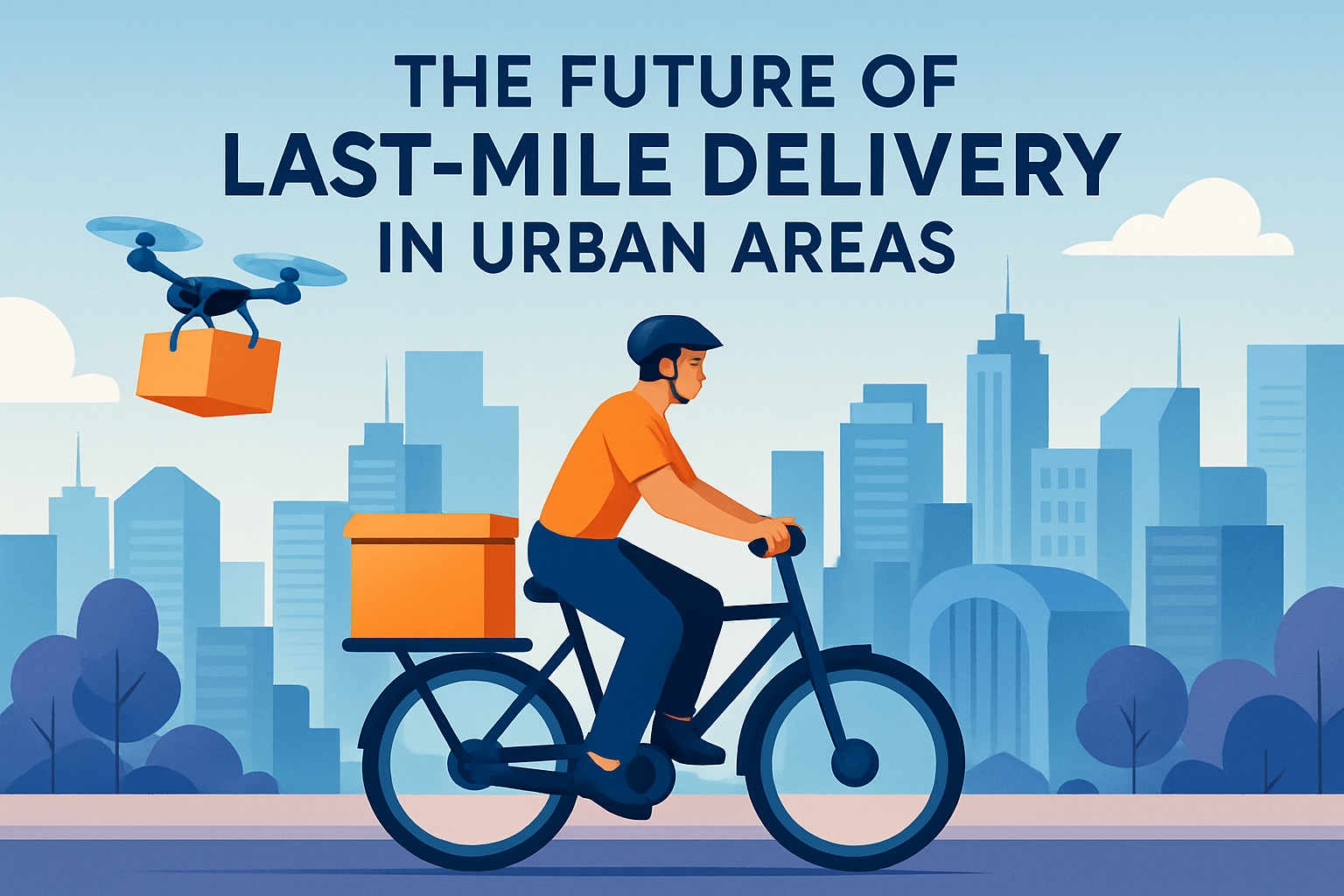
Last-mile delivery in urban areas is entering a decisive phase as cities grow denser, shoppers expect same-day service, and logistics operators face rising costs, congestion, and sustainability mandates. In practical terms, last-mile delivery means the final movement of goods from a fulfillment hub, store, or micro-distribution point to the customer’s doorstep, locker, office, or pickup location. It is the most visible part of the supply chain and usually the most expensive, often accounting for more than half of total shipping costs because it involves fragmented routes, failed deliveries, parking delays, and labor-intensive handoffs. After working with ecommerce and transport teams on urban fulfillment projects, I have seen one consistent reality: the last mile is where customer promises either become loyalty or turn into complaints.
The future of last-mile delivery matters because urban demand is rising faster than legacy delivery systems can adapt. More people live in apartments with limited loading access. Cities are adding low-emission zones, curbside controls, and safety rules for vans and riders. At the same time, retailers are pushing faster delivery windows to compete with major marketplaces, while consumers increasingly want precision, affordability, and lower environmental impact all at once. These pressures are reshaping network design, vehicle choice, routing software, and even how buildings are planned. When companies talk about urban logistics transformation, they are really talking about making the last mile more reliable, more intelligent, and less disruptive to city life.
Several key terms define this shift. Micro-fulfillment refers to small urban facilities positioned close to demand, often automated, that reduce travel distance. Delivery orchestration is the software layer that selects the best carrier, route, time slot, and delivery method in real time. Alternative delivery points include parcel lockers, pickup stores, concierge rooms, and secure access boxes that reduce failed attempts. Electrification covers battery electric vans, cargo bikes, scooters, and charging systems used to cut emissions and operating costs. Autonomous delivery includes robots, drones, and self-driving vehicles, though their deployment remains limited by regulation and edge-case complexity. Together, these models form the operating blueprint for the future of last-mile delivery in urban areas.
The direction is clear: urban last-mile networks are moving from a one-size-fits-all van model to a flexible, data-driven system built around proximity, multimodal fleets, and customer choice. The companies that will win are not simply the fastest. They are the ones that balance speed with route density, first-attempt success, sustainability, and unit economics. In the sections that follow, I will break down the technologies, operating models, policy changes, and business tradeoffs shaping the next decade of urban delivery, with direct answers to the questions most decision-makers and consumers are already asking.
Why Urban Last-Mile Delivery Is Being Reinvented
Urban last-mile delivery is being reinvented because traditional parcel networks were designed for broad regional coverage, not hyper-dense cities with tight delivery windows and strict street constraints. In central neighborhoods, drivers lose time searching for legal parking, navigating security access, and carrying parcels into multi-story buildings. Every minute of idle time erodes margin. In many city operations I have reviewed, route plans that looked efficient on a map failed in practice because they ignored elevator wait times, loading dock queues, and resident availability. That gap between digital planning and street reality is exactly why the next generation of urban delivery depends on better local data and more adaptive execution.
Consumer behavior is another major force. Same-day and next-day expectations, once premium services, have become normal in many categories including groceries, pharmacy, electronics, and household essentials. Yet customers do not only want speed. They want accurate estimated arrival times, easy rescheduling, live tracking, and low-cost or free delivery. This creates a hard operational equation. Faster service shrinks route density, while free delivery compresses margins. Carriers and retailers are solving that tension by steering demand toward economically sensible windows, offering incentives for pickup points, and using predictive analytics to consolidate orders geographically before dispatch.
Environmental pressure is equally significant. Road transport contributes materially to urban air pollution and carbon emissions, and delivery vehicles intensify congestion when poorly managed. City governments from London to Paris to New York are tightening regulations through emission zones, idling enforcement, curbside digitization, and safety standards for commercial fleets. Companies that fail to adapt will face direct costs through fees and indirect costs through slower access. As a result, sustainability in urban logistics is no longer a branding exercise. It is becoming a hard operating requirement linked to permits, procurement standards, and long-term competitiveness.
Micro-Fulfillment and Dark Stores Bring Inventory Closer
Micro-fulfillment is one of the most important developments in the future of last-mile delivery in urban areas because distance is still the dominant driver of speed and cost. By positioning fast-moving inventory inside cities, retailers can reduce stem mileage, support narrower delivery windows, and improve same-day economics. These sites range from compact automated units attached to existing stores to dedicated dark stores that serve online orders only. In grocery, where order frequency is high and delivery urgency matters, urban micro-fulfillment centers can cut picking time significantly when compared with store-based manual picking during busy trading hours.
The strongest deployments use a portfolio approach rather than a single format. High-volume stock-keeping units are held in automated urban nodes, broader assortments remain in regional distribution centers, and local stores act as overflow or pickup locations. This allows companies to promise speed without replicating full inventory everywhere. I have seen retailers overbuild urban space and then struggle with stock imbalance and markdown risk. The better model uses demand forecasting by postcode, order heat maps by hour, and dynamic replenishment rules so each node holds only what local demand justifies.
Dark stores are especially effective where store aisles are too crowded to support both shoppers and pickers. They improve picking accuracy, reduce substitution rates, and create a cleaner environment for process design. However, they also carry neighborhood and planning challenges. Residents may object to increased vehicle activity, and cities may scrutinize whether former retail premises should be used for logistics. This is why successful operators combine localized inventory with low-impact delivery modes, noise controls, and transparent engagement with municipalities. Urban logistics works best when facility design aligns with community expectations rather than treating them as an afterthought.
Electric Vans, Cargo Bikes, and Multimodal Fleets
The urban delivery fleet of the future will be multimodal. No single vehicle type can serve every neighborhood, parcel profile, and regulatory condition efficiently. Electric vans are becoming the default replacement for diesel in many city routes because they reduce tailpipe emissions, lower energy and maintenance costs, and help operators comply with low-emission rules. Their limitations are well understood: higher upfront cost, charging coordination, payload tradeoffs in some configurations, and sensitivity to route design. Those constraints are manageable when fleets use telematics, depot charging schedules, and route assignments matched to battery range and stop density.
Cargo bikes are proving even more transformative in dense cores. For lightweight parcels, food, pharmacy, and small grocery orders, e-bikes and cargo trikes often outperform vans on actual stop productivity because they bypass congestion, park close to destinations, and use bike infrastructure. Operators such as DHL, UPS, and specialized urban couriers have expanded cargo bike programs in European cities for exactly this reason. In real deployments, the key is not replacing every van with a bike. It is building transfer points or micro-hubs where parcels are sorted from inbound trucks to bike couriers for final delivery within a compact radius.
Multimodal planning also improves resilience. A heat wave may affect battery performance, a major event may block van access, and a storm may make two-wheeler use unsafe. Networks that can switch among vans, bikes, lockers, and pickup points maintain service better than rigid fleets. The best orchestration systems treat vehicle choice as a dynamic decision based on parcel dimensions, promised time, neighborhood restrictions, weather, and curb availability.
| Delivery mode | Best urban use case | Main advantages | Main limitations |
|---|---|---|---|
| Electric van | Medium-density routes, larger parcels, consolidated rounds | Higher payload, broad route coverage, emissions compliance | Parking delays, charging needs, traffic exposure |
| Cargo bike | Dense cores, small parcels, urgent local drops | Fast stop access, low operating cost, low emissions | Limited payload, weather exposure, rider capacity |
| Locker delivery | Commuter corridors, apartment districts, repeat parcel flows | High first-attempt success, route efficiency, customer flexibility | Requires network density, customer adoption, site agreements |
| Store pickup | Retail networks with local foot traffic | Uses existing real estate, cross-sell potential, fewer failed drops | Store labor impact, limited hours, inventory accuracy requirements |
AI Routing, Delivery Orchestration, and Better Data
Software will determine much of the competitive advantage in the future of last-mile delivery. Route optimization used to focus mainly on minimizing miles, but urban networks require far more sophistication. Modern systems incorporate stop duration estimates, building access patterns, service-time variability, traffic forecasts, promised windows, customer preferences, and driver break rules. Tools from providers such as OptimoRoute, Routific, Onfleet, Bringg, and enterprise transportation management platforms increasingly use machine learning to improve estimated times of arrival and sequencing. The result is not theoretical efficiency; it is fewer late deliveries, denser routes, and better labor utilization.
Delivery orchestration goes beyond routing. It decides which fulfillment node should serve the order, whether the order should ship now or be held for consolidation, which carrier or fleet type is best, and whether a locker or attended delivery is more likely to succeed. This matters because the cheapest delivery option at checkout may become the most expensive if it triggers a failed attempt in a secure apartment building. High-performing teams measure first-attempt delivery rate, cost per stop, orders per route hour, on-time-in-full performance, and customer contact rate. Those metrics reveal where process friction actually sits.
Data quality is the hidden issue many companies underestimate. Incorrect address formatting, missing access codes, poor geocoding, and stale customer preferences create avoidable exceptions. In one urban program, simply standardizing apartment instructions and validating addresses before dispatch improved first-attempt success enough to cut repeat-trip costs materially within weeks. AI can help, but only if the underlying operational data is clean. The future is not just smarter algorithms; it is disciplined data governance connected to dispatch, customer communication, and proof-of-delivery systems.
Lockers, Pickup Points, and the End of the Single Doorstep Model
One of the clearest answers to urban delivery inefficiency is reducing dependency on attended home delivery. Parcel lockers, click-and-collect counters, staffed pickup shops, and residential package rooms significantly improve first-attempt success while giving customers more flexibility. In dense apartment markets, one locker bank can replace many fragmented doorstep attempts. This reduces miles traveled, failed deliveries, and customer frustration. It also matches the reality of modern city life, where many residents are not home during standard delivery hours or prefer a secure collection option near transit, work, or retail destinations.
Retailers and carriers increasingly see alternative delivery points as a permanent part of network design rather than an optional add-on. Amazon Hub, InPost, UPS Access Point, and numerous grocery pickup models show how this approach scales when locations are easy to find and collection is simple. The strongest consumer proposition combines transparent pricing, map-based selection at checkout, and convenient opening hours. If customers are pushed into pickup purely to save the operator money, adoption will stall. If pickup is framed as faster, more reliable, and often more sustainable, usage grows naturally.
For buildings, developers are starting to design for parcel volume rather than treating it as a secondary amenity. New residential projects include secure package rooms, smart access systems, refrigerated lockers for groceries, and designated courier zones. This architectural change is part of the future of last-mile delivery in urban areas because the built environment directly affects delivery efficiency. Better building interfaces mean shorter stop times, fewer theft claims, and less congestion at entrances.
Autonomous Delivery, Drones, and Realistic Timelines
Autonomous delivery attracts enormous attention, but the realistic outlook is mixed. Sidewalk robots, drones, and autonomous road vehicles each solve narrow problems well yet still face major limitations in dense urban settings. Sidewalk robots can work on campuses or controlled neighborhoods with predictable paths, but they struggle with uneven pavements, crowds, stairs, and vandalism risk. Drones are effective for urgent lightweight deliveries in low-density or hard-to-reach areas, though noise, airspace rules, weather, payload limits, and safe landing constraints reduce their urban applicability. Autonomous vans hold long-term promise, but mixed traffic and complex curb interactions remain difficult.
That does not mean autonomy is irrelevant. It means deployment will be selective. The most credible near-term uses are yard automation, assisted driving features, robotic sorting inside urban depots, and tightly bounded delivery environments. In other words, automation will likely improve the last mile before it fully replaces human couriers. Companies that present autonomy as an immediate citywide solution usually understate the regulatory, liability, and human-factors complexity. The better strategy is staged adoption: automate repetitive tasks first, collect performance data, and expand only where service quality clearly improves.
Policy, Curb Management, and What Cities Will Reward
Public policy will shape winners and losers in urban last-mile delivery as much as technology will. Cities are increasingly digitizing curb space, setting delivery time restrictions, creating zero-emission zones, and requiring better safety compliance from commercial operators. These measures are often portrayed as obstacles, but in practice they reward disciplined carriers and penalize inefficient ones. If a company can book curb access, use compliant vehicles, share basic operating data, and reduce failed trips, it will move through the city more effectively than a competitor relying on improvised parking and oversized route promises.
Collaboration matters here. Urban freight partnerships between municipalities, carriers, property owners, and retailers can unlock loading zones, shared micro-hubs, and better delivery timing near schools, hospitals, and busy retail streets. The future of last-mile delivery in urban areas will favor operators that treat city agencies as stakeholders in network design, not merely regulators to react to. That is especially true as public procurement increasingly includes emissions, reporting, and service standards.
The future of last-mile delivery in urban areas will not be defined by a single breakthrough. It will come from many coordinated improvements: inventory placed closer to demand, multimodal fleets matched to neighborhood conditions, smarter orchestration software, more alternative pickup options, selective automation, and policies that reward efficient, low-impact operations. The common thread is precision. Urban delivery succeeds when every part of the system, from stock location to curb access to customer communication, is designed around real city constraints rather than theoretical averages.
For retailers, carriers, and city leaders, the main benefit is clear: a better last-mile model lowers cost per delivery while improving customer experience and reducing environmental strain. For consumers, it means more reliable service, better choice, and fewer missed parcels. For operators, it means stronger margins in the most complex part of fulfillment. The businesses leading this shift are already investing in micro-fulfillment, electric fleets, locker networks, and high-quality operational data because these are practical tools, not experimental ideas.
If you are planning your urban logistics strategy, start by auditing failed deliveries, route density, curb delays, and building access friction. Then redesign the network around what the data actually shows. The future of last-mile delivery is already taking shape on city streets, and the organizations that act now will be the ones that set the standard others must follow.
Frequently Asked Questions
What is last-mile delivery, and why is it becoming such a major issue in urban areas?
Last-mile delivery refers to the final step in the logistics journey, when a package moves from a fulfillment center, local store, warehouse, or micro-distribution hub to the end customer. In cities, this stage is especially important because it is the part consumers actually see and experience directly. It shapes delivery speed, convenience, cost, and customer satisfaction. At the same time, it is often the most expensive and operationally difficult part of the supply chain due to failed deliveries, traffic congestion, parking restrictions, labor costs, and the complexity of serving many stops in a small geographic area.
Urban areas are making last-mile delivery more challenging because population density continues to rise while consumer expectations keep accelerating. Many shoppers now expect same-day or even near-instant service, which puts pressure on carriers to move smaller orders faster and more frequently. That reduces route efficiency and increases operating costs. Cities are also tightening sustainability rules, introducing low-emission zones, curb access controls, and noise regulations that force logistics companies to rethink traditional delivery models. As a result, last-mile delivery has become a central strategic issue for retailers, carriers, city planners, and technology providers alike.
How will technology change the future of last-mile delivery in cities?
Technology will play a defining role in making urban last-mile delivery faster, cleaner, and more efficient. One of the biggest shifts is the use of artificial intelligence and advanced route optimization software. These systems can process traffic patterns, delivery windows, customer preferences, weather conditions, and driver availability in real time to build smarter routes. That helps reduce miles traveled, cut fuel costs, improve on-time performance, and increase the number of successful first-attempt deliveries.
Beyond routing, the future will also be shaped by connected delivery ecosystems. Real-time tracking, digital proof of delivery, predictive ETAs, and automated customer notifications are becoming standard expectations. Micro-fulfillment centers positioned closer to urban customers will support quicker turnaround times, while data analytics will help companies forecast demand and place inventory more strategically. In some markets, autonomous vehicles, drones, and sidewalk robots may serve niche roles, especially for short-distance or time-sensitive deliveries, although regulation and infrastructure will determine how quickly they scale. Overall, the most important technology trend is not a single innovation, but the combination of automation, visibility, and localized distribution working together to create more resilient city delivery networks.
What are the biggest sustainability challenges and opportunities in urban last-mile delivery?
Sustainability has become one of the most important factors shaping the future of urban logistics. Traditional delivery models often rely on diesel vans making repeated trips through congested neighborhoods, which contributes to air pollution, carbon emissions, and traffic. In dense urban environments, these effects are magnified because there are more deliveries per square mile, less curb space, and greater pressure from local governments to improve quality of life. Retailers and logistics operators are therefore being pushed to lower emissions while still meeting demanding delivery promises.
The opportunity lies in redesigning the delivery model rather than simply trying to make old systems work harder. Electric vans, cargo bikes, consolidated drop-offs, parcel lockers, pickup points, and neighborhood micro-hubs can all reduce emissions and improve route efficiency. Delivery companies are also exploring dynamic batching, where orders headed to the same area are grouped more intelligently to reduce unnecessary trips. Just as important, sustainability can improve economics when done well. Fewer failed deliveries, shorter routes, and better vehicle utilization can lower costs as well as emissions. The companies most likely to succeed will be those that treat sustainability as an operational advantage, not just a compliance requirement.
Will same-day and instant delivery continue to expand in urban markets?
Yes, but not in the same way many people imagined during the early rush toward ultra-fast commerce. Same-day delivery will likely continue to grow in urban areas because cities have the population density, order volume, and local inventory networks needed to support it. However, the future will be more selective and economically disciplined. Not every product category needs delivery in one or two hours, and not every customer is willing to pay a premium for maximum speed. That means delivery providers will increasingly segment services based on urgency, basket size, customer value, and local operating conditions.
In practice, the most sustainable growth will come from offering flexible delivery options rather than promising the fastest possible speed for every order. Consumers may choose between premium rapid delivery, lower-cost same-day windows, scheduled evening delivery, locker pickup, or click-and-collect. This model gives logistics operators more room to consolidate orders and manage capacity efficiently. For retailers, the goal will be balancing customer convenience with delivery economics. In urban areas, speed will remain a competitive advantage, but the real long-term winner will be the business that combines speed with reliability, affordability, and environmental responsibility.
What strategies will help logistics companies succeed in the future of urban last-mile delivery?
Success in urban last-mile delivery will depend on building flexible, data-driven, and locally adapted operations. One key strategy is decentralizing inventory through micro-fulfillment centers, dark stores, and store-based picking models so products are positioned closer to customers. This shortens delivery distances and makes same-day service more practical. Another important strategy is diversifying delivery methods. Instead of relying entirely on vans, companies will increasingly use cargo bikes, walkers, parcel lockers, pickup partnerships, and electric fleets depending on neighborhood density and regulatory requirements.
Collaboration will also become more important. Logistics providers that work closely with retailers, property managers, municipalities, and technology platforms will be better equipped to solve urban access challenges such as curb management, building entry, and delivery timing. At the same time, companies must invest in the customer experience through accurate tracking, flexible rescheduling, clear communication, and easy returns. Ultimately, the future belongs to operators that can manage cost, convenience, and compliance at the same time. In urban markets, last-mile delivery is no longer just a transportation task; it is a strategic capability that sits at the intersection of commerce, technology, and city life.