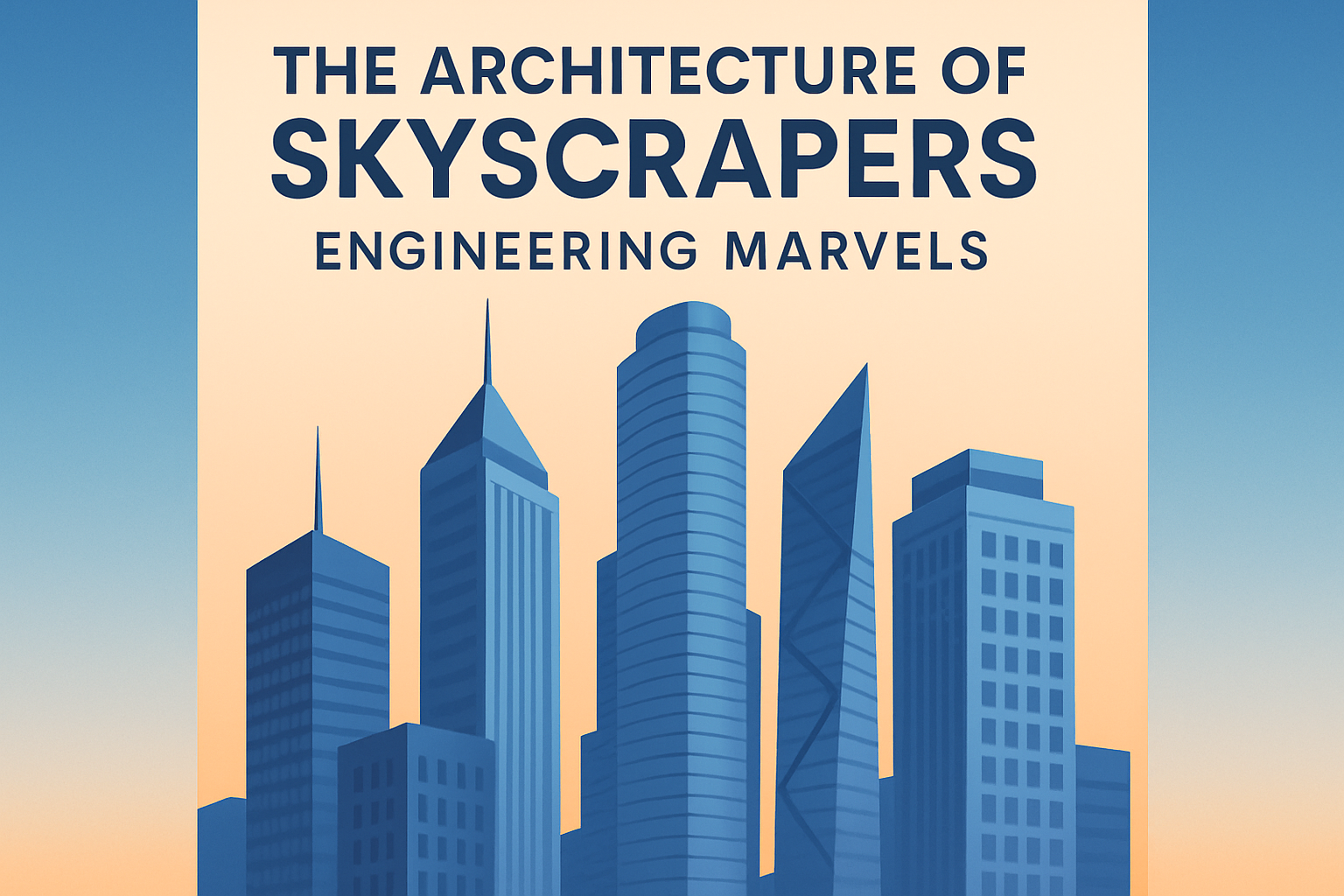
Skyscrapers have become synonymous with modern urban landscapes. These towering structures not only pierce the sky but also represent the pinnacle of architectural and engineering achievement. With city skylines across the globe adorned with these monumental feats of design and construction, understanding how they are conceived and constructed is essential for anyone interested in architecture, engineering, or urban planning. Skyscrapers are more than just tall buildings; they are icons of progress, demonstrating what human ingenuity can accomplish. Key terms such as “load-bearing walls,” “steel frame construction,” and “aerodynamics” define this architectural genre, providing insight into the technical complexities behind these structures.
Why do skyscrapers matter? They are not just architectural landmarks but also economic powerhouses, providing space for offices, hotels, and residences within limited urban areas. Their vertical expansion makes living and working in densely populated areas feasible, contributing significantly to urban development. Additionally, skyscrapers often symbolize economic prosperity and architectural innovation, leading cities to compete globally for the most striking designs. With this significance in mind, let’s explore the architectural marvels that are skyscrapers, examining their engineering aspects, construction challenges, and impact on cityscapes around the world.
The Evolution of Skyscraper Architecture
Skyscrapers, as we know them today, owe their existence to significant technological advances and historic milestones in architecture. The birthplace of the modern skyscraper is often considered to be Chicago, where the first steel-framed high-rise, the Home Insurance Building, was erected in 1885. This building, although only ten stories tall, laid the groundwork for a revolution in building design and construction. Before this innovation, buildings relied on load-bearing walls, which severely limited both their height and structural integrity.
The introduction of steel frame construction marked a pivotal moment in architecture, allowing architects to build higher and more robust structures. This method involves a steel skeleton that supports the building, permitting thin, non-load-bearing exterior walls. As a result, windows could span entire floors, bringing more light into the building and improving aesthetic appeal.
New York City soon followed Chicago’s lead, where the race toward the sky escalated. A stellar example is the iconic Empire State Building, completed in 1931. Standing at 1,454 feet, it was the tallest building in the world for several decades. The Empire State Building’s design combined Art Deco elements with advanced engineering techniques of its time, setting standards for future skyscrapers.
Engineering Challenges and Solutions
The construction of skyscrapers presents various engineering challenges. Key among these is the impact of wind and weather on such tall structures. As buildings rise, they are subject to increased wind forces, which can cause swaying, making them uncomfortable or unsafe. Engineers counteract these forces by integrating tuned mass dampers, a common solution in modern skyscrapers. These are large weights controlled by computer systems, moving opposite to the building’s sway, effectively stabilizing it.
For instance, Taipei 101, a towering skyscraper in Taiwan, employs a massive steel sphere weighing 660 metric tons. It acts as a tuned mass damper and is visible to the public, showcasing the ingenious engineering behind these feats of design. Its implementation is crucial in Taiwan, as the region is prone to typhoons and earthquakes, highlighting the need for adaptable and resilient construction techniques.
- Challenge: Wind resistance
- Solution: Tuned mass dampers
- Example: Taipei 101, with a 660 metric ton damper
Materials and Innovative Techniques
The materials used in skyscrapers have evolved significantly, allowing for taller and more complex structures. Steel remains a primary material due to its strength and flexibility, essential in supporting the weight and stress these buildings endure. However, steel is often combined with concrete to increase load-bearing capabilities and fire resistance, yielding composite materials that further enhance structural performance.
One striking example of innovative material use is the Burj Khalifa in Dubai, currently the tallest building in the world at 2,722 feet. Its construction utilized a bundled tube design, with a combination of structural steel and concrete. This technique affords more significant height and strength, supporting the tower’s massive weight while allowing for its slim, tapering design that resists wind forces effectively.
The integration of advanced computer modeling and Building Information Modeling (BIM) has also revolutionized skyscraper design. These tools enable architects and engineers to simulate a building’s performance under various conditions, optimize material usage, and predict potential issues before construction begins.
Sustainability in Skyscraper Design
With an increasing focus on sustainability, modern skyscrapers incorporate numerous eco-friendly and energy-efficient technologies. These initiatives aim to reduce energy consumption, lessen environmental impact, and improve the health and comfort of occupants. Green building certifications like LEED (Leadership in Energy and Environmental Design) have become benchmarks in sustainable skyscraper design.
A prime example is The Vodafone Building in Lisbon, Portugal, known for its unique architecture and sustainable features. This skyscraper includes elements like energy-efficient glass, solar panels, and rainwater recycling systems, reducing its carbon footprint significantly. Such advancements make it a model for future skyscrapers aiming to blend aesthetic appeal with environmental responsibility.
Adaptive reuse is another trend in sustainability, where existing buildings are repurposed rather than demolished, preserving historical value and reducing waste. This approach saves resources and energy that would otherwise be spent on new construction, reaffirming the importance of sustainability in urban development.
Impact on Society and Urban Landscapes
Skyscrapers shape the identity of cities, becoming icons that attract tourism and business investments. Their vertical architecture allows for more efficient land use, transforming urban cores into vibrant hubs of activity and innovation. Economically, they contribute to job creation, real estate development, and increased property value.
Furthermore, skyscrapers often drive technological advancements in other industries, influencing transportation, telecommunications, and urban infrastructure. Their construction necessitates advancements in logistics, safety standards, and engineering, often setting new standards that enhance living conditions for city dwellers.
However, the rise of skyscrapers also presents challenges, including the need for adequate infrastructure, public transportation, and urban planning to support densely populated high-rise environments. Balancing architectural ambition with practical urban management is crucial to ensuring that these structures remain beneficial rather than burdensome.
Conclusion
In conclusion, skyscrapers are marvels of modern architecture and engineering, standing as testaments to human innovation and ambition. Through technological advancements and creative design, they redefine city skylines and solve urban density issues, while simultaneously symbolizing progress and prosperity. Key takeaways include the importance of engineering innovations like steel frame construction, tuned mass dampers for stability, and sustainable practices for environmental responsibility.
For those living in or visiting cities with skyscrapers, or studying architecture and engineering, understanding these towering structures’ complex interplay of design, technology, and sustainability is crucial. As you gaze upon these architectural giants, consider the myriad of challenges and solutions that make such feats possible. To further appreciate the intricacies of skyscraper design and influence, consider exploring local architecture tours or educational programs that delve deeper into these engineering marvels.
Skyscrapers will continue to shape our world, challenging architects and engineers to reach new heights of creativity and sustainability. Whether for practical purposes or artistic expression, their evolution remains a fascinating aspect of human development, deserving of both admiration and study.
Frequently Asked Questions
1. What is the architectural significance of skyscrapers in modern urban landscapes?
Skyscrapers are monumental structures that define the skylines of cities around the world, making them central to modern urban landscapes. Their architectural significance lies in their ability to embody the progress, aspirations, and innovative spirit of a city or even a country. These towering edifices serve as a testament to human ingenuity, as they challenge and overcome the forces of nature, such as gravity, wind, and seismic activity. In terms of aesthetics, skyscrapers are often designed with unique forms and cutting-edge materials, reflecting the eclectic and evolving nature of contemporary architecture. They serve as icons of their respective cities, blending function and form in ways that are both practical and breathtakingly beautiful. The integration of sustainable technologies within skyscrapers also marks a significant architectural development, as urban centers strive to reduce their ecological footprint while maximizing space efficiency. Overall, skyscrapers are a celebration of architectural creativity and engineering excellence, pushing the boundaries of what is possible in building design and construction.
2. What are the main engineering challenges faced when constructing skyscrapers?
Building skyscrapers involves overcoming a myriad of engineering challenges, showcasing the zenith of technical mastery. The primary challenges include: – **Structural Integrity**: With increasing height, structural integrity becomes paramount. Engineers must design a robust framework that can support the building’s weight while resisting lateral forces like wind and earthquakes. This often involves the use of advanced materials such as high-strength steel and reinforced concrete, as well as innovative structural systems like the tubular design and outrigger trusses. – **Wind Forces**: The higher a building, the greater the wind load it experiences. Engineers employ aerodynamic shapes, pedestal designs, and tuned mass dampers to minimize swaying and discomfort for occupants. – **Foundation and Site Conditions**: Skyscrapers require a deep and solid foundation to ensure stability. Constructing such foundations poses challenges, particularly in densely populated cities with varied soil conditions. Geotechnical analysis and foundation engineering become crucial in these scenarios. – **Load Distribution**: Efficiently distributing the loads from different parts of the skyscraper is vital to prevent structural failures. Advanced simulation tools and load-balancing techniques are used to achieve this. – **Construction Logistics**: Skyscrapers are typically built in tight urban environments where space is limited. Coordinating the logistics of materials, labor, and machinery requires meticulous planning and scheduling to minimize disruptions to surrounding areas. Overall, the interplay of these challenges and solutions defines the engineering marvel that skyscrapers represent, showcasing not just the ambition but the potential of human engineering.
3. How do skyscrapers contribute to urban planning and development?
Skyscrapers play a significant role in shaping urban planning and development through their capacity to accommodate large numbers of people and activities in a condensed footprint. Here’s how they contribute: – **Vertical Urbanization**: By extending upwards rather than outwards, skyscrapers help mitigate urban sprawl. This allows for the conservation of natural landscapes and minimizes the ecological impact on the surrounding environment. – **Enhanced Land Use**: In densely populated cities with limited available land, skyscrapers optimize land use by housing offices, residences, commercial spaces, and amenities in a single structure, making urban spaces more efficient. – **Iconic Identity**: Skyscrapers often become landmarks and cannot be overlooked in the branding and identity of a city. They attract businesses, tourists, and residents by showcasing the city’s forward-thinking approach and vibrant economy. – **Economic Activity**: Hosting a multitude of businesses and services, skyscrapers create hubs of economic activity and innovation, boosting the local economy and providing employment opportunities. – **Sustainable Solutions**: With urban centers grappling with sustainability concerns, skyscrapers play a pivotal role in integrating green technologies such as energy-efficient systems, green roofs, and rainwater harvesting, setting benchmarks for sustainable urban development. In summary, skyscrapers are not just architectural feats but crucial components in the fabric of urban planning, helping cities grow smarter and more sustainably.
4. What technological advancements have been made to enhance the safety and sustainability of skyscrapers?
In response to the growing demand for safe and sustainable skyscrapers, several technological advancements have been developed: – **Advanced Materials**: The use of high-performance concrete, advanced composites, and lightweight materials enhances the strength and durability of skyscrapers while reducing their environmental footprint. – **Smart Building Systems**: Integration of IoT (Internet of Things) technologies allows for smart energy management, predictive maintenance, and enhanced security systems in skyscrapers, leading to increased safety and energy efficiency. – **Renewable Energy Integration**: Many skyscrapers now incorporate renewable energy sources such as solar panels and wind turbines to reduce their reliance on traditional power grids, contributing to a reduction in carbon emissions. – **Water Conservation Systems**: Techniques like greywater recycling, low-flow fixtures, and rainwater harvesting systems are becoming standard to reduce water usage and promote sustainability. – **Fire Safety Enhancements**: Modern skyscrapers feature sophisticated fire suppression systems, fire-resistant materials, and effective evacuation strategies to ensure occupant safety in emergencies. – **Seismic Design**: In regions prone to earthquakes, skyscrapers are equipped with advanced base isolation systems and dampers that absorb seismic shocks and prevent structural damage. These advancements underscore the commitment to building skyscrapers that not only reach new heights but do so safely and sustainably, addressing environmental concerns and prioritizing occupant welfare.
5. How do cultural and historical factors influence skyscraper design?
Skyscraper design is often a reflection of the cultural and historical context from which it emerges. These factors heavily influence architectural aesthetics and the role these buildings play in society: – **Cultural Identity**: Skyscrapers often embody the cultural identity and aspirations of a city or country. For example, the design of the Burj Khalifa in Dubai reflects Islamic architectural motifs, melding modern engineering with cultural heritage. – **Historical Context**: The historical development of a region influences the materials, style, and functionality of skyscrapers. Cities with rich architectural histories might incorporate elements that pay homage to traditional design while embracing modern innovations. – **National Pride and Economic Ambitions**: Often symbols of national pride, skyscrapers project economic prowess and futuristic aspirations. They serve as testament to a nation’s potential and its willingness to invest in cutting-edge technologies. – **Symbolism and Storytelling**: Skyscrapers can tell stories through their design. They might symbolize peace, progress, or connectivity, depending on the narrative that the designers and stakeholders wish to convey. – **Local Climate and Environmental Conditions**: Regional climatic and environmental conditions can also dictate design elements. This may include features like sunshades and thermal mass walls in hot climates, or the ability to withstand monsoon rains or heavy snowfalls. – **Social Dynamics and Urban Trends**: The social trends and demographic makeup of a city often guide the functionality of a skyscraper, determining whether it’s residential, commercial, mixed-use, and how communal spaces are allocated. In essence, skyscraper design is a tapestry woven from threads of history, culture, and contemporary societal needs, contributing to the diverse fabric of the world’s urban landscapes.