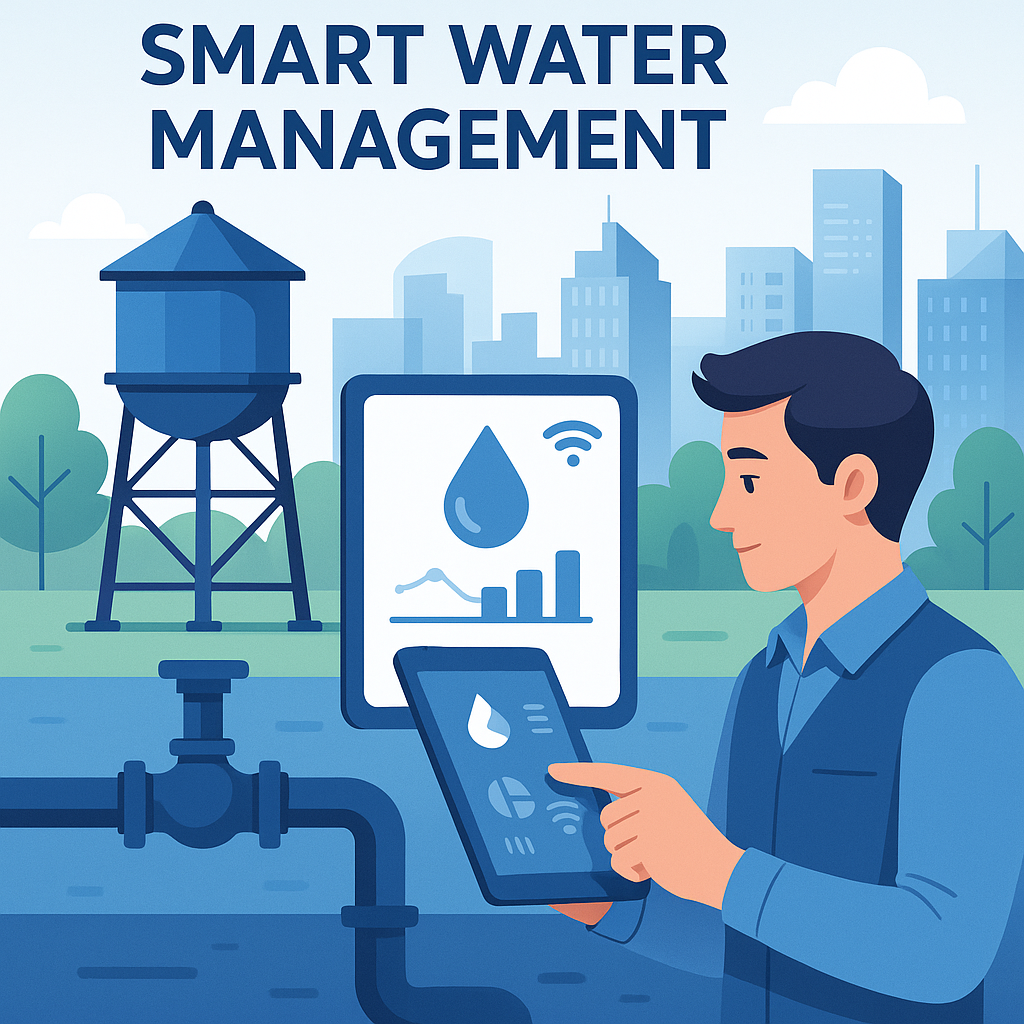
In an age where urbanization is rapidly increasing, the management of water resources has become a critical challenge. Smart water management in urban areas refers to the innovative integration of technology and data to efficiently oversee the collection, treatment, distribution, and utilization of water resources within a city. With populations surging and climate change impacting water availability, urban areas worldwide are striving to implement smarter systems to ensure sustainable water use and preservation. Smart water management is essential as it has direct implications on public health, economic stability, and environmental sustainability.
Traditional water management systems often suffer from inefficiencies such as leaks, poor water quality monitoring, and wastage, leading to both resource depletion and higher operational costs. By employing smart technologies, cities can better monitor and manage their water resources, leading to more informed decision-making processes, significantly reduced wastage, and the betterment of urban green spaces. As cities around the world seek to address these challenges, the use of intelligent water systems is growing, integrating sensors, IoT devices, data analytics, and AI for better management of water resources.
The Role of Technology in Smart Water Management
Technology plays a crucial role in transforming traditional water management systems into smart and efficient processes. By utilizing Internet of Things (IoT) devices and sensors, cities can collect real-time data on various water parameters such as pressure, flow, and quality. This data is essential for detecting leaks, bursts, and other anomalies quickly, leading to prompt repairs and reducing water loss. With predictive analytics, water utilities can forecast future water demand and consumption patterns, better aligning supply strategies with actual needs.
One notable example is the city of Singapore, which has implemented a smart water grid that incorporates more than 100,000 smart water meters and sensors across its water supply network. These devices allow the city to monitor consumption patterns, optimize water usage, and detect leaks efficiently. The real-time data collected helps ensure quality control and maintenance planning, ultimately reducing the city’s reliance on imported water resources.
Water Quality Monitoring and Management
Ensuring clean and safe water is a fundamental aspect of smart water management. Traditional water quality monitoring methods often rely on periodic sampling and lab testing, which can delay detection of contamination. Smart water management utilizes real-time sensors that continuously monitor various water quality indicators such as pH, turbidity, and microbial content. Such technology allows for immediate response to any detected anomalies, safeguarding public health.
A case in point is the city of Paris, which employs advanced sensors to monitor the quality of both its raw and treated water. These sensors provide continuous streams of data, enabling authorities to detect and address any contaminants quickly. As a result, the city has significantly reduced the incidence of waterborne diseases and ensured high-quality water for its residents.
Rainwater Harvesting and Reuse
Urban areas often face challenges related to stormwater management, which can result in flooding and water pollution. Smart water systems integrate rainwater harvesting techniques and utilize advanced storage systems for collection and reuse. This not only reduces the burden on wastewater systems but also provides an alternate water source for non-potable applications like irrigation and industrial processes.
In Melbourne, Australia, the installation of smart rainwater harvesting systems has proven to be highly effective. The city utilizes IoT-enabled tanks and smart control units that store rainwater and distribute it effectively. These systems manage water distribution automatically based on weather forecasts and usage demands, showcasing how cities can reuse captive rainwater efficiently, ultimately reducing their dependence on the main water supply.
Efficient Water Distribution Networks
One of the greatest challenges of urban water management lies in the efficient distribution of water across cities. Aging infrastructure can lead to significant water losses through leaks and bursts. Employing smart distribution networks that use sensors and advanced analytics can drastically reduce these losses. Smart water management systems can optimize distribution by understanding demand in different sectors and adjusting pressure dynamically to minimize losses.
Barcelona has transformed its water distribution network into a highly efficient system by deploying smart water grid technology. The city’s infrastructure includes remotely controlled valves and pumps, which allow for immediate adjustments to the water flow. This not only minimizes disruptions but also ensures that water is distributed where needed most, effectively conserving water and reducing costs.
| City | Smart Application | Outcome |
|---|---|---|
| Singapore | Smart Water Grid | Optimized consumption, reduced leaks |
| Paris | Water Quality Sensors | Improved public health, quality assurance |
| Melbourne | Rainwater Harvesting | Lower dependency on main supply |
| Barcelona | Smart Distribution Network | Efficient water distribution, cost savings |
Public Engagement and Education
For smart water management to be successful, it is crucial to engage and educate the public. Understanding their water consumption patterns, and the significance of conservation, and promoting behavioral changes can lead to reduced water usage and greater adoption of smart technologies. Public awareness campaigns and incentivizing the installation of smart water meters in households can be effective strategies.
The City of Los Angeles has been actively promoting water conservation through its “Save the Drop” initiative. This campaign educates the public on water-saving practices, encourages the adoption of low-flow appliances, and offers incentives for using smart water meters. By involving residents, the city has made notable progress in reducing its overall water consumption.
Legislation and Regulation
The role of legislation and regulation cannot be understated in the implementation of smart water management systems. Governments and regulatory bodies must create frameworks that mandate the use of smart technologies in urban water management while ensuring compliance and accountability. Implementing such standards not only promotes widespread adoption but also sets benchmarks for performance and sustainability.
Denmark’s holistic approach to water management includes stringent regulations that enforce water conservation and management standards in urban areas. The Danish government has instituted policies that require new developments to incorporate smart water systems. As a result, Denmark has achieved high efficiency in its urban water management practices, serving as a model for other countries.
Future Trends in Smart Water Management
As technology continues to advance, the future of smart water management looks promising. Emerging trends such as AI-driven analytics, decentralized water systems, and blockchain for transparent transactions are set to redefine the landscape. These innovations promise to enhance water management, further reduce losses, and streamline operations, positioning cities to handle the increasing demands of the future.
For example, the city of Las Vegas is exploring AI technologies to improve the accuracy of water demand predictions. By leveraging machine learning, the city aims to refine its water distribution models, thereby optimizing resource allocations and enhancing service delivery.
Conclusion and Call to Action
Smart water management in urban areas is no longer an option but a necessity in our bid to ensure sustainable growth and environmental preservation. The integration of technology and data analytics in all aspects of water management—from quality monitoring to efficient distribution and usage—can yield significant benefits, including cost savings, improved water quality, and environmental conservation. This comprehensive approach addresses the critical challenges posed by increasing urban populations and climate change, safeguarding our vital water resources for future generations.
It is imperative for city planners, policymakers, and residents to actively participate in the transition to smarter water systems. By investing in modern technologies and infrastructures, promoting public engagement and education, and enforcing conducive policies, we can create urban environments where water resources are managed effectively, responsibly, and sustainably. Let us take proactive steps to embrace these solutions, ensuring that every drop of water is maximized, preserved, and valued.
Frequently Asked Questions
1. What exactly is smart water management in urban areas?
Smart water management in urban areas is all about using the latest technology and data analytics to improve how we manage our water resources. With cities growing in both size and population, ensuring a sustainable and efficient water supply is increasingly critical. Smart water management involves several key aspects: collecting water, treating it, distributing it to where it’s needed, and making sure it’s used effectively. The primary goal is to ensure that every drop of water is accounted for and utilized in ways that meet the demands of urban residents while protecting the environment.
By integrating cutting-edge technologies such as smart sensors, data analytics, and automated systems, cities can monitor water use in real-time, identify leaks or inefficiencies, and make informed decisions about water distribution and consumption. This approach not only helps to conserve precious water resources but also supports the sustainability of urban areas in the face of unpredictable climate changes and growing populations.
2. How do smart water management systems benefit urban areas?
The benefits of smart water management systems in urban areas are numerous and impactful. Firstly, these systems enhance the efficiency of water usage by closely monitoring the water supply and detecting leaks or wastage. This helps to minimize water loss and ensures more water is available for essential use. Moreover, by using data analytics, cities can make evidence-based decisions about how to allocate water resources effectively, especially during times of scarcity or drought.
Another significant benefit is the increased resilience of the urban water supply. With climate change introducing an array of unpredictable variables into the water cycle, having smart systems that can adapt and respond to changing conditions is invaluable. Additionally, smart water management reduces operating costs by optimizing water infrastructure, leading to long-term savings for both municipal authorities and consumers. Lastly, by improving water quality monitoring and treatment processes, these systems help ensure that the water delivered to urban residents is safe and clean.
3. What are some technologies involved in smart water management?
Smart water management relies on a variety of advanced technologies to achieve its goals. One key technology is the use of smart sensors, which are installed throughout water infrastructure, such as pipes and treatment facilities. These sensors provide continuous data on water flow, pressure, and quality, helping to identify issues like leaks or contamination early and accurately.
Another essential technology is data analytics, which involves processing vast amounts of water-related data to understand consumption patterns, predict future needs, and optimize water allocation. Real-time remote monitoring and control systems also play a crucial role, allowing for seamless communication between different parts of the water network and facilitating proactive management. Moreover, Geographic Information Systems (GIS) are used to map and analyze spatial water-related data to plan and manage water resources effectively. With the integration of Internet of Things (IoT) devices, these technologies converge to create an ecosystem where every aspect of water management can be monitored and controlled with precision.
4. Can smart water management systems help address water scarcity during droughts?
Absolutely, smart water management systems are instrumental in managing water resources more efficiently during droughts or periods of water scarcity. By utilizing real-time data and predictive analytics, these systems provide insights on water availability and consumption, allowing urban areas to implement water-saving measures proactively. For example, during a drought, a city can use smart systems to promote water conservation among residents or adjust water distribution to prioritize critical sectors.
Additionally, smart systems can optimize water use by detecting leaks early and reducing wastage, thereby ensuring that available water resources are used to their maximum potential. The systems can also model future scenarios and simulate various strategies to mitigate the effects of water scarcity, guiding cities in their planning and policy formulation. This foresight and adaptability enhance the city’s ability to cope with droughts, ensuring a steady and reliable water supply despite challenging conditions.
5. What challenges do cities face when implementing smart water management systems?
While the advantages of smart water management systems are clear, there are several challenges cities may encounter during implementation. One significant obstacle is the initial financial investment required to overhaul existing infrastructure and adopt new technologies. Though cost savings and efficiency improvements are expected over time, the upfront costs can be a barrier for some cities, especially those with limited budgets.
Moreover, integrating smart systems into existing water infrastructure can be complex. It often requires upgrading or modifying components that are decades old, which can be technically challenging and time-consuming. There’s also the potential issue of data security, as these systems rely heavily on computerized networks, making them vulnerable to cyber-attacks. Cities need to ensure robust cybersecurity measures are in place to protect sensitive water management data.
Lastly, there’s the challenge of ensuring that all relevant stakeholders, including city officials, utility operators, and residents, understand the benefits and functionalities of the smart systems. Effectively communicating these aspects is crucial for securing support and cooperation across all levels of society as these systems are launched and maintained.