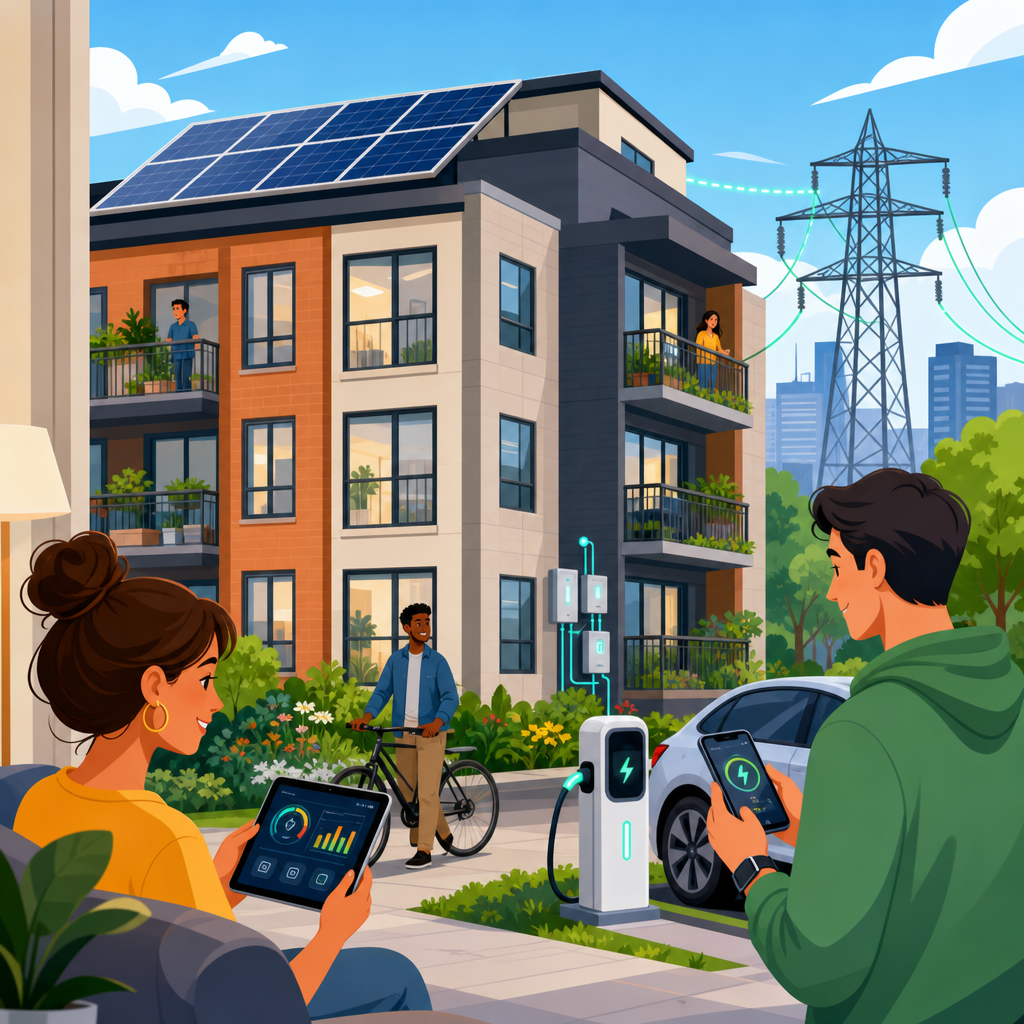
Smart grids for multifamily housing are reshaping how apartment buildings, condominiums, and mixed-use residential properties buy, distribute, monitor, and conserve electricity. In practical terms, a smart grid is an electricity network enhanced with digital sensors, automated controls, two-way communication, and data analytics that help utilities and building operators balance supply and demand in near real time. For multifamily housing, that means more visibility into energy use, faster outage detection, better integration of rooftop solar and battery storage, and new opportunities to reduce operating costs without sacrificing resident comfort.
Owners and tenants both need to understand this shift because multifamily buildings sit at an important junction in the housing market. They are dense, energy intensive, and increasingly expected to deliver reliability, sustainability, and predictable costs. Heating and cooling systems, elevators, corridor lighting, electric vehicle chargers, central hot water, and in-unit appliances all place variable demands on the grid. When those loads are managed with smart meters, building automation systems, submetering, and utility demand response programs, the building becomes more flexible and efficient. When they are not, owners face avoidable peak demand charges, and residents may face higher utility bills, discomfort during outages, or confusion about how shared energy costs are allocated.
I have worked with multifamily operators evaluating energy retrofits, and the same questions come up repeatedly: What exactly changes when a property joins a smarter energy network, who pays for the upgrades, do residents lose control over their apartments, and are the savings real? The short answer is that smart grid adoption does not require owners to hand control to a utility or force tenants into complicated technology. A well-designed system combines hardware, software, utility tariffs, and resident communication so that energy decisions become more informed, not more burdensome. It matters now because electrification policies, time-of-use rates, resilience planning, and investor pressure on operating performance are all accelerating adoption across the rental housing sector.
What Smart Grids Mean in Multifamily Buildings
In a single-family home, smart grid participation often centers on one meter, one thermostat, and perhaps rooftop solar. Multifamily housing is different. A single property may have a master meter for common areas, individual unit meters, central mechanical equipment, distributed laundry rooms, parking garage ventilation, access control systems, and backup generators. A smart grid environment connects these pieces so owners and utilities can identify when energy is being used, where waste occurs, and which loads can be shifted without harming residents.
The key building blocks are straightforward. Advanced metering infrastructure records interval data instead of a simple monthly total. Building management systems coordinate HVAC, lighting, pumps, and ventilation. Smart in-unit devices, such as communicating thermostats or water leak sensors, add apartment-level visibility where residents opt in or where the lease structure allows. Demand response platforms automatically reduce or reschedule certain loads during periods when the grid is stressed. Distributed energy resources, including solar photovoltaic systems, battery storage, and controllable EV charging, allow a property to generate or store power on site and use it when electricity is most expensive or scarce.
For owners, the operational value is immediate. Interval data shows whether a chiller is starting too early, whether garage exhaust fans are running longer than needed, or whether common area electricity spikes at predictable hours. For tenants, the benefit is usually indirect but meaningful: fewer service disruptions, potentially lower bills, better comfort control, and a building that can support modern expectations such as EV charging and cleaner energy procurement.
Why Owners Are Investing Now
Three forces are driving investment. First, utility rate design is changing. Many regions now use time-of-use pricing or demand charges that make electricity far more expensive during peak periods. Second, local building performance standards and decarbonization rules are putting pressure on owners to electrify heating, improve energy efficiency, and document emissions reductions. Third, insurance costs and climate risks are elevating the value of resilience, especially in markets vulnerable to extreme heat, storms, wildfires, or grid instability.
Owners who understand smart grids can convert these pressures into financial strategy. A multifamily building that can precool common spaces before peak hours, charge batteries overnight, stagger EV charging, and curtail nonessential loads during demand response events can materially reduce operating expenses. In several utility territories, demand response payments and avoided peak charges together create a credible return on investment for controls upgrades. The economics vary by climate, tariff, and building age, but the pattern is consistent: the more flexible the load, the more valuable the building becomes in an increasingly dynamic power market.
There is also an asset management case. Institutional buyers and lenders increasingly review utility data, capital planning for electrification, and exposure to future compliance costs. A property with modern controls, verified interval data, and a roadmap for integrating solar, storage, and managed charging is easier to underwrite than one relying on aging equipment and opaque utility bills.
How Tenants Experience a Smart Grid
Most residents do not care about grid architecture; they care about comfort, convenience, privacy, and cost. A successful smart grid strategy respects all four. In practice, tenants may notice smart thermostats in common areas, updated submeters, mobile notifications about peak pricing, or EV chargers that cost less when used overnight. They may also see faster communication during outages because the management team has better system visibility and clearer utility coordination.
Concerns about privacy are legitimate. Smart meters and connected devices generate detailed data about when electricity is used, and in some cases that pattern can imply occupancy or appliance behavior. Owners should use only the data necessary for operations and billing, store it securely, define access controls, and explain plainly how information is collected and used. The best programs are transparent from the beginning and avoid bundling residents into technology they do not understand.
Tenant protections also matter in billing. Where submetering is used, residents should know whether they are being billed on actual interval consumption, a ratio utility billing system, or a flat fee embedded in rent. Smart grid tools can improve fairness by assigning costs more accurately, but they can also create confusion if the billing method is poorly explained. Clear lease language and utility disclosures prevent disputes.
Core Technologies and Their Roles
The technology stack in multifamily housing is not one product; it is a coordinated system. The right combination depends on building age, utility territory, and whether the property is garden style, mid-rise, or high-rise.
| Technology | Primary function | Typical owner benefit | Typical tenant impact |
|---|---|---|---|
| Advanced meters | Track interval electricity use | Better billing accuracy and load visibility | Clearer usage data |
| Building management system | Automate HVAC, lighting, fans, pumps | Lower peak demand and operating costs | More stable comfort in common areas |
| Smart thermostats | Adjust temperature based on schedules and setpoints | Load shifting and efficiency gains | More control, if user permissions are clear |
| Battery storage | Store electricity for later use | Peak shaving and backup support | Improved resilience during outages |
| Solar PV | Generate on-site electricity | Reduced grid purchases | Potential shared savings where allowed |
| Managed EV charging | Control charging times and speeds | Avoid transformer overload and peak charges | Lower-cost charging windows |
In older buildings, the first gains often come from controls and metering, not from expensive generation assets. I have seen owners save meaningful amounts simply by correcting equipment schedules, installing variable frequency drives, and using interval data to identify waste in corridors, garages, and central plant operations. Solar and batteries become more compelling once those fundamentals are in place.
Costs, Savings, and Return on Investment
Smart grid upgrades can range from relatively low-cost software improvements to major capital projects. A benchmarking and controls optimization effort may be modest compared with a battery installation, panel upgrade, or campuswide submetering rollout. Owners should evaluate projects in layers: no-cost operational changes, low-cost controls, medium-cost equipment modernization, and higher-cost distributed energy investments tied to utility incentives and long-term capital planning.
Real savings usually come from four categories. The first is energy efficiency, such as reducing run time and waste. The second is demand reduction, especially lowering usage during a utility’s system peak. The third is tariff optimization, using cheaper hours for flexible loads. The fourth is resilience value, which is harder to quantify but increasingly important. For example, a battery that limits peak demand may also keep emergency lighting, access systems, internet equipment, and one elevator operating during an outage.
Owners should be careful not to rely on generic vendor claims. Any savings estimate should be tested against interval load data, local weather, occupancy patterns, and the actual utility tariff. Measurement and verification protocols, such as those commonly aligned with the International Performance Measurement and Verification Protocol, help ensure projected savings are real and persistent rather than theoretical.
Implementation Challenges and Best Practices
The biggest mistakes in multifamily smart grid projects are organizational, not technical. Owners underestimate data integration, ignore tenant communication, or fail to align energy upgrades with capital replacement cycles. A property manager may prioritize resident satisfaction, an asset manager may prioritize net operating income, and an engineer may prioritize equipment reliability. The project works best when all three goals are addressed from the start.
Interoperability is another common issue. Devices from different manufacturers do not always communicate cleanly, especially in older buildings with legacy controls. Open protocols such as BACnet are useful, but they do not guarantee seamless deployment. Cybersecurity also deserves attention. Any internet-connected control system can create new exposure, so owners should require secure network architecture, software update policies, multifactor authentication where available, and clear vendor responsibility for incident response.
Best practice is to start with an energy audit, interval data review, and utility tariff analysis. Then identify quick wins, sequence larger upgrades around equipment end of life, and communicate resident impacts before installation begins. Buildings that phase the work logically usually achieve better savings and fewer complaints than buildings that buy technology first and define the operating plan later.
What the Future Looks Like for Multifamily Housing
Smart grids will become more relevant as buildings electrify space heating, hot water, and transportation. Heat pumps, induction cooking, and EV chargers can reduce direct fossil fuel use, but they also increase electrical load. Without smart coordination, that shift can strain building infrastructure and increase peak costs. With smart coordination, electrification becomes manageable and often advantageous.
Expect utilities and regulators to push for more flexible buildings. Virtual power plant programs are expanding, allowing many small resources, such as batteries, thermostats, and chargers, to act together like one dispatchable asset. For multifamily owners, that creates a new role: the apartment building is no longer just a passive energy consumer. It can become an active grid participant that helps stabilize local supply while improving property performance.
The bottom line is simple. Smart grids give owners better control over energy costs, resilience, and compliance, while giving tenants a better chance at reliable service, clearer billing, and modern amenities. The technology is not a cure-all, and returns depend on utility rates, building condition, and management discipline. Still, for multifamily housing, the direction is clear. Start with data, fix the operational basics, plan upgrades in stages, and make resident communication part of the strategy from day one. Owners and tenants who understand how smart grids work will be better prepared for the next generation of housing market change. Review your building’s current metering, controls, and tariff structure, then identify one practical improvement you can make this year.
Frequently Asked Questions
What is a smart grid, and how does it apply to multifamily housing?
A smart grid is an upgraded electricity network that uses digital sensors, advanced meters, automated controls, and two-way communication to monitor and manage power flow more intelligently than a traditional grid. In multifamily housing, this technology helps apartment buildings, condominiums, and mixed-use residential properties track energy use more accurately, respond to changing demand, and improve overall building performance. Instead of simply delivering electricity in one direction, a smart grid allows utilities and building operators to exchange data in near real time, making it easier to identify inefficiencies, reduce waste, and maintain more stable service.
For owners and property managers, this can translate into better visibility across common areas, mechanical systems, and sometimes individual units, depending on how the building is metered. They can see when energy use spikes, whether equipment is running inefficiently, and where opportunities exist to reduce operating costs. For tenants, smart grid integration may support more reliable service, faster outage detection, and in some cases access to better usage information that can help lower monthly utility bills. In short, smart grids bring a level of intelligence and responsiveness to multifamily energy management that traditional infrastructure typically cannot provide.
What are the main benefits of smart grids for property owners, managers, and tenants?
The biggest benefit is improved energy visibility. In many multifamily buildings, electricity costs can be difficult to manage because usage is spread across common areas, central systems, and private units. Smart grid technologies make consumption data easier to track and analyze, which helps owners and managers understand where energy is going and what changes will have the greatest impact. This often supports better budgeting, more informed capital planning, and stronger decisions around upgrades such as LED lighting, high-efficiency HVAC systems, battery storage, or electric vehicle charging infrastructure.
Another major advantage is operational efficiency. Smart grids can support automated demand response, which means certain systems can reduce or shift electricity use during peak demand periods when power is more expensive or grid conditions are strained. In a multifamily property, that may involve adjusting common-area lighting schedules, optimizing HVAC setpoints in shared spaces, or coordinating onsite equipment more intelligently. These capabilities can lower peak demand charges, reduce stress on building systems, and support long-term cost control.
Tenants can also benefit in practical ways. Better outage monitoring can lead to faster response when power disruptions occur. More detailed usage data can help residents understand how their habits affect electricity consumption. In buildings with submetering or advanced tenant portals, residents may gain access to near-real-time information about their own usage, making energy-saving decisions easier. Over time, smart grid participation can also support cleaner energy integration, which matters to tenants who value sustainability, resilience, and more modern building amenities.
Will smart grid technology lower electricity costs in multifamily buildings?
Smart grid technology can help reduce electricity costs, but the savings usually come from better energy management rather than from the technology alone. A smart grid gives owners and operators the tools to see energy patterns more clearly, identify inefficiencies, and adjust building operations based on actual demand. That visibility often reveals waste that would otherwise go unnoticed, such as equipment running outside scheduled hours, unnecessary peak usage, or aging systems consuming more power than expected.
Cost savings can come from several areas. One is demand management. Many commercial and multifamily properties pay not only for total electricity consumption but also for peak demand, or the highest level of power used during a billing period. Smart controls can reduce those peaks by shifting nonessential loads or fine-tuning major systems during expensive periods. Another source of savings is preventive maintenance. When smart systems detect irregular performance in HVAC equipment, pumps, lighting controls, or other electrical assets, building teams can address issues before they become costly failures or persistent energy drains.
That said, results vary based on building size, age, utility rate structure, metering setup, and how actively the property uses the data. A well-managed building with centralized systems and high common-area loads may see meaningful savings. A smaller property with limited infrastructure may see more modest gains. Owners should think of smart grid adoption as a strategic investment in efficiency, resilience, and operational intelligence, not just a quick utility bill reduction tool. When paired with strong energy management practices, however, the cost benefits can be significant over time.
Do smart grids raise privacy or data security concerns for residents?
Yes, privacy and cybersecurity are important considerations, especially because smart grid systems depend on collecting and transmitting more data than traditional electrical infrastructure. In multifamily housing, that data may include building-level energy consumption, equipment performance information, and in some cases unit-level usage from smart meters or submeters. While this information is valuable for improving efficiency and service reliability, it also needs to be handled responsibly. Residents may reasonably want to know what data is being collected, who can access it, how long it is stored, and whether it can be linked to individual behavior patterns.
For property owners and managers, the best approach is transparency and governance. Building operators should work with utilities, technology vendors, and legal advisors to ensure there are clear policies around data collection, access controls, encryption, system monitoring, and compliance with any applicable state or local regulations. Contracts with service providers should address cybersecurity responsibilities, breach notification procedures, and data ownership. Systems should also be segmented and secured so that smart building controls do not create unnecessary exposure across broader property networks.
From a tenant perspective, the presence of smart grid technology does not automatically mean personal privacy is compromised. In many cases, data is aggregated and used primarily for operational or billing purposes. Still, residents should be informed about how the building uses energy data and whether unit-specific monitoring is involved. The most successful multifamily smart grid programs balance efficiency and innovation with trust, clear communication, and strong digital safeguards.
What should owners and tenants know before a multifamily building adopts smart grid technology?
Owners should start by understanding their building’s current electrical setup, utility billing structure, and long-term operational goals. Smart grid adoption is not a one-size-fits-all upgrade. A high-rise with central HVAC, backup power systems, and significant common-area energy use may have very different opportunities than a garden-style apartment community or a mixed-use building with retail on the ground floor. Before investing, owners should evaluate metering configuration, existing building automation systems, major energy loads, utility incentives, and whether future plans include solar, battery storage, EV charging, or electrification projects. A professional energy assessment can help identify where smart grid tools will provide the most value.
Implementation also requires planning around cost, integration, and communication. Owners should ask whether new hardware will be needed, how systems will connect to existing controls, who will manage the data, and what staff training will be required. They should also consider how residents will be affected during installation and whether new billing or monitoring tools will change the tenant experience. If a property plans to participate in utility demand response programs or time-of-use strategies, lease language, operating policies, and resident communication may need to be updated.
Tenants should know that smart grid adoption is generally intended to improve reliability, efficiency, and building performance, not simply to add complexity. In some cases, residents may gain access to better energy information, more stable building operations, or sustainability upgrades that improve comfort and convenience. However, they should also ask practical questions: Will billing change? Will any smart devices be installed in units? Will outage notifications improve? What protections are in place for usage data? When owners and tenants understand both the benefits and the expectations, smart grid projects tend to deliver better results for everyone involved.