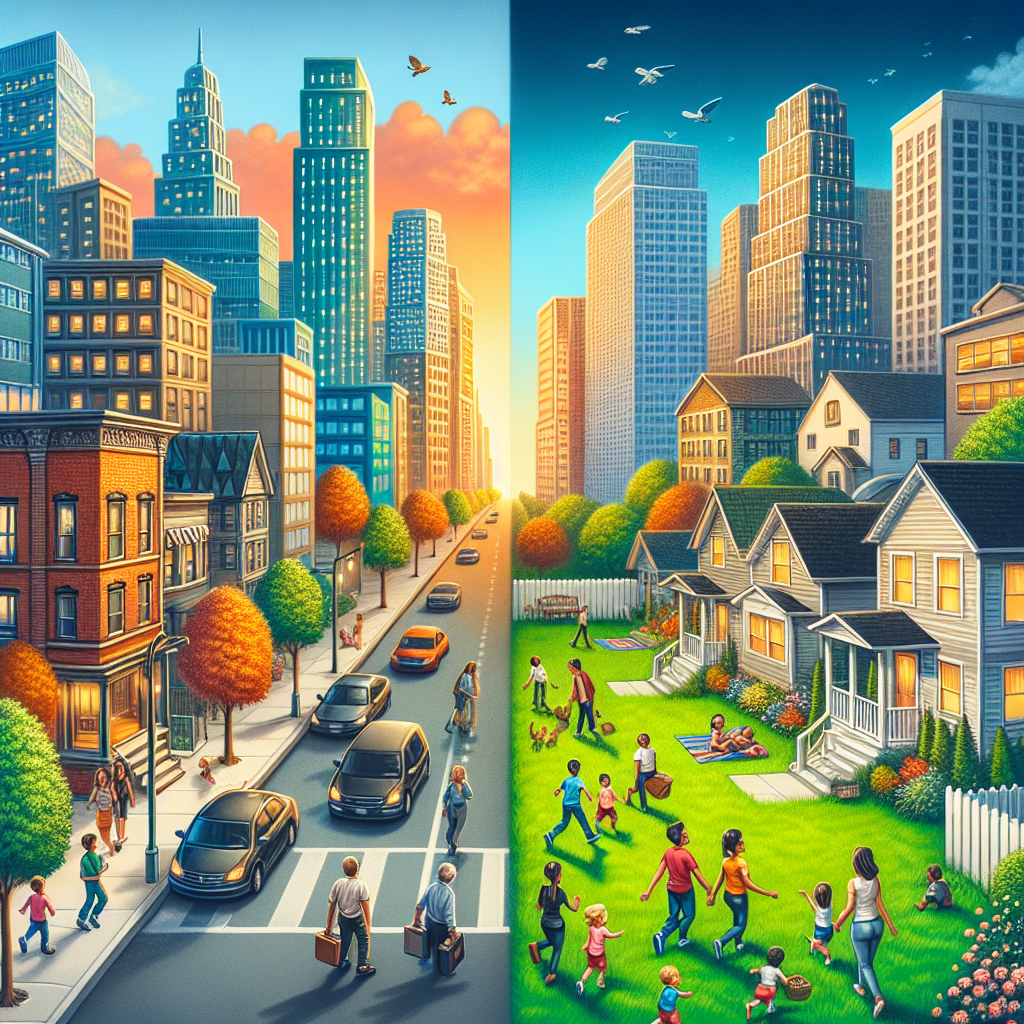
Modern life often presents us with crucial decisions that shape our lifestyles and, ultimately, our happiness. One such significant decision is choosing between urban and suburban living. These two distinct housing environments come with their own sets of advantages, challenges, and nuances that cater to different preferences and life stages. As we delve deeper into the 21st century, it’s essential to understand how housing market trends and shifting preferences are molding the landscape of urban and suburban living.
Historically, urban areas have been the epicenters of commerce, culture, and innovation, drawing individuals for the opportunities and experiences they offer. Meanwhile, the suburban sprawl, often characterized by its more relaxed atmosphere, larger homes, and a sense of community, has been the ideal spot for families and those desiring more space and greenery. These trends, however, are in constant flux influenced by economic conditions, technological advancements, and now, a global pandemic.
This article will explore some of the most prominent trends in the housing market as they pertain to urban and suburban living. We’ll examine how preferences are evolving, the factors influencing these shifts, and the long-term implications for homebuyers, developers, city planners, and policymakers. By understanding these trends, we can better navigate the complex landscape of choosing where to live and how to develop future housing projects that cater to these evolving preferences.
Urban Living: The Magnetism of the Metropolis
Urban living has always had a magnetic pull, especially for younger generations and professionals seeking a fast-paced lifestyle. Cities are synonymous with opportunities – be it in careers, socializing, or cultural experiences. The allure of urban living continues to be strong for several reasons.
Firstly, economic opportunities in urban areas are unparalleled. Cities host the headquarters of multinational corporations, booming tech startups, and various other businesses that offer numerous job prospects. This concentration of potential employers makes cities attractive to recent graduates and professionals looking to advance their careers.
Secondly, urban environments offer unparalleled amenities and conveniences. Residents benefit from a wide array of dining options, entertainment venues, cultural exhibits, and public transportation infrastructure that makes commuting relatively straightforward. The vibrancy and diversity of urban life can be profoundly enriching and appealing, especially to those who thrive in dynamic environments.
Additionally, the rise of the sharing economy and advances in technology have enhanced the appeal of urban living. Services like ride-sharing, bike rentals, coworking spaces, and app-based delivery services create a convenient and connected lifestyle, adding layers of utility to city life.
Suburban Appeal: Space, Serenity, and Community
On the flip side, suburban living has long captivated individuals who yearn for tranquility, more significant living spaces, and a close-knit community atmosphere. The suburbs offer a contrasting lifestyle to the hustle and bustle of city living, with several compelling aspects drawing people out of urban centers.
Space is undoubtedly one of the primary attractions of the suburbs. Houses are generally larger, offering more bedrooms, expansive yards, and sizeable garages. This abundance of space is particularly appealing to families with children, individuals seeking home offices, or anyone desiring more room to move and grow.
The sense of community is another strong point for suburban areas. Suburbs are often characterized by their neighborhood feel, where people know their neighbors, local schools are tightly-knit, and community events take center stage. This atmosphere fosters a sense of belonging and security that many find comforting and fulfilling.
The appeal of suburban areas is also tied to quality-of-life factors. Residents often enjoy lower crime rates, access to parks and green spaces, and schools that perform well academically. For those who prioritize safety, education, and a slower pace of life, the suburbs emerge as an attractive choice.
The Impact of the Pandemic
The COVID-19 pandemic has had a profound impact on housing preferences and market trends. The health crisis redefined work arrangements, social interactions, and living conditions, leading to some notable shifts in housing trends.
Remote work became widespread, with many companies adopting flexible or fully remote work policies. This change allowed employees to reconsider their living arrangements, no longer tethered to cities by daily commutes. As a result, there was a significant migration from urban to suburban areas as people sought more space and comfort to manage work and home life under the same roof.
Additionally, the pandemic placed a premium on space and a closer connection to nature. With lockdowns restricting movement and activities, homes with larger yards, access to parks, and proximity to outdoor recreational areas became more desirable. The importance of having room to breathe and areas to safely engage in physical activities soared.
These shifts have had lasting implications on housing demand, with suburban areas experiencing a boom in home sales and newfound attention from developers looking to capitalize on this trend. While cities remain vital, the lure of suburbia has undoubtedly gained momentum in this unprecedented chapter of history.
Environmental Considerations
In recent years, environmental concerns have increasingly influenced housing preferences and market trends. Urban and suburban developments are now evaluated through the lens of sustainability, with both areas responding to the growing demand for eco-friendly living.
Urban environments have started to emphasize the development of green buildings, the expansion of public transportation networks, and the integration of green spaces. Innovations such as green roofs, energy-efficient building materials, and shared amenities like community gardens and bike lanes are becoming standard practices to create sustainable cities.
Conversely, suburban areas are also embracing sustainability initiatives. Homebuyers are increasingly looking for homes with energy-efficient appliances, solar panels, and sustainable landscaping practices. Suburban developments are incorporating features like walking trails, community gardens, and shared green spaces to promote healthier, more environmentally responsible lifestyles.
Environmental considerations are reshaping how we think about both urban and suburban living, and they will continue to play a crucial role in future housing market trends. As awareness grows, the demand for sustainable housing alternatives is expected to rise, influencing everything from individual home choices to large-scale urban planning projects.
The Role of Affordability
Affordability remains a critical factor in determining housing preferences between urban and suburban areas. Cities, with their higher density and extensive amenities, often come with a steeper price tag compared to suburban counterparts. Consequently, the cost of living and budget constraints heavily influence where people decide to put down roots.
Urban areas tend to have higher property prices and rental rates, which can be prohibitive for first-time buyers, young professionals, and families. For those on tighter budgets, the suburbs offer more cost-effective solutions, providing larger homes at more affordable rates and generally requiring less financial strain.
However, it’s worth noting that some suburban areas, particularly those in proximity to major urban centers, have seen a rise in property values due to increased demand. This phenomenon has created pockets of affluent suburban neighborhoods where the cost of living approaches that of urban areas.
The quest for affordability also intersects with other factors like access to jobs and quality of life. Some individuals are willing to compromise on proximity to urban amenities for more space, better schools, and a safer environment, making suburban living a compelling choice despite the potentially longer commutes.
Demographic Influences
Demographic trends play a significant role in shaping housing market preferences. Different age groups, family structures, and lifestyle choices influence the appeal of urban versus suburban living.
For instance, Millennials and Generation Z, known for their desire for convenience, connectivity, and experiential lifestyles, often gravitate towards urban environments. These younger demographics value access to job opportunities, cultural activities, and vibrant social scenes, aspects that urban areas are well-positioned to offer.
On the other hand, Baby Boomers and Generation X tend to lean towards suburban living. As these generations seek to settle down, raise families, or even retire, the space and serenity of suburbs become highly attractive. The suburban promise of larger homes, better schools, and quieter neighborhoods aligns well with the priorities of these age groups.
Understanding these demographic dynamics helps explain why certain housing trends emerge and how they might evolve over time. As populations age and preferences shift, both urban and suburban areas will need to adapt to meet the changing needs and expectations of their residents.
Conclusion
The interplay between urban and suburban living preferences is a complex, dynamic phenomenon shaped by a multitude of factors, including economic opportunities, lifestyle choices, environmental considerations, and demographic trends. As we navigate the evolving housing market landscape, it becomes evident that both urban and suburban areas provide unique advantages and face distinct challenges.
The rise of remote work, the emphasis on sustainable living, and the ongoing quest for affordability and quality of life will continue to drive shifts in housing preferences. Urban living will likely remain appealing for those seeking employment opportunities, cultural richness, and convenience, while suburban areas will cater to individuals and families desiring space, tranquility, and a tight-knit community atmosphere.
Ultimately, the decision between urban and suburban living is deeply personal and varies based on individual circumstances and priorities. By staying informed about housing market trends and understanding the factors influencing these shifts, homebuyers, developers, and policymakers can make more strategic decisions that align with evolving preferences, ensuring vibrant and sustainable living environments for all.
Frequently Asked Questions
1. What are the main differences between urban and suburban living?
Urban and suburban living each offer unique experiences and cater to different lifestyles, priorities, and needs. Urban living typically involves residing in larger cities where everything is compact and within easy access. The hustle and bustle of city life might be overwhelming to some but exhilarating to others. You can find an abundance of restaurants, entertainment venues, job opportunities, and cultural institutions like museums and theaters. Plus, urban areas often come with benefits like public transportation that minimize the need for a car.
Suburban living, on the other hand, generally occurs in residential areas on the outskirts of larger cities. Suburbs typically offer more space, quieter neighborhoods, and a slower pace of life that can be ideal for raising a family. Houses tend to be larger and have more yard space, making them perfect for those who value interior and exterior space to their compressed urban counterparts. While this might mean you need a car to get around, the appeal of a tight-knit community and serene environment often trumps the demand for proximity to city conveniences. Ultimately, choosing between urban and suburban living comes down to weighing the importance of these factors.
2. What current trends are influencing people to move to suburbs over cities?
In recent years, several factors have sparked a noticeable migration trend where individuals and families are gravitating towards suburban living. Chief among these reasons is the quest for more spacious living arrangements, a need amplified by the COVID-19 pandemic. With work from home becoming a viable long-term option for many, families are seeking homes that provide ample space for office setups, outdoor activities, and privacy.
Additionally, the cost of living often tends to be lower in suburban areas. Housing prices and rental costs in cities can be prohibitive, prompting individuals to seek more affordable options without sacrificing comfort or style. Suburbs typically deliver more significant square footage and amenities for the price you would pay for a small apartment in a city.
There’s also the appeal of community-driven living, safer neighborhoods, and better schooling options, which persuade families with children to move away from urban centers. These reasons combined with city dwellers’ increased desire for work-life balance and cleaner environments have significantly affected housing preferences in recent times.
3. What role does access to amenities and lifestyle preferences play in the decision between urban and suburban living?
Amenities and lifestyle preferences are among the most crucial factors for anyone deciding on urban versus suburban living. Urban areas typically spoil residents with their proximity to a wide variety of conveniences – from grocery stores and pharmacies to bars, cafes, and specialty shops. This accessibility is particularly beneficial for those who thrive on the energy of the city, enjoy attending events, and partake in nightlife or cultural experiences.
Conversely, suburban residents may need to travel a bit further for these amenities, but they often find that the trade-off for quietude and spacious living is worth it. Many suburbs have developed their own local hubs that offer everything a city dweller might seek, but on a more manageable scale with less congestion.
The importance of amenities is often aligned with lifestyle preferences. Younger adults, singles, and professionals may prefer cities for their vibrant atmosphere and accessibility to work, while families or retirees might opt for suburbs’ community orientation, spacious parks, and homely settings.
4. How have changes in work patterns impacted housing preferences between urban and suburban areas?
Changes in work patterns, particularly the shift toward remote work, have substantially impacted housing preferences. With telecommuting becoming more normalized across various industries, the daily commute, which once largely dictated housing decisions, has declined in importance. Many employees no longer need to live close to their workplace, allowing them to consider homes outside city limits where they can find more attractive housing at competitive prices.
Moreover, the pandemic has altered what people look for in a home. Larger living spaces, home offices, and access to outdoor areas have become priorities, which suburban homes are more likely to offer compared to the typically smaller urban apartments. Flexibility in work patterns essentially released residents from the grips of urban life, making suburban areas a haven for those seeking both space and tranquility.
This shift doesn’t only affect cost and convenience. It has also sparked urban regeneration efforts, as cities strive to become more appealing by enhancing green spaces, improving public transport, and fostering community engagement, attempting to retain their urban population amidst these emerging preferences.
5. Is one living environment considered better than the other?
The age-old debate doesn’t have a one-size-fits-all answer because choosing between urban and suburban living ultimately depends on personal preferences, career paths, family needs, and individual priorities. What might be appealing and favorable for one person may not suit another’s lifestyle at all.
For instance, those who relish constant activity, cultural exposure, and societal interactions usually find urban environments more suitable. On the other hand, individuals who crave a calm lifestyle, prioritize family-friendly settings, or value personal space and private property might find themselves more at home in the suburbs.
Different life stages also contribute to the evaluation criteria. Young professionals just starting their careers might prioritize an urban setting that aligns with their work demands and social lives, while parents, retirees, or those who prefer solace might look towards suburban options.
Ultimately, the ‘better’ environment is subjective, tied closely to one’s circumstances and values. The decision should balance all these factors – evaluating both immediate and future lifestyle implications to ensure long-term happiness and fulfillment.