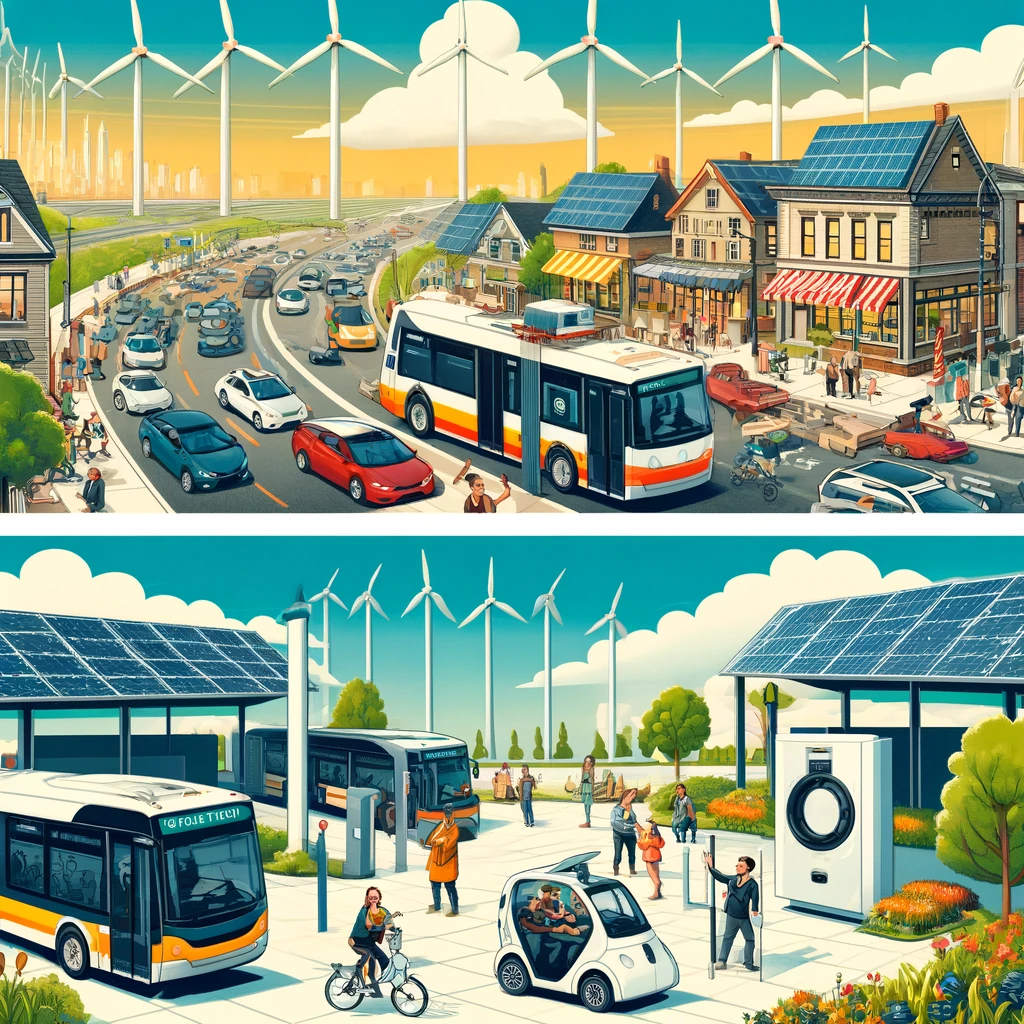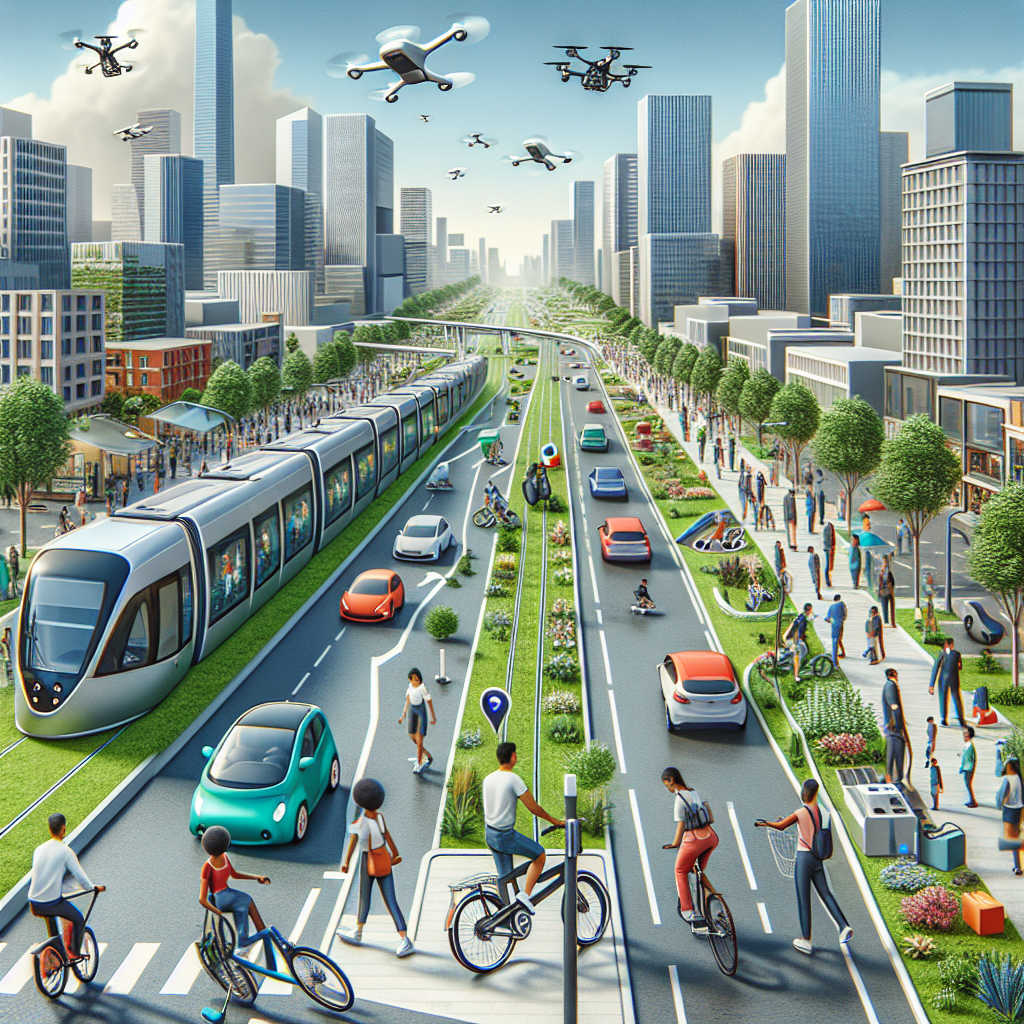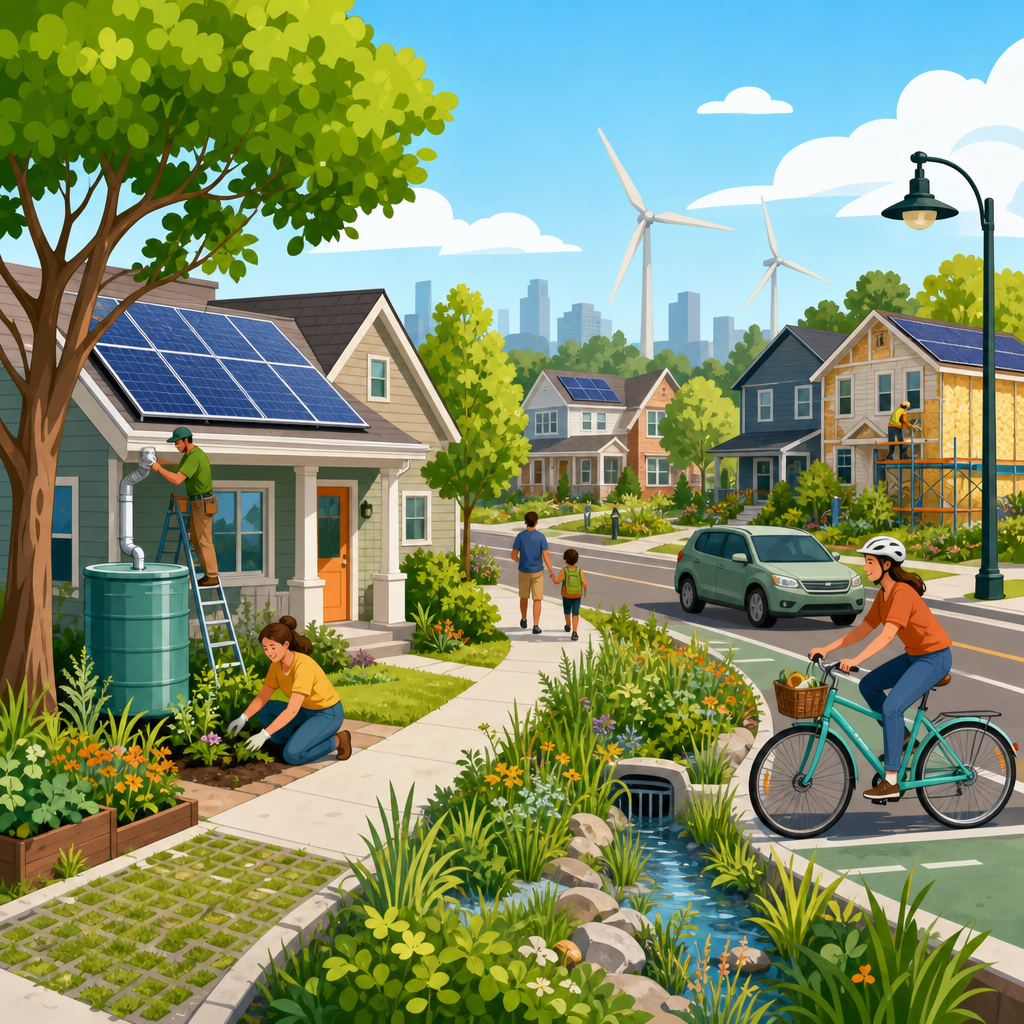
Retrofitting suburbs for sustainability without starting from scratch is one of the most practical ways to cut emissions, lower household costs, and improve daily life in places where most people already live. In this context, retrofitting means upgrading existing homes, streets, utilities, landscapes, and community services so they use less energy, consume less land, and support more travel choices without requiring wholesale demolition. Suburbs matter because they contain a large share of housing in North America, Australia, and parts of Europe, yet many were built around cheap fuel, separated land uses, and abundant parking. Those assumptions no longer hold. Energy prices fluctuate, infrastructure is aging, climate risks are rising, and municipalities face pressure to add housing while preserving affordability. After working on suburban infill and public-realm upgrade projects, I have seen the same lesson repeated: the fastest path to a lower-carbon future is usually not building a brand-new eco-city, but making ordinary neighborhoods perform better with targeted, phased improvements that residents can recognize and support.
A sustainable suburb is not defined by a single technology or a rigid urban form. It is a place where homes are efficient, streets are safe for more than cars, stormwater is managed close to where it falls, daily needs are reachable with fewer long trips, and public investment produces long-term resilience instead of deferred maintenance. That can include heat pumps, better insulation, shade trees, accessory dwelling units, bus priority, permeable paving, school-centered mobility plans, and mixed-use redevelopment of underused commercial parcels. The key is to work with existing assets rather than pretending the slate is blank. Streets already have rights-of-way. Parking lots can become housing or green infrastructure. Single-family districts can add gentle density through duplexes, backyard cottages, and small apartment buildings near transit and shopping. Community acceptance improves when retrofits solve visible problems people already care about, such as flooding, traffic danger, utility bills, and lack of nearby services. Done well, suburban retrofit is not a sacrifice. It is an upgrade strategy that aligns climate goals with comfort, fiscal responsibility, and neighborhood stability.
Why existing suburbs are the biggest sustainability opportunity
Suburbs are often treated as environmentally fixed, but that view is outdated. The postwar development pattern created large stocks of buildings and roads that will remain in use for decades, so improving them has a higher near-term impact than waiting for entirely new districts to absorb growth. According to the International Energy Agency, buildings account for roughly 30 percent of global final energy consumption and a significant share of energy-related emissions. In many suburban municipalities, detached homes dominate that profile because they have larger floor areas, more exposed exterior walls, and older HVAC equipment. Transportation adds another major burden. Low-density separation of homes, jobs, schools, and shops increases vehicle miles traveled, which raises fuel use, congestion, and household transportation costs.
The opportunity is not only environmental. Retrofitting also addresses municipal finance. Strong Towns and many public works analysts have documented how low-density expansion creates long-term liabilities because infrastructure maintenance costs outlast initial development revenues. Existing suburbs already have pipes, pavement, and utility corridors in place. That means upgrading and intensifying current neighborhoods is often cheaper per household than extending services farther outward. I have seen this in corridor studies where adding homes above shops, converting oversized intersections to safer designs, and repurposing vacant big-box parcels delivered more tax productivity than continuing edge expansion. A sustainability strategy grounded in retrofit therefore supports climate action and better capital planning at the same time.
Housing retrofit and gentle density
Housing is central because suburban sustainability fails if people must move long distances to find an affordable home or if existing homes remain energy inefficient. The first layer is building performance. Deep energy retrofit can include air sealing, attic and wall insulation, high-performance windows where cost-effective, heat pump space conditioning, heat pump water heaters, induction cooking, and rooftop solar when orientation and roof condition make sense. The Passive House standard demonstrates how enclosure quality and mechanical ventilation can slash energy demand, but most suburbs benefit first from simpler measures identified through blower door testing and home energy audits. ENERGY STAR guidance consistently shows that sealing leaks and improving insulation can reduce heating and cooling loads significantly, especially in older detached housing.
The second layer is adding homes without radically altering neighborhood character. Gentle density means legalizing and encouraging housing types between detached houses and high-rise towers: accessory dwelling units, duplexes, triplexes, fourplexes, cottage courts, and small mixed-use buildings on corner lots or near transit. Minneapolis, Portland, Edmonton, and parts of California have all adjusted zoning to allow more housing choice in areas once reserved for one dwelling per lot. Results vary by market, but the direction is clear. When a homeowner can add a backyard cottage for a family member or rental income, the neighborhood gains flexibility without requiring massive land assembly. When aging strip malls become mixed-use sites with apartments above daily services, residents gain walkable access and municipalities gain more efficient land use. Gentle density also supports local retail and transit ridership, both essential for reducing car dependence.
Street redesign, mobility, and access to daily needs
Transportation retrofit works best when it starts with a simple question: can more trips be made safely and conveniently without requiring a private car? In many suburbs, the answer is yes, but only after redesigning streets that currently prioritize vehicle speed over access. A complete street retrofit can include narrower travel lanes, protected bike lanes, sidewalks on both sides, raised crossings, median refuges, bus shelters, street trees, and curb management for deliveries and pickup zones. The National Association of City Transportation Officials and the Institute of Transportation Engineers both provide design guidance showing that lower design speeds reduce crash severity and improve comfort for all users. Safety is not cosmetic. It determines whether children can walk to school, whether older adults can cross a road, and whether a bus stop is realistically usable.
Suburbs also need better trip logic. Cul-de-sac networks often force short local trips onto arterial roads. Strategic connectors for walking and cycling can dramatically shorten access to parks, schools, and shopping centers. Bus service improves when routes run on corridors with enough residents and destinations within walking distance. That is why land use and mobility cannot be separated. I have worked on suburban transit plans where service frequency only became viable after zoning changes allowed apartments and small offices near stops. Micromobility can help too, but only where protected infrastructure exists. Electric bikes are particularly important in spread-out areas because they extend comfortable travel distance and flatten hills, making five to eight kilometer trips practical for many adults. The goal is not to eliminate cars. It is to make car ownership less mandatory and each household’s travel pattern less expensive and carbon intensive.
| Retrofit area | Typical intervention | Main sustainability benefit | Real-world example |
|---|---|---|---|
| Homes | Insulation, air sealing, heat pumps | Lower energy use and emissions | Electrification programs in Massachusetts towns |
| Neighborhood housing | ADUs, duplexes, small infill apartments | More homes on serviced land | Zoning reforms in Portland and Auckland |
| Streets | Sidewalks, protected bike lanes, bus priority | Fewer car trips and safer travel | Complete street conversions in Arlington County |
| Water systems | Rain gardens, bioswales, permeable pavement | Reduced runoff and flood risk | Philadelphia Green City, Clean Waters |
| Commercial sites | Redevelop oversized parking lots | Higher land efficiency and walkability | Suburban mall mixed-use retrofits near Denver |
Water, trees, and climate resilience in built-out neighborhoods
Many suburbs were engineered to move stormwater away quickly through pipes and detention basins. That approach becomes less reliable as rainfall intensity increases and impervious area remains high. A more resilient retrofit strategy uses green infrastructure to manage water where it lands. Bioswales, rain gardens, tree trenches, green streets, and permeable surfaces slow runoff, filter pollutants, and reduce pressure on storm sewers. Philadelphia’s Green City, Clean Waters program is a widely studied example of using distributed green infrastructure at scale to improve combined sewer performance while enhancing neighborhoods. In suburban settings, the same principles apply along school frontages, shopping center parking fields, and residential streets with frequent ponding.
Urban forestry is equally important. Trees reduce surface temperatures, improve comfort for walking, intercept rainfall, and lower cooling demand by shading buildings and pavement. The details matter, though. Species selection must account for drought tolerance, root behavior, canopy spread, and long-term maintenance. Planting tiny ornamental trees under power lines will not deliver the same heat mitigation as establishing a durable canopy plan coordinated with utilities and road reconstruction cycles. FEMA hazard mitigation frameworks and many local climate adaptation plans now emphasize cooling and flood reduction together because heat and heavy rain increasingly overlap in vulnerable communities. In practice, the most successful suburban resilience projects pair visible landscape upgrades with maintenance funding, community stewardship, and performance tracking rather than one-time planting campaigns.
Energy, utilities, and the move from fossil systems to clean power
Suburban retrofit becomes transformative when home upgrades align with utility planning. Electrification works best when the building envelope is improved first, panel capacity is assessed, and local distribution infrastructure is prepared for higher electric loads. Heat pumps are now effective in cold climates, with modern cold-climate models maintaining strong performance at low temperatures, but installation quality remains decisive. Oversized or poorly commissioned equipment will underperform. Utilities and local governments can reduce friction through on-bill financing, group-purchase programs, and neighborhood-scale outreach that bundles audits, contractor lists, and rebate navigation. These administrative details often determine adoption rates more than the technology itself.
Distributed energy resources add another layer. Rooftop solar, community solar subscriptions, battery storage, and demand response can make suburban neighborhoods more resilient and help utilities manage peak load. Yet equity and grid constraints must be addressed. Renters and households with shaded roofs cannot rely on rooftop solar alone, which is why community solar and shared storage models matter. Smart thermostats, time-of-use rates, and managed EV charging can shift demand away from expensive peaks, but only if programs are understandable and consumer protections are clear. In projects I have reviewed, the strongest results came from treating utilities as long-term partners rather than as permitting obstacles. When planners, electric providers, and housing departments coordinate, electrification can coincide with road openings, trench work, and redevelopment timing instead of becoming a fragmented retrofit burden for each homeowner.
Governance, financing, and public support
The hardest part of suburban sustainability is rarely identifying the right interventions. It is coordinating rules, budgets, and local expectations. Zoning reform, capital improvement planning, school access, transit service, stormwater management, and utility upgrades often sit in separate departments with separate timelines. A workable retrofit strategy therefore needs a clear implementation framework: map priority corridors and nodes, align land use changes with infrastructure capacity, set measurable targets, and sequence projects so one upgrade supports the next. Municipalities that treat retrofit as a one-off pilot usually stall. Those that embed it in comprehensive plans, transportation plans, and asset management systems make steady progress.
Funding can come from multiple sources: local improvement districts, tax increment financing for redevelopment areas, utility rebates, green bonds, state and federal grants, and revised development charges that favor infill over greenfield expansion. The Inflation Reduction Act in the United States, for example, expanded incentives for home energy improvements and clean technologies, while many regions offer separate stormwater credits or transit-oriented development funds. Public support grows when benefits are tangible and distributed fairly. Residents respond to lower bills, safer crossings, less flooding, nearby housing for relatives, and revitalized shopping areas. They resist change when plans appear abstract or imposed. The most durable process I have seen combines data with demonstration projects: one safer corridor, one school-zone retrofit, one mixed-use parking lot conversion, then scale what works. Start with the suburb that exists, measure improvements honestly, and build momentum through visible success.
Retrofitting suburbs for sustainability without starting from scratch is not a compromise between ambition and realism. It is the main strategy available to regions that want meaningful climate progress within the lifetime of existing infrastructure and current residents. The evidence is straightforward. Upgrading homes cuts energy demand and improves comfort. Allowing gentle density creates more housing on land already served by roads, pipes, and schools. Redesigning streets makes short trips safer and reduces forced car dependence. Green infrastructure and urban forestry lower flood and heat risks. Coordinated electrification and utility planning reduce emissions while preparing neighborhoods for a cleaner grid. None of these moves requires erasing suburbia. They require using its assets better and correcting its weak points step by step.
The biggest benefit is cumulative. A single heat pump helps one household, but a neighborhood retrofit program can shift local load profiles, support contractor capacity, and normalize cleaner systems. One accessory dwelling unit adds one home, but citywide reform creates choice for older adults, young families, and workers. One safer arterial crossing protects one intersection, but a connected walking network changes travel behavior altogether. That is how sustainable urban development becomes practical: not through isolated green gestures, but through linked investments that improve everyday life. If you are shaping policy, managing infrastructure, or advising development, begin with an audit of existing suburban assets and constraints, identify the highest-impact retrofit corridors and neighborhoods, and move from pilot projects to permanent standards.
Frequently Asked Questions
What does it mean to retrofit a suburb for sustainability without starting from scratch?
Retrofitting a suburb for sustainability means improving what is already there instead of clearing neighborhoods and rebuilding them from the ground up. In practice, that includes upgrading older homes with better insulation, efficient heating and cooling systems, heat pumps, solar panels, and water-saving fixtures; redesigning streets so they are safer for walking, biking, and transit; modernizing utilities for cleaner energy and better stormwater management; and rethinking local land use so more daily needs can be reached closer to home. The goal is not to erase suburban life, but to make it less wasteful, less car-dependent, and more resilient.
This approach matters because most emissions and household costs are tied to existing buildings, existing roads, and existing development patterns. Waiting for entirely new “green” communities to replace today’s suburbs would take decades and require enormous expense. Retrofitting works with the reality that millions of people already live in these areas and need practical improvements now. It is typically faster, less disruptive, and more politically feasible than wholesale redevelopment, while still delivering meaningful gains in energy performance, mobility, public health, and quality of life.
Why are suburbs such an important focus for climate and sustainability efforts?
Suburbs are central to sustainability because they contain a large share of housing, infrastructure, and daily travel demand. Many suburban neighborhoods were designed around separated land uses, wide roads, and routine car trips for work, school, shopping, and errands. That pattern often leads to high transportation emissions, larger household energy use, more paved surfaces, and greater long-term infrastructure costs. If climate strategies focus only on downtowns or brand-new developments, they miss a huge portion of where people actually live and where emissions are generated every day.
Retrofitting suburbs can produce outsized benefits. Home energy upgrades can lower utility bills and reduce peak energy demand. Safer sidewalks, bike routes, and better bus service can reduce car dependence for at least some trips, even if driving remains part of daily life. Adding trees, cooling landscapes, and better drainage can reduce urban heat and improve flood resilience. Small increases in housing variety near schools, commercial corridors, and transit can help communities grow without consuming more undeveloped land. In short, suburbs are not peripheral to sustainability goals; they are one of the main places where those goals will either succeed or fall short.
What kinds of upgrades make the biggest difference in an existing suburban neighborhood?
The most effective suburban retrofits usually combine building improvements, transportation changes, and landscape or infrastructure upgrades rather than relying on any single fix. On the housing side, major gains often come from weatherization, air sealing, insulation, high-performance windows where needed, efficient water heaters, induction cooking, and replacing fossil-fuel furnaces and air conditioners with heat pumps. These changes can sharply cut energy waste, improve indoor comfort, and lower exposure to volatile fuel prices. Rooftop solar, battery storage, and smarter electric panels can add further resilience and reduce operating costs when they are paired with a strong building envelope.
On the neighborhood side, street retrofits can be just as important. Sidewalk infill, protected bike lanes on key corridors, safer crossings, traffic calming, shade trees, and more reliable transit stops make it easier for residents to choose something other than a car for short trips. Parking lots and oversized roadways can sometimes be repurposed for housing, pocket parks, stormwater features, or local services. Green infrastructure such as rain gardens, permeable paving, and expanded tree canopy helps manage runoff, reduce heat, and improve appearance at the same time. The biggest difference usually comes from coordinated upgrades that make homes cheaper to run and neighborhoods easier to navigate without increasing sprawl.
Can suburbs become more sustainable without becoming unrecognizable or forcing residents out?
Yes, and that is one of the strongest arguments for retrofit-based planning. Sustainable suburban change does not have to mean high-rise redevelopment or the loss of neighborhood identity. In many places, the most successful improvements are gradual and practical: better home efficiency, accessory dwelling units, duplexes or townhomes near existing services, safer school routes, improved bus corridors, shared community energy projects, and redesigned commercial strips that mix housing, shops, and public space. These steps can make a suburb more functional and inclusive while preserving much of its existing character.
The concern about displacement is real, however, and it should be addressed directly. If upgrades only increase property values without protections, lower-income renters, seniors on fixed incomes, and even moderate-income homeowners can be squeezed out. That is why equitable retrofit strategies often include targeted rebates, low-interest financing, anti-displacement policies, affordable housing requirements, property tax relief for vulnerable residents, and programs that prioritize the homes with the highest energy burdens first. Done well, suburban sustainability is not about imposing a new identity from above; it is about helping current residents benefit from lower bills, safer streets, healthier homes, and more choices in how they live and move.
What are the biggest barriers to suburban retrofitting, and how can communities overcome them?
The biggest barriers are usually not technical; they are financial, regulatory, and institutional. Many homeowners face high upfront costs for energy upgrades even when the long-term savings are clear. Local zoning may prohibit mixed-use redevelopment, smaller homes, or accessory units that would make neighborhoods more adaptable. Transportation departments may still prioritize vehicle speed over safety and access. Utility coordination can be slow, and fragmented governance often means housing, transit, stormwater, and climate planning are handled separately even though they are deeply connected on the ground.
Communities can overcome these obstacles by bundling solutions and aligning policies with real-world neighborhood needs. Cities and counties can streamline permitting for home retrofits, legalize a broader range of housing types, and update street design standards to support walking, biking, and transit. Public agencies can offer grants, on-bill financing, group purchasing programs, and technical assistance so upgrades are easier to afford and simpler to navigate. Pilot projects can demonstrate success quickly, especially on commercial corridors, school zones, or flood-prone streets. Most importantly, residents should be involved early so plans respond to daily experience rather than abstract sustainability goals. When policy reform, financing, and community input move together, suburban retrofit becomes far more achievable and far more durable.