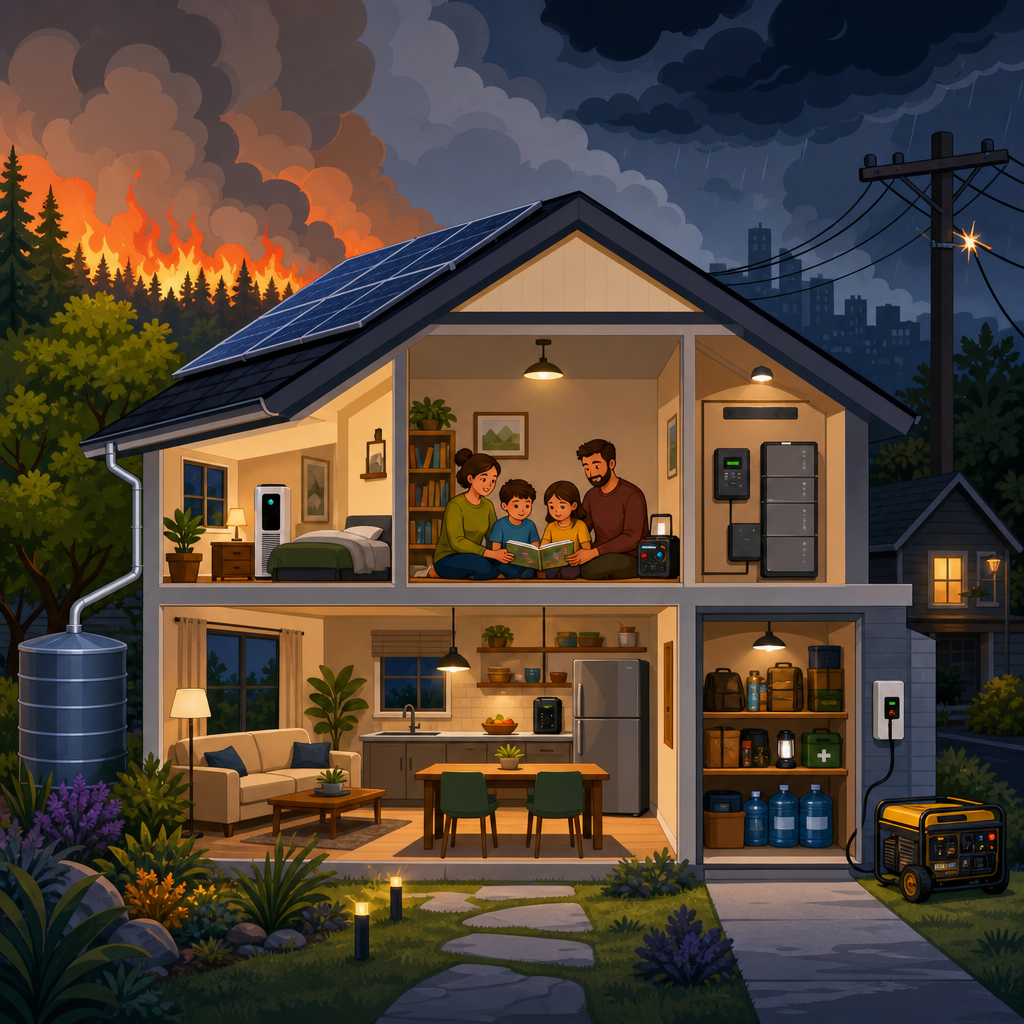
Resilient design for smoke, heat, and power outages has moved from a niche concern to a core requirement in sustainable urban development because cities now face longer fire seasons, more frequent heat waves, and grid disruptions that can turn ordinary buildings into unsafe environments within hours. In practice, resilient design means shaping buildings, sites, streets, and neighborhood systems so they continue protecting health and basic function during compound hazards, not just under normal operating conditions. Smoke resilience focuses on limiting particulate infiltration, maintaining acceptable indoor air quality, and creating refuge spaces. Heat resilience addresses overheating through passive cooling, reflective surfaces, shading, insulation, ventilation strategies, and access to water and cooling. Power outage resilience, often called energy resilience, ensures that critical systems such as ventilation, refrigeration, communication, lighting, and medical equipment keep operating when the grid fails.
I have worked on projects where teams initially treated these as separate design checklists. That approach fails when one event triggers another. Wildfire smoke drives residents indoors, high temperatures increase cooling demand, and planned shutoffs or storm damage knock out electricity at the exact moment mechanical systems are most needed. A resilient building therefore has to perform as a whole system. Envelope design, filtration, backup power, landscape decisions, occupant operations, and neighborhood emergency planning are interconnected. The strongest projects start by asking a simple question: if people had to shelter in place here for seventy two hours during dirty air, extreme heat, and no grid power, what would keep them safe?
This matters especially in dense urban areas, where apartment residents may lack private outdoor space, older towers may have sealed windows and weak backup systems, and vulnerable populations live farther from cooling centers or clinics. It also matters for schools, multifamily housing, libraries, and transit oriented districts that function as community anchors. Designing for resilience reduces health risk, protects property value, lowers recovery costs, and supports climate adaptation without sacrificing energy efficiency. The rest of this hub article explains the principles, performance targets, building strategies, district scale approaches, and implementation priorities that make resilient design practical.
Start With Risk: Smoke, Heat, and Outages Are a Combined Urban Threat
The first step is a hazard assessment grounded in local conditions rather than generic assumptions. Teams should review wildfire exposure, urban heat island intensity, historical outage duration, building age, occupancy type, and resident vulnerability. Public sources such as FEMA maps, local hazard mitigation plans, utility reliability reports, NOAA heat data, and state fire agencies provide a baseline. For urban districts, I also look at street tree canopy, pavement coverage, transformer placement, and whether cooling centers are walkable during an emergency. A six story apartment building in a temperate city can still face dangerous indoor conditions if it has dark roofing, west facing glazing, poor insulation, and no operable windows during a summer outage.
Smoke risk is often underestimated because many designers think only about direct fire exposure. In reality, the dominant urban hazard is often fine particulate matter, especially PM2.5, carried from regional fires. These particles penetrate buildings through leakage, open doors, and poorly filtered mechanical systems. Exposure can aggravate asthma, cardiovascular disease, and pregnancy related risks. During severe episodes, outdoor air can become unsafe for days. The design response is to reduce infiltration, manage pressure relationships, and ensure high efficiency filtration where systems can support it. MERV 13 filters are widely recommended as a minimum for smoke reduction in compatible HVAC equipment, and HEPA filtration is appropriate for portable cleaners and certain dedicated spaces.
Heat risk requires a similar level of precision. Outdoor temperature alone does not define danger. Mean radiant temperature, humidity, solar gain, nighttime cooling, and occupancy patterns determine whether indoor spaces stay survivable. During the 2021 Pacific Northwest heat dome, many deaths occurred in homes without air conditioning, especially upper floor units with limited ventilation and direct solar exposure. That event made one lesson unavoidable: code minimum compliance for energy use does not guarantee passive survivability. Buildings need low internal heat gain, strong shading, insulated roofs, airtight but controllable envelopes, and cooling strategies that still function during outages. For essential facilities, designers should establish explicit temperature thresholds for habitable refuge areas rather than assuming full building cooling will remain available.
Building Level Strategies That Improve Passive Survivability
Passive survivability is the ability of a building to maintain safe conditions for occupants during extended utility loss. It is the backbone of resilient design because active systems can fail, fuel deliveries can be delayed, and maintenance quality varies over time. The most dependable projects begin with envelope performance. Continuous insulation, reduced thermal bridging, quality air sealing, and high performance windows slow heat gain and help keep smoke outside. External shading matters more than many teams expect. Exterior louvers, deep overhangs, shade screens, and deciduous trees can sharply reduce solar gain on east, south, and west facades. In multifamily retrofits, even simple window films and operable interior shades can lower peak room temperatures when paired with night flushing.
Ventilation must be designed for two opposite conditions: bringing in outdoor air when it is beneficial and limiting it when smoke is hazardous. That means controllable systems rather than one fixed mode. Dedicated outdoor air systems with economizer lockout, variable fan operation, and clear smoke mode settings perform better than ad hoc shutoffs. In naturally ventilated buildings, operable windows should be paired with instructions for when not to open them. Vestibules, weather stripping, and compartmentalization reduce leakage pathways in larger buildings. I have seen older corridors become smoke transfer channels because apartment doors had poor seals and exhaust systems created unintended pressure differences. Correcting those details is not glamorous, but it materially improves indoor conditions.
Cooling resilience is strongest when passive and active measures reinforce each other. Ceiling fans and high albedo roofing lower demand, making it easier for battery systems or generators to support limited cooling in refuge zones. Thermal mass can help if night ventilation is feasible and smoke conditions allow it. In hot humid climates, dehumidification becomes a health issue, not a comfort luxury, because high indoor humidity can worsen heat stress and mold risk after outages. Refrigerant based systems such as variable refrigerant flow or high efficiency heat pumps can be useful, but they need surge protection, sensible zoning, and backup power planning for critical areas. Designers should not promise full normal operation during a blackout unless the project truly has the generation and storage to support it.
| Design objective | Primary strategy | Why it works during emergencies | Common limitation |
|---|---|---|---|
| Reduce smoke exposure | MERV 13 or better filtration, tighter envelope, sealed refuge room | Lowers PM2.5 infiltration and protects sensitive occupants indoors | Higher filter pressure drop may exceed older fan capacity |
| Limit overheating | Exterior shading, reflective roof, insulation, operable night ventilation | Reduces indoor peak temperatures without relying entirely on grid power | Night flushing may be impossible during smoke events or high humidity |
| Maintain essential power | Battery storage with solar, islandable controls, selective load panel | Keeps lighting, communications, refrigeration, and limited cooling running | Battery duration depends on careful load management |
| Support vulnerable residents | Shared cooling clean air room with backup power and water access | Creates a managed refuge for older adults, children, and medically fragile occupants | Needs staffing, access planning, and clear operating procedures |
Clean Air, Cool Refuge, and Critical Power: The Core Resilience Package
When budgets are limited, every project should still define a minimum resilience package. I recommend three elements: a clean air room, a cool refuge area, and a backed up critical power plan. In many buildings these can overlap in one community room, library zone, clinic area, or school multipurpose space. The room should have strong envelope sealing, verified filtration, backup lighting, charging access, drinking water, and space for occupants to sit for extended periods. If the building serves older adults or people with disabilities, the refuge must be accessible without elevators when possible or supported by evacuation and relocation protocols if not. Clear signage and multilingual instructions matter because emergency performance depends on occupant understanding.
Critical power planning should begin with a load hierarchy, not equipment shopping. Too many projects install a generator or battery and then discover it cannot support the loads occupants assumed were protected. Essential loads usually include communication systems, security, emergency lighting, domestic water boosting where needed, refrigeration for medicines, ventilation and filtration for the refuge room, and at least some cooling or heating depending on climate. Battery storage paired with rooftop solar can improve resilience if the system is islandable and the inverter supports off grid operation; many standard solar arrays shut down during outages to protect line workers. For longer events, hybrid systems that combine solar, battery, and generator capacity provide better endurance and fuel flexibility.
Filtration strategy deserves detailed commissioning. Specifying a MERV 13 filter is not enough if the fan cannot maintain airflow, the filter racks leak, or maintenance staff lack replacement inventory during fire season. Portable HEPA air cleaners are often one of the fastest and most cost effective upgrades for schools, senior housing, and clinics, but they should be sized by clean air delivery rate to room volume and occupancy. Indoor air quality sensors can help teams respond, though low cost sensors vary in accuracy and need thoughtful placement. The operational goal is simple: know when outdoor air is unsafe, know which spaces can be protected, and know how long systems can run without the grid.
District Scale Design and Governance Make Buildings More Effective
Individual buildings matter, but urban resilience improves fastest when districts coordinate infrastructure, public space, and operations. Street trees, cool pavements, shaded transit stops, and pocket parks lower ambient heat and make it safer for residents to reach services during outages. Water features are less universally useful because they can increase humidity, require pumping, and complicate maintenance, but strategically placed misting or hydration stations can help in dry climates if water reliability is strong. Microgrids serving campuses, affordable housing clusters, or mixed use districts are increasingly practical because they allow selective islanding of critical loads across multiple buildings. Universities and hospitals have used this model for years; now municipalities and developers are adapting it to civic centers and resilience hubs.
Governance is often the deciding factor between a paper plan and a working system. Property managers need seasonal smoke protocols, heat emergency procedures, and battery or generator maintenance schedules. Cities need agreements on when libraries, schools, and community centers shift into refuge operations. Utilities need communication channels for planned shutoffs so building operators can pre cool spaces, charge batteries, and deploy staff. Public health agencies should help define air quality and temperature triggers. In my experience, the best resilience programs run tabletop exercises before summer and fire season. Teams test access control, backup power transfer, filter replacement, resident communication, and staffing assumptions. Those exercises reveal weak points faster than any design review meeting.
This hub should also connect readers to deeper topics across sustainable urban development: passive house envelopes, electrification, urban forestry, water sensitive streets, district energy, community emergency planning, and healthy housing standards. The reason is practical. Smoke, heat, and outage resilience is not a stand alone specialty. It sits at the intersection of building science, public health, energy systems, landscape design, and social equity. A neighborhood with efficient buildings, shaded walking routes, distributed energy resources, and trusted community institutions will recover faster than one relying on a single emergency shelter and aging centralized infrastructure.
Implementation Priorities for New Construction and Retrofits
For new construction, resilience should be embedded at concept stage because orientation, massing, facade design, and mechanical zoning are expensive to fix later. Set performance goals early: acceptable indoor temperature range during outage hours, maximum particulate infiltration in refuge areas, and minimum duration of critical backup power. Then test those goals using energy modeling, airflow analysis, and simple emergency scenarios. For retrofits, start with the highest return actions: air sealing, roof reflectance, shading, filter upgrades, portable HEPA units, subpaneling for critical loads, and creation of at least one clean cool refuge room. Older affordable housing often benefits enormously from these measures because baseline conditions are poor and residents may have fewer alternatives during emergencies.
Cost should be discussed honestly. Some measures, such as shade trees, door seals, reflective roofing, and portable air cleaners, are relatively affordable. Others, such as full facade replacement, deep electrification, or district microgrids, require capital planning and policy support. Incentives from utilities, resilience grants, tax credits, and weatherization programs can help, especially when projects frame resilience as health protection and emissions reduction together. The best investment cases quantify avoided losses: fewer heat related illnesses, reduced smoke exposure, lower spoilage, less displacement, and faster reopening after outages. Decision makers respond when resilience is translated into continuity of service, resident safety, and long term operating value.
Resilient design for smoke, heat, and power outages works when teams stop treating emergencies as rare exceptions and instead design for safe operation under stress. The essentials are clear: understand compound risk, improve passive survivability, create clean and cool refuge spaces, back up truly critical loads, and coordinate building decisions with district infrastructure and public operations. For sustainable urban development, the benefit is larger than emergency response. These strategies also produce healthier interiors, lower peak demand, and more durable neighborhoods. Use this hub as your starting point, then map your buildings and districts against the risks residents actually face, prioritize the weakest points, and upgrade them before the next extreme event arrives.
Frequently Asked Questions
What does resilient design for smoke, heat, and power outages actually include?
Resilient design for smoke, heat, and power outages is the practice of creating buildings and neighborhoods that remain safer, healthier, and more functional when normal conditions break down. Instead of assuming that mechanical systems, the electric grid, and outdoor air quality will always perform as expected, resilient design plans for periods when they do not. In practical terms, that includes improving the building envelope so indoor temperatures rise more slowly during extreme heat, reducing unwanted air leakage so smoke infiltration can be controlled, and providing ventilation strategies that can shift between normal operation and emergency modes.
It also includes backup power for critical loads, such as medical equipment, refrigeration for essential medications, lighting, communications, elevators in some settings, and the systems needed to maintain safe indoor air. High-performance filtration, shaded windows, reflective roofs, thermal mass, exterior shading devices, operable windows where appropriate, and passive cooling strategies are all part of the toolkit. At the site and neighborhood scale, resilient design can involve tree canopy, cool pavements, microgrids, community cooling centers, distributed energy resources, and water systems that continue functioning during disruptions.
The key idea is that resilience is not a single product or technology. It is a layered design approach that combines architecture, engineering, landscape design, and infrastructure planning so buildings can protect occupants during compound hazards. A resilient building is not simply energy efficient under ideal conditions; it is capable of maintaining life safety, acceptable indoor air quality, and survivable indoor temperatures when smoke events, heat waves, and outages happen at the same time.
Why has resilient design become so important in sustainable urban development?
Resilient design has become central to sustainable urban development because climate-related hazards are no longer rare or isolated. Many cities now experience longer wildfire seasons, more intense and frequent heat waves, and power interruptions caused by storms, peak demand, damaged infrastructure, or deliberate utility shutoffs. These events often overlap. A building may need to keep people cool during a blackout while also preventing smoke from entering indoor spaces. Traditional design assumptions are often not enough for these conditions.
Sustainability used to focus heavily on reducing resource consumption during standard operations, and that remains important. However, a building that performs efficiently on paper but becomes dangerously hot, smoky, or uninhabitable during an outage cannot be considered truly sustainable. Urban sustainability now requires durability under stress, public health protection, and the ability to support communities during emergencies. This is especially important in dense urban areas, where vulnerable populations may have limited mobility, fewer cooling options, and greater exposure to poor outdoor air quality.
There is also a strong equity dimension. Low-income households, older adults, children, and people with chronic health conditions are often hit hardest by smoke exposure, extreme heat, and service disruptions. Resilient design helps reduce those risks by making healthy indoor environments more dependable even when external systems fail. In that sense, resilience and sustainability are no longer separate goals. They are increasingly the same goal: creating places that reduce environmental impact while continuing to protect human health when conditions become extreme.
How can buildings stay safer during wildfire smoke events without relying entirely on sealed, energy-intensive systems?
Buildings can be designed to manage wildfire smoke through a balanced strategy that combines tighter construction, effective filtration, smart ventilation control, and passive survivability principles. The first step is reducing uncontrolled air leakage. Smoke enters buildings through cracks, poorly sealed penetrations, and weak enclosure details, so improving airtightness gives operators much more control over what comes indoors. Once the envelope is tighter, mechanical ventilation systems can use higher-efficiency filters, such as MERV-rated filters appropriate to the system design, to capture a large share of fine particles associated with wildfire smoke.
Resilient smoke design does not mean buildings must be permanently sealed off or mechanically dependent in every season. It means they should be capable of switching modes when outdoor air becomes hazardous. During cleaner conditions, buildings may use natural ventilation or mixed-mode strategies to reduce energy use and improve occupant comfort. During smoke events, they can temporarily reduce outside air intake, recirculate indoor air through upgraded filtration, and maintain cleaner air in designated refuge areas. Entry vestibules, compartmentalization, and pressure management can further help limit smoke migration.
Designers should also think about what happens during a power outage. If filtration and ventilation depend entirely on uninterrupted grid power, smoke resilience may fail precisely when it is needed most. That is why many resilient buildings pair air quality strategies with backup power, battery storage, or microgrid support for critical HVAC components. Portable room air cleaners can also play an important supporting role in homes, schools, and community buildings. The most effective approach is layered: limit infiltration, filter effectively, create clean-air rooms, and ensure critical systems can operate during emergencies without locking the building into unnecessary year-round energy use.
What are the most effective design strategies for keeping indoor spaces survivable during extreme heat and outages?
The most effective strategies begin with reducing the amount of heat the building gains in the first place. That means using well-insulated roofs and walls, high-performance windows, exterior shading, cool roofs, and thoughtful orientation to limit direct solar exposure. Exterior shading is especially valuable because it stops solar heat before it enters the building, which is generally more effective than relying on interior blinds alone. Trees, pergolas, arcades, and other urban shading elements also help lower ambient temperatures around buildings and reduce heat island effects.
Inside the building, resilient heat design focuses on slowing temperature rise and supporting passive cooling. Thermal mass can absorb heat and reduce temperature swings when properly used, and night flushing may help in climates where evening temperatures drop enough to remove stored heat. Natural ventilation can be effective in some regions, but it must be designed carefully because it may conflict with smoke protection during wildfire events. Ceiling fans, low-energy air movement strategies, and zoned refuge spaces can improve comfort and reduce health risks when full air conditioning is unavailable.
Perhaps most importantly, resilient design identifies survivability thresholds rather than assuming normal comfort standards will always be maintained. A building may not hold ideal indoor temperatures through a prolonged outage, but it can be designed so conditions deteriorate slowly enough to remain far safer than outdoors or than a conventional structure. This often includes creating dedicated cool rooms or refuge areas served by backup power, battery-supported heat pumps, or other limited-capacity systems that protect the most vulnerable occupants first. In multifamily housing, schools, healthcare settings, and public buildings, this targeted strategy can save lives during prolonged heat emergencies.
How do backup power, microgrids, and neighborhood-scale planning improve resilience beyond the individual building?
Backup power is essential, but true resilience goes beyond a single generator attached to a single building. At the building level, backup systems should be designed around critical loads rather than trying to support all normal operations. That usually means prioritizing smoke filtration, emergency lighting, communications, refrigeration, water pumping where needed, cooling for refuge spaces, and access systems that support life safety and continuity. Batteries, solar-plus-storage systems, and highly efficient heat pumps are increasingly attractive because they can reduce fuel dependence, lower emissions, and provide quieter, more flexible support than conventional backup generation alone.
Microgrids expand that idea by allowing a group of buildings or a campus to maintain essential service even when the main grid fails. A neighborhood microgrid can support cooling centers, clinics, schools, shelters, grocery functions, and communications hubs, all of which become critically important during prolonged smoke and heat events. Distributed energy resources also reduce the risk that one single point of failure will leave an entire area without support. When integrated with demand management and efficient building design, these systems can stretch limited energy resources much farther during emergencies.
Neighborhood-scale planning matters because resilience is social and infrastructural, not just architectural. Safe streets with shade, accessible cooling centers, redundant water supplies, transit continuity, and coordinated emergency communications all affect whether people can remain safe during compound hazards. In many cases, the most resilient outcome comes from linking building design with district energy, emergency planning, land use policy, and public health strategy. That broader approach recognizes a simple truth: a resilient building helps, but a resilient neighborhood can sustain a community through repeated smoke events, dangerous heat, and extended outages far more effectively.